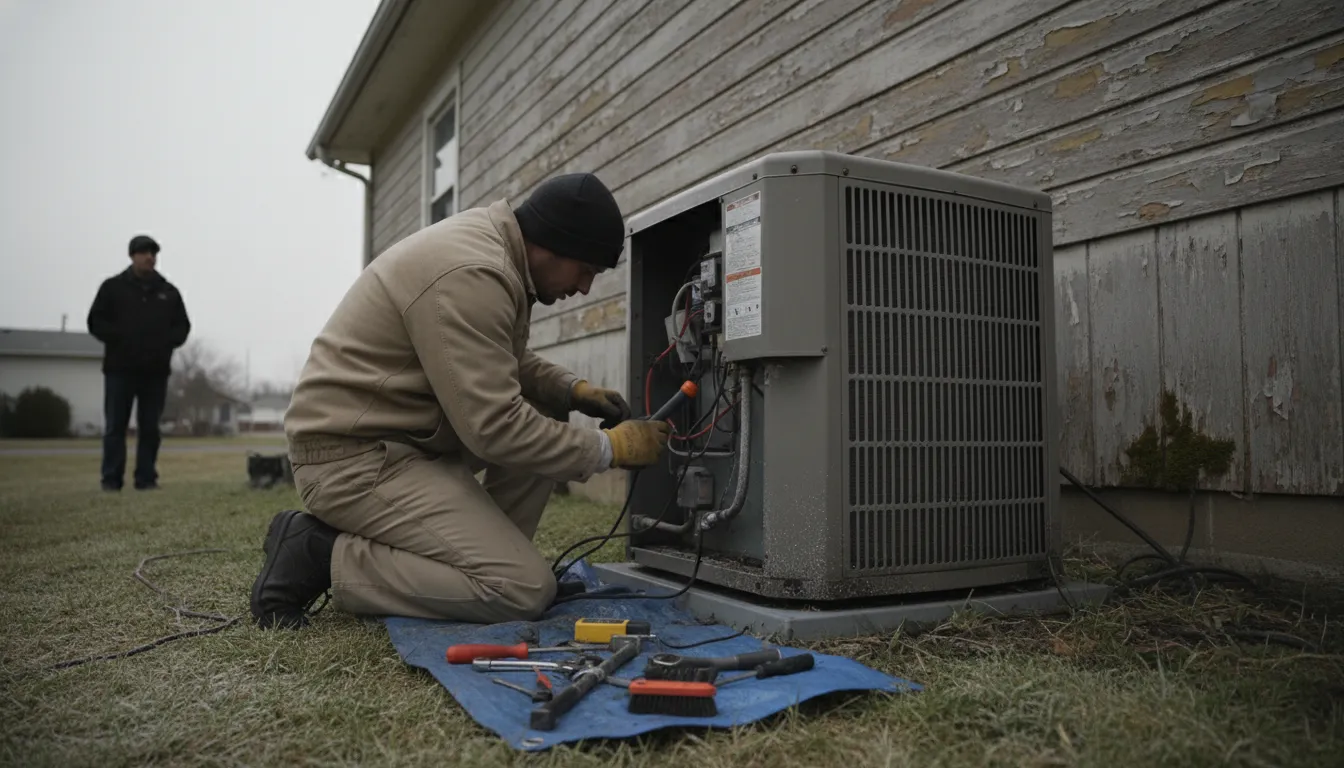
Find the Best Heat Pump Repair Contractors for Your Business
No obligation • Fast responses • Nationwide coverage

Why you can trust HVAC Firms
HVAC Firms is a leading United States resource for evaluating HVAC service providers. Our team researches companies, checks credentials, and reviews customer feedback to present clear, unbiased information. Listings and rankings are based on merit, and companies cannot pay to change our editorial content.
Search providers near you
Top Heat Pump Repair Contractors in Peabody, Massachusetts Ranked
When your heat pump isn't working correctly, it can disrupt your home's comfort and efficiency year-round. Heat pump repair is a specialized service that addresses the unique heating and cooling issues these systems can develop. For Peabody residents, understanding common problems, repair processes, and local service expectations is key to maintaining a reliable and cost-effective system. This guide will help you identify issues, know what to expect from a service visit, and connect with qualified professionals in the area.
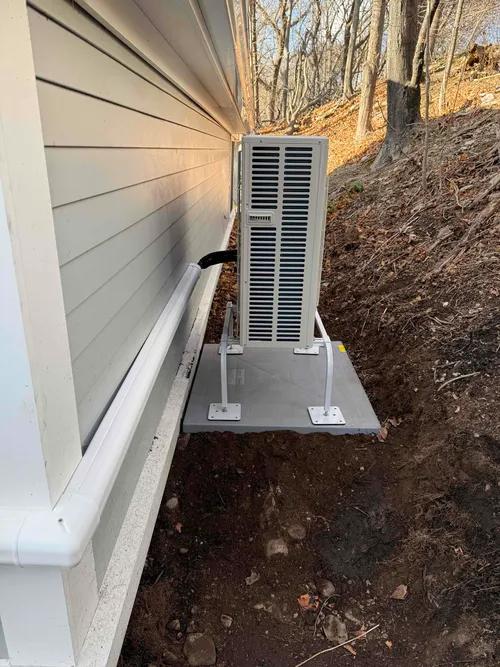
Yellow Dog Plumbing, Heating & Cooling
19 Kearney Rd, Needham, MA 02494
Yellow Dog Plumbing, Heating & Cooling is a plumbing and HVAC company serving Boston, MA, and nearby areas. They offer a wide range of services including air conditioning, furnace, heat pump, and boiler repair and installation, as well as HVAC tune-ups and indoor air quality solutions. Their technicians are equipped to handle both residential and light commercial HVAC needs, with well-stocked trucks to complete most repairs on the first visit. Yellow Dog emphasizes clear communication and customer care, providing same-day service and 24/7 live answering to support their clients' comfort and safety.
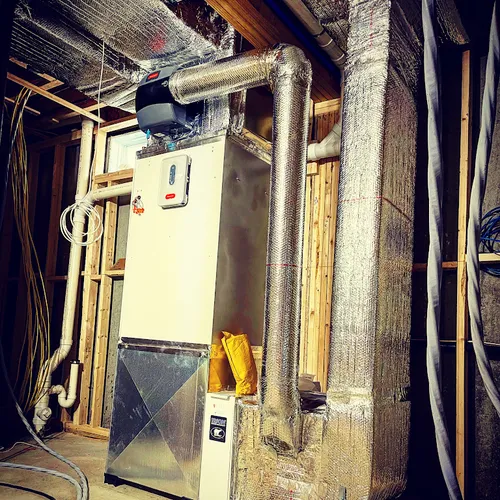
EML Mechanical
28 Pine St, Stoneham, MA 02180
EML Mechanical is an HVAC company serving Boston, MA, and the Greater Northshore Community. They provide residential and commercial heating, ventilation, and air conditioning services, including installation, repair, and tune-ups for systems like furnaces, heat pumps, and air conditioners. EML Mechanical is a MassSave-approved contractor, offering access to energy efficiency rebates and financing options. Their services also include indoor air quality solutions and thermostat installation. The company emphasizes integrity, expertise, and customer-focused service, with 24/7 emergency support available through their service membership plans.
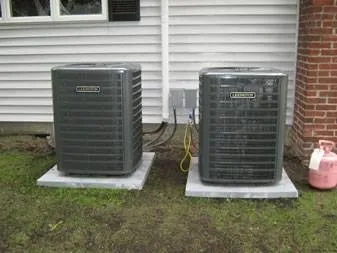
Royal Air Systems, Inc.
210 Main St, North Reading, MA 01864
Royal Air Systems, Inc. is an HVAC company serving Boston, MA, and the surrounding North Shore communities. They offer a wide range of services including repair and installation of air conditioners, furnaces, heat pumps, and boilers. The company is known for its expertise in heat pump systems, providing flexible heating and cooling solutions that adapt to seasonal changes. Established in 1980, Royal Air Systems has over 46 years of experience in the HVAC industry. They also provide emergency after-hours service for heating repairs.
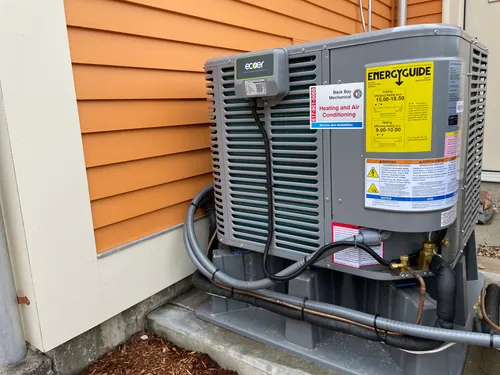
Back Bay Mechanical AC Repair & Heating
654 Washington St, Braintree, MA 02184
Back Bay Mechanical AC Repair & Heating is a licensed and insured HVAC company serving Boston, MA. They provide a range of services including furnace, heat pump, boiler, and water heater repair, as well as AC installation and duct cleaning. Their technicians evaluate all furnace components such as the combustion chamber, burners, heat exchanger, and thermostat to ensure safe and efficient operation. The company is recognized for its thorough maintenance plans and does not push unnecessary repairs or replacements. They offer emergency service and cover multiple Boston neighborhoods and surrounding areas.
CMS Plumbing, Heating, and Cooling
210 Andover St, Wilmington, MA 01887
CMS Plumbing, Heating, and Cooling is a family-owned business serving Boston, MA, since 1976. They provide a range of services including installation, repair, and maintenance for HVAC systems such as air conditioners, furnaces, heat pumps, and boilers, along with plumbing and water treatment solutions. CMS offers expertise in HVAC tune-ups and indoor air quality services, ensuring customers receive informed guidance on their home comfort needs. The company is known for offering one of the industry's longest warranties on HVAC equipment and flexible financing options.
Common Heat Pump Problems in Peabody Homes
Heat pumps are complex systems that work hard throughout Massachusetts' varied seasons. Several recurring issues prompt calls for heat pump service in Peabody.
- Dirty Filters and Clogged Coils: This is one of the most frequent causes of reduced performance. Restricted airflow forces the system to work harder, lowering efficiency and potentially leading to frozen coils or system shutdowns.
- Thermostat and Sensor Malfunctions: If your heat pump isn't responding to commands, blowing cold air in heat mode, or cycling erratically, the problem could be a faulty thermostat, a miscommunicating control board, or inaccurate temperature sensors.
- Refrigerant Leaks: The refrigerant is the lifeblood of your heat pump's heat transfer process. Leaks are more common in older units and can severely diminish both heating and cooling capacity. A system low on refrigerant will struggle to maintain temperature 1.
- Electrical Component Failures: Components like capacitors, contactors, and fuses can wear out. A failing capacitor, for instance, may prevent the compressor or fan motor from starting, while tripped breakers indicate an electrical fault.
- Compressor Failure: The compressor is the heart of the system, and its failure is a major repair. Symptoms include the outdoor unit humming but not starting, a complete lack of heating or cooling, or frequent circuit breaker trips 2.
What to Expect During a Professional Repair Visit
A systematic approach by a trained technician ensures an accurate diagnosis and effective solution for your HVAC system.
1. Initial Assessment and Visual Inspection The process begins with the technician discussing the symptoms you've observed. They will then operate the system, listening for unusual noises like grinding, squealing, or hissing. A thorough visual inspection follows, checking both the indoor air handler and outdoor condenser unit for obvious signs of damage, corrosion, ice buildup, or debris blockage around the coils.
2. Diagnostic Testing and Troubleshooting This is the core of the service call. The technician will use specialized tools to measure:
- Airflow: Ensuring proper airflow across the indoor coil.
- Refrigerant Charge: Checking pressure and temperature to determine if the system is correctly charged or has a leak.
- Electrical Integrity: Testing voltages, amperage draws on motors, and the health of electrical components like capacitors and contractors.
- Ductwork Inspection: Looking for leaks or restrictions in the duct system that can impact performance 3.
This troubleshooting phase pinpoints the root cause, distinguishing between, for example, a faulty sensor and an actual refrigerant leak.
3. The Repair and Service Execution Once diagnosed, the technician will explain the issue and provide repair options. For minor fixes, such as replacing a capacitor or cleaning coils, the work may be completed on the spot. More complex repairs, like fixing a refrigerant leak or replacing a compressor, may require scheduling a follow-up visit with additional parts. A standard maintenance service, which can prevent many repairs, typically includes comprehensive cleaning, tightening electrical connections, lubricating moving parts, and verifying system operation.
Find the perfect heat pump repair contractors for your needs
Get personalized recommendations and expert advice
Understanding Repair Timelines and Costs
The time and cost for heat pump fixes in Peabody vary significantly based on the problem's complexity and the parts required.
Typical Repair Durations:
- Minor Electrical or Control Repairs: Replacing a thermostat, capacitor, or contactor is often a relatively quick job, typically taking 1 to 3 hours.
- Refrigerant-Related Issues: Addressing a leak involves locating it (which can be time-consuming), repairing it, and then recharging the system. This process generally takes longer than a simple part swap 4.
- Major Component Replacement: A compressor replacement is a major undertaking. It involves recovering refrigerant, swapping out the compressor, often replacing the filter-dryer, evacuating the system, and recharging it. This repair can extend over a full day or more 5.
Common Repair Cost Ranges: It's important to note that prices can vary based on the service provider, the specific heat pump model, and time of year. The following are general estimates based on industry data for the region 6:
- Thermostat or Sensor Replacement: $80 - $250
- Electrical Component Repairs (e.g., capacitor, contactor): $150 - $450
- Refrigerant Recharge or Leak Repair: $300 - $750
- Compressor Replacement: $1,200 - $2,000+
- Full System Service or Complex Repairs: Costs can vary widely. Major work or a full system replacement represents a significant investment, with averages often starting over $5,000 7.
The key takeaway is that proactive, regular maintenance is the most cost-effective strategy. Catching small issues like a dirty filter or a weakening capacitor during a service visit can prevent them from escalating into catastrophic and expensive failures like compressor burnout 8 9 10.
Maintaining Your Heat Pump for Longevity
Consistent care is the best way to avoid unexpected breakdowns and costly repairs. Homeowners can perform some basic maintenance, while professionals should handle the technical aspects.
Homeowner Maintenance Tasks:
- Monthly Filter Checks/Changes: Replace or clean disposable filters every 1-3 months, especially during peak heating and cooling seasons. A clean filter is crucial for airflow and efficiency.
- Keep Units Clear: Ensure at least 2 feet of clearance around the outdoor condenser unit. Regularly remove leaves, grass clippings, and other debris from the fins.
- Visual Inspections: Periodically look for visible damage to refrigerant lines, unusual ice buildup on coils, or signs of pests nesting in the unit.
Professional Maintenance Services: An annual professional tune-up, ideally in the spring or fall, is highly recommended. This service goes far beyond filter changes and includes 11 12:
- Cleaning evaporator and condenser coils.
- Checking and adjusting refrigerant charge.
- Inspecting and tightening all electrical connections.
- Measuring motor amperage and voltage.
- Verifying correct thermostat operation.
- Checking the condensate drain for clogs.
- Lubricating moving parts as needed.
- Inspecting ductwork for leaks.
This proactive approach not only extends the system's life but also maintains its efficiency, keeping your energy bills in check.
Choosing a Reliable Service Provider in Peabody
When you need heat pump troubleshooting or repair, selecting the right contractor is crucial. Look for licensed, insured professionals with specific experience in heat pump systems. Check for positive reviews from local customers and ask about their diagnostic process. A reputable technician will provide a clear explanation of the problem, a detailed estimate before starting work, and discuss all your repair options. They should also be able to explain the benefits of ongoing maintenance plans to protect your investment.
Frequently asked questions
Sources
Footnotes
-
Heat Pump Troubleshooting: 11 Heat Pump Issues & Their Fixes - https://cielowigle.com/blog/heat-pump-troubleshooting/ ↩
-
Does My Heat Pump Have a Bad Compressor in Durham, NC? - https://leeac.com/does-my-heat-pump-have-a-bad-compressor-in-durham-nc/ ↩
-
Heat Pumps: The Efficient Key to Year-Round Home Comfort - https://wini.com/articles/heat-pump/ ↩
-
Heat Pump & HVAC Maintenance Auckland | AC Repair Services - EPS - https://epservices.co.nz/electrical-services/heat-pump-repairs/ ↩
-
The HVAC Repair Process: What to Expect from Start to Finish - https://eliteairandheatllc.com/the-hvac-repair-process-what-to-expect-from-start-to-finish/ ↩
-
How Much Does It Cost To Repair A Carrier Heat Pump? - https://carrierohio.com/how-much-does-it-cost-to-repair-a-carrier-heat-pump/ ↩
-
Heat Pump in Peabody, MA - Costs 09 / 2025 - Homeyou - https://www.homeyou.com/ma/heat-pumps-peabody-costs ↩
-
How Much Does Heat Pump Repair Typically Cost? - https://www.sumzeroenergysystems.com/blog/how-much-does-heat-pump-repair-typically-cost ↩
-
Heat Pump Services in Peabody, MA - https://spencerhomeservice.com/heat-pump-repair/ ↩
-
Peabody, MA Heat Pump Installation, Repair & Maintenance ... - https://www.silcoplumbing.com/peabody-ma/heat-pump-services/ ↩
-
Operating and Maintaining Your Heat Pump | Department of Energy - https://www.energy.gov/energysaver/operating-and-maintaining-your-heat-pump ↩
-
10 Things That Should be Included in a Heat Pump Inspection - https://iaqcolorado.com/blog/10-things-that-should-be-included-in-a-heat-pump-inspection/ ↩