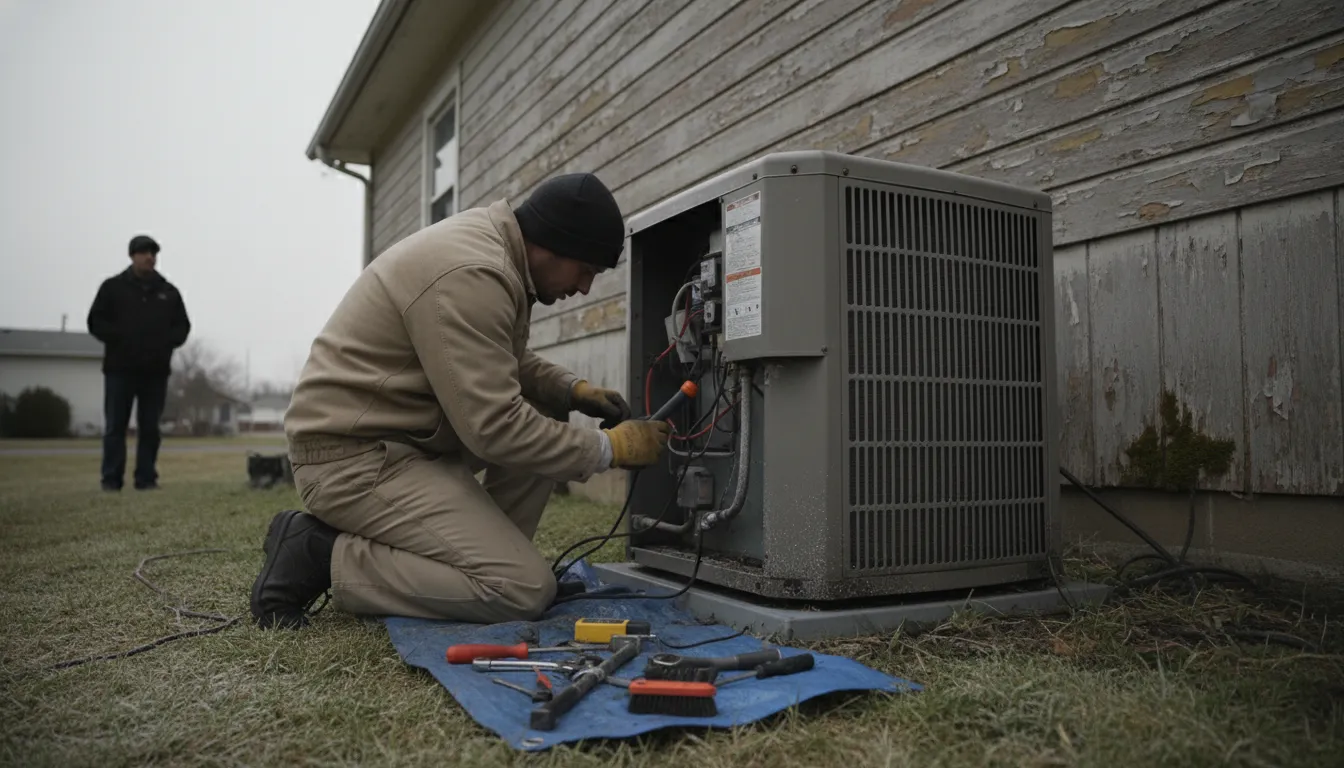
Find the Best Heat Pump Repair Contractors for Your Business
No obligation • Fast responses • Nationwide coverage

Why you can trust HVAC Firms
HVAC Firms is a leading United States resource for evaluating HVAC service providers. Our team researches companies, checks credentials, and reviews customer feedback to present clear, unbiased information. Listings and rankings are based on merit, and companies cannot pay to change our editorial content.
Search providers near you
Top Heat Pump Repair Contractors in Winter Haven, Florida Ranked
A heat pump is a versatile and efficient system for both heating and cooling your home, making it a popular choice in Winter Haven's climate. When it breaks down, it can disrupt your comfort and lead to higher energy bills. This guide explains common heat pump problems, what to expect during a service visit, and how to find qualified local technicians to restore your system's performance quickly and reliably.
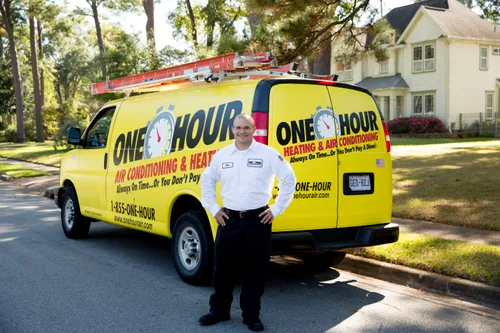
One Hour Air Conditioning & Heating
803 Lakeland Park Center Dr, Lakeland, FL 33809
One Hour Air Conditioning & Heating serves residents in Tampa, FL, providing a full range of HVAC services including repair, installation, and maintenance for air conditioners, furnaces, heat pumps, and mini-split systems. They also offer indoor air quality solutions such as advanced filtration, air purification, and whole-house humidifiers and dehumidifiers. The company emphasizes timely service and thorough diagnostics to ensure heating and cooling systems operate efficiently and reliably. Their experienced technicians handle everything from routine tune-ups to system replacements and new installations.
Iceberg Home Services
1101 42nd St NW, Winter Haven, FL 33881
Iceberg Home Services is a family-owned company based in Tampa, FL, offering air conditioning, heat pump repair, mini split installation, and indoor air quality services. They serve Lakeland, Winter Haven, Orlando, and the broader Central Florida area. The company provides 24/7 emergency HVAC repair with certified technicians experienced in servicing all HVAC system makes and models, including ductless mini-splits. Iceberg Home Services holds NATE certification and emphasizes continuous training to maintain advanced HVAC and plumbing skills.
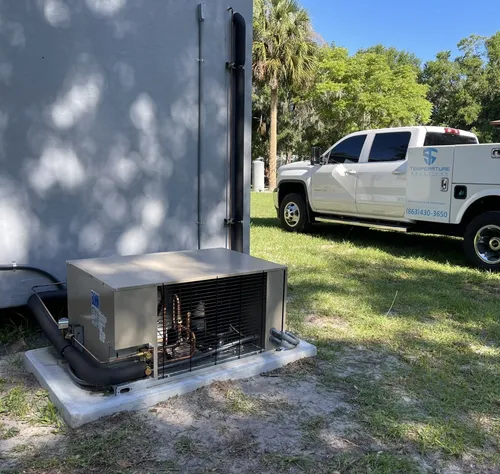
Temperature Solutions
Tampa, FL
Temperature Solutions is an HVAC and refrigeration company based in Tampa, FL, serving both residential and commercial clients. They offer air conditioning and heat pump service, repair, installation, and maintenance, as well as refrigeration solutions for walk-in coolers and freezers. Their expertise includes handling Kramer Thermobank hot gas systems for cold storage and food distribution. The company is known for supporting ongoing maintenance plans to keep equipment performing efficiently.

Aire Serv of South Hillsborough County
Tampa, FL
Aire Serv of South Hillsborough County provides heating and air conditioning services in Tampa, FL. They offer air conditioner repair and replacement, heater repair and installation for heat pumps and furnaces, HVAC maintenance, and indoor air quality improvements with air purification systems. Their team serves residential and commercial customers across South Hillsborough County, including areas like Brandon and Valrico. Aire Serv is part of a national network with access to many major HVAC brands and emphasizes upfront pricing and customer communication. Their customer service team is available day and night for emergency repairs.
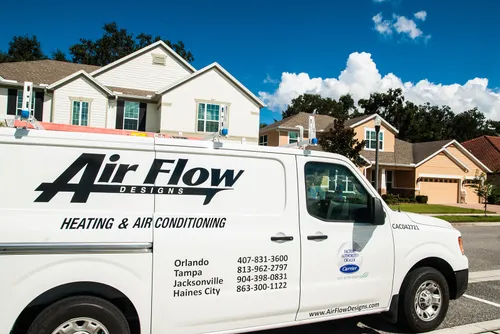
Air Flow Designs Heating & Air Conditioning
5115, 92 W US-17, Haines City, FL 33844
Air Flow Designs Heating & Air Conditioning is an HVAC company serving Tampa, FL, and the surrounding Haines City area. They provide air conditioner and heat pump repair, installation, and maintenance services, including comprehensive system diagnostics and tune-ups. The company is a certified Carrier dealer and offers flat-rate repair quotes with no hidden fees. With over 65 years of experience in the Haines City area, Air Flow Designs emphasizes transparent pricing and expert workmanship to maintain home comfort year-round.
Understanding Your Heat Pump System
Unlike a standard air conditioner, a heat pump can reverse its refrigeration cycle to provide warmth in the winter. This dual functionality relies on components like the compressor, reversing valve, coils, and refrigerant. Because it runs year-round in Florida, handling both summer cooling and occasional winter heating, regular maintenance and prompt repairs are essential to prevent breakdowns during peak seasons.
Common Heat Pump Issues in Winter Haven
Florida's humidity and consistent use put unique stresses on HVAC systems. Here are the most frequent problems Winter Haven homeowners face with their heat pumps.
Frozen Coils
One of the most visible signs of trouble is ice forming on the indoor or outdoor coils. This is often caused by restricted airflow from a dirty air filter, blocked vents, or failing blower motors. It can also indicate a low refrigerant charge due to a leak. A frozen system won't heat or cool effectively and can lead to water damage if the ice melts.
Short-Cycling
If your unit turns on and off every few minutes, it's called short-cycling. This wastes energy, wears out components prematurely, and fails to properly condition your home. Common culprits include a faulty thermostat, an oversized unit, dirty coils, or a failing compressor.
Unusual Noises
Heat pumps should operate relatively quietly. New or loud noises are a clear signal for service:
- Hissing or Bubbling: Often points to a refrigerant leak.
- Rattling or Vibrating: Suggests loose parts, such as fan blades or panels.
- Screeching or Grinding: May indicate a failing motor bearing.
- Banging: Could signal a serious issue with the compressor or a broken internal part.
Reduced Heating or Cooling Capacity
When your system runs constantly but can't reach the thermostat setting, it's struggling. This loss of capacity can stem from refrigerant issues, a failing compressor, ductwork leaks, or a system that is no longer properly sized for your home.
Spiking Energy Bills
A sudden, unexplained increase in your electricity bill is a classic symptom of an inefficient heat pump. Any of the problems listed above-dirty coils, low refrigerant, or a failing component-forces the system to work harder, consuming more power 1.
Find the perfect heat pump repair contractors for your needs
Get personalized recommendations and expert advice
What to Expect During a Professional Service Visit
A structured repair process ensures the root cause is found and fixed correctly. Here's how a typical service call for heat pump troubleshooting unfolds.
1. Initial Assessment and Diagnosis
The technician will start by discussing the symptoms you've noticed. They will then perform a visual inspection of the indoor and outdoor units, listen for unusual sounds, and check the thermostat settings. Using specialized tools like multimeters and refrigerant gauges, they will test electrical components, measure refrigerant pressure, and assess airflow to pinpoint the exact issue.
2. Transparent Explanation and Quote
A reputable technician will clearly explain their findings, what needs to be repaired, and why. You should receive a detailed estimate that breaks down the cost of parts and labor before any work begins. This step ensures there are no surprises and allows you to make an informed decision.
3. Expert Repair Execution
Once authorized, the technician will proceed with the repair. This may involve replacing a capacitor, tightening electrical connections, sealing a refrigerant leak, swapping out a fan motor, or addressing more complex components like the reversing valve or compressor. Proper repairs require specific skills and tools to ensure safety and longevity.
4. System Testing and Verification
After the repair is complete, the technician will restart the system and monitor its operation. They will verify that the original problem is resolved, check that all modes (heating and cooling) function correctly, and ensure the system is operating at peak efficiency. They may also provide tips for maintaining your system.
Repair Timelines and Cost Considerations
Understanding the scope of a repair helps set realistic expectations for time and investment.
How Long Do Repairs Take?
- Diagnosis: Typically takes 30 to 60 minutes.
- Simple Repairs: Common fixes like replacing a capacitor, contactor, or thermostat usually take 1 to 3 hours 2.
- Complex Repairs: Major jobs such as repairing refrigerant lines, replacing a compressor, or installing a new fan motor can take half a day or longer, especially if custom parts need to be ordered.
Factors Influencing Heat Pump Repair Costs
Costs can vary based on the part needed, its brand, and the labor involved. Many companies charge a standard service or diagnosis fee, which is often applied toward the repair cost.
- Service Call/Diagnosis Fee: Often ranges from $100 to $200.
- Common Component Replacements:
- Capacitor: $150 - $300 3.
- Fan Motor: $300 - $800+ 4.
- Refrigerant Leak Repair & Recharge: $250 - $600+ 5.
- Preventive Maintenance: Regular professional maintenance can help avoid many costly repairs by catching small issues early 8.
Maintaining Your Heat Pump for Longevity
Proactive care is the best way to ensure reliability. Homeowners should change their air filters every 1-3 months, keep the outdoor unit clear of debris like leaves and grass clippings, and ensure interior vents are unblocked. Scheduling a professional tune-up at least once a year is also recommended. A technician will clean coils, check refrigerant levels, inspect electrical connections, and calibrate the system, which can improve efficiency and prevent unexpected failures.
Frequently asked questions
Sources
Footnotes
-
Common Winter HVAC Problems in Florida - Progressive Air Systems - https://progressiveairsystems.com/blog/common-winter-hvac-problems-in-florida/ ↩
-
Heat Pump & HVAC Maintenance Auckland | AC Repair Services - EPS - https://epservices.co.nz/electrical-services/heat-pump-repairs/ ↩
-
Servicing your heat pump | Daikin - https://www.daikin.co.uk/en_gb/residential/inspiration/articles/servicing-your-heat-pump.html ↩
-
HVAC Troubleshooting Guide: Step-by-Step Solutions Made Easy - https://projecthvac.com/2026/01/07/hvac-troubleshooting-guide-step-by-step/ ↩
-
Heat Pump Repair in Winter Haven | Integrity: 24/7 Service - https://www.integrityrefrigerationandac.com/heat-pumps/heat-pump-repair-winter-haven-fl ↩
-
24/7 Heat Pump Repairs | Lakeland & Winter Haven, FL - https://icebergcooling.com/hvac/heat-pumps/repair/ ↩
-
Does My Heat Pump Have a Bad Compressor in Durham, NC? - https://leeac.com/does-my-heat-pump-have-a-bad-compressor-in-durham-nc/ ↩
-
Operating and Maintaining Your Heat Pump | Department of Energy - https://www.energy.gov/energysaver/operating-and-maintaining-your-heat-pump ↩