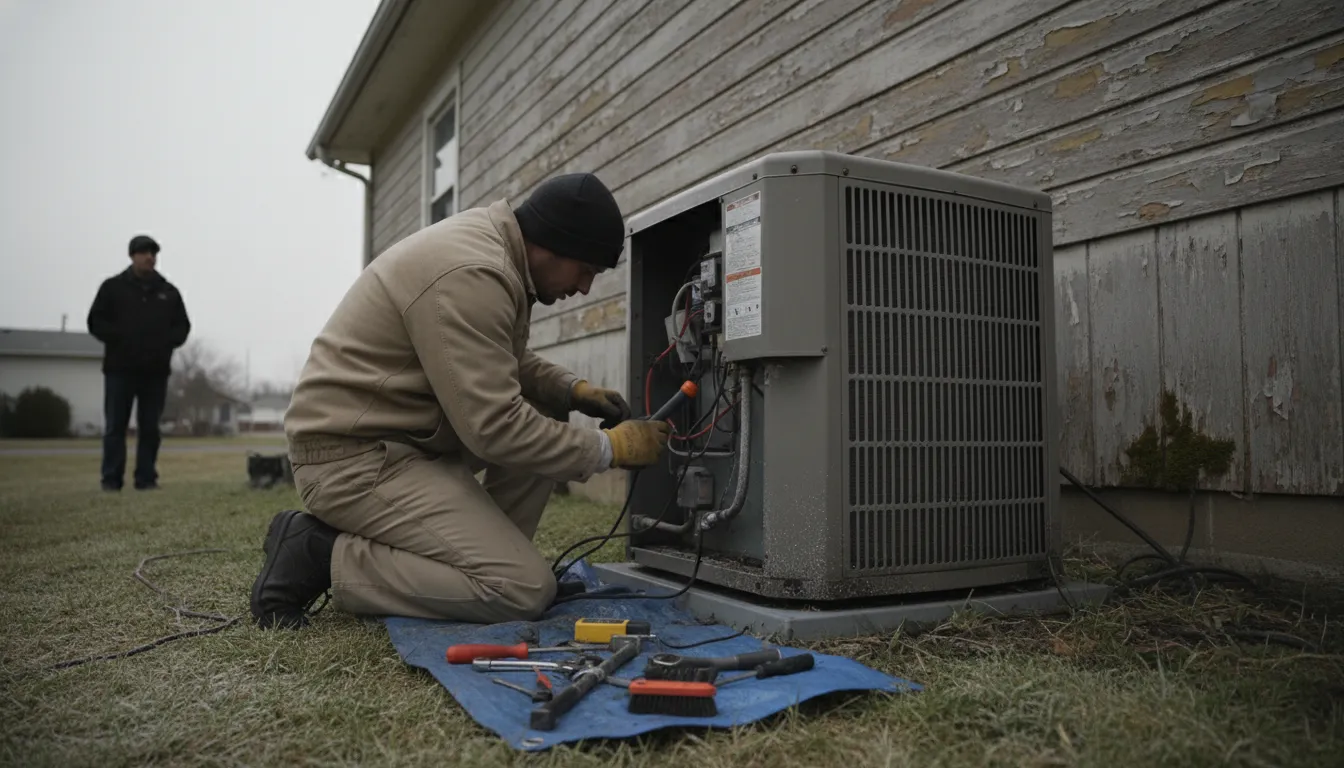
Find the Best Heat Pump Repair Contractors for Your Business
No obligation • Fast responses • Nationwide coverage

Why you can trust HVAC Firms
HVAC Firms is a leading United States resource for evaluating HVAC service providers. Our team researches companies, checks credentials, and reviews customer feedback to present clear, unbiased information. Listings and rankings are based on merit, and companies cannot pay to change our editorial content.
Search providers near you
Top Heat Pump Repair Contractors in Port Orange, Florida Ranked
Your heat pump is a critical component for year-round comfort in Port Orange, handling both air conditioning and heating duties. When this system malfunctions, it can disrupt your home's climate control, especially during our humid summers or occasional cooler nights. This guide explains common heat pump issues specific to our coastal environment, what professional repair entails, and how you can connect with qualified local technicians to restore your system's efficiency and reliability.
Understanding Your Heat Pump System
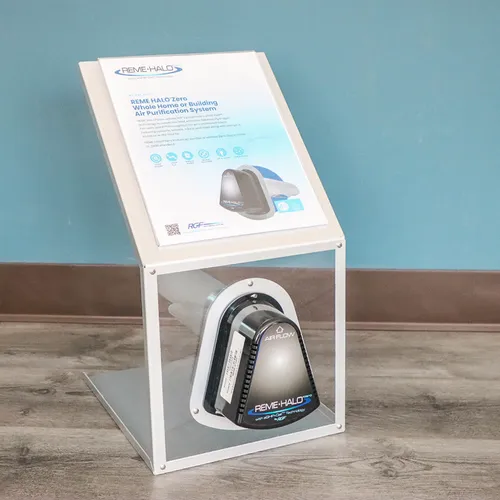
A heat pump is an energy-efficient HVAC unit that transfers heat rather than generating it. In cooling mode, it extracts heat from inside your home and releases it outdoors. In heating mode, the process reverses, pulling heat from the outside air to warm your interior. This dual functionality makes it a popular choice in Florida's mild climate, but it also means the system runs nearly year-round, leading to wear and tear. Proper maintenance and timely repair of your heat pump, air source heat pump, or climate control system are essential for preventing minor issues from becoming major, costly failures.
Common Heat Pump Problems in Port Orange
The coastal environment in Port Orange presents unique challenges for HVAC equipment. The combination of high humidity, salt air, and constant operation leads to a specific set of frequent repair needs.
Refrigerant Leaks and Charging Issues
The refrigerant is the lifeblood of your heat pump, facilitating the heat transfer process. Leaks are a serious issue that reduce cooling and heating capacity and can damage the compressor. In our area, corrosion from salt air can weaken coils and connections over time, leading to leaks. A system that is improperly charged-either underfilled or overfilled-will also struggle to maintain temperature and strain components, leading to higher energy bills and potential failure.
Dirty Coils and Airflow Restrictions
Both the indoor evaporator coil and outdoor condenser coil must be clean for efficient operation. Port Orange's humidity fosters the growth of mold, mildew, and algae, which can coat these coils and act as an insulator. This blockage forces the system to work longer and harder. Similarly, a clogged air filter is one of the most common causes of reduced airflow, frozen coils, and system shutdowns. Regular cleaning of coils and monthly filter changes are crucial preventative steps.
Electrical Component Failures
The constant cycling in our climate puts significant stress on electrical parts. Capacitors, which help start the compressor and fan motors, are frequent failure points. Contactors, which engage high-voltage power to components, can also wear out or pit. Faulty wiring, tripped breakers, or issues with the thermostat can also prevent the system from starting or running correctly.
Drain Line Clogs and Water Damage
As your heat pump cools, it removes moisture from the air, which drains away via a condensate line. The dark, damp environment inside this PVC pipe is perfect for algae and mold growth, which can create a complete blockage. A clogged drain line will cause water to back up, potentially overflowing the drain pan and leaking into your home, causing water damage and creating a slip hazard.
Blower Motor and Fan Issues
The indoor blower motor and outdoor fan motor are in near-constant motion. Bearings can wear out, motors can overheat, and fan blades can become unbalanced or obstructed by debris. A failing motor may produce unusual noises, reduce airflow, or cause the system to overheat and shut off on a safety switch.
What to Expect During a Professional Service Visit
When you contact a technician for heat pump service or HVAC repair in Port Orange, a systematic approach ensures a thorough diagnosis and effective solution.
Initial Assessment: The technician will start by discussing the symptoms with you and checking basic items: thermostat settings, power supply at the disconnect and breaker panel, and a visual inspection for obvious issues like ice on coils or water around the unit 1.
Comprehensive Diagnostics: Using specialized tools, the tech will take electrical readings to check capacitors, contactors, and windings. They will measure refrigerant pressures and temperatures to assess charge levels and check for leaks. Airflow measurements at the vents and across the coils help identify restrictions.
Cleaning and Preparation: Often, the service includes cleaning the accessible condenser coils, clearing the condensate drain line with a vacuum or nitrogen charge, and replacing the air filter. This alone can resolve many performance issues.
Repair and Component Replacement: Based on the diagnosis, the technician will repair or replace faulty components. This could mean swapping a bad capacitor, sealing a refrigerant leak (after repairing the source), replacing a contactor, or addressing a failing motor.
System Testing and Verification: After repairs, the technician will start the system and let it run through complete cycles in both cooling and heating modes (if applicable). They will verify proper temperature drop, check that the drain is flowing, ensure all electrical components are operating within specifications, and confirm the issue is resolved.
Find the perfect heat pump repair contractors for your needs
Get personalized recommendations and expert advice
Repair Timelines and Cost Considerations
Understanding the potential scope and investment for heat pump fixes can help you plan. Timelines depend heavily on the complexity of the problem and part availability.
Quick Repairs (1-3 hours): Services like replacing a dirty air filter, clearing a clogged condensate drain, or addressing a minor wiring issue typically fall into this category and can often be completed in a single visit.
Moderate Repairs (Half a Day): Jobs such as replacing a failed capacitor or contactor, performing a deep coil cleaning, or recharging refrigerant (if no leak is present) usually require a few hours of labor and common parts.
Major Repairs (1-2 Days): Significant issues like repairing a refrigerant leak, replacing a compressor, or swapping an entire coil often require more extensive labor and may involve ordering special parts, which can extend the timeline.
Costs in Port Orange vary based on the repair, the specific part needed, and the service provider's rates. Here are general estimates based on common industry pricing:
- Service Call/Diagnostic Fee: Typically ranges from $75 to $150. Many companies apply this fee toward the cost of the repair if you proceed with their services.
- Common Part Replacements: A new capacitor or contactor, including parts and labor, generally costs between $150 and $350.
- Refrigerant Recharge: If the system is simply low, recharging it costs between $150 and $400 or more, depending on the type (e.g., R-410A) and amount needed 2.
- Major Components: Replacing a compressor, blower motor, or fan motor is a significant investment, often ranging from $800 to over $2,000 when including parts, labor, and refrigerant 3 4.
Maintaining Your Heat Pump for Longevity
Proactive maintenance is the best way to avoid repairs and extend the life of your system, which averages 10-15 years in Florida's demanding climate 5. Homeowners should:
- Change or clean air filters every 1-3 months.
- Keep the outdoor unit clear of leaves, grass, and debris (maintain at least 2 feet of clearance).
- Visually inspect for ice on coils or water leaks.
- Schedule a professional tune-up at least once a year. A thorough maintenance visit includes cleaning coils, checking refrigerant charge, tightening electrical connections, lubricating moving parts (if applicable), and testing system performance 6.
Frequently asked questions
Sources
Footnotes
-
6 Important Things to Check Before Scheduling a Service Call - https://acmasters.com/6-things-to-check-before-scheduling-a-service-call/ ↩
-
HVAC Troubleshooting Guide: Step-by-Step Solutions Made Easy - https://projecthvac.com/2026/01/07/hvac-troubleshooting-guide-step-by-step/ ↩
-
Ductless Heat Pump Repair Port Orange - (866) 325-0850 ... - https://ductless-heat-pump-repair-port-orange.akoolsaver.net/ ↩
-
Common HVAC Troubleshooting Scenarios: A Technician's Guide - https://www.servicetitan.com/blog/hvac-troubleshooting-scenarios ↩
-
How Long Does a Heat Pump Last in Florida? - https://redcapnow.com/help-guides/how-long-heat-pump-last-florida ↩
-
Operating and Maintaining Your Heat Pump | Department of Energy - https://www.energy.gov/energysaver/operating-and-maintaining-your-heat-pump ↩