Find the Best Heat Pump Installation & Replacement Contractors for Your Business
No obligation • Fast responses • Nationwide coverage

Why you can trust HVAC Firms
HVAC Firms is a leading United States resource for evaluating HVAC service providers. Our team researches companies, checks credentials, and reviews customer feedback to present clear, unbiased information. Listings and rankings are based on merit, and companies cannot pay to change our editorial content.
Search providers near you
Best Heat Pump Installation & Replacement Contractors in Wisconsin Ranked
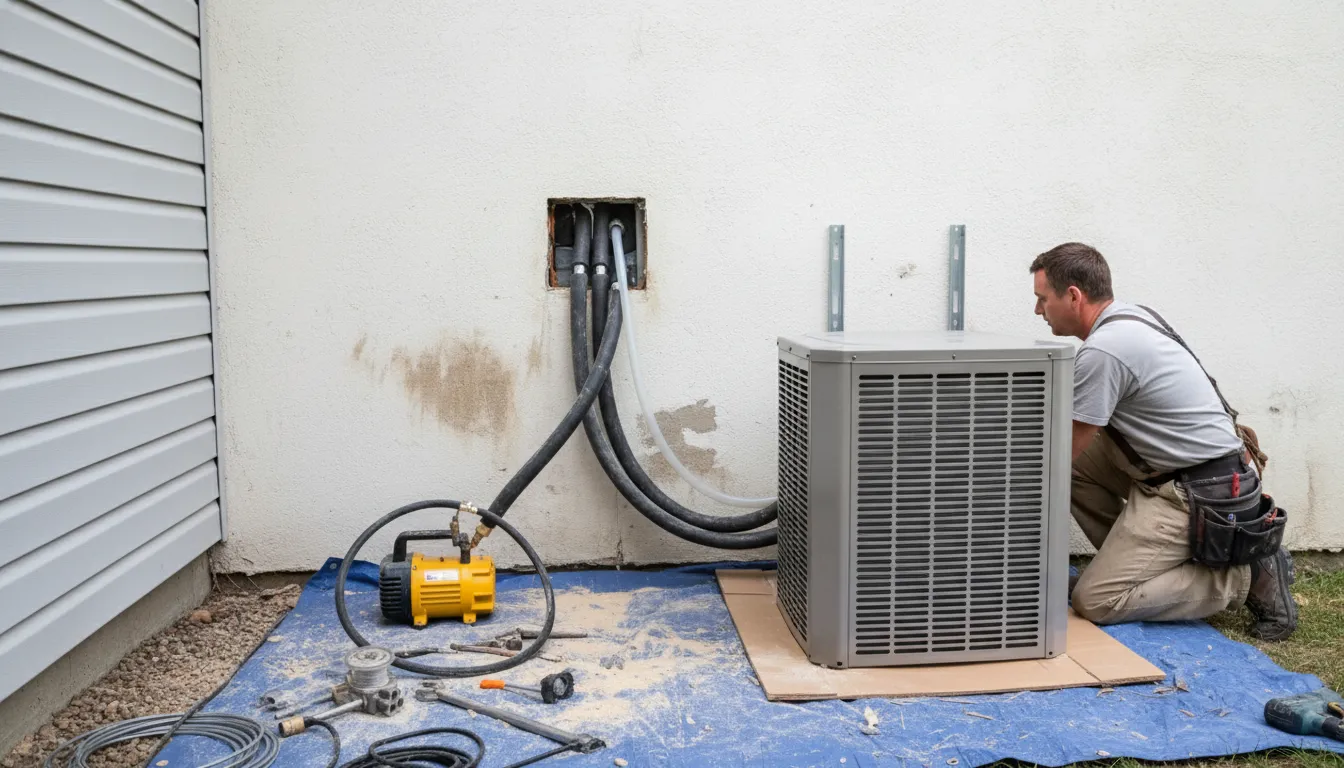
Upgrading your home's heating and cooling system with a heat pump is a smart investment in year-round comfort and energy efficiency. For Wisconsin homeowners, this technology offers a modern solution that provides both heating and cooling from a single unit, often at a lower operating cost than traditional systems. Finding the right local professional for your heat pump installation or replacement is crucial, as proper sizing and expert installation directly impact system performance, longevity, and the significant rebates you may qualify for. This guide provides the essential information you need to understand your options, navigate available financial incentives, and connect with qualified specialists in your area.

Professional Services Heating, AC & Electric Repair
113 Riverview Dr, Thiensville, WI 53092
Professional Services Heating, AC & Electric Repair is an HVAC company serving Milwaukee, WI, and the surrounding Ozaukee and Washington counties. They provide a range of heating and cooling services including furnace, heat pump, boiler, and geothermal system repair and installation. The company is equipped to handle both standard and high-efficiency furnaces, as well as ductless split systems. They emphasize practical advice and offer warranties on parts and labor. Professional Services also offers 24/7 emergency service to address urgent heating and cooling needs.
HoneyCreek Heating, Cooling & Electric, LLC
N63W22633 Main St Ste. 107, Sussex, WI 53089
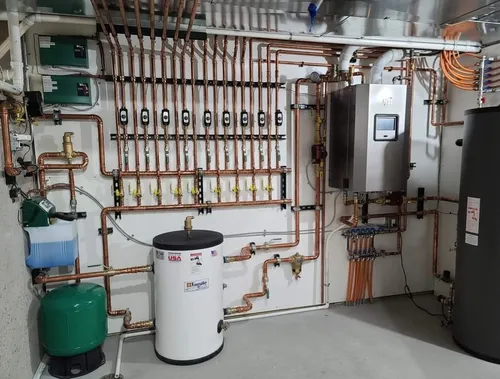
HoneyCreek Heating, Cooling & Electric, LLC is a full-service HVAC and electrical company serving Milwaukee, WI, and the surrounding areas. They provide repair, installation, and maintenance for heating and cooling systems including furnaces, air conditioners, boilers, heat pumps, and thermostats. Their licensed electricians also handle electrical panel upgrades, wiring repairs, and ceiling fan installations. HoneyCreek offers 24/7 emergency service and covers a broad range of locations in Southeastern Wisconsin. Their technicians are experienced with many HVAC brands and emphasize safety and clear communication throughout their work.

Pro Serv Plumbing, Heating, and Cooling
110 N 121st St, Wauwatosa, WI 53226
Pro Serv Plumbing, Heating, and Cooling provides residential and commercial plumbing, heating, and cooling services in Milwaukee, WI. The company offers repair, installation, and maintenance for HVAC systems including air conditioners, furnaces, and heat pumps. Pro Serv is family owned and operated by Jon Weis, a Master Plumber and HVAC Contractor trained by the U.S. Air Force. The company is accredited by the Better Business Bureau and the Milwaukee Builders Association and serves the Milwaukee metro area with 24/7 availability.
Roman Home Services - Electric, Plumbing, Heating & Cooling
2220 S 114th St, West Allis, WI 53227
Roman Home Services - Electric, Plumbing, Heating & Cooling is a family-owned home service contractor based in Milwaukee, WI. Serving Southeastern Wisconsin since 1929, they provide a wide range of residential electrical, plumbing, and HVAC services including installation, repair, and maintenance of air conditioning, furnaces, heat pumps, and boilers. Their team is equipped to handle projects of all sizes, from new construction to remodeling and service upgrades. Roman Home Services offers 24/7 availability with over 50 service trucks on the road, ensuring timely support whenever needed.
Action Plumbing, Heating, Air Conditioning and Electric, Inc.
1338 S Midvale Blvd, Madison, WI 53711
Action Plumbing, Heating, Air Conditioning and Electric, Inc. provides heating and cooling services in Madison, WI. They repair, install, and maintain furnaces, air conditioners, boilers, and heat pumps, focusing on efficient system operation to help manage energy use throughout the year. Their services include HVAC tune-ups and full system replacements, with an emphasis on thorough inspections and clear communication about repair options.
Understanding Heat Pump Technology
A heat pump is an energy-efficient appliance that transfers heat rather than generating it by burning fuel. In the winter, it extracts heat from the outside air or ground and moves it indoors. In the summer, the process reverses, pulling heat from your home and releasing it outside, functioning as an air conditioner. This dual capability makes a heat pump a versatile, all-in-one HVAC solution for Wisconsin's distinct seasons.
The two primary types of systems available are:
- Air-Source Heat Pumps (ASHPs): The most common type, which transfers heat between your home and the outside air. These come in ducted systems (which use existing ductwork) or ductless mini-split systems (ideal for homes without ducts or for room additions).
- Geothermal Heat Pumps (Ground-Source): These leverage the stable temperature of the earth for even greater efficiency. While they have a higher upfront installation cost, they offer exceptional long-term savings and are eligible for robust federal incentives.
Other eligible products include heat pump water heaters and dryers, which can also qualify for rebates when installed as part of a comprehensive home energy upgrade.
Wisconsin's Climate and Heat Pump Performance
A common concern is whether a heat pump can handle a Wisconsin winter. Modern cold-climate air-source heat pumps are specifically engineered to operate efficiently at temperatures well below freezing. Technological advancements, such as variable-speed compressors and enhanced refrigerants, allow these systems to extract heat from cold outdoor air effectively. For periods of extreme cold (typically below -10°F to -15°F), most systems are equipped with or can be paired with a supplemental backup heating source, such as electric resistance strips, to ensure uninterrupted comfort.
Financial Incentives and Rebates in Wisconsin
The financial landscape for heat pump adoption is highly favorable due to federal and state programs. Understanding the layered incentives can dramatically reduce your net project cost.
Federal Tax Credits
The Energy Efficient Home Improvement Credit offers a tax credit worth 30% of your total project costs, including equipment and installation, with a maximum credit of $2,000 per year 1. This credit applies to both qualifying air-source and geothermal heat pumps that meet specific efficiency tiers (ENERGY STAR certification is typically required) 1 2.
Home Energy Rebates (IRA Programs)
The Inflation Reduction Act created two landmark rebate programs administered in Wisconsin through Focus on Energy and local utilities. These are direct, point-of-sale discounts that do not need to be repaid.
- High-Efficiency Electric Home Rebate Act (HEEHRA): For low- and moderate-income households.
- Low-Income (≤ 80% of Area Median Income): Qualifying households can receive rebates covering 100% of project costs, up to $14,000 total for a suite of upgrades that may include the heat pump, necessary electrical panel upgrades, and insulation 3.
- Moderate-Income (81% - 150% of Area Median Income): Qualifying households can receive rebates covering 50% of project costs, up to $4,000 - $7,000 for eligible upgrades 4.
- Home Efficiency Rebates (HEAR): These rebates are based on the modeled energy savings of the installed measures and are also administered through local programs.
Utility and Local Rebates
Many Wisconsin utilities, such as Alliant Energy, Wisconsin Public Service (WPS), and others, offer additional rebates on top of federal programs through the Focus on Energy initiative 5. It is essential to check with your specific utility provider and the Focus on Energy website to identify all applicable savings for your address.
Find the perfect heat pump installation & replacement contractors for your needs
Get personalized recommendations and expert advice
Cost Considerations and System Sizing
The installed cost of a heat pump in Wisconsin varies based on system type, capacity, brand, and installation complexity. For a standard air-source system, installed costs typically range from $9,000 to $13,000 or more for a 3-ton unit, which includes equipment, labor, and any necessary modifications like ductwork or electrical updates 6 7. The unit cost for a 2-ton heat pump alone can range from $4,000 to $6,0008.
It's critical to view these figures alongside the available incentives. For a moderate-income household, a 50% rebate could cut a $12,000 project to $6,000 out-of-pocket, and the federal tax credit could then reduce that cost by an additional $1,800 (30% of $6,000), bringing the final net investment to $4,200. For qualifying low-income households, the net cost after a 100% rebate could be $0 9 10 11.
Proper sizing is not about the physical size of the unit but its heating and cooling capacity (measured in tons or BTUs). An oversized or undersized system will lead to poor performance, higher energy bills, and reduced comfort. A reputable installer will perform a Manual J load calculation, which considers your home's square footage, insulation levels, window types, and local climate to determine the precise capacity needed.
Choosing a Qualified Wisconsin Installer
Selecting the right contractor is the most important step after deciding on a heat pump. A qualified professional ensures the system is correctly sized, installed, and commissioned to meet efficiency standards required for rebates.
Look for a specialist who:
- Is licensed, insured, and has extensive experience installing the specific type of heat pump you are considering.
- Conducts a thorough home assessment and provides a detailed, written estimate that includes a Manual J calculation.
- Is intimately familiar with Wisconsin's Focus on Energy rebate process and federal tax credit paperwork. They should be able to guide you through eligibility and application steps 12 13.
- Offers clear warranties on both equipment and labor.
- Can provide references from recent heat pump installation projects in your region.
Efficiency Standards and Regulations
Wisconsin has minimum efficiency standards for HVAC equipment. For split-system heat pumps, the current state code generally requires a minimum of 13.0 SEER (Seasonal Energy Efficiency Ratio) for cooling and 7.7 HSPF (Heating Seasonal Performance Factor) for heating. However, to qualify for federal tax credits and maximum rebates, your system will need to meet higher efficiency tiers, often those set by the Consortium for Energy Efficiency (CEE) or ENERGY STAR's most efficient specifications. Your installer should be well-versed in these requirements to ensure your investment qualifies for all available financial incentives.
Maintenance for Long-Term Performance
To protect your investment and maintain peak efficiency, regular maintenance is key. This typically includes an annual professional service check to clean coils, check refrigerant levels, inspect electrical components, and ensure the system is operating correctly. Many installers offer annual maintenance plans. Homeowners can also perform simple tasks like keeping outdoor units clear of debris, snow, and vegetation, and replacing indoor air filters regularly.
Frequently asked questions
Sources
Footnotes
-
Energy Efficient Home Improvement Credit | Internal Revenue Service - https://www.irs.gov/credits-deductions/energy-efficient-home-improvement-credit ↩ ↩2
-
Wis. Admin. Code Department of Safety and Professional Services ... - https://www.law.cornell.edu/regulations/wisconsin/Wis-Admin-Code-SS-SPS-322-45 ↩
-
Wisconsin's Home Energy Rebates | Mayor's Office - City of Madison - https://www.cityofmadison.com/mayor/blog/2025-06-20/wisconsins-home-energy-rebates ↩
-
Home Energy Rebates for Wisconsin customers - https://www.alliantenergy.com/ways-to-save/wisconsin-home-rebates ↩
-
Rebates and Programs | Wisconsin Public Service - https://www.wisconsinpublicservice.com/savings/rebates ↩
-
2026 Heat Pumps Installation Cost Guide: Types, Sizes and Brands - https://modernize.com/hvac/heating-repair-installation/heat-pump ↩
-
Madison Heat Pumps Costs & Prices - ProMatcher Cost Report - https://heat-pumps.promatcher.com/cost/madison-wi-heat-pumps-costs-prices.aspx ↩
-
Understanding the Cost to Replace a 2-Ton Heat Pump - https://thefurnaceoutlet.com/blogs/news/understanding-the-cost-to-replace-a-2-ton-heat-pump-a-homeowners-guide ↩
-
Home Upgrades | Department of Energy - https://www.energy.gov/save/home-upgrades ↩
-
Wisconsin Heat Pump Rebates - https://www.paulsheating.com/hear-program/ ↩
-
7 Things You Should Know About the IRA and Heat Pump Incentives - https://www.ecicomfort.com/blog/7-things-you-should-know-about-the-ira-and-heat-pump-incentives ↩
-
PSC Heat Pumps - Public Service Commission of Wisconsin - https://psc.wi.gov/Pages/ServiceType/OEI/HeatPumps.aspx ↩
-
Rebates and Incentives | Kilowatt Heating, Air Conditioning & Electric - https://www.kilowatthvac.com/savings/rebates-and-incentives/ ↩