Find the Best Heat Pump Installation & Replacement Contractors for Your Business
No obligation • Fast responses • Nationwide coverage

Why you can trust HVAC Firms
HVAC Firms is a leading United States resource for evaluating HVAC service providers. Our team researches companies, checks credentials, and reviews customer feedback to present clear, unbiased information. Listings and rankings are based on merit, and companies cannot pay to change our editorial content.
Search providers near you
Top Heat Pump Installation & Replacement Contractors in Clifton, New Jersey Ranked
A heat pump is an efficient, all-in-one system that provides both heating and cooling for your home by moving heat rather than generating it. For Clifton residents, this technology offers a modern, eco-friendly alternative to traditional furnaces and air conditioners, potentially lowering energy bills and reducing your carbon footprint. This guide helps you understand your options, from cold-climate models to available financial incentives, so you can make an informed decision when connecting with local, qualified professionals for your project.
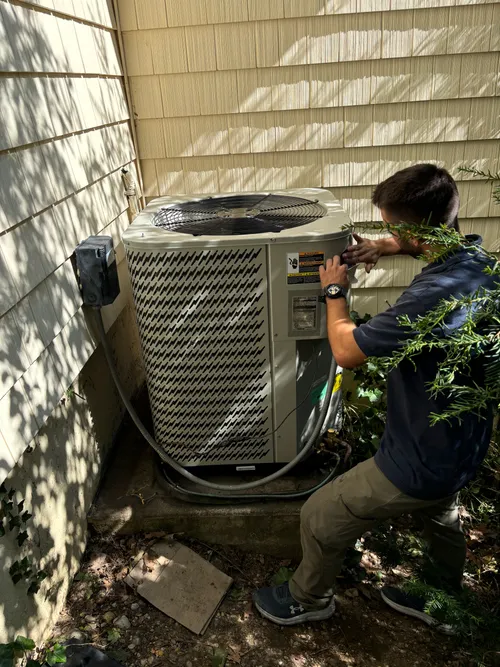
KOKA-TECH HVAC INC
60-21 Menahan St, Ridgewood, NY 11385
KOKA-TECH HVAC INC provides professional heating and cooling services in New York, NY, including installation, repair, and tune-ups for air conditioners, furnaces, heat pumps, boilers, and mini splits. They offer 24/7 emergency support and same-day availability, serving Queens, Brooklyn, Manhattan, Bronx, and Long Island. The company is licensed and insured, with a strong local presence and expertise in NYC buildings. With nearly 300 five-star reviews, KOKA-TECH HVAC INC is recognized for upfront quotes and customer approval before starting work.
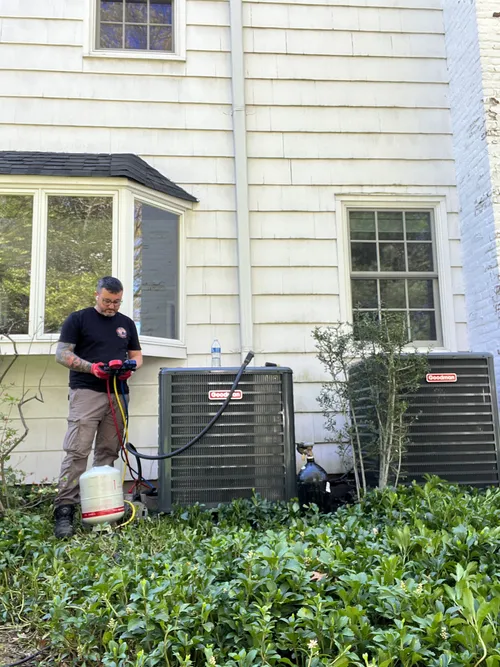
Air Cubes HVAC
2431 Dorchester Rd, Union, NJ 07083
Air Cubes HVAC is a family-owned HVAC contractor serving Newark, NJ, and surrounding areas in Essex, Hudson, Middlesex, and Union counties. They provide heating and air conditioning services including installation, repair, and maintenance for furnaces, air conditioners, heat pumps, and duct systems. The company is fully licensed and insured, with a master HVACR contractor leading the team. Air Cubes HVAC offers duct cleaning and HVAC tune-up services to help maintain system efficiency and comfort year-round.
Aeromark Mechanical Inc
153 Morgan St, Jersey City, NJ 07302
Aeromark Mechanical Inc provides residential and commercial HVAC services in New York, NY, and the surrounding Northern New Jersey area. They specialize in heating and air conditioning repair, installation, and maintenance, including heat pumps, ductless HVAC systems, and indoor air quality solutions. With over 15 years of experience, Aeromark Mechanical offers seasonal maintenance plans and has expertise in installing advanced systems like VRF and high-velocity HVAC. Their certified technicians also handle smart thermostat installations and duct repair services.
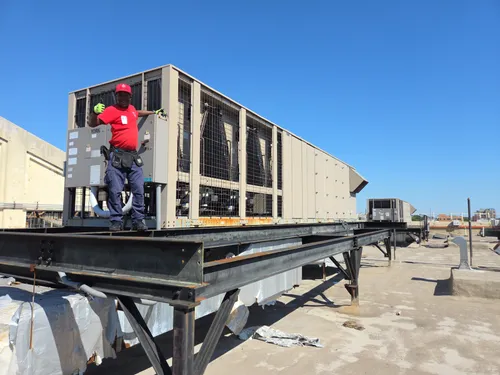
American HVAC Corp - Brooklyn, Heating, Air Conditioning, Refrigeration, Ductless Mini Split, Rooftop, Commercial HVAC NYC
77 Sands St 6th Floor, Brooklyn, NY 11201
American HVAC Corp - Brooklyn, Heating, Air Conditioning, Refrigeration, Ductless Mini Split, Rooftop, Commercial HVAC NYC provides HVAC repair, installation, and maintenance services in New York, NY. Their certified technicians handle a wide range of heating and air conditioning equipment, including furnaces, heat pumps, mini splits, and rooftop systems. The company serves numerous neighborhoods across Brooklyn and extends service to Queens, Manhattan, Staten Island, and The Bronx. They support various industries such as banks, data centers, educational institutions, and commercial office buildings. Their technicians are accredited by EPA and NATE, ensuring professional expertise.
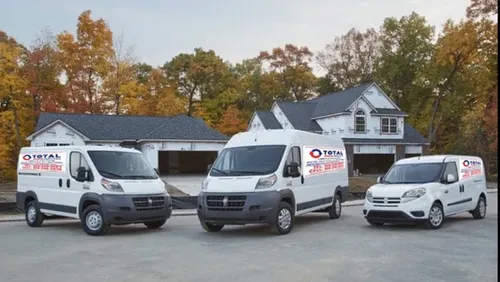
Total HVACR Services LLC
Newark, NJ
Total HVACR Services LLC is an HVAC company based in Newark, NJ, offering a full range of heating, ventilation, air conditioning, and refrigeration repair and installation services. They provide expertise in AC, furnace, heat pump, and boiler systems, covering both repairs and new installations. The company has built a reputation over many years by maintaining professional and timely service standards.
Why Consider a Heat Pump in Clifton?
Clifton's climate, with its warm, humid summers and cold winters, makes it an ideal candidate for modern heat pump technology. Unlike older models, today's cold-climate heat pumps are engineered to operate efficiently in sub-freezing temperatures, providing reliable warmth even during a New Jersey winter. In the summer, the same system reverses direction to act as a highly efficient air conditioner, dehumidifying and cooling your home. This dual functionality consolidates two major home systems into one, which can simplify maintenance and, when properly sized and installed, lead to significant annual energy savings.
Beyond comfort and efficiency, switching to a heat pump system aligns with broader environmental goals and financial incentives. As a cleaner technology that often uses electricity, it can reduce reliance on fossil fuels. Furthermore, federal tax credits, such as those available through the Inflation Reduction Act (IRA), can offset a substantial portion of the installation cost, making the upgrade more accessible for homeowners.
Types of Heat Pump Systems
Choosing the right type of system is crucial for your home's comfort and the project's overall cost. The main options are ducted, ductless, and geothermal systems.
Ducted (Central) Heat Pumps
This type is best for homes that already have a functional ductwork system from a traditional forced-air furnace or central air conditioner. A ducted heat pump replaces your existing outdoor AC unit and indoor furnace, utilizing the same network of ducts to distribute conditioned air throughout your entire house. It provides whole-home comfort and a seamless transition from an old HVAC system. However, the upfront installation cost tends to be higher, typically ranging from $12,000 to over $20,000, depending on the home's size and system capacity 1.
Ductless Mini-Split Heat Pumps
For homes without existing ducts, such as older properties, additions, or rooms that are difficult to condition, ductless mini-splits are an excellent solution. These systems consist of an outdoor compressor unit connected to one or more indoor air-handling units mounted on walls or ceilings. They offer "zoned" comfort, allowing you to control temperatures in individual rooms. A single-zone system for one room can start around $4,000 to $7,500, while multi-zone systems for several areas can range from $10,000 to $20,000+. They are generally less invasive to install than ducted systems.
Geothermal (Ground-Source) Heat Pumps
The most efficient type available, geothermal systems, exchange heat with the ground, which maintains a stable temperature year-round. While they offer unparalleled efficiency and low operating costs, they come with a significantly higher installation price due to the need to excavate and install ground loops. This option requires adequate land and is a major investment, but it can be the most cost-effective over the very long term in the right property 2.
Understanding Efficiency and Performance Ratings
When comparing heat pumps, you'll encounter key metrics that indicate how efficiently they convert electricity into heating or cooling. Understanding these will help you select a model that performs well in Clifton's climate.
- COP (Coefficient of Performance): This measures instantaneous efficiency. A COP of 3.0 means the system delivers three units of heat for every one unit of electricity consumed. For reliable cold-weather operation, look for a high COP at low outdoor temperatures (e.g., 5°F or 17°F).
- SCOP (Seasonal Coefficient of Performance): This is a more valuable rating for homeowners, as it represents the average efficiency over an entire heating season, accounting for varying outdoor temperatures. A SCOP above 3.5 is generally considered very good for our region 3.
- HSPF (Heating Seasonal Performance Factor): This is the U.S. standard seasonal efficiency rating for the heating mode. The minimum federal standard is 8.2 HSPF, but high-efficiency models will be 9.0 HSPF or higher.
- SEER (Seasonal Energy Efficiency Ratio): This measures cooling efficiency. The current minimum standard is 14 SEER, with high-performance models reaching 20+ SEER.
For Clifton, prioritizing a high HSPF and a strong SCOP rating ensures your system will heat efficiently throughout the winter. Many modern cold-climate models from brands like Mitsubishi and Carrier are specifically designed to maintain high COP values well below freezing 4 5.
Find the perfect heat pump installation & replacement contractors for your needs
Get personalized recommendations and expert advice
Cost Factors and Financial Incentives
The total investment for a heat pump installation in Clifton varies widely based on several factors. Understanding these can help you interpret quotes and plan your budget.
Primary Cost Drivers:
- System Type and Size: A properly sized, whole-home ducted system is the largest investment, while a single-zone ductless unit is the most affordable entry point. System size (measured in tons) must be calculated by a professional based on your home's square footage, insulation, and window quality.
- Equipment Brand and Features: Premium brands with advanced inverter technology and cold-climate capabilities often come at a higher cost.
- Installation Complexity: The need for new electrical service, modifying existing ductwork, or installing multiple indoor units for a ductless system will add to the labor cost.
- Local Permits and Codes: Compliance with Clifton and New Jersey building codes is mandatory and may involve permit fees.
Financial Incentives to Reduce Net Cost: The most significant incentive is the Federal Tax Credit for Energy Efficient Home Improvements, which provides a credit of 30% of the project cost, up to a maximum of $2,000 6 7 8. This credit applies to both the equipment and its installation. It's crucial to keep all manufacturer certification statements and receipts for your tax records. Additionally, it's always worth checking with your local utility company (like PSE&G) for any available rebate programs that can provide upfront discounts.
The Professional Installation Process
A successful heat pump project hinges on professional sizing, installation, and commissioning. Here's what a quality process looks like:
- Home Assessment and Load Calculation: A reputable contractor will perform a Manual J load calculation. This is not a simple guess based on square footage; it's a detailed analysis of your home's insulation, air leakage, window types, and orientation to determine the exact heating and cooling capacity needed. Proper sizing is critical for efficiency, comfort, and system longevity.
- System Design and Quote: Based on the load calculation, the contractor will recommend a specific system type, size, and model. You should receive a detailed, written quote that breaks down equipment, labor, permits, and any ancillary work (like electrical upgrades).
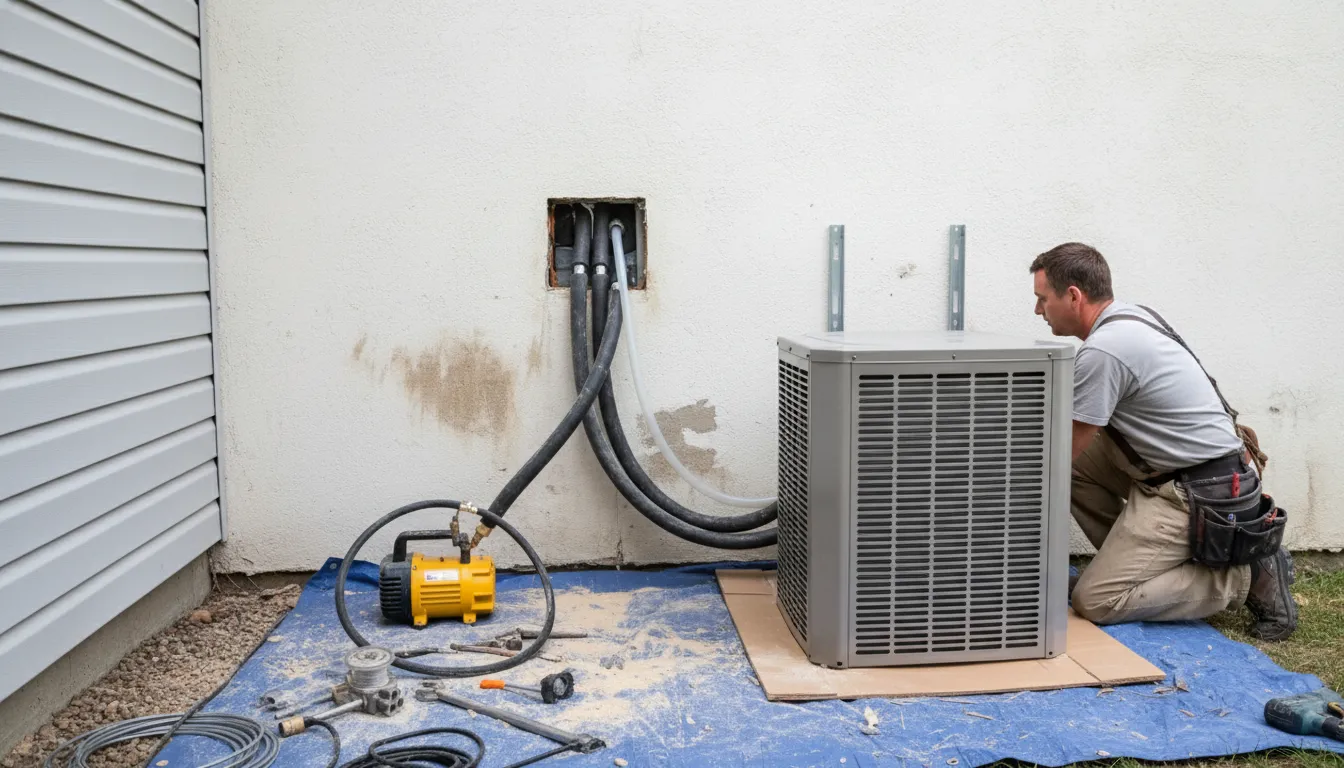
- Installation Day: For a ducted system, this involves removing old equipment, setting the new outdoor unit and indoor air handler, connecting refrigerant and electrical lines, and integrating with your ductwork. For ductless, it involves mounting the indoor unit(s), running refrigerant lines through a small hole in the wall, and setting the outdoor unit. A quality install ensures all connections are tight and the system is level and secure.
- Commissioning and Testing: The most critical step. The technician should evacuate moisture and air from the refrigerant lines with a vacuum pump, charge the system with the precise amount of refrigerant, test airflow, and verify all modes (heating, cooling, defrost) are working correctly. They should also explain basic operation and maintenance to you.
Always seek multiple quotes from licensed, insured, and NATE-certified HVAC contractors in the Clifton area. Check reviews and ask for references to ensure you choose a provider known for quality workmanship.
Maintenance for Long-Term Performance
To protect your investment and ensure your heat pump operates at peak efficiency for its full lifespan (typically 15+ years), regular maintenance is key. This includes simple homeowner tasks and annual professional service.
- Homeowner Tasks: Keep the outdoor unit clear of leaves, grass clippings, and snow (maintain at least 2 feet of clearance on all sides). Regularly clean or replace the indoor air filters-every 1-3 months during peak seasons. This simple act is the most important thing you can do to maintain efficiency and airflow.
- Professional Tune-Up: Once a year, ideally in the spring or fall, have a qualified technician perform a maintenance check. This service typically includes inspecting electrical components, checking refrigerant levels and pressures, cleaning the indoor and outdoor coils, verifying thermostat operation, and ensuring the defrost cycle is functioning properly. Regular maintenance can prevent small issues from becoming costly repairs and helps sustain the system's rated efficiency.
Frequently asked questions
Sources
Footnotes
-
Heat Pump Systems: The Complete Guide for NJ Homeowners - https://genuinehvacservices.com/heat-pump/heat-pump-systems-the-complete-guide-for-nj-homeowners/ ↩
-
Understanding Heat Pump Efficiency and Ratings - Carrier - https://www.carrier.com/residential/en/us/products/heat-pumps/heat-pump-efficiency/ ↩
-
Heat Pump COP and SCOP: What They Mean & Why They Matter - https://www.h2xengineering.com/blogs/heat-pump-cop-and-scop-what-they-mean-and-why-they-matter/ ↩
-
Heat Pump Installation | Northern NJ - https://www.climaxheatingandcooling.com/heat-pump-installation ↩
-
Best Heat Pump Brands 2026 | Compare Bosch, Carrier, Mitsubishi - https://www.edge-gogreen.com/hvac/best-heat-pump-brands/ ↩
-
Heat Pump Installation & Repair Service New Jersey - A.J. Perri - https://www.ajperri.com/heating/heat-pump ↩
-
12 Questions About Heat Pumps For New Jersey Homes - https://njairpros.com/12-questions-about-heat-pumps-for-new-jersey-homes/ ↩
-
2026 Heat Pump Costs | Purchase, Installation & Repair - Carrier - https://www.carrier.com/residential/en/us/products/heat-pumps/how-much-does-a-heat-pump-cost/ ↩