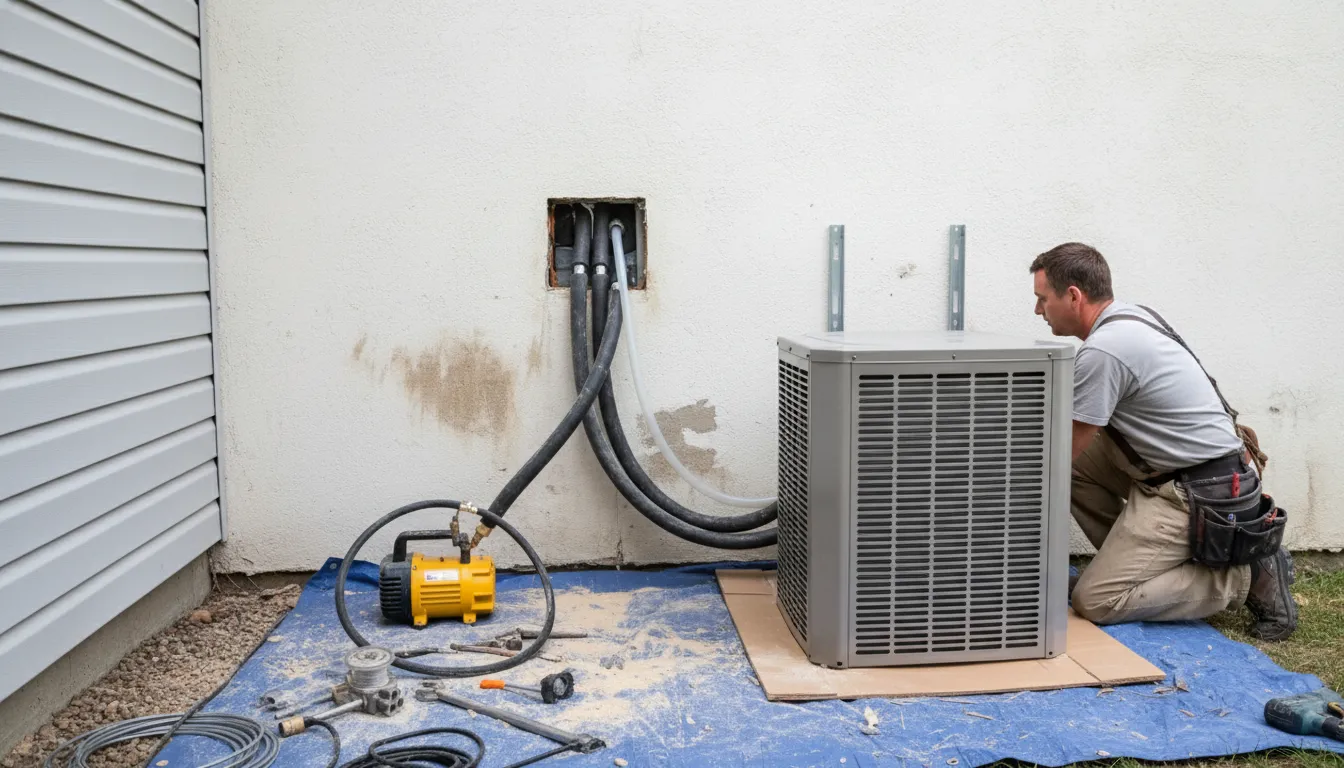
Find the Best Heat Pump Installation & Replacement Contractors for Your Business
No obligation • Fast responses • Nationwide coverage

Why you can trust HVAC Firms
HVAC Firms is a leading United States resource for evaluating HVAC service providers. Our team researches companies, checks credentials, and reviews customer feedback to present clear, unbiased information. Listings and rankings are based on merit, and companies cannot pay to change our editorial content.
Search providers near you
Best Heat Pump Installation & Replacement Contractors in Missouri Ranked
Upgrading your home's heating and cooling system with a heat pump is a smart move for Missouri homeowners seeking year-round comfort, lower energy bills, and a reduced carbon footprint. These efficient systems provide both heating and cooling from a single unit, making them an excellent choice for the state's varied climate. Finding a qualified local professional is the most critical step to ensure your system is correctly sized and installed for maximum efficiency and longevity. This guide will help you understand the process, costs, and significant financial incentives available specifically in Missouri.
Air Unlimited Heating and Cooling
701 Haines Suite 100, Liberty, MO 64068
Air Unlimited Heating and Cooling provides a range of HVAC and indoor air quality services in Kansas City, MO. Their offerings include air conditioner, furnace, and heat pump repair and installation, as well as duct cleaning, thermostat installation, and air quality solutions. The company also handles water heater repair and water filtration system installation. Established in 2010, Air Unlimited Heating and Cooling has built a reputation for honest and reliable service. VIP members have access to 24/7 emergency service for urgent heating and cooling needs.

Indoor Comfort Team
3640 Scarlet Oak Blvd, Kirkwood, MO 63122
Indoor Comfort Team is a family-owned HVAC company serving St Louis, MO, and nearby areas since 1979. They provide a wide range of services including air conditioning repair, furnace and heat pump installation and repair, mini split and geothermal heat pump systems, as well as indoor air quality solutions. Their NATE-certified technicians work with leading manufacturers to deliver heating and cooling services tailored to residential and commercial needs. Indoor Comfort Team offers specialized capabilities such as ground-source geothermal heat pump installations and maintains a commitment to customer satisfaction with workmanship guarantees.
Home Heating & Cooling
1450 Frontage Rd, O'Fallon, IL 62269
Home Heating & Cooling is an HVAC company serving St Louis, MO, specializing in air conditioning, furnace, and heat pump installation and repair. As a Lennox® Premier Dealer™, they are trained to design, install, service, and maintain HVAC systems with a focus on customer comfort. This status reflects their commitment to meeting high standards and maintaining strong customer satisfaction.
Energy Experts
17850 W 182nd St, Olathe, KS 66062
Energy Experts is an HVAC company serving Kansas City, MO, and the surrounding South Kansas City Metro and Johnson County areas. They provide a full range of heating and cooling services including repair, installation, and maintenance for furnaces, boilers, air conditioners, heat pumps, and thermostats. Their NATE-certified technicians are skilled in working with various manufacturers and offer expertise in installing high-quality Trane equipment. Energy Experts also provide furnace tune-ups and safety inspections, and they offer free second opinions on major repairs or replacements.
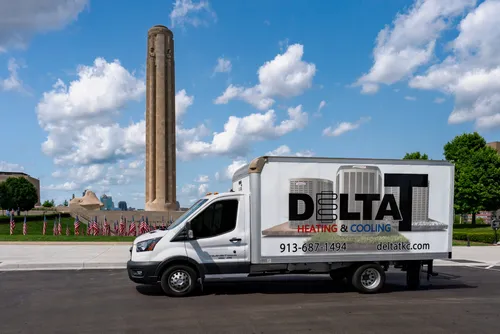
Delta T Heating & Cooling
14200 Parallel Rd, Basehor, KS 66007
Delta T Heating & Cooling is an HVAC company serving Kansas City, MO, offering a range of services including air conditioning, heating, ductless systems, indoor air quality solutions, and electrical work. They provide repairs, installations, maintenance, and tune-ups for residential and commercial clients. The company emphasizes fair pricing and honest service, backed by licensed professional engineers who perform all the work themselves. Their capabilities include comprehensive HVAC system assessments and seasonal maintenance plans tailored to ensure efficient operation throughout the year.
Understanding Heat Pumps for Missouri Homes
A heat pump is an all-in-one HVAC system that moves heat rather than generating it. In the summer, it extracts heat from inside your home and expels it outdoors, functioning as an air conditioner. In the winter, the process reverses, pulling ambient heat from the outside air (even in cold weather) and transferring it indoors. This technology is remarkably efficient, often delivering two to three times more heat energy than the electrical energy it consumes.
For Missouri, which experiences hot, humid summers and cold winters, modern air-source heat pumps are a versatile solution. Homeowners with sufficient land may also consider geothermal (or ground-source) heat pumps, which use the stable temperature of the earth for even greater efficiency. The right choice depends on your home's layout, existing ductwork, and budget.
Key Benefits of Installing a Heat Pump
- Year-Round Comfort: One system handles both heating and cooling, simplifying your home's HVAC setup.
- High Efficiency: Heat pumps significantly reduce energy consumption compared to standard air conditioners paired with furnaces or electric resistance heat, leading to lower utility bills.
- Reduced Carbon Footprint: By using electricity and moving heat, they produce fewer on-site emissions than systems burning fossil fuels like natural gas or propane.
- Potential for Dehumidification: Many models offer enhanced dehumidification in cooling mode, improving comfort during Missouri's humid summers.
- Eligibility for Incentives: High-efficiency installations qualify for substantial rebates and federal tax credits, improving affordability.
Cost Overview for Heat Pump Systems in Missouri
The total investment for a new heat pump system varies widely based on the system type, your home's size, and the complexity of the installation. Key cost factors include the unit's capacity and efficiency rating, labor charges, and any necessary upgrades to electrical service or ductwork.
- Air-Source Heat Pumps: A standard ducted system typically ranges from $6,000 to $15,000 installed. Ductless mini-split systems, ideal for homes without ducts or for room additions, can range from $4,000 for a single zone to $20,000+ for a whole-home multi-zone system.
- Geothermal Heat Pumps: These systems involve ground-loop installation and have a higher upfront cost, generally between $15,000 and $25,000 or more. However, their superior efficiency and generous incentives can improve the long-term return on investment 1.
Find the perfect heat pump installation & replacement contractors for your needs
Get personalized recommendations and expert advice
Financial Incentives: Lowering Your Upfront Cost
Missouri residents have access to a powerful combination of federal, utility, and potential state incentives that can reduce the net cost of a qualifying heat pump by thousands of dollars.
Federal Tax Credits
The Inflation Reduction Act (IRA) provides direct tax credits:
- Air-Source Heat Pumps: You can claim up to $2,000 per year for the installation of a qualifying system. This credit is 30% of the project cost, capped at $2,000 2 3.
- Geothermal Heat Pumps: Eligible installations qualify for a 30% uncapped tax credit of the total cost, including labor 4. These credits are available for systems installed through December 31, 2032, and you claim them on your federal income tax return for the year the installation was completed.
Missouri Utility Rebate Programs
Several utility providers offer instant rebates that reduce your invoice at the point of sale or provide check rebates after installation.
- Ameren Missouri: Offers robust rebates for customers installing high-efficiency systems.
- Air-Source Heat Pumps: Rebates of up to $2,000, with higher amounts for units meeting top-tier efficiency requirements (18+ SEER2) 5.
- Geothermal Systems: Rebates of up to $5,000 6.
- Ductless Mini-Splits & Smart Thermostats: Additional rebates are available.
- City of Columbia (Columbia Water & Light): Provides rebates for replacing existing non-heat pump systems.
- Replacement Rebate: $1,200 for a qualifying heat pump replacing an existing air conditioner or furnace 7.
- New Construction: Rebates ranging from $500 to $1,400 8.
- Missouri Rural Electric Cooperatives (MREC): Many rural co-ops offer rebates through a unified program.
- Air-Source Heat Pumps: $150 to $500 per ton of capacity 9.
- Geothermal Systems: $400 to $750 per ton of capacity 10.
Pending State of Missouri Rebates
The Missouri Department of Natural Resources (DNR) has been allocated significant federal IRA funding to administer statewide rebate programs. While the specific details, amounts, and launch dates are still being finalized, these programs are expected to provide additional point-of-sale discounts for income-qualified households making major electrification upgrades 11. Homeowners should monitor the MO DNR website for official announcements.
Efficiency Requirements for Rebate Eligibility
To qualify for most rebates and tax credits, your new heat pump must meet minimum efficiency standards. Your installer will help you select a qualifying model.
- Ameren Missouri: Typically requires a minimum of 15.0 SEER2 for standard air-source heat pumps, with higher rebates for units achieving 18.0 SEER2 and above. Geothermal systems generally require a 23.0 EER or higher.
- City of Columbia: Requires a minimum 15.2 SEER2 for air-source heat pumps.
- Federal Tax Credit: Requires systems to meet ENERGY STAR® criteria at the time of installation.
- MREC: Requires ENERGY STAR® rating and often stipulates no electric backup heat for air-source units to qualify for the highest rebate tier.
The Installation Process: Steps to Success
- Get Multiple Quotes: Contact at least three licensed, insured, and experienced HVAC contractors who specialize in heat pump installations. Ask for references and examples of past work.
- Home Evaluation & Load Calculation: A proper installer will perform a Manual J load calculation (not a simple rule-of-thumb) to determine the exact heating and cooling needs of your home. Correct sizing is crucial for efficiency, comfort, and system life.
- System Design & Proposal: The contractor should present a detailed proposal including the recommended make and model, its efficiency ratings, a breakdown of all costs (equipment, labor, duct modifications, electrical), and a clear explanation of which rebates and tax credits you qualify for.
- Secure Financing & Rebate Pre-Approval: If needed, explore financing options. Your utility may offer on-bill financing. Contact your utility provider to confirm rebate amounts and any pre-approval steps before installation begins 12.
- Professional Installation: A quality installation is as important as the equipment itself. Ensure the crew follows best practices for placement, refrigerant charging, duct sealing, and electrical connections.
- Post-Installation: Keep all receipts, model numbers, and the Manufacturer's Certification Statement for your tax records. Submit any required rebate paperwork to your utility promptly. Enjoy the comfort and savings!
Frequently asked questions
Sources
Footnotes
-
2026 Heat Pump Costs | Purchase, Installation & Repair - Carrier - https://www.carrier.com/residential/en/us/products/heat-pumps/how-much-does-a-heat-pump-cost/ ↩
-
Energy Efficient Home Improvement Credit - IRS - https://www.irs.gov/credits-deductions/energy-efficient-home-improvement-credit ↩
-
Federal Tax Credits for Energy Efficiency - https://www.energystar.gov/about/federal-tax-credits ↩
-
Heat Pump Tax Credit | Federal Incentives for Energy Savings - https://www.carrier.com/residential/en/us/products/heat-pumps/heat-pump-tax-credits/ ↩
-
Ameren Missouri Heating and Cooling Program - https://www.ameren.com/-/media/missouri-site/files/energy-efficiency/mo-res-ee/mo-hvac-rebate-chart.ashx ↩
-
Ameren FastTrack HVAC Rebates + 25C & 25D Tax Credits - https://www.callsmarthouse.com/best-hvac-deals-ameren-fasttrack-tax-credits/ ↩
-
Air Conditioner and Heat Pump Rebates - City of Columbia Missouri - https://www.como.gov/utilities/columbia-power-partners/residential-programs-and-tools/air-conditioner-and-heat-pump-rebates/ ↩
-
Efficient Electrification - City of Columbia Missouri - CoMo.gov - https://www.como.gov/utilities/columbia-power-partners/residential-programs-and-tools/efficient-electrification/ ↩
-
Rebates, Products & Forms - Missouri Rural Electric - https://www.morec.org/rebates-products/ ↩
-
Missouri Rural Electric Cooperative - Residential Energy Efficiency Rebate Program - https://programs.dsireusa.org/system/program/detail/4482 ↩
-
Inflation Reduction Act (IRA) Home Energy Rebates Programs - https://dnr.mo.gov/energy/what-were-doing/inflation-reduction-act-home-energy-rebates-programs ↩
-
Tap Into Missouri's HVAC Rebates for Energy-Efficient Upgrades | Scott-Lee - https://scottleeheating.com/how-to-tap-into-missouris-hvac-rebates-and-incentives-for-energy-efficient-upgrades/ ↩