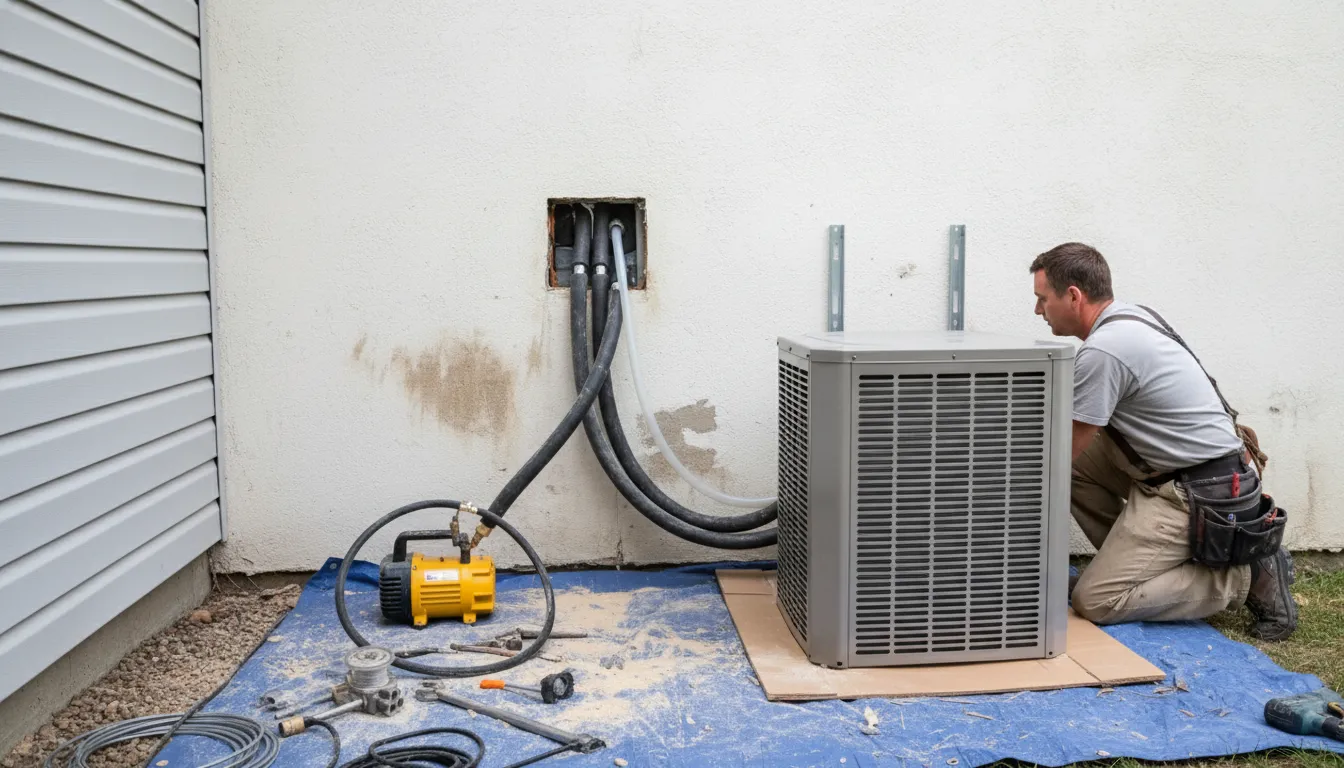
Find the Best Heat Pump Installation & Replacement Contractors for Your Business
No obligation • Fast responses • Nationwide coverage

Why you can trust HVAC Firms
HVAC Firms is a leading United States resource for evaluating HVAC service providers. Our team researches companies, checks credentials, and reviews customer feedback to present clear, unbiased information. Listings and rankings are based on merit, and companies cannot pay to change our editorial content.
Search providers near you
Top Heat Pump Installation & Replacement Contractors in Lakeville, Minnesota Ranked
Upgrading your home's heating and cooling system with a heat pump is a smart investment in year-round comfort and energy efficiency, especially in a climate like Lakeville's. This technology provides both heating and cooling from a single unit, moving heat rather than generating it, which can lead to significant utility savings. For local homeowners, navigating the options for heat pump setup, from cold-climate models to geothermal systems, is key to a successful project. This guide will help you understand the critical considerations, costs, and local incentives to find qualified professionals for your installation or replacement needs.
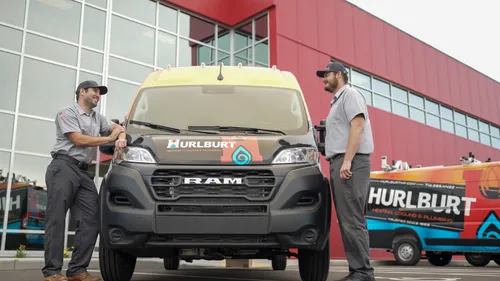
Hurlburt Heating & Plumbing
1000 County Rd E Suite 115, Shoreview, MN 55126
Hurlburt Heating & Plumbing is a family-owned home services provider serving Minneapolis, MN, and surrounding areas. Since 1959, they have offered a wide range of services including HVAC installation and repair, plumbing, and electrical work. Their HVAC services cover air conditioner and furnace repair, heat pump and mini split installation, indoor air quality solutions, and HVAC tune-ups. Hurlburt also provides whole-home air scrubbers, purifiers, humidifiers, and dehumidifiers to improve indoor air quality. With over six decades of experience, they combine modern technology with personalized service to address customer needs.
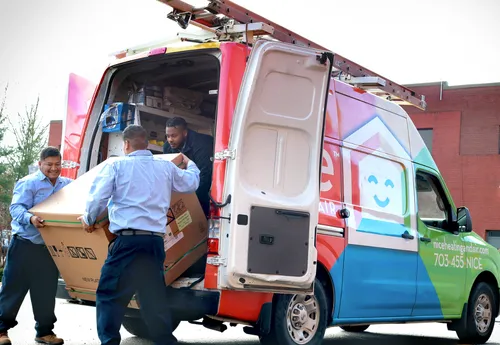
Nice Heating & Air
24 Onville Rd suite 101-9, Stafford, VA 22556
Nice Heating & Air is an HVAC company serving Minneapolis, MN, specializing in air conditioning, heating, and indoor air quality services. They provide installation, repair, and maintenance for systems including ductless mini splits, heat pumps, furnaces, and water heaters. The company has many years of experience and focuses on delivering high-quality products and services with a commitment to customer satisfaction. Their capabilities include HVAC tune-ups and indoor air quality improvements such as air purifier installation and ventilation services.
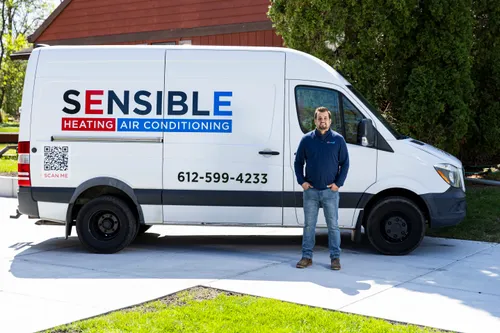
Sensible Heating and Air Conditioning
3533 Roosevelt St NE, St Anthony, MN 55418
Sensible Heating and Air Conditioning is a locally owned HVAC company serving Minneapolis, MN. They provide a range of services including air conditioning, furnace, and heat pump repair, installation, and tune-ups. With 16 years of experience, they focus on maintaining efficient and comfortable home environments through reliable HVAC solutions. Their expertise includes troubleshooting and installing all major brands to ensure energy-efficient performance throughout the year.

Pronto Heating and Air Conditioning - Minneapolis
7415 Cahill Rd, Minneapolis, MN 55439
Pronto Heating and Air Conditioning - Minneapolis is an HVAC company serving Minneapolis, MN, and nearby communities. They provide installation, repair, and maintenance for heating and cooling systems including furnaces, air conditioners, boilers, heat pumps, and ductless mini splits. The company is a Bryant Factory Authorized Dealer with expertise in indoor air quality solutions such as air purification and advanced thermostats. Pronto Heating and Air Conditioning offers emergency service with a commitment to respond within 24 hours and has a history of recognized performance as a multiple Bryant Dealer of the Year finalist and winner.
Stafford Home Service
6225 Cambridge St, Minneapolis, MN 55416
Stafford Home Service is a family-operated company based in Minneapolis, MN, offering residential HVAC and electrical services. They provide repairs, installations, and maintenance for heating and cooling systems including furnaces, heat pumps, boilers, mini-split systems, and air conditioning units. The company features licensed technicians with over 70 years of combined experience and emphasizes transparent pricing and customer satisfaction. Stafford Home Service also offers advanced HVAC solutions with Daikin products, known for energy efficiency and zoning capabilities. Since 2007, the company has continued a legacy of quality workmanship under current ownership. They serve Minneapolis and surrounding communities with a range of home comfort services.
Understanding Heat Pump Options for Minnesota Winters
Choosing the right system is the most critical step for a Lakeville home. The primary consideration is selecting a unit specifically engineered to perform in our cold climate. The most common and effective choice for our region is a cold-climate air-source heat pump (ccASHP). These systems are designed to work efficiently in temperatures as low as -15°F or lower, providing reliable heating throughout most of the winter. There are two main configurations:
- Ducted Central Systems: These utilize your home's existing ductwork to provide whole-home heating and cooling. They are an excellent choice for maintaining consistent temperatures and are ideal if you are replacing a traditional forced-air furnace.
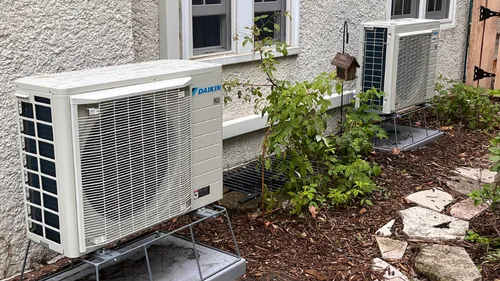
- Ductless Mini-Splits: These systems consist of an outdoor unit connected to one or more indoor wall-mounted units. They are perfect for homes without existing ducts, for room additions, or for creating "zones" with independent temperature control in specific areas like basements or sunrooms. They are often highly efficient and simplify the installation process.
For the ultimate in efficiency and long-term performance, geothermal heat pumps (or ground-source heat pumps) are an option. They exchange heat with the ground, which maintains a stable temperature year-round, making them extremely efficient and durable. However, they come with significantly higher upfront costs due to the excavation required for the ground loops 1.
Key Performance Factors for Sub-Zero Climates
Simply installing a heat pump isn't enough; ensuring it's optimized for Lakeville's weather is essential for comfort and cost-effectiveness.
- Sub-Zero Performance: Not all heat pumps are created equal for Minnesota winters. It is essential to select a cold-climate model that maintains a significant heating capacity at 5°F and below. This specification ensures the unit can handle the bulk of our heating season without excessive reliance on backup systems.
- The Role of Backup Heat: Even the best cold-climate heat pump may need assistance during our most extreme cold snaps. Planning for a backup heat source is a standard and prudent practice. This is often achieved through a dual-fuel system, which pairs the heat pump with a gas furnace. The furnace takes over only during the coldest periods. Alternatively, electric resistance coils within the air handler can provide backup heat 2.
- Home Envelope First: The performance and savings from any new heating system are dramatically influenced by your home's shell. Before investing in a heat pump installation or replacement, addressing air leaks and improving insulation in attics, walls, and baselines is highly recommended. A well-sealed home retains the conditioned air better, allowing a properly sized heat pump to work more efficiently and reducing overall energy demand 3.
Cost Expectations for Heat Pump Projects
The investment for a heat pump system in Lakeville varies widely based on the type of system, the size of your home, and the complexity of the installation. Here's a general breakdown:
- Air-Source Heat Pumps (Cold-Climate): For a whole-home, ducted system, homeowners can expect costs ranging from $7,500 to $14,000 or more. More complex installations, such as those requiring new ductwork or significant electrical upgrades, will be on the higher end of this spectrum.
- Ductless Mini-Split Systems: These are typically priced per zone (one indoor unit). Costs can range from $2,000 to $7,500+ per zone, depending on the unit's capacity and features 4 5.
- Geothermal Systems: Given the ground-loop excavation, these systems represent a premium investment, often ranging from $10,000 to $25,000+ 6.
The final price is influenced by factors including the system size (measured in BTUs), the condition of existing ductwork, local labor rates, the unit's efficiency rating (SEER2 and HSPF2), and any necessary ancillary work like electrical panel upgrades.
Find the perfect heat pump installation & replacement contractors for your needs
Get personalized recommendations and expert advice
Financial Incentives and Rebates in Minnesota
A significant advantage of investing in a high-efficiency heat pump today is the availability of financial incentives that can substantially lower the net project cost.
- Minnesota State Rebate Program: The state offers significant rebates for eligible homeowners installing qualifying heat pumps. Rebates can be as high as $4,000 and are often integrated with federal programs for maximum benefit 7 8.
- Federal Tax Credits: The Inflation Reduction Act (IRA) provides federal tax credits for the installation of high-efficiency electric home upgrades, including heat pumps. This credit can directly reduce your federal income tax liability.
- Utility-Specific Programs: It is always worthwhile to check with your local Lakeville utility provider. Many offer additional rebates, special financing, or favorable off-peak electricity rates for homes using high-efficiency electric heating systems like heat pumps 9.
Working with a knowledgeable local professional is crucial, as they can help you navigate these incentive programs and ensure your selected system meets all eligibility requirements.
The Professional Installation Process
A successful heat pump installation is more than just equipment swap; it's a detailed process that ensures optimal performance. It typically begins with a comprehensive home assessment. A qualified technician will evaluate your home's size, layout, insulation levels, and existing infrastructure (ductwork, electrical) to perform a Manual J load calculation. This calculation determines the precise heating and cooling capacity your home needs-avoiding the common pitfalls of an oversized or undersized system.
The installation phase involves setting the outdoor unit on a stable pad, connecting refrigerant and electrical lines, and integrating the indoor air handler or ductless heads. For ducted systems, the existing ductwork will be inspected, sealed, and possibly modified. Finally, the system is charged with refrigerant, thoroughly tested across various modes, and the homeowner is educated on its operation and basic maintenance. Choosing a contractor with specific experience in cold-climate heat pump installations in the Twin Cities area is highly recommended for this technical process 10.
Long-Term Benefits and Considerations
Beyond the immediate comfort upgrade, a modern heat pump installation offers long-term advantages. The most notable is improved energy efficiency. By moving heat instead of creating it through combustion, heat pumps can deliver more than 100% efficiency, translating to lower monthly energy bills, especially when replacing an older electric or oil-based system. This also contributes to a reduced carbon footprint for your household.
Modern systems also offer enhanced comfort features, such as more consistent temperatures, quieter operation, and built-in dehumidification during the cooling season. Furthermore, a heat pump provides a single, streamlined system for both heating and cooling, simplifying your home maintenance. To protect your investment, consider a routine maintenance plan with your installer to keep the system running at peak efficiency for its full lifespan.
Frequently asked questions
Sources
Footnotes
-
HVAC System Installation - Lakeville HVAC Solutions - https://www.hvaclakeville.com/hvac-system-installation/ ↩
-
Heat Pump Efficiency in Sub-Zero Weather: What Minnesota ... - https://www.aircomfortmn.com/blog/heat-pump-efficiency-in-sub-zero-weather-what-minnesota-homeowners-need-to-know ↩
-
Best Heat Pump Installation in Minnesota - 14 Cold Climate Tips on ... - https://genzryan.com/blog/heat-pump-installation-minnesota/ ↩
-
Heat Pump Cost Analysis: What To Expect & How It's Determined - https://clinesairconditioning.com/heat-pump-cost/ ↩
-
Cost to Install Heat Pump in Minnesota: Factors and Estimate - https://mspplumbingheatingair.com/minnesota-heat-pump-installation-costs-factors/ ↩
-
How Much Does Installing a Heat Pump Cost in 2025? Actual ... - https://thefurnaceoutlet.com/blogs/hvac-tips/how-much-does-installing-a-heat-pump-cost-in-2025-actual-estimates-advice ↩
-
How Much Does a Heat Pump in Minnesota Cost? 2026 Prices - https://modernize.com/hvac/heating-repair-installation/heat-pump/minnesota ↩
-
Residential Heat Pump Rebate Program - MN.gov - https://mn.gov/commerce/energy/consumer/energy-programs/heat-pump.jsp ↩
-
How Much Does a Heat Pump Cost? 2025 Expert Guide - https://www.solarreviews.com/blog/heat-pump-costs ↩
-
2026 Heat Pump Cost Guide: Purchase, Installation & Repair - Carrier - https://www.carrier.com/residential/en/us/products/heat-pumps/how-much-does-a-heat-pump-cost/ ↩