Find the Best Heat Pump Installation & Replacement Contractors for Your Business
No obligation • Fast responses • Nationwide coverage

Why you can trust HVAC Firms
HVAC Firms is a leading United States resource for evaluating HVAC service providers. Our team researches companies, checks credentials, and reviews customer feedback to present clear, unbiased information. Listings and rankings are based on merit, and companies cannot pay to change our editorial content.
Search providers near you
Top Heat Pump Installation & Replacement Contractors in Noblesville, Indiana Ranked
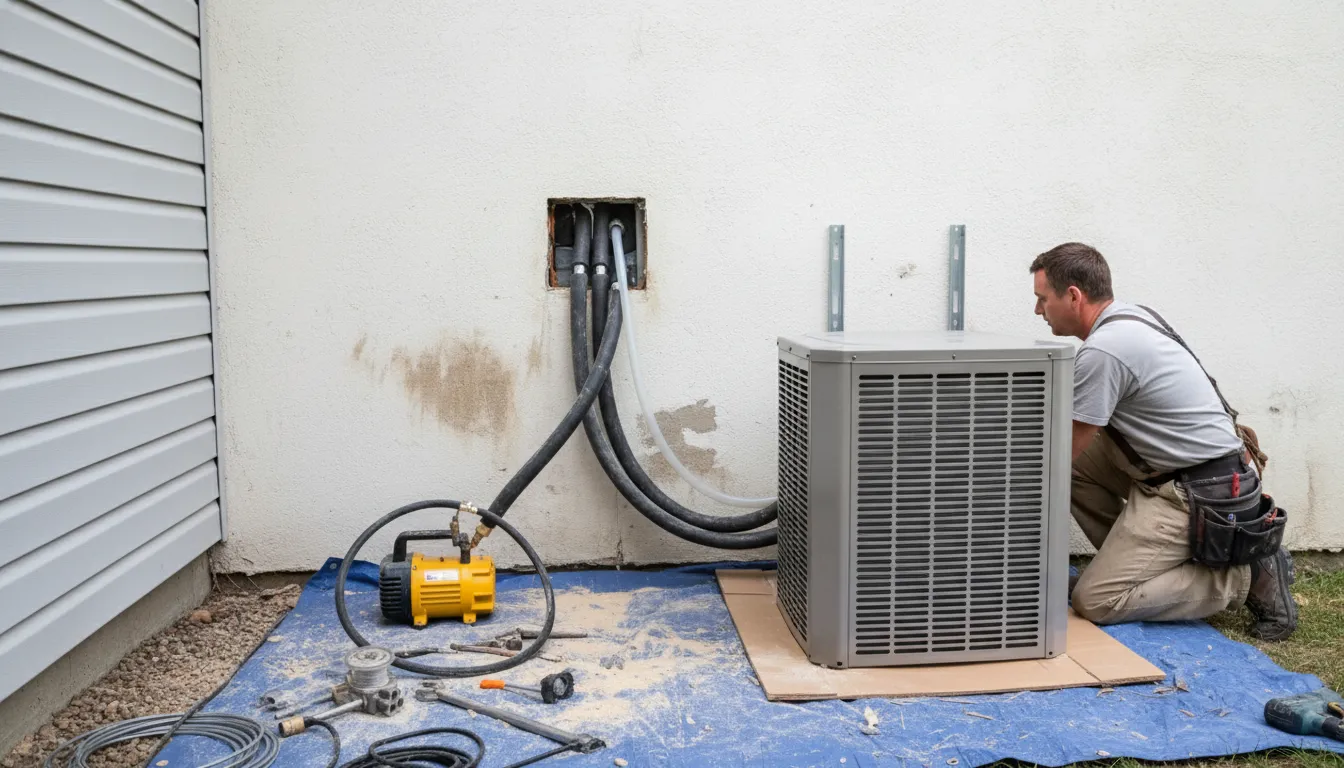
Considering a heat pump for your Noblesville home? This guide explains what you need to know. A heat pump is an efficient, all-in-one system that provides both heating and cooling by moving heat rather than generating it, which can lead to significant energy savings. For homeowners in Indiana's climate, choosing the right type and size is crucial for year-round comfort and cost-effectiveness. The information here will help you understand your options, from system types to costs, so you can make an informed decision and find a qualified local professional for your project.
Vital Heating & Air
8913 Southeastern Ave, Indianapolis, IN 46239
Vital Heating & Air is an HVAC company serving Indianapolis, IN, and surrounding areas. They provide a full range of heating and cooling services including air conditioner, furnace, and heat pump repair and installation, as well as HVAC tune-ups. With over a decade of experience since 2012, they offer expert solutions aimed at improving home comfort and energy efficiency. Their services cover the Indianapolis metro area and nearby communities such as Center Grove, Beech Grove, Broad Ripple, Geist, Fountain Square, Southport, Greenwood, Zionsville, and Fishers.
King of Comfort Heating & Cooling
7009 E 56th St, Indianapolis, IN 46226
King of Comfort Heating & Cooling is an HVAC company based in Indianapolis, IN, offering a wide range of heating and cooling services. Their team provides installation, repair, and maintenance for air conditioners, furnaces, heat pumps, boilers, mini splits, geothermal heat pumps, and thermostats. They emphasize comprehensive service and staying current with industry developments to meet diverse HVAC needs. The company also offers 24/7 emergency repair services to ensure reliable heating and cooling during extreme weather conditions. Their technicians handle everything from routine tune-ups to complex repairs, including cracked heat exchangers and faulty thermostats.
Bowers Heating and Cooling
Indianapolis, IN
Bowers Heating and Cooling provides HVAC installation, repair, and tune-up services in Indianapolis, IN. They handle air conditioning, furnace, heat pump, and boiler systems with tailored solutions based on thorough consultations. The company serves several surrounding areas including Westfield, Carmel, Fishers, Noblesville, and Zionsville. Their process emphasizes transparency and consistent updates throughout each project.
Jons Air
160 W Carmel Dr suite 201, Carmel, IN 46032
Jons Air is an HVAC company based in Indianapolis, IN, offering a wide range of heating and cooling services. They provide repair, installation, and maintenance for air conditioning units, furnaces, heat pumps, thermostats, and ventilation systems. The company serves Indianapolis and surrounding areas, including Carmel, Fishers, Noblesville, and more. Jons Air is capable of handling new construction HVAC installations and commercial heating solutions. Their team is trained and certified to manage various HVAC equipment and appliances, ensuring professional service for residential and commercial clients.
Chapman Heating, Air Conditioning & Plumbing
9230 Crawfordsville Rd, Indianapolis, IN 46234
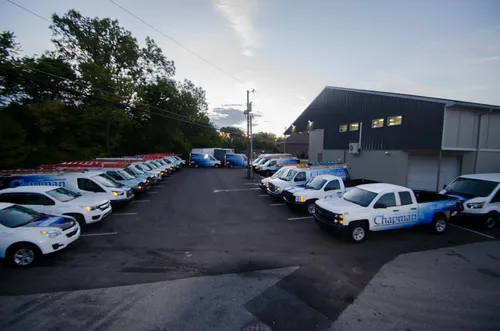
Chapman Heating, Air Conditioning & Plumbing has been serving Indianapolis, IN, and the surrounding areas for over 40 years. They provide a range of HVAC services including AC repair, heat pump repair, and installation of air conditioning and heat pump systems. As a Lennox dealer, Chapman offers comprehensive heating and cooling solutions backed by experienced technicians who are background-checked and drug-tested. Their service covers both residential and commercial customers in the Indianapolis metro area.
Understanding Heat Pump Systems
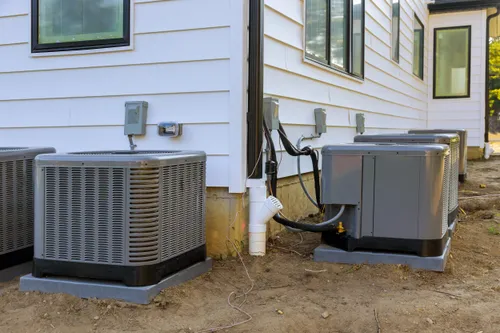
A heat pump is the core of a modern, efficient home comfort system. Unlike a furnace that burns fuel to create heat, a heat pump transfers existing heat from one place to another. In the summer, it acts like an air conditioner, moving heat from inside your home to the outdoors. In the winter, it reverses this process, extracting heat from the outside air (or ground) and pumping it indoors. This process of heat transfer is far more energy-efficient than traditional combustion, making heat pumps a popular choice for upgrading home HVAC systems.
Primary System Types Available
Not all heat pumps are the same. The right choice for your Noblesville home depends on your existing infrastructure, budget, and performance needs.
- Air-Source Heat Pumps (ASHP): This is the most common type of residential heat pump. It exchanges heat with the outdoor air. Modern models are highly efficient and effective in a wide range of temperatures, making them a solid choice for many homes.
- Hybrid or Dual-Fuel Systems: This is an excellent solution for Indiana's colder winters. A hybrid system combines an electric air-source heat pump with a gas furnace. The system intelligently switches to the most efficient heat source based on the outdoor temperature-using the heat pump for moderate cold and the furnace for extreme cold-optimizing both comfort and operating costs.
- Ductless Mini-Split Systems: Ideal for homes without existing ductwork, for room additions, or for creating independent temperature zones. These systems have an outdoor unit connected to one or more indoor wall-mounted units. They offer high efficiency and flexible installation but can have a higher cost per zone.
- Geothermal (Ground-Source) Heat Pumps: This is the most efficient type of heating and cooling system available. It uses the stable temperature of the earth a few feet below the surface to exchange heat. While it has the highest upfront installation cost due to the required ground loop, it offers the lowest long-term operating costs and is exceptionally reliable.
Climate Considerations for Noblesville Homes
Noblesville is located in USDA Hardiness Zone 6, which experiences cold winters that can challenge the efficiency of standard air-source heat pumps. When the outdoor temperature drops significantly, a standard ASHP must work harder to extract heat, and its efficiency declines. This is why system selection is critical.
- The Need for Supplemental Heat: In our climate, a heat pump installation plan must account for supplemental heat. This could be in the form of electric resistance heating strips (often built into the air handler) or, more efficiently, as part of a hybrid system with a gas furnace. A proper professional assessment will determine the correct balance and sizing.
- Efficiency Ratings Matter: To ensure performance in our region, pay close attention to efficiency ratings. For cooling, look for a SEER (Seasonal Energy Efficiency Ratio) of 14 or higher. For heating, which is paramount here, look for an HSPF (Heating Seasonal Performance Factor) of 8 or higher 1 2. Higher ratings mean better performance on cold days and lower utility bills.
Find the perfect heat pump installation & replacement contractors for your needs
Get personalized recommendations and expert advice
Cost Factors for Heat Pump Projects
The total investment for a new heat pump system in Noblesville can vary widely, typically ranging from $4,500 to $12,500 or more for a complete installed system 3 4. Several key factors influence where your project will fall within this range.
- Home Size and Layout: Larger homes require larger capacity (measured in tons) units, which cost more. The layout also affects how much ductwork modification is needed.
- Existing Infrastructure: A straightforward replacement of an old heat pump with a new one of similar type and capacity is generally less expensive. Installing a completely new system type (like switching from a furnace to a heat pump) or adding ductwork for the first time adds significant labor and material costs 5 6.
- System Type and Efficiency: As outlined above, an air-source system has a different price point than a geothermal system. Within each category, units with higher SEER and HSPF ratings command a premium upfront cost but offer greater savings over time.
- Installation Complexity: Factors like the difficulty of accessing the outdoor unit location, necessary electrical upgrades, and local permit fees all contribute to the final labor cost 7.
Example Price Ranges by System Type
To give you a clearer financial picture, here are approximate installed cost ranges for different systems in our area:
- Air-Source Heat Pump: $4,500 - $8,000+ for a complete system replacement, depending on capacity and efficiency 8.
- Hybrid (Dual-Fuel) System: $6,000+, assuming you have an existing furnace and ductwork that can be integrated 9. This is often a cost-effective upgrade.
- Ductless Mini-Split: $1,500 - $8,000+, heavily dependent on the number of indoor zones (heads) you need 10.
- Geothermal System: $10,000 - $25,000+, reflecting the major excavation or drilling required for the ground loop, though federal tax credits and long-term savings can improve the return on investment 11 12.
The Importance of Professional Sizing and Installation
A heat pump is a significant investment, and its performance hinges on two things: correct sizing and quality installation. An undersized unit will struggle to heat or cool your home, run constantly, and wear out prematurely. An oversized unit will short-cycle (turn on and off frequently), failing to dehumidify properly in summer and causing temperature swings, while also wasting energy.
A reputable contractor will perform a Manual J load calculation. This is not a simple rule-of-thumb based on square footage; it's a detailed analysis that considers your home's insulation, window quality, air leakage, orientation, and more. This calculation determines the exact heating and cooling capacity (in BTUs) your home needs. Always seek multiple detailed quotes that include this professional assessment 13.
Maintaining Your Heat Pump System
Once your new system is installed, proper maintenance is key to ensuring it delivers its promised efficiency and lifespan for years to come. Simple homeowner tasks include keeping the outdoor unit clear of leaves, snow, and debris and replacing or cleaning air filters monthly during peak seasons. However, professional maintenance is essential. You should schedule a tune-up twice a year-ideally in the spring before cooling season and in the fall before heating season. A technician will check refrigerant levels, inspect electrical components, clean coils, and ensure the system is operating at peak efficiency. This proactive care prevents minor issues from becoming major, costly repairs.
Frequently asked questions
Sources
Footnotes
-
Heat Pump Price Guides - https://heatpumppriceguides.com/ ↩
-
Heat Pumps in California: Everything You Need to Know - QuitCarbon - https://www.quitcarbon.com/blog/heat-pumps/california ↩
-
2025 Cost to Replace HVAC in Louisville & Southern Indiana - HVAC Service and Repair - https://projecthvac.com/2025/06/11/cost-to-replace-hvac-louisville-southern-indiana-2025/ ↩
-
Most Dependable HVAC Units Heat Pump - 7 Best Picks 2025 - https://aircomechanical.com/most-dependable-hvac-units-heat-pump-2025/ ↩
-
Heat Pump Installation Cost Guide: Types, Factors & Savings - https://statclimate.ca/heat-pump-installation-cost-guide/ ↩
-
How Much Do Heat Pumps Cost? (2024 Price Estimate Guide) - https://jarboes.com/knowledge-center/how-much-do-heat-pumps-cost/ ↩
-
Heat Pump Cost Explained: What to Expect for Your Home Upgrade - https://www.leokobco.com/post/heat-pump-cost-explained ↩
-
Heat Pump Cost Analysis: What To Expect & How It's Determined - https://clinesairconditioning.com/heat-pump-cost/ ↩
-
How Much Does a Heat Pump Cost in Indianapolis? [2026 Data] - https://www.angi.com/articles/how-much-does-heat-pump-cost/in/indianapolis ↩
-
How Much Does a Heat Pump Cost? 2025 Expert Guide - https://www.solarreviews.com/blog/heat-pump-costs ↩
-
2026 Heat Pump Cost Guide: Purchase, Installation & Repair - https://www.carrier.com/residential/en/us/products/heat-pumps/how-much-does-a-heat-pump-cost/ ↩
-
Understanding 2025 Heat Pump Installation Prices - Armor Air - https://www.armorair.com/blog/heat-pump-installation-cost/ ↩
-
What to Consider When Planning a Heat Pump Installation in ... - https://callthiele.com/blog/what-to-consider-heat-pump-installation-indiananpolis-in/ ↩