Find the Best Heat Pump Installation & Replacement Contractors for Your Business
No obligation • Fast responses • Nationwide coverage

Why you can trust HVAC Firms
HVAC Firms is a leading United States resource for evaluating HVAC service providers. Our team researches companies, checks credentials, and reviews customer feedback to present clear, unbiased information. Listings and rankings are based on merit, and companies cannot pay to change our editorial content.
Search providers near you
Top Heat Pump Installation & Replacement Contractors in Greenwood, Indiana Ranked
Considering a new heat pump for your Greenwood home? You're looking at one of the smartest upgrades for year-round comfort and energy efficiency. A heat pump is a versatile system that provides both heating and cooling by moving heat rather than generating it, which can lead to significant savings on your utility bills. For homeowners in Indiana's variable climate, choosing the right type and efficiency level is key to maximizing performance and comfort. This guide will help you understand your options, from system types and costs to climate-specific considerations, so you can make an informed decision for your home.
Economy HVAC
9116 Karen Dr, Mooresville, IN 46158
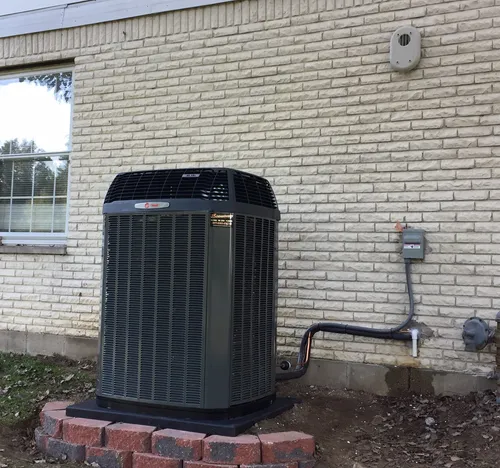
Economy HVAC is a family-owned company based in Indianapolis, IN, offering heating, air conditioning, and plumbing services. They provide installation, repair, and maintenance for furnaces, air conditioners, heat pumps, and HVAC systems. Economy HVAC is a certified Trane dealer and offers 24/7 emergency service to address urgent heating and cooling needs. Their technicians are highly trained and NATE certified, ensuring professional diagnostics and repairs. The company emphasizes quality workmanship and customer care in every project.

Vital Heating & Air
8913 Southeastern Ave, Indianapolis, IN 46239
Vital Heating & Air is an HVAC company serving Indianapolis, IN, and surrounding areas. They provide a full range of heating and cooling services including air conditioner, furnace, and heat pump repair and installation, as well as HVAC tune-ups. With over a decade of experience since 2012, they offer expert solutions aimed at improving home comfort and energy efficiency. Their services cover the Indianapolis metro area and nearby communities such as Center Grove, Beech Grove, Broad Ripple, Geist, Fountain Square, Southport, Greenwood, Zionsville, and Fishers.
Quality Comfort Heating and Air LLC
5557 N Morristown Rd, Shelbyville, IN 46176
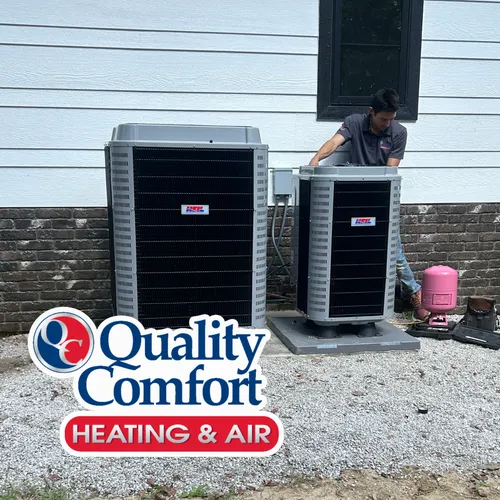
Quality Comfort Heating and Air LLC is an HVAC contractor based in Indianapolis, IN, offering installation services for air conditioning, furnaces, heat pumps, and duct cleaning. They provide energy-efficient heating and cooling solutions featuring Heil brand equipment, known for advanced technology like variable operation and communicating comfort systems. The company supports customers with extensive warranties and access to multiple utility rebates and tax incentives. Their services also include attic insulation to enhance system efficiency.
King of Comfort Heating & Cooling
7009 E 56th St, Indianapolis, IN 46226
King of Comfort Heating & Cooling is an HVAC company based in Indianapolis, IN, offering a wide range of heating and cooling services. Their team provides installation, repair, and maintenance for air conditioners, furnaces, heat pumps, boilers, mini splits, geothermal heat pumps, and thermostats. They emphasize comprehensive service and staying current with industry developments to meet diverse HVAC needs. The company also offers 24/7 emergency repair services to ensure reliable heating and cooling during extreme weather conditions. Their technicians handle everything from routine tune-ups to complex repairs, including cracked heat exchangers and faulty thermostats.
Bowers Heating and Cooling
Indianapolis, IN
Bowers Heating and Cooling provides HVAC installation, repair, and tune-up services in Indianapolis, IN. They handle air conditioning, furnace, heat pump, and boiler systems with tailored solutions based on thorough consultations. The company serves several surrounding areas including Westfield, Carmel, Fishers, Noblesville, and Zionsville. Their process emphasizes transparency and consistent updates throughout each project.
Understanding Heat Pump Systems
A heat pump is essentially an air conditioner that can run in reverse. In the summer, it extracts heat from inside your home and releases it outdoors. In the winter, it reverses the process, pulling heat energy from the outside air (even when it's cold) and transferring it indoors. This method of heat transfer is far more energy-efficient than traditional furnaces that create heat by burning fuel.
Modern heat pump technology has advanced significantly, making these systems a reliable primary heating source even in colder regions like Central Indiana. The efficiency of a heat pump is measured by two key ratings: the Seasonal Energy Efficiency Ratio (SEER) for cooling and the Heating Seasonal Performance Factor (HSPF) for heating. Higher numbers indicate greater efficiency and lower operating costs.
Types of Heat Pumps for Greenwood Homes
Not all heat pumps are created equal. The right choice for your home depends on your existing infrastructure, budget, and performance expectations.
Air-Source Heat Pumps (ASHP) This is the most common type, transferring heat between your home and the outdoor air. They are a suitable choice for our climate but often benefit from a backup heating source during periods of extreme cold.
Dual-Fuel or Hybrid Systems This is an increasingly popular and highly recommended setup for Indiana. It pairs an air-source heat pump with a gas furnace. The system intelligently uses the efficient heat pump for moderate temperatures and automatically switches to the furnace during deep freezes, ensuring reliable comfort and optimizing energy use year-round.
Ductless Mini-Split Heat Pumps Ideal for homes without existing ductwork, room additions, or for creating zoned comfort in specific areas. These systems have an outdoor compressor/condenser and one or more indoor air-handling units, connected by a small conduit. They offer excellent efficiency and flexible installation options.
Geothermal Heat Pumps Also known as ground-source heat pumps, these are the most efficient systems available. They use the stable temperature of the earth for heat exchange. While they offer the lowest operating costs and longest lifespan, they come with the highest upfront installation cost due to the required ground loop excavation 1 2.
Why Climate Matters: Heat Pumps in Indiana Winters
Greenwood experiences cold winters where temperatures can dip well below freezing. A critical factor in heat pump performance is that their efficiency decreases as the outdoor temperature drops-a phenomenon known as "cold climate capacity." In extreme cold, a standard air-source heat pump may struggle to extract enough heat from the air to keep your home warm.
This is why the dual-fuel system is so strongly recommended for our area. It provides the best of both worlds: the exceptional efficiency of a heat pump for the majority of the year and the powerful, reliable heat of a furnace for the coldest days. This combination ensures comfort without the high operating cost of running a furnace all winter or the potential inadequacy of a heat pump alone in a deep freeze 3.
Efficiency Ratings: SEER and HSPF Explained
When comparing heat pumps, you'll encounter SEER and HSPF ratings. Understanding these will help you calculate long-term savings.
- SEER (Seasonal Energy Efficiency Ratio): Measures cooling efficiency. The current federal minimum is 14 SEER, but high-efficiency models range from 17 to over 20 SEER.
- HSPF (Heating Seasonal Performance Factor): Measures heating efficiency. The minimum is 8.2 HSPF, with high-performance models reaching 9.5 HSPF or higher.
For Greenwood, prioritizing a higher HSPF can lead to more significant heating savings during our winters. Investing in a unit with a SEER of 17+ and an HSPF of 9.0+ typically offers the best balance of upfront cost and operational savings over the system's life.
Cost Factors for Heat Pump Installation & Replacement
The cost to install or replace a heat pump in Greenwood can vary widely based on several factors. Generally, homeowners can expect a range from $5,000 to over $15,000 for a full system 4 5.
What Influences the Final Price?
- System Type and Size: The capacity of the unit (measured in tons) must be correctly matched to your home's square footage and insulation levels. A dual-fuel system will cost more than a standard air-source unit, and geothermal is the most expensive option.
- Efficiency Level: High-efficiency models (19+ SEER, 9.5+ HSPF) have a higher purchase price but lower monthly energy bills.
- Existing Infrastructure: The condition of your ductwork is a major factor. Leaky or poorly sized ducts may need modification or replacement, adding to the project cost. Homes without ducts considering mini-splits will have different cost variables.
- Labor and Complexity: Installation difficulty, such as working in a tight attic or crawlspace, or integrating with smart home controls, can affect labor time and cost.
- Additional Components: The job often includes replacing the indoor air handler or coil, updating electrical connections, and installing a new thermostat.
Find the perfect heat pump installation & replacement contractors for your needs
Get personalized recommendations and expert advice
Choosing the Right System for Your Home
Making the best choice involves more than just comparing price tags. Consider this roadmap:
- Schedule a Professional Assessment: A reputable HVAC contractor will perform a Manual J load calculation. This is not a guess based on square footage; it's a precise analysis of your home's heat gain and loss, ensuring your new system is perfectly sized.
- Evaluate Your Existing Equipment: What is the age and condition of your furnace and ductwork? If you have a relatively new, efficient furnace, a dual-fuel setup might be ideal. If your ducts are old, budget for necessary repairs or sealing.
- Consider Long-Term Value: While a high-efficiency system has a higher initial cost, calculate the potential energy savings. Also, inquire about available rebates from utilities or federal tax credits for energy-efficient home improvements, which can significantly offset the upfront investment 6.
- Plan for the Future: Modern multi-stage or variable-speed heat pumps operate more quietly and maintain more consistent temperatures than single-stage models. Features like smart thermostats can further enhance comfort and control.
For most Greenwood homeowners, a high-efficiency dual-fuel (hybrid) system represents the optimal balance of year-round comfort, energy savings, and reliability in our climate, despite the higher initial investment 7.
The Importance of Professional Installation
Even the best heat pump will underperform if installed incorrectly. Professional installation is non-negotiable for ensuring:
- Correct Sizing: Prevents short-cycling (frequent on/off cycles) and inadequate heating/cooling.
- Optimal Airflow: Proper duct design and refrigerant charge are critical for efficiency and longevity.
- Safety and Warranty: Proper electrical and gas line work ensures safety. Most manufacturers require professional installation to validate their equipment warranty.
- Local Code Compliance: Certified technicians ensure the installation meets all local building codes and regulations.
Maintenance for Longevity and Efficiency
To protect your investment, regular maintenance is essential. This should include an annual professional tune-up, typically in the spring or fall, to clean coils, check refrigerant levels, inspect electrical components, and ensure the system is operating at peak efficiency. Homeowners can also help by regularly changing or cleaning air filters, keeping the outdoor unit clear of debris, and ensuring indoor vents are not blocked.
Frequently asked questions
Sources
Footnotes
-
How Much Does a Heat Pump Cost? 2025 Expert Guide - https://www.solarreviews.com/blog/heat-pump-costs ↩
-
Heat Pump Price Guides - https://heatpumppriceguides.com/ ↩
-
Heat Pump Installation & Service in Greenwood IN & Nearby - https://www.reveporter.com/heat-pump-installation/ ↩
-
Greenwood, IN Heat Pump Installation | HVAC Near Me - https://callthiele.com/greenwood-heating-air-conditioning-service/heat-pump-installation/ ↩
-
Cost of a Heat Pump Installation in 2025 - https://www.cabshvac.com/heat-pump-installation-cost/ ↩
-
Here's how much heat pumps cost to install - https://homes.rewiringamerica.org/articles/heating-and-cooling/heat-pump-costs ↩
-
What to Consider When Planning a Heat Pump Installation in ... - https://callthiele.com/blog/what-to-consider-heat-pump-installation-indiananpolis-in/ ↩