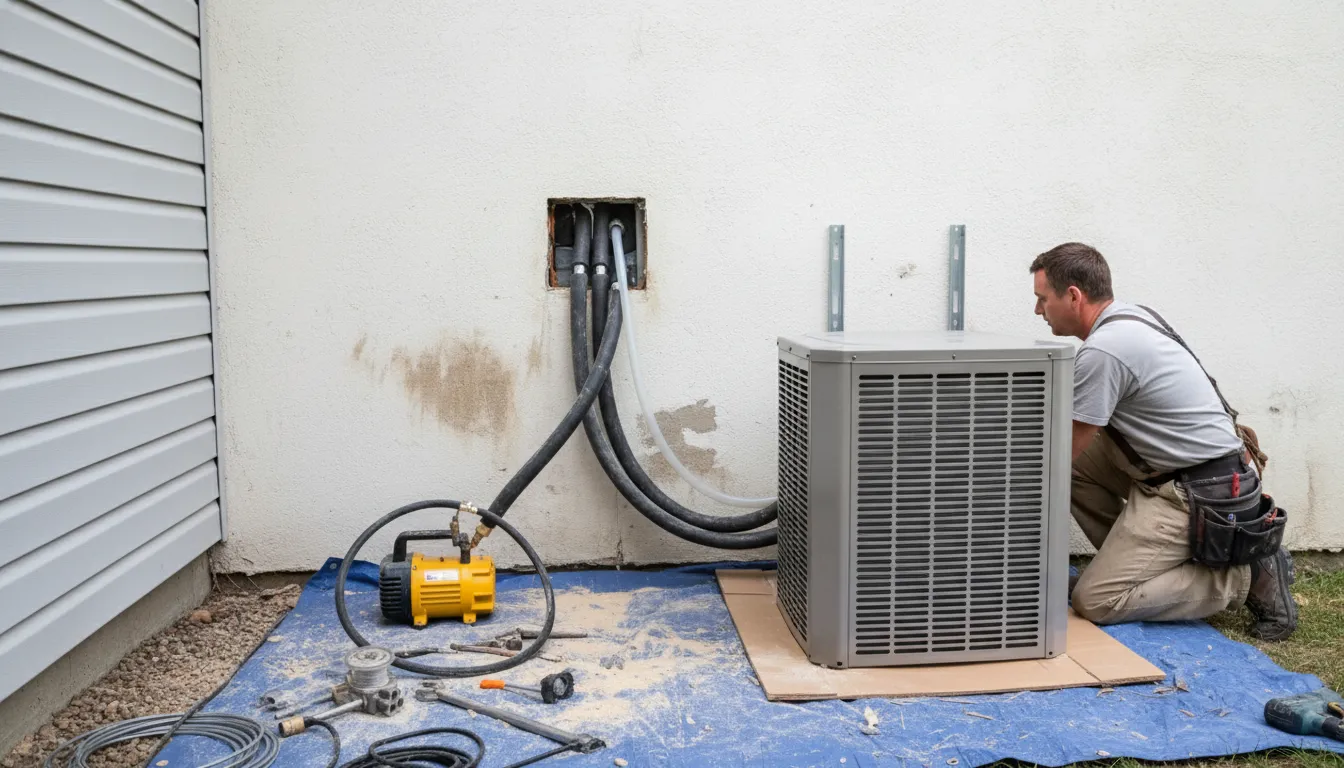
Find the Best Heat Pump Installation & Replacement Contractors for Your Business
No obligation • Fast responses • Nationwide coverage

Why you can trust HVAC Firms
HVAC Firms is a leading United States resource for evaluating HVAC service providers. Our team researches companies, checks credentials, and reviews customer feedback to present clear, unbiased information. Listings and rankings are based on merit, and companies cannot pay to change our editorial content.
Search providers near you
Top Heat Pump Installation & Replacement Contractors in Greenwich, Connecticut Ranked
Considering a new heating and cooling system for your Greenwich home? A heat pump is a versatile, energy-efficient solution that provides both heating and air conditioning from a single unit. For Connecticut homeowners, modern heat pump technology offers a compelling alternative to traditional oil or gas furnaces, especially with available financial incentives. This guide will help you understand the types of heat pump systems, their costs, and the key factors for a successful installation in our local climate.
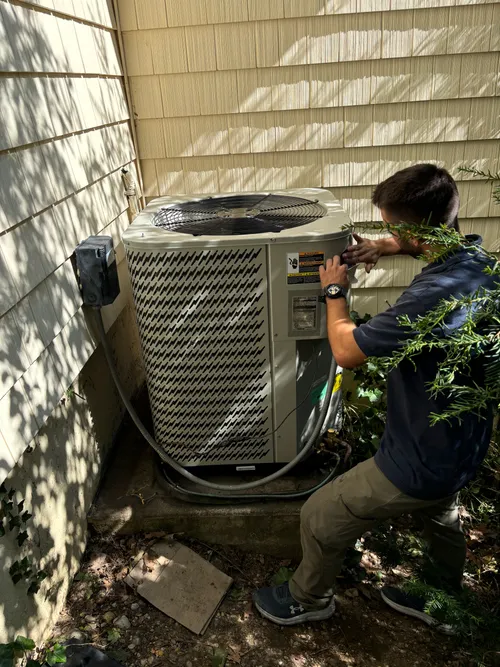
KOKA-TECH HVAC INC
60-21 Menahan St, Ridgewood, NY 11385
KOKA-TECH HVAC INC provides professional heating and cooling services in New York, NY, including installation, repair, and tune-ups for air conditioners, furnaces, heat pumps, boilers, and mini splits. They offer 24/7 emergency support and same-day availability, serving Queens, Brooklyn, Manhattan, Bronx, and Long Island. The company is licensed and insured, with a strong local presence and expertise in NYC buildings. With nearly 300 five-star reviews, KOKA-TECH HVAC INC is recognized for upfront quotes and customer approval before starting work.
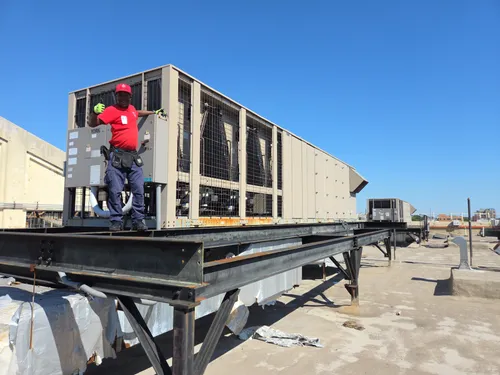
American HVAC Corp - Brooklyn, Heating, Air Conditioning, Refrigeration, Ductless Mini Split, Rooftop, Commercial HVAC NYC
77 Sands St 6th Floor, Brooklyn, NY 11201
American HVAC Corp - Brooklyn, Heating, Air Conditioning, Refrigeration, Ductless Mini Split, Rooftop, Commercial HVAC NYC provides HVAC repair, installation, and maintenance services in New York, NY. Their certified technicians handle a wide range of heating and air conditioning equipment, including furnaces, heat pumps, mini splits, and rooftop systems. The company serves numerous neighborhoods across Brooklyn and extends service to Queens, Manhattan, Staten Island, and The Bronx. They support various industries such as banks, data centers, educational institutions, and commercial office buildings. Their technicians are accredited by EPA and NATE, ensuring professional expertise.
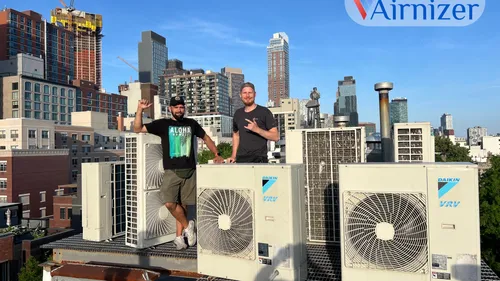
Airnizer HVAC
175 Pearl St Floor 1, suit 342, Brooklyn, NY 11201
Airnizer HVAC is an HVAC contractor based in New York, NY, specializing in the installation, repair, and maintenance of ductless mini split AC and heat pump systems. They serve multiple boroughs including Brooklyn, Queens, Manhattan, Bronx, and Staten Island. Their services cover all types of AC repairs, furnace, boiler, heat pump, and PTAC system maintenance and replacements. The team is certified and insured, focusing on practical solutions for heating and air conditioning needs.
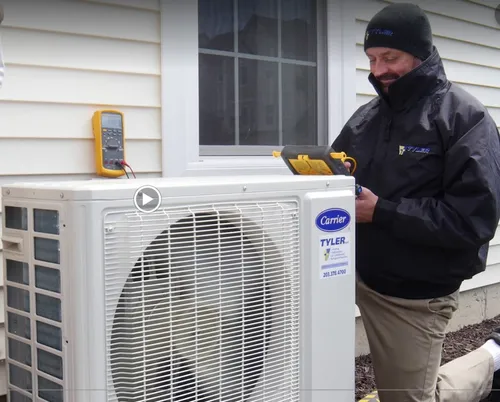
Tyler Heating, Air Conditioning, Refrigeration LLC
255 Hathaway Dr Unit 1, Stratford, CT 06615
Tyler Heating, Air Conditioning, Refrigeration LLC is an HVAC company serving New York, NY, with a focus on heating, cooling, and indoor air quality services. They provide installation, repair, and maintenance for air conditioners, furnaces, heat pumps, mini splits, and ductless HVAC systems. The company also offers indoor air quality solutions including humidity control and air purification. Established in 1995, Tyler Heating has over 25 years of experience serving the Southwest Connecticut area and offers same-day service to address urgent needs.
Yost & Campbell
2825/2823 Third Ave 3F Suite C1, Bronx, NY 10455
Yost & Campbell is a heating, air conditioning, water heater, and generator service provider based in New York, NY. Serving Westchester County and surrounding areas, they offer installation, repair, and maintenance for HVAC systems, water heaters, and automatic standby generators. With over 85 years of experience since 1939, the company provides 24-hour emergency service to ensure home comfort and safety throughout the region.
Understanding Heat Pump Technology
At its core, a heat pump doesn't generate heat by burning fuel. Instead, it moves existing heat from one place to another. In the winter, it extracts heat from the outside air (or ground) and transfers it indoors. In the summer, the process reverses, pulling heat from your home and releasing it outside, functioning as an air conditioner. This efficient transfer of energy is why heat pumps can deliver more heating energy than the electrical energy they consume, measured by a Coefficient of Performance (COP).
This technology is particularly relevant in Connecticut, where homeowners often face high heating oil and natural gas bills. By switching to a high-efficiency heat pump, you can significantly reduce your annual energy costs while gaining the benefit of whole-home cooling-something a standard furnace cannot provide.
Types of Heat Pump Systems for Greenwich Homes
Not all heat pumps are the same. The right system for your home depends on your existing ductwork, property, and specific comfort needs.
Air-Source Heat Pumps (ASHPs): This is the most common type installed in Greenwich. An ASHP transfers heat between your house and the outdoor air. Modern models are highly efficient even in cold weather. They can be ducted, connecting to your home's existing air duct system, or ductless.
Ductless Mini-Split Heat Pumps: These systems are ideal for homes without existing ductwork, such as older Greenwich properties, or for room additions and targeted zone control. A mini-split consists of an outdoor compressor unit connected to one or more indoor air-handling units mounted on walls or ceilings. They allow you to control temperatures in individual rooms, eliminating energy waste in unused spaces.
Ground-Source (Geothermal) Heat Pumps: This is the most efficient type of heat pump system available. It uses the stable temperature of the earth, just a few feet below the surface, as its heat exchange medium. While geothermal systems have a much higher upfront cost due to the required ground loop installation (either horizontal trenches or vertical boreholes), they offer the lowest operating costs and longest equipment life, making them a valuable long-term investment for suitable properties in Greenwich 1.
Why Cold-Climate Heat Pumps Are Essential
A common concern is whether a heat pump can handle a Connecticut winter. The answer is a definitive yes, provided you install a cold-climate heat pump model. Early generations of heat pumps lost efficiency in freezing temperatures, but today's advanced models are specifically engineered to provide efficient heating in sub-freezing conditions, some operating effectively at temperatures as low as -15°F.
These cold-climate units incorporate features like variable-speed compressors and enhanced vapor injection to maintain heating capacity and efficiency when it's needed most. For most Greenwich homes, a properly sized and installed cold-climate air-source heat pump can serve as the primary heating system without the need for a fossil fuel backup 2.
Key Factors Influencing Performance and Cost
Several critical factors will determine the performance, comfort, and overall value of your heat pump investment.
Home Insulation and Air Sealing: This is arguably the most important prerequisite. A heat pump system works best in a well-insulated, airtight home. If your Greenwich home has drafty windows, insufficient attic insulation, or unsealed gaps, the heat pump will have to work harder and longer to maintain temperature, reducing its efficiency and potential savings. Addressing insulation first can often allow for a smaller, less expensive system to be installed 3.
System Sizing and Efficiency Ratings: Bigger is not better. An oversized system will short-cycle (turn on and off frequently), leading to poor humidity control, uneven temperatures, and higher wear and tear. A professional will perform a Manual J load calculation to determine the precise heating and cooling capacity your home needs. Look for high efficiency ratings: SEER2 (Seasonal Energy Efficiency Ratio) for cooling, HSPF (Heating Seasonal Performance Factor) for heating, and COP for instantaneous heating efficiency 4.
Find the perfect heat pump installation & replacement contractors for your needs
Get personalized recommendations and expert advice
Installation Quality: The skill of the installer is as important as the quality of the equipment. Proper installation involves correct refrigerant charging, optimal placement of outdoor units, and meticulous electrical and control wiring. A poor installation can cripple the performance of even the best heat pump model.
Cost Breakdown for Heat Pump Installation in Greenwich
The total investment for a heat pump system in Greenwich varies widely based on the type of system, your home's size and characteristics, and the equipment's efficiency level. Here is a general cost overview based on local and regional data:
- Air-Source Heat Pump (Ducted): For a whole-home system that integrates with existing ductwork, homeowners can expect a range of $8,000 to $20,000 or more. Higher-efficiency models and complex installations will be at the upper end of this scale 5.
- Ductless Mini-Split System: Costs are typically calculated per zone (one outdoor unit + one indoor head). A single-zone system often starts around $3,500 to $5,000. Multi-zone systems, which connect one outdoor unit to several indoor heads, can range from $7,000 to $10,000+ depending on the number of zones 6 7.
- Ground-Source Geothermal System: These involve the highest initial investment due to the ground loop excavation or drilling. Installed costs for a residential geothermal system in our region often start around $15,000 and can exceed $30,000 8 9.
It's crucial to view these costs alongside available incentives and long-term operating savings.
Financial Incentives and Long-Term Savings
The upfront cost of a heat pump is offset by significant incentives and ongoing energy bill reductions.
Energize CT Rebates: This state-sponsored program offers rebates for installing qualifying air-source and ground-source heat pumps. Rebates can vary but may offer amounts like $250 per ton of cooling capacity, directly reducing your installation invoice 10.
Federal Tax Credits: The federal government offers a tax credit for energy-efficient home improvements. Through 2032, you can claim 30% of the project cost, up to a maximum of $2,000 per year, for a qualifying heat pump installation 11 12.
Long-Term Energy Savings: This is where the real value is realized. By moving heat instead of creating it through combustion, heat pumps operate at much higher efficiencies-often 300% or more. This can translate to a drastic reduction in your annual heating costs compared to oil or propane systems, with the added benefit of low-cost cooling in the summer. Over the 15+ year lifespan of the system, these savings can fully offset the initial investment 13 14.
Frequently asked questions
Sources
Footnotes
-
Heat Pump Cost Explained: What to Expect for Your Home Upgrade - https://www.leokobco.com/post/heat-pump-cost-explained ↩
-
Air-Source Heat Pumps (ASHP) - Energize CT - https://www.energizect.com/sites/default/files/documents/ECT_ASHP_GUIDE_FIN_011222.pdf ↩
-
Advice on installing a heat pump system in CT (Eversource is ... - https://www.reddit.com/r/heatpumps/comments/1hij424/advice_on_installing_a_heat_pump_system_in_ct/ ↩
-
Best Heat Pump Buying Guide - Consumer Reports - https://www.consumerreports.org/appliances/heat-pumps/buying-guide/ ↩
-
2026 Heat Pump Cost Guide: Purchase, Installation & Repair - Carrier - https://www.carrier.com/residential/en/us/products/heat-pumps/how-much-does-a-heat-pump-cost/ ↩
-
Heat Pump Cost East Windsor CT | 2025 Prices & Rebates Guide - https://cleanclimatehvac.com/how-much-does-a-heat-pump-cost-in-east-windsor/ ↩
-
Ultimate Guide to Heat Pump Cost in Canada: You Should Know - https://www.knowledgehvacr.ca/heat-pump-cost-installation-bc-canada/ ↩
-
Heat Pump Cost & Replacement Cost Guide - Rahn Industries - https://rahnindustries.com/2023/08/08/heat-pump-replacement-cost-guide/ ↩
-
How Much Does it Cost to Install a Heat Pump in Connecticut? - https://www.aiellohomeservices.com/blog/cost-install-heat-pump-connecticut ↩
-
Heat Pumps - Connecticut General Assembly - https://www.cga.ct.gov/2025/rpt/pdf/2025-R-0096.pdf ↩
-
Heating System Comparison - https://www.homecomfortpractice.com/hvac/heating/heating-system-comparison/ ↩
-
Heat Pump Cost Analysis: What To Expect & How It's Determined - https://clinesairconditioning.com/heat-pump-cost/ ↩
-
Complete Guide to Heat Pumps for Connecticut Homeowners - https://ne-smartenergy.com/blog/complete-guide-to-heat-pumps-for-ct-homeowners/ ↩
-
2025 Heat Pump Replacement Costs - What Homeowners Can ... - https://heatpumppriceguides.com/heat-pump-replacement-costs-this-year/ ↩