Find the Best Heat Pump Installation & Replacement Contractors for Your Business
No obligation • Fast responses • Nationwide coverage

Why you can trust HVAC Firms
HVAC Firms is a leading United States resource for evaluating HVAC service providers. Our team researches companies, checks credentials, and reviews customer feedback to present clear, unbiased information. Listings and rankings are based on merit, and companies cannot pay to change our editorial content.
Search providers near you
Top Heat Pump Installation & Replacement Contractors in Bridgeport, Connecticut Ranked
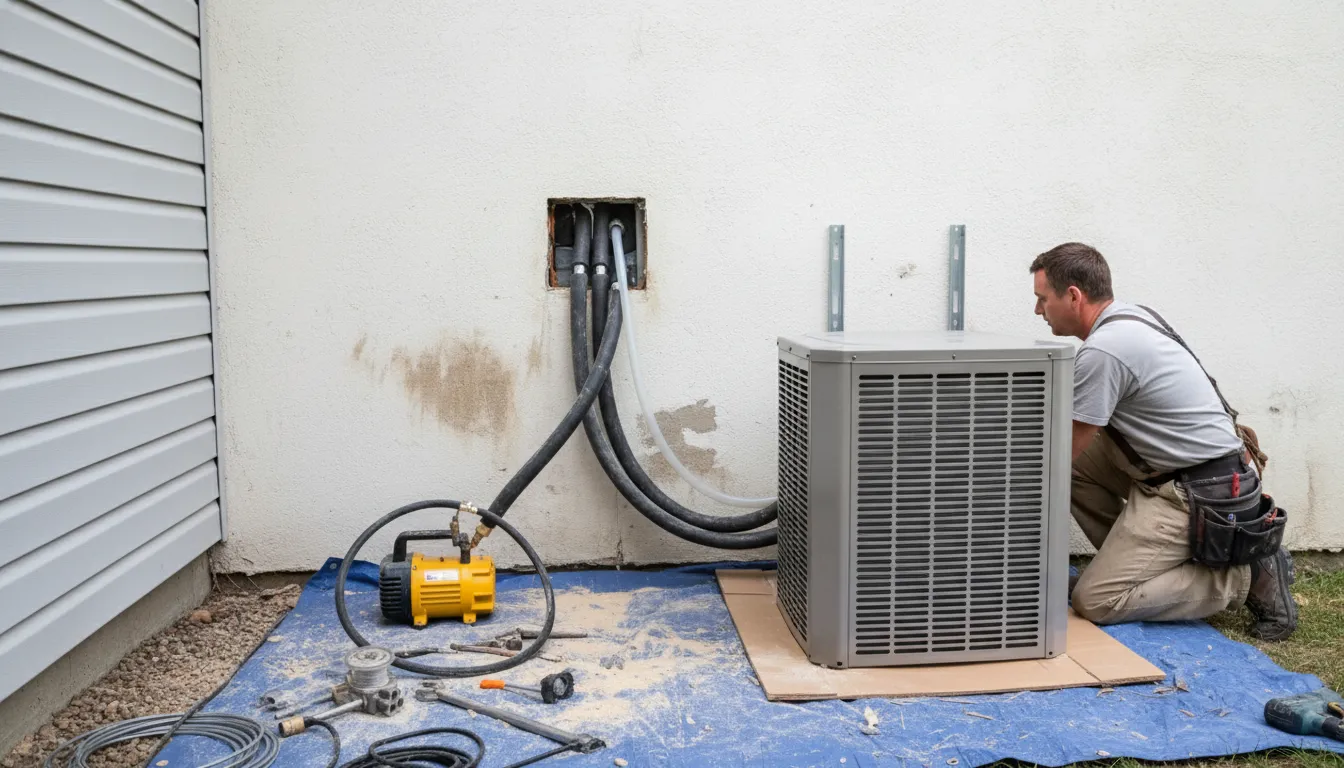
Upgrading your home's heating and cooling with a heat pump is a smart investment in year-round comfort and energy efficiency, especially in Bridgeport's climate. These versatile systems provide both heating and cooling from a single unit, offering a modern alternative to traditional furnaces and air conditioners. This guide will help you understand the types of systems available, key considerations for local homes, and how to find qualified professionals for your installation or replacement project.
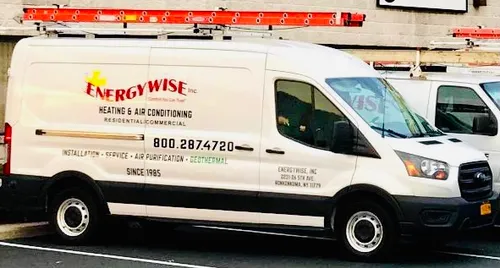
Energywise Inc
2231 5th Ave Suite 26, Ronkonkoma, NY 11779
Energywise Inc is an HVAC company based in New York, NY, specializing in heating and cooling solutions. They offer installation, repair, and maintenance services for a variety of systems including heat pumps, central air conditioning, ductless mini splits, geothermal systems, and traditional furnaces. Their factory-trained technicians provide expert guidance and personalized recommendations to optimize home comfort and energy efficiency. Energywise Inc emphasizes energy-efficient products and sustainable solutions to reduce environmental impact while maintaining reliable system performance. The company has decades of experience and provides 24/7 emergency repair services to address urgent heating or cooling issues promptly.
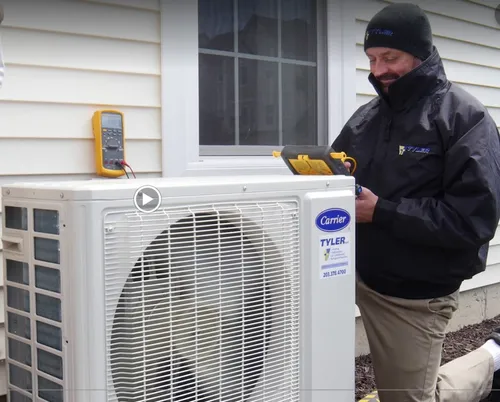
Tyler Heating, Air Conditioning, Refrigeration LLC
255 Hathaway Dr Unit 1, Stratford, CT 06615
Tyler Heating, Air Conditioning, Refrigeration LLC is an HVAC company serving New York, NY, with a focus on heating, cooling, and indoor air quality services. They provide installation, repair, and maintenance for air conditioners, furnaces, heat pumps, mini splits, and ductless HVAC systems. The company also offers indoor air quality solutions including humidity control and air purification. Established in 1995, Tyler Heating has over 25 years of experience serving the Southwest Connecticut area and offers same-day service to address urgent needs.
Understanding Heat Pump Technology
A heat pump doesn't generate heat by burning fuel; instead, it moves existing heat from one place to another. In the winter, it extracts heat from the outside air-even when it's cold-and transfers it indoors. In the summer, the process reverses, pulling heat from your home and releasing it outside, functioning as an air conditioner. This efficient transfer of energy is what makes heat pumps a compelling choice for reducing reliance on fossil fuels and lowering utility bills.
For Connecticut homeowners, the most critical advancement is the cold-climate air-source heat pump. Modern models are engineered to operate efficiently at temperatures well below freezing, with some systems providing 100% of a home's heating needs even when outdoor temperatures drop below 0°F. This technology has effectively dispelled the outdated myth that heat pumps are only suitable for mild climates.
Types of Heat Pump Systems
Choosing the right system depends on your home's layout, existing infrastructure, and performance goals. The two primary categories are air-source and geothermal systems.
Air-Source Heat Pumps (ASHPs)
This is the most common type, transferring heat between your home and the outdoor air. They come in two main configurations:
- Ducted Systems: These integrate with your home's existing forced-air ductwork to provide whole-home heating and cooling. They are an excellent replacement for a traditional central air system.
- Ductless Mini-Split Systems: These consist of an outdoor compressor unit connected to one or more indoor air handlers mounted on walls or ceilings. They are ideal for homes without existing ducts, for room additions, or for creating customized heating and cooling zones within a home. Mini-splits are known for their high efficiency and quiet operation.
Geothermal Heat Pumps (Ground-Source)
These systems use the stable temperature of the earth a few feet below the surface as their heat exchange medium. While they have a significantly higher upfront installation cost, they offer the highest efficiency and lowest operating costs available, as the ground temperature is more consistent than the air year-round. Installation requires adequate yard space for burying ground loops, either horizontally in trenches or vertically in deep boreholes.
Why a Heat Pump is Ideal for Bridgeport Homes
Bridgeport's climate, with its cold winters and warm, humid summers, is perfectly suited for a modern heat pump system. Here's why:
- Year-Round Solution: A single system handles both heating and cooling, eliminating the need for separate equipment.
- Cold-Climate Performance: Today's advanced ASHPs are specifically rated for northern climates and can maintain efficiency and capacity during Connecticut's coldest snaps.
- Energy Savings: By moving heat instead of creating it through combustion, heat pumps can be 2-3 times more efficient than traditional electric resistance heating or standard air conditioners. For homes currently using oil or propane, the savings on heating costs can be substantial.
- Improved Indoor Air Quality: Many heat pump systems include advanced multi-stage filtration and dehumidification capabilities, which are particularly beneficial during Bridgeport's humid summer months.
Key Considerations for Your Installation
A successful heat pump project requires careful planning. Key factors include:
- Proper Sizing: An HVAC professional should perform a Manual J load calculation. This analysis determines your home's exact heating and cooling needs based on its size, insulation, windows, and orientation. An oversized or undersized system will lead to comfort issues, short cycling, and reduced efficiency 1.
- Ductwork Assessment: If you're considering a ducted system, your existing ducts must be inspected. They need to be properly sealed, insulated, and sized to handle the airflow requirements of a new heat pump. Upgrading or installing new ductwork can add significantly to the project cost 2.
- Electrical Service: Heat pumps require a dedicated electrical circuit. Your electrical panel may need an upgrade to support the new system, which is an additional cost factor.
- Choosing a Contractor: Look for local HVAC companies with specific experience installing cold-climate heat pumps. They should be licensed, insured, and able to provide references. Always obtain multiple detailed quotes that include equipment model numbers, efficiency ratings, labor warranties, and a clear scope of work.
Find the perfect heat pump installation & replacement contractors for your needs
Get personalized recommendations and expert advice
Understanding Costs and Financial Incentives
The total investment for a heat pump installation in Bridgeport varies widely based on system type, home size, and complexity. It's important to view this cost alongside available incentives and long-term energy savings.
Typical Cost Ranges:
- Ductless Mini-Split: A single-zone system typically ranges from $5,000 to $8,000 installed. Multi-zone systems for whole-home coverage cost more 3.
- Ducted Air-Source System: Replacing a full central system, including the outdoor unit and indoor air handler, often falls between $14,000 and $22,000 or more, especially if new ductwork is needed 4 5.
- Geothermal System: Given the ground loop excavation or drilling, these systems represent a higher initial investment, often starting around $17,000 and ranging to $34,000 or above 6.
Substantial Rebates and Tax Credits: The upfront cost is mitigated by significant financial incentives.
- Energize CT Rebates: This state program offers substantial point-of-sale rebates for installing qualifying high-efficiency heat pumps. Rebates are often calculated per ton of system capacity and can reduce your out-of-pocket cost immediately 7 8.
- Federal Tax Credit: The federal government offers a tax credit of up to $2,000 for the installation of a qualifying heat pump system 9 10. This credit is claimed on your annual income tax return.
Efficiency Ratings: What to Look For
When comparing systems, pay close attention to these key metrics:
- SEER2 (Seasonal Energy Efficiency Ratio): Measures cooling efficiency. A higher number indicates greater efficiency.
- HSPF2 (Heating Seasonal Performance Factor): Measures heating efficiency. This is especially important for cold climates like Bridgeport's. Look for a high HSPF2 rating to ensure efficient operation throughout the winter 11.
- Cold-Climate Certification: Seek out models that are specifically tested and certified for performance in low temperatures, ensuring they will deliver heat efficiently on the coldest days.
Maintaining Your New System
To protect your investment and ensure peak performance, regular maintenance is essential. This includes seasonal checks of refrigerant levels, cleaning of coils (both indoor and outdoor), inspecting electrical connections, and ensuring proper airflow. Many contractors offer annual maintenance plans. A well-maintained heat pump can provide reliable, efficient service for 15 years or more.
Frequently asked questions
Sources
Footnotes
-
Heat Pumps - Connecticut General Assembly - https://www.cga.ct.gov/2025/rpt/pdf/2025-R-0096.pdf ↩
-
Heating System Comparison - https://www.homecomfortpractice.com/hvac/heating/heating-system-comparison/ ↩
-
2026 Heat Pump Cost Guide: Purchase, Installation & Repair - https://www.carrier.com/residential/en/us/products/heat-pumps/how-much-does-a-heat-pump-cost/ ↩
-
Heat Pump Installation Costs in CT : r/Connecticut - Reddit - https://www.reddit.com/r/Connecticut/comments/1jeowog/heat_pump_installation_costs_in_ct/ ↩
-
How Much Do Heat Pumps Cost? (2024 Price Estimate Guide) - https://jarboes.com/knowledge-center/how-much-do-heat-pumps-cost/ ↩
-
The Smart Homeowner's Guide to Heat Pump Installations - Majic Air - https://www.majicair.com/the-smart-homeowners-guide-to-heat-pump-installations ↩
-
Air-Source Heat Pumps (ASHP) - Energize CT - https://www.energizect.com/sites/default/files/documents/ECT_ASHP_GUIDE_FIN_011222.pdf ↩
-
Complete Guide to Heat Pumps for Connecticut Homeowners - https://ne-smartenergy.com/blog/complete-guide-to-heat-pumps-for-ct-homeowners/ ↩
-
Heat Pump Guide: Cost, Rebates, and Efficiency Explained - https://www.sumzeroenergysystems.com/blog/heat-pump-guide-cost-rebates-efficiency-explained ↩
-
Air Conditioning System Comparison - Home Comfort Practice - https://www.homecomfortpractice.com/hvac/air-conditioning/air-conditioning-comparison/ ↩
-
How Much Does Installing a Heat Pump Cost in 2025? Actual ... - https://thefurnaceoutlet.com/blogs/hvac-tips/how-much-does-installing-a-heat-pump-cost-in-2025-actual-estimates-advice ↩