Find the Best Furnace Repair Companies for Your Business
No obligation • Fast responses • Nationwide coverage

Why you can trust HVAC Firms
HVAC Firms is a leading United States resource for evaluating HVAC service providers. Our team researches companies, checks credentials, and reviews customer feedback to present clear, unbiased information. Listings and rankings are based on merit, and companies cannot pay to change our editorial content.
Search providers near you
Top Furnace Repair Companies in Moore, Oklahoma Ranked
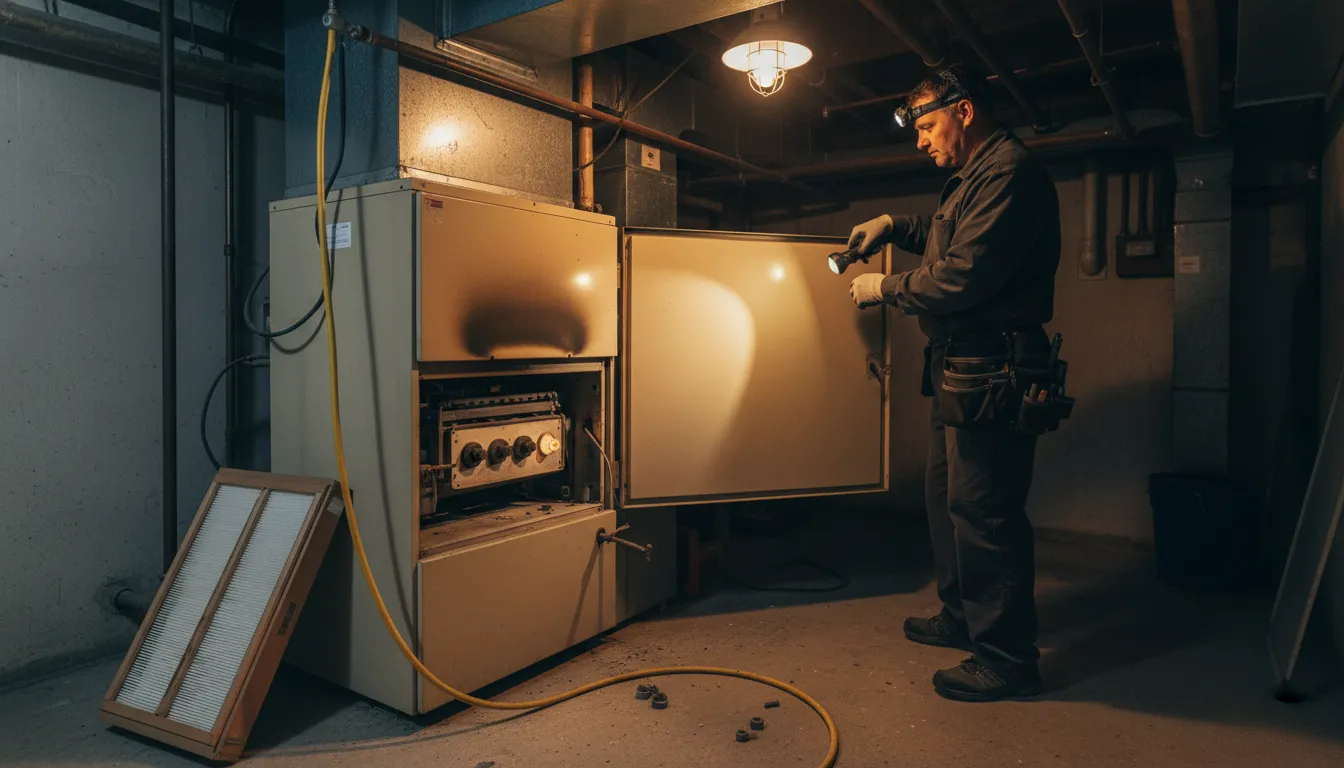
When your furnace stops working on a cold Moore night, getting reliable and fast heating service is essential. Furnace repair involves diagnosing and fixing issues that prevent your system from producing heat efficiently and safely. This guide explains what to expect from the furnace repair process in Moore, why timely attention matters for our local climate, and how you can find qualified technicians to restore warmth to your home.
A&T Mechanical Heat&Air Services, Inc.
14900 Santa Fe Crossing Dr, Edmond, OK 73013
A&T Mechanical Heat&Air Services, Inc. is a family-owned HVAC contractor based in Oklahoma City, OK, with over 40 years of experience. They provide a wide range of services including air conditioning repair, furnace and heat pump installation and repair, as well as HVAC tune-ups for residential and commercial clients. Their certified technicians serve the greater Oklahoma City area and surrounding communities, offering comprehensive heating, cooling, electrical, and plumbing solutions. The company is known for managing statewide commercial HVAC systems and emphasizes regular maintenance to ensure system efficiency and code compliance.
Ac Medic Heating and Air Conditioning
193 W N Centennial Way, Mustang, OK 73064
Ac Medic Heating and Air Conditioning is a family-owned HVAC company based in Mustang, serving Oklahoma City, OK, and nearby communities. They offer a range of services including air conditioner and furnace repair, installation, seasonal maintenance, and duct repair. The team is trained and tested to provide clear options without high-pressure sales tactics, helping customers make informed decisions about their heating and cooling needs.
Airbenders Heat and Air, Plumbing, Fireplaces
1818 Industrial Blvd, Norman, OK 73069
Airbenders Heat and Air, Plumbing, Fireplaces is a contractor based in Oklahoma City, OK, offering heating, air conditioning, plumbing, and fireplace services for both residential and commercial clients. They provide installation and repair services for HVAC systems, including furnaces and air conditioners, focusing on dependable solutions. The company emphasizes honest pricing and reliable workmanship in their projects.
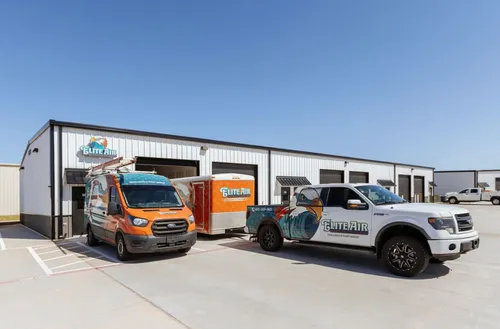
Elite Air Heating and Air Conditioning
2500 N Shields Blvd suite 501, Moore, OK 73160
Elite Air Heating and Air Conditioning is a family-owned HVAC company serving Oklahoma City, OK, and nearby areas. They provide a range of services including air conditioning installation and repair, furnace and heat pump maintenance, commercial HVAC solutions, and indoor air quality improvements such as air filtration and ventilation systems. With over 15 years of experience, Elite Air offers preventative maintenance through their Elite Comfort Program to help extend system lifespan and maintain efficiency.
Select Heat & Air
Oklahoma City, OK
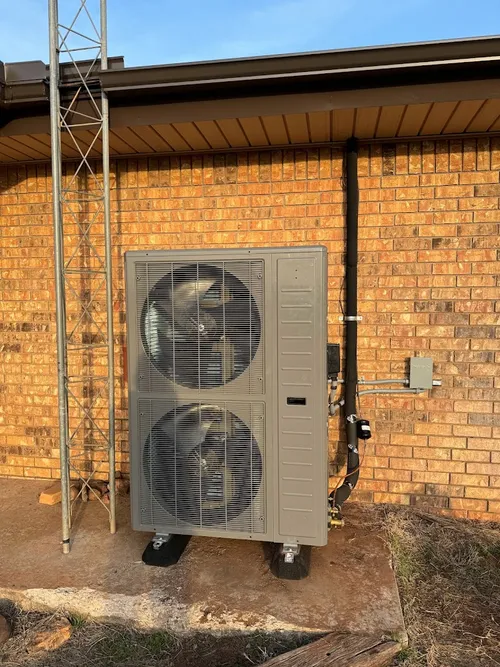
Select Heat & Air is a family-owned HVAC company serving Oklahoma City, OK, and nearby communities. With over 10 years of experience, they provide a range of services including air conditioning and heating installation, repair, and maintenance, as well as indoor air quality solutions and gas line services. Their team is equipped to handle duct cleaning and air purifier installations to improve air circulation and reduce allergens. Select Heat & Air offers 24/7 emergency service to address urgent HVAC needs promptly.
Understanding Furnace Service in Moore
A furnace service call in Moore typically begins with a technician diagnosing the problem. They will inspect key components like the thermostat, electrical connections, ignition system, heat exchanger, airflow, and gas lines. This thorough check is crucial for identifying not just the immediate fault but also potential safety issues, such as carbon monoxide leaks. Many local providers offer 24/7 emergency options, recognizing that heating failures during our cold winters can't wait for business hours.
The goal of any heating repair is to restore safe, efficient operation. Common issues technicians encounter include a lack of heat, weak airflow, strange noises like banging or screeching, unusual odors, and a system that cycles on and off too frequently. Promptly addressing these signs can prevent a minor issue from escalating into a major, costly breakdown.
Common Furnace Problems and Their Solutions
What are the most frequent reasons a Moore homeowner might need furnace repair? The local climate plays a significant role, as cold winters put extra strain on heating systems. Here are some typical malfunctions:
- No Heat or Weak Heat: This is the most urgent issue. It can be caused by a clogged air filter restricting airflow, a faulty hot surface ignitor or flame sensor, dirty burners, or a failing blower motor. The ignitor is often cited as one of the most common parts to fail on a furnace 1.
- Strange Noises or Odors: Rattling, squealing, or booming noises often point to mechanical wear, such as a loose belt, failing bearings in the blower motor, or issues within the combustion chamber. A musty smell might indicate mold in the ductwork, while a burning odor could be dust on the heat exchanger. Any smell of gas or rotten eggs requires immediate attention and evacuation.
- Frequent Short Cycling: If your furnace turns on and off every few minutes, it's not running long enough to heat your home effectively and is wearing itself out. This can be caused by an oversized unit, a dirty filter, a faulty flame sensor, or an overheating limit switch.
- Yellow Pilot Light or Burner Flames: The flame should be a crisp blue. A yellow, lazy flame indicates an improper fuel-air mixture, which can lead to inefficient combustion and the dangerous production of carbon monoxide.
Find the perfect furnace repair companies for your needs
Get personalized recommendations and expert advice
The Furnace Repair Process: What to Expect
Knowing the steps involved can make scheduling heating service less stressful. A standard repair visit follows a logical sequence:
- Diagnosis: The technician will ask about the symptoms and then perform a systematic inspection. They will check thermostat settings, electrical power, the ignition sequence, the condition of the heat exchanger for cracks, airflow through the filter and ducts, and the integrity of gas lines.
- Repair Plan & Estimate: After identifying the problem, the technician will explain the necessary fixes, which could include ignitor replacement, filter changes, motor repair or replacement, duct sealing, or thermostat calibration. They should provide a clear estimate for the repair work.
- The Repair Work: The time required depends on the complexity. Simple fixes like replacing an ignitor or thermostat can often be completed in 30 to 60 minutes. Most common repairs, such as swapping out a blower motor or cleaning burners, typically take between 1 to 4 hours. More extensive work, like replacing a heat exchanger, will take longer.
- Testing & Safety Check: Once the repair is complete, the technician will start the furnace and monitor a full cycle to ensure it operates correctly, efficiently, and safely. They should verify proper ignition, stable operation, and correct venting.
Cost Considerations for Heating Repair in Moore
The cost of furnace service in Moore varies based on the problem's severity, the parts required, and the service fee. It's helpful to understand the general pricing structure:
- Service Call/Diagnosis Fee: Most companies charge a service call fee, typically ranging from about $100 to $200, to cover the trip and initial diagnosis. This fee is often waived or applied toward the total cost if you proceed with the repair 2.
- Minor Repairs: Fixes such as replacing a hot surface ignitor, flame sensor, thermostat, or air filter generally fall in the range of $150 to $500.
- Major Repairs: Replacing significant components like a blower motor, control board, or, most critically, a heat exchanger, is more expensive. These repairs can cost anywhere from $800 to over $2,000 3.
When faced with a high repair bill, homeowners often wonder if it's more economical to repair or replace an older system. Factors like the age of your furnace, the frequency of recent repairs, and the cost of the fix relative to a new unit's price should all be considered.
Why Timely Furnace Maintenance Matters in Moore
The data shows that cold Moore winters actively strain furnaces, leading to common failures. Proactive maintenance is your best defense. An annual tune-up before heating season can identify and resolve small issues-like a slightly dirty sensor or a worn belt-before they leave you without heat. Regular maintenance also ensures your system runs efficiently, which can prevent a gradual rise in your monthly energy bills, a common sign of a struggling system.
Extending the life of your heating system through care and prompt repairs is both a comfort and a financial decision. While most repairs are completed within a few hours, major component failures are substantially more costly. Paying attention to early warning signs like unusual noises, strange smells, or increasing bills is the key to avoiding these major problems and ensuring your home stays warm all winter long 4 5 6.
Frequently asked questions
Sources
Footnotes
-
What Is The Most Common Part to Fail on a Furnace? - https://www.myqualitycomfort.com/general/what-is-the-most-common-part-to-fail-on-a-furnace/ ↩
-
How Much Is a Service Call for HVAC in Oklahoma? - https://rescueheatandair.com/blog/how-much-is-a-service-call-for-hvac-in-oklahoma/ ↩
-
Repair or Replace your furnace? - Direct Air LLC - https://directairandheat.com/blog/is-it-cheaper-to-repair-or-replace-a-furnace-in-oklahoma ↩
-
Heating Repair | Moore Air - https://www.mooreairok.com/service/heating-repair ↩
-
Furnace Repair Moore OK | Home Comfort Solutions - https://thehomecomfortsolutions.com/furnace-repair-moore-ok/ ↩
-
How Long Does It Usually Take to Repair a Furnace?. - https://www.tcmemt.com/post/how-long-does-it-usually-take-to-repair-a-furnace ↩