Find the Best Furnace Repair Companies for Your Business
No obligation • Fast responses • Nationwide coverage

Why you can trust HVAC Firms
HVAC Firms is a leading United States resource for evaluating HVAC service providers. Our team researches companies, checks credentials, and reviews customer feedback to present clear, unbiased information. Listings and rankings are based on merit, and companies cannot pay to change our editorial content.
Search providers near you
Top Furnace Repair Companies in Burlington, North Carolina Ranked
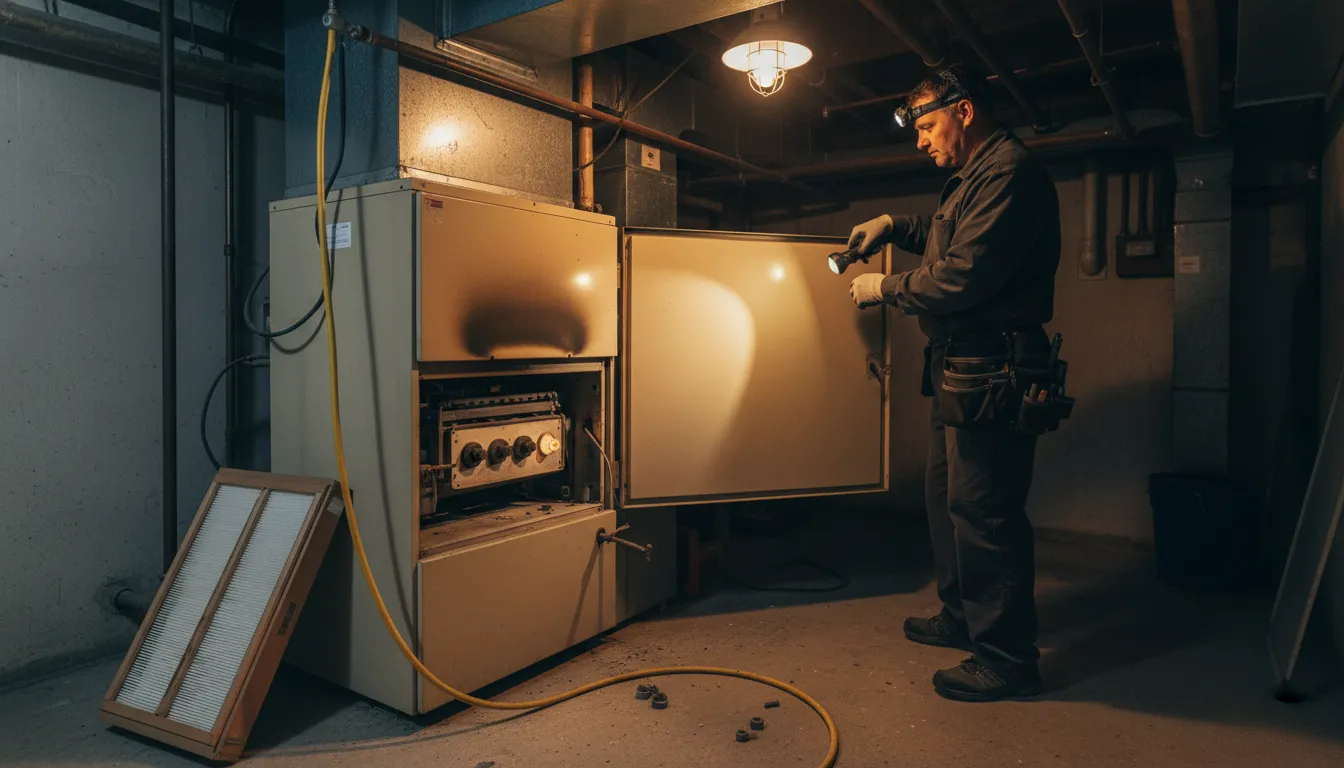
When winter arrives in Burlington, a reliable heating system isn't just a comfort-it's a necessity. Furnace repair involves diagnosing and fixing issues with your home's primary heating unit to restore warmth, safety, and efficiency. A malfunctioning furnace can lead to cold homes, high energy bills, and even safety hazards like carbon monoxide leaks. This guide is designed to help you understand the local furnace service process, common problems, and what to expect, so you can confidently connect with a qualified Burlington technician to get your heat back on.
Go-Forth HVAC Plumbing and Electrical
4260 Piedmont Pkwy Suite 100, Greensboro, NC 27410
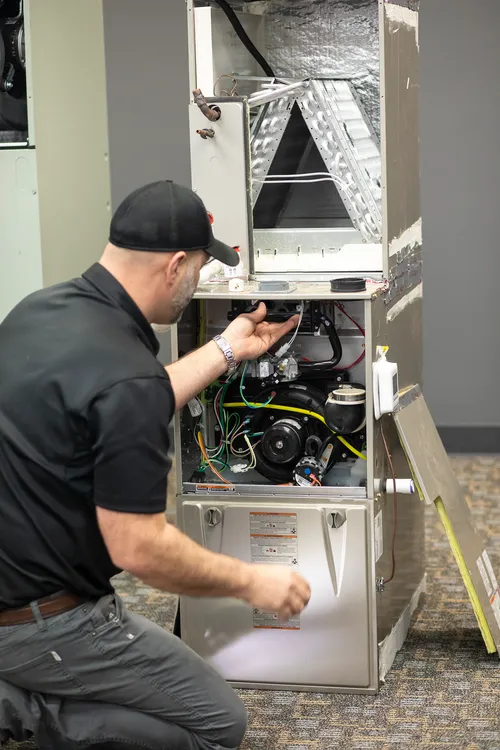
Go-Forth HVAC Plumbing and Electrical is a family-owned business serving Greensboro, NC, and surrounding areas in Guilford County. With over 60 years of experience, they provide a full range of HVAC services including installation, repair, maintenance, and indoor air quality solutions such as duct cleaning and air purification. Their certified technicians offer 24/7 emergency repair services to keep homes and businesses comfortable year-round. The company emphasizes regular HVAC maintenance to improve energy efficiency, extend equipment lifespan, and enhance indoor air quality.
Lanier Heating and Air
Greensboro, NC
Lanier Heating and Air is a family-owned HVAC company serving Greensboro, NC, and surrounding areas. They provide repair, installation, and maintenance services for heating and air conditioning systems, including furnaces, heat pumps, and air conditioners. The company is licensed in North Carolina and has been in business since 2015, with over 18 years of experience from the owner, Todd Lanier. Lanier Heating and Air offers personalized service and helps customers choose the best equipment for their homes or businesses.
Triad Heating & Cooling, Inc.
806 Green Valley Rd Suite 200, Greensboro, NC 27408
Triad Heating & Cooling, Inc. provides heating, cooling, and indoor air quality services in Greensboro, NC. They work with all makes and models of furnaces, heat pumps, and air conditioning systems, offering installation, repair, tune-ups, and duct cleaning. The company emphasizes preventative maintenance to extend equipment life and improve efficiency. Founded in the early 1980s, Triad Heating & Cooling has a long history of serving the local community with a focus on quality and customer care.
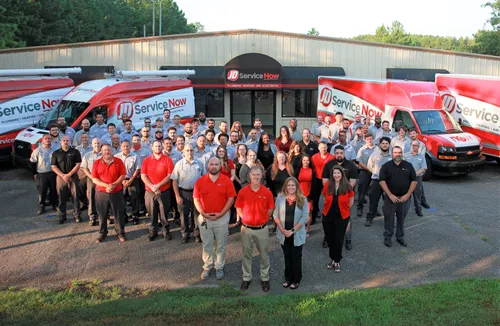
JD Service Now
4416 Bennett Memorial Rd STE 108, Durham, NC 27705
JD Service Now is a home solutions provider based in Durham, NC, offering heating, cooling, plumbing, and electrical services. They specialize in HVAC repair, installation, and maintenance, including air conditioning and furnace services. The company also provides plumbing solutions such as water heater replacement and leak detection, as well as drain and sewer services like hydro jetting and trenchless pipe lining. JD Service Now serves the Durham area with a focus on respectful and efficient service, employing trained technicians who prioritize craftsmanship and customer care.
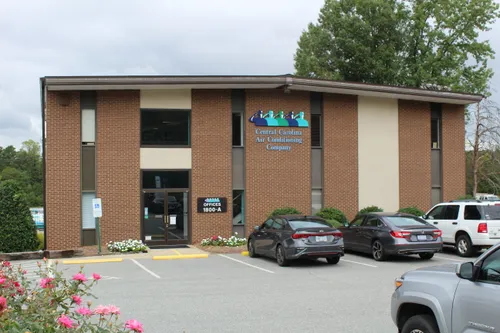
Central Carolina Air Conditioning
1800-A, Fairfax Rd, Greensboro, NC 27407
Central Carolina Air Conditioning is a full-service provider of residential heating, air conditioning, plumbing, and electrical services based in Greensboro, NC. Serving the Piedmont Triad area, they offer installation, maintenance, and repair for HVAC systems, water heaters, and electrical components. Established in 1967, the company has decades of experience and provides 24/7 emergency service to support customers whenever needed.
Understanding the Furnace Service Process in Burlington
When your heat goes out, knowing the typical steps a local professional will take can ease the stress. The process is generally straightforward and designed to resolve your issue as efficiently as possible.
Initial Contact and Diagnosis Your first step is to contact a local Burlington HVAC company. Reputable providers like those serving the area will schedule a service call, often prioritizing emergencies during cold snaps. Upon arrival, the technician will perform a comprehensive inspection. This includes checking your thermostat settings and functionality, examining the air filter for clogs, verifying system power, and testing key components like the ignitor, flame sensor, and blower motor. This diagnostic phase is crucial for pinpointing the exact cause of the failure.
Recommendation and Repair After the assessment, the technician will provide a clear estimate detailing the necessary repairs, including both labor and parts. They should explain whether a repair is the most cost-effective solution or if replacement is recommended, particularly if your furnace is older (15+ years) or has a major failure like a cracked heat exchanger. For minor issues, the repair can often be completed on the spot, sometimes in as little as 30 minutes to four hours 1 2. More complex jobs may require ordering parts and scheduling a follow-up visit.
Common Furnace Problems During Burlington Winters
Cold weather strains heating systems, leading to a set of frequent issues. Being aware of these can help you describe problems to your technician and sometimes even perform simple troubleshooting.
- Ignition System Failures: One of the most common reasons a furnace won't start is a problem with the ignition. Modern furnaces use a hot surface ignitor, which can crack and fail over time. In older systems, the pilot light can go out. Replacing a faulty ignitor is a standard repair 3.
- Clogged Air Filters: A dirty filter is the simplest and most preventable cause of furnace trouble. It restricts airflow, forcing the system to work harder, which reduces efficiency, drives up bills, and can cause the furnace to overheat and shut down.
- Thermostat Malfunctions: Sometimes the issue isn't with the furnace itself but with its command center. Incorrect settings, dead batteries, or internal failures can prevent the furnace from turning on or cause it to cycle erratically 4.
- Airflow and Distribution Issues: If some rooms are cold while others are warm, you might be dealing with leaky or poorly insulated ductwork. A malfunctioning blower motor or a dirty blower wheel can also impede proper air circulation throughout your home 5.
- Mechanical Wear and Tear: Components like bearings, belts, and inducer motors wear out over time. Unusual noises such as squealing, rattling, or rumbling often point to these mechanical issues needing attention.
What to Expect: Repair Timelines and Considerations
The time required to fix your furnace depends entirely on the nature of the problem. Understanding potential timelines helps set realistic expectations.
Minor Repairs: Simple fixes are often quick. Replacing a standard air filter, calibrating a thermostat, or swapping out a hot surface ignitor can frequently be completed in under two hours, sometimes during the same service visit. Complex Repairs: Issues involving electrical components, gas valves, or the blower assembly may take longer to diagnose and repair, potentially ranging from half a day to a full day. If a specialty part needs to be ordered, the repair will be scheduled for a later date once the part arrives. Major Failures or Replacement: The most time-intensive scenario is a critical failure, such as a cracked heat exchanger, which is a serious safety issue. In these cases, or when recommending a full system replacement, the technician will discuss all options with you. Full replacement is a multi-day project that involves removing the old unit, installing the new one, and ensuring all connections and ductwork are properly configured.
Find the perfect furnace repair companies for your needs
Get personalized recommendations and expert advice
Navigating Repair Costs and Investment Decisions
Cost is a primary concern for any homeowner facing a furnace breakdown. Prices can vary based on the part needed, labor rates, and the time of year.
Typical Repair Cost Ranges Based on industry averages, you can expect a range of costs for common repairs. It's important to get a detailed, written estimate from your Burlington technician for your specific situation.
- Minor Repairs: Simple component replacements, like an ignitor or flame sensor, often start around $100 to $200 for parts and labor.
- Standard Repairs: More involved repairs, such as fixing a blower motor or replacing a control board, typically fall in the $130 to $500 range, with an average cost around $300 6.
- Major Repairs: Addressing a failed heat exchanger or a damaged compressor is a significant repair, often costing between $500 and $1,200 or more 7 8.
Repair vs. Replacement: A Key Crossroad A trustworthy technician will help you weigh the cost of repair against the investment in a new system. Key factors influencing this decision include:
- Age of Furnace: If your unit is over 15 years old, investing in a major repair may not be economical, as other components are likely near the end of their lifespan.
- Efficiency: Older furnaces operate at lower efficiency (AFUE), wasting fuel and money. A new, high-efficiency model could offer significant savings on your monthly utility bills 9.
- Frequency of Repairs: If you're calling for service multiple times a season, cumulative repair costs may justify an upgrade to a more reliable system.
- Safety Concerns: Issues like a cracked heat exchanger, which can leak carbon monoxide, are immediate safety hazards that often necessitate replacement.
Maintaining Your Furnace to Prevent Future Issues
Proactive maintenance is the best way to avoid sudden, costly breakdowns and ensure your system runs efficiently throughout the Burlington winter.
Essential DIY Maintenance Tasks Homeowners can perform a few simple tasks to keep their system running smoothly:
- Change Air Filters Regularly: Check your filter monthly and replace it at least every 90 days, or more often if you have pets or allergies. This is the single most important maintenance task you can do 10.
- Keep Vents and Registers Clear: Ensure furniture, rugs, or curtains are not blocking supply and return vents throughout your home.
- Inspect the Area Around Your Furnace: Keep the space around your indoor furnace unit clean and free of clutter, especially flammable materials.
The Value of Professional Tune-Ups Scheduling an annual professional furnace tune-up before the heating season begins is highly recommended. During a tune-up, a technician will:
- Clean critical components like the burners and heat exchanger.
- Check and adjust the gas pressure and flame.
- Test safety controls and the carbon monoxide output.
- Lubricate moving parts and inspect the blower assembly.
- Identify and address small wear-and-tear issues before they lead to a full breakdown 11.
This proactive service not only improves reliability and efficiency but can also extend the overall lifespan of your heating equipment.
Frequently asked questions
Sources
Footnotes
-
Heating Repair in Burlington, NC | Schedule Now - https://lmwilson.com/heating-service-and-repair/ ↩
-
How Long Does It Usually Take to Repair a Furnace?. - https://www.tcmemt.com/post/how-long-does-it-usually-take-to-repair-a-furnace ↩
-
What Is The Most Common Part to Fail on a Furnace? - https://www.myqualitycomfort.com/general/what-is-the-most-common-part-to-fail-on-a-furnace/ ↩
-
6 Important Things to Check Before Scheduling a Service Call - https://acmasters.com/6-things-to-check-before-scheduling-a-service-call/ ↩
-
HVAC Troubleshooting Guide: Step-by-Step Solutions Made Easy - https://projecthvac.com/2026/01/07/hvac-troubleshooting-guide-step-by-step/ ↩
-
How Much Does It Cost to Repair a Furnace? - Rescue Heat & Air - https://rescueheatandair.com/blog/how-much-does-it-cost-to-repair-a-furnace/ ↩
-
Residential Heating - Last Call HVAC - https://lastcallnc.com/residential-heating/ ↩
-
What to Do If Your Furnace Has a Cracked Heat Exchanger - Lennox - https://www.lennox.com/residential/lennox-life/consumer/furnace-cracked-heat-exchanger ↩
-
9 Reasons Your Furnace Is Losing Efficiency - Santa Energy - https://www.santaenergy.com/reasons-your-furnace-is-losing-efficiency/ ↩
-
5 Common Winter HVAC Problems and How to Avoid Them - https://www.rogerlnewman.com/post/5-common-winter-hvac-problems-and-how-to-avoid-them ↩
-
Reliable HVAC Services in Burlington, NC - https://www.fogghvac.net/locations/burlington-nc ↩