Find the Best Furnace Repair Companies for Your Business
No obligation • Fast responses • Nationwide coverage

Why you can trust HVAC Firms
HVAC Firms is a leading United States resource for evaluating HVAC service providers. Our team researches companies, checks credentials, and reviews customer feedback to present clear, unbiased information. Listings and rankings are based on merit, and companies cannot pay to change our editorial content.
Search providers near you
Top Furnace Repair Companies in Lakeville, Minnesota Ranked
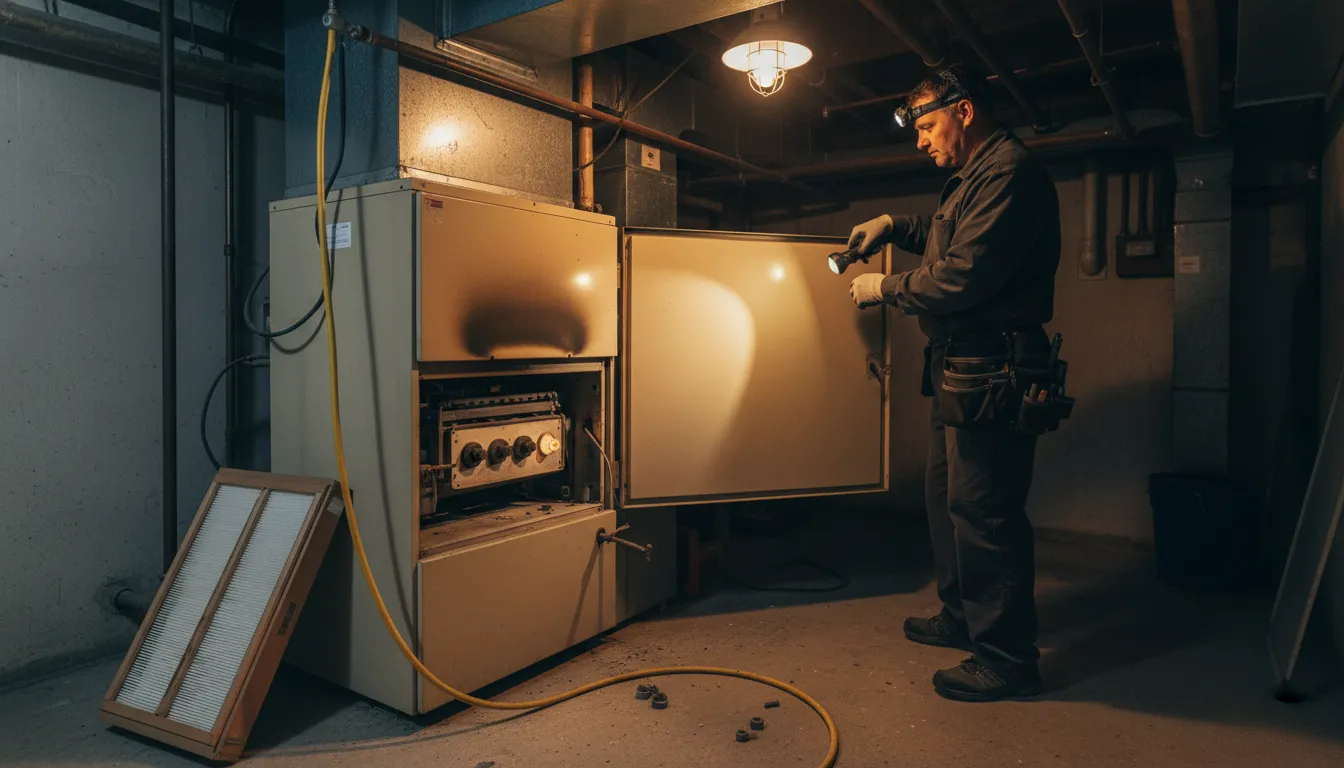
When your furnace stops working on a cold Minnesota night, getting it fixed quickly isn't just a matter of comfort-it's a necessity for safety. Furnace repair involves a trained technician diagnosing and fixing issues with your home's heating system, from simple thermostat glitches to complex component failures. This guide will help you understand the repair process, common problems, and what to expect when you need to restore heat to your Lakeville home.
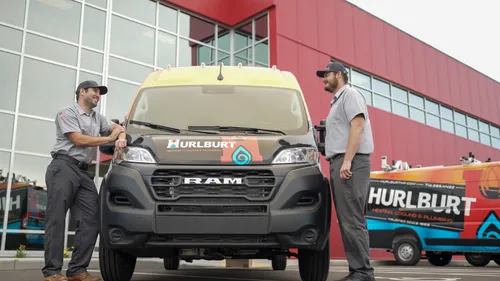
Hurlburt Heating & Plumbing
1000 County Rd E Suite 115, Shoreview, MN 55126
Hurlburt Heating & Plumbing is a family-owned home services provider serving Minneapolis, MN, and surrounding areas. Since 1959, they have offered a wide range of services including HVAC installation and repair, plumbing, and electrical work. Their HVAC services cover air conditioner and furnace repair, heat pump and mini split installation, indoor air quality solutions, and HVAC tune-ups. Hurlburt also provides whole-home air scrubbers, purifiers, humidifiers, and dehumidifiers to improve indoor air quality. With over six decades of experience, they combine modern technology with personalized service to address customer needs.
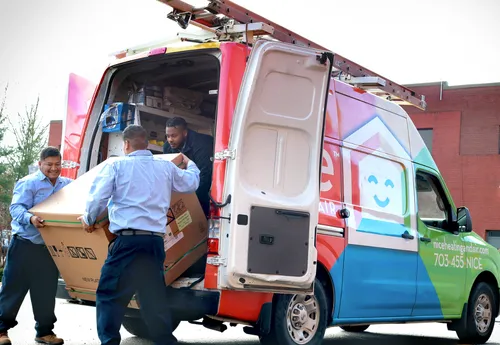
Nice Heating & Air
24 Onville Rd suite 101-9, Stafford, VA 22556
Nice Heating & Air is an HVAC company serving Minneapolis, MN, specializing in air conditioning, heating, and indoor air quality services. They provide installation, repair, and maintenance for systems including ductless mini splits, heat pumps, furnaces, and water heaters. The company has many years of experience and focuses on delivering high-quality products and services with a commitment to customer satisfaction. Their capabilities include HVAC tune-ups and indoor air quality improvements such as air purifier installation and ventilation services.
Furnace Doctors
102 County Rd C West, Little Canada, MN 55117
Furnace Doctors is an HVAC company based in Minneapolis, MN, offering a range of heating and cooling services. Their expertise includes furnace repair and replacement, air conditioner repair and installation, ductless system installation, and indoor air quality solutions such as air filtration and humidity control systems. The company emphasizes maximizing HVAC system performance and has installers with over 25 years of experience. Furnace Doctors also provides annual maintenance plans to help keep systems running efficiently.
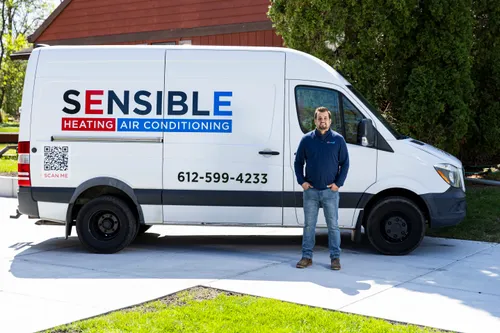
Sensible Heating and Air Conditioning
3533 Roosevelt St NE, St Anthony, MN 55418
Sensible Heating and Air Conditioning is a locally owned HVAC company serving Minneapolis, MN. They provide a range of services including air conditioning, furnace, and heat pump repair, installation, and tune-ups. With 16 years of experience, they focus on maintaining efficient and comfortable home environments through reliable HVAC solutions. Their expertise includes troubleshooting and installing all major brands to ensure energy-efficient performance throughout the year.
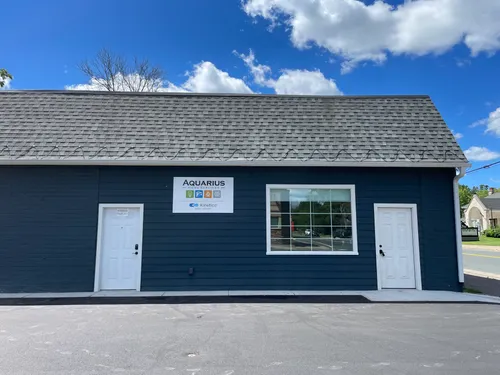
Aquarius Home Services
3182 Country Dr, Little Canada, MN 55117
Aquarius Home Services is a home care company serving Minneapolis, MN, and surrounding areas in Minnesota and Wisconsin. They specialize in HVAC services including air conditioner and furnace repair, as well as HVAC tune-ups. Aquarius also provides water treatment, plumbing, and electrical services. The company is an authorized dealer of Kinetico water systems and offers maintenance plans to help extend the life and efficiency of home systems. Aquarius Home Services stands behind their work with a 100% performance guarantee and flexible financing options.
Understanding the Furnace Repair Process
Knowing what happens when you call for service can ease the stress of a heating emergency. The process is designed to be efficient and transparent, ensuring you get back to warmth as soon as possible.
Initial Contact and Emergency Response The first step is contacting a local heating professional. In Lakeville, many companies offer emergency services, especially critical during winter. When you call, be prepared to describe the symptoms-such as no heat, strange noises, or the system short cycling-as this helps the technician prepare. For immediate heat loss, many providers can dispatch a team quickly and may even offer temporary heating solutions to keep your family safe while repairs are underway.
On-Site Assessment and Diagnosis Upon arrival, a qualified technician will discuss the issues you've observed and then perform a thorough inspection. This typically involves checking the thermostat, inspecting the burners and ignition system, listening to the blower motor, examining safety controls, and assessing overall airflow. This diagnostic phase is crucial for pinpointing the exact cause of the malfunction.
Performing the Repair or Replacement Once the problem is identified, the technician will explain their findings and the recommended solution. For common failures like a bad ignitor or a faulty thermostat, the repair is often straightforward. They will perform the necessary part swaps or adjustments. If a major component like a heat exchanger or blower motor has failed, they will discuss replacement options and associated timelines.
System Testing and Preventative Advice After the repair is complete, the technician will test the entire system to ensure it's operating safely and efficiently. This is also an opportunity for them to offer tips for maintaining your system, such as the importance of regular filter changes, keeping vents clear, and optimal thermostat settings to improve longevity and performance 1.
Common Furnace Problems in Lakeville Homes
Furnaces face significant strain during Minnesota's long winters. Being able to recognize common issues can help you describe problems accurately and understand potential repairs.
Short Cycling This occurs when your furnace turns on and off much more frequently than normal. It's not only annoying but also inefficient and hard on the system. Short cycling can be caused by an oversized furnace, a dirty flame sensor, a clogged air filter, or issues with the thermostat.
Ignition and Pilot Light Failure One of the most common reasons for a "no heat" call is an ignition problem. In modern furnaces, this is often a failed hot surface ignitor. In older systems with a standing pilot light, the flame can be blown out or the thermocouple can malfunction. Ignition issues are a frequent repair item 2.
Thermostat Malfunctions Sometimes the issue isn't with the furnace itself but with its brain-the thermostat. Problems can range from dead batteries and inaccurate temperature readings to faulty wiring or a complete unit failure. A technician will check the thermostat early in the diagnostic process.
Restricted Airflow and Frozen Components Poor airflow, often due to a severely clogged air filter or blocked return vents, can cause the furnace's heat exchanger to overheat and shut down. In extreme cases, it can even lead to frozen condensate lines in high-efficiency models. Ensuring proper airflow is a simple but critical part of maintenance.
Unusual Noises Banging, screeching, rattling, or rumbling sounds are never normal. These can indicate problems ranging from a loose panel (a simple fix) to a cracked heat exchanger (a serious safety issue requiring immediate attention) or a failing blower motor bearing.
Find the perfect furnace repair companies for your needs
Get personalized recommendations and expert advice
What to Expect: Repair Time and Cost Considerations
The duration and cost of a furnace repair can vary widely based on the complexity of the issue and the parts required.
Typical Repair Timelines
- Simple Fixes: Replacing a thermostat, swapping a dirty air filter, or cleaning a flame sensor can often be completed in 30 to 60 minutes.
- Standard Repairs: Common component replacements, such as installing a new ignitor, capacitor, or pressure switch, typically take between 1 to 4 hours from diagnosis to completion.
- Complex Repairs: Major work, like replacing a blower motor or addressing a significant gas valve issue, can take longer, potentially requiring a follow-up visit if special-order parts are needed.
Understanding Repair Costs Costs in Lakeville are influenced by the service fee, parts, and labor. It's common for companies to have a diagnostic or service call fee that may be applied toward the repair.
- Minor Repairs: Fixes like thermostat replacement or a basic tune-up often cost under $200.
- Common Component Repairs: Replacing frequently failing parts like an ignitor, flame sensor, or capacitor typically falls in the $150 to $500 range.
- Major Repairs: Replacing significant components such as a blower motor assembly or a heat exchanger is a more substantial investment, often exceeding $1,0003 4 5.
The Importance of Prompt Action and Professional Service
In a Lakeville winter, delaying a furnace repair can turn a minor, affordable fix into a major, costly emergency. A small ignition issue can leave you without heat entirely, and a minor leak in a heat exchanger can become a serious safety hazard. Professional technicians have the training and tools to diagnose problems correctly the first time, ensuring repairs are done safely and in compliance with local codes. They can also identify underlying issues that a DIY approach might miss, preventing future breakdowns6 7.
Relying on local experts ensures you get service tailored to the specific demands of Minnesota's climate and have access to emergency support when you need it most.
Frequently asked questions
Sources
Footnotes
-
Furnace Tune-Ups in Minnesota - Connors Plumbing, Heating & Air - https://connorsplumbingandheating.com/homeowners-guide-to-furnace-tune-ups-what-to-expect-and-why-its-worth-it/ ↩
-
What Is The Most Common Part to Fail on a Furnace? - https://www.myqualitycomfort.com/general/what-is-the-most-common-part-to-fail-on-a-furnace/ ↩
-
Furnace Repair in Lakeville, MN - Golden Valley - https://www.goldenvalleyhtg.com/locations/lakeville/furnace-repair-lakeville/ ↩
-
How Much Does It Cost to Fix a Furnace? - Ideal Heating and Air - https://theidealair.com/how-much-does-it-cost-to-fix-a-furnace/ ↩
-
How Long Does It Usually Take to Repair a Furnace?. - https://www.tcmemt.com/post/how-long-does-it-usually-take-to-repair-a-furnace ↩
-
7 Common Winter HVAC Problems in Minnesota Homes & How to ... - https://burnsvilleheating.com/7-common-winter-hvac-problems-in-minnesota-homes-how-to-fix-them/ ↩
-
Lakeville, MN Furnace Repair and AC Service. - https://www.lasalleheating.com/furnace-repair-service-area/lakeville/ ↩