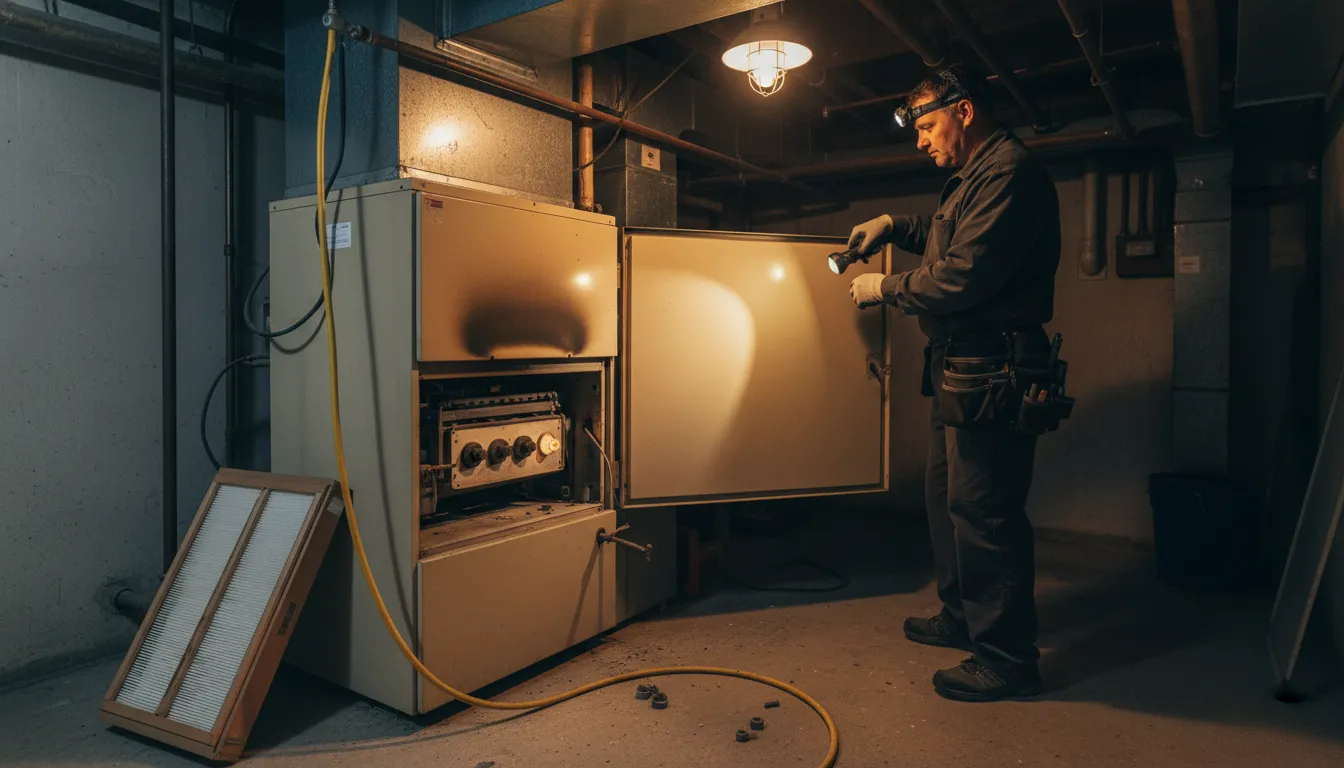
Find the Best Furnace Repair Companies for Your Business
No obligation • Fast responses • Nationwide coverage

Why you can trust HVAC Firms
HVAC Firms is a leading United States resource for evaluating HVAC service providers. Our team researches companies, checks credentials, and reviews customer feedback to present clear, unbiased information. Listings and rankings are based on merit, and companies cannot pay to change our editorial content.
Search providers near you
Best Furnace Repair Companies in Iowa Ranked
A reliable furnace is essential for comfort and safety during Iowa's harsh winters. When your heating system fails, finding a qualified professional quickly becomes a top priority. This guide provides Iowa homeowners with practical information on common furnace problems, the professional repair process, and how to find reputable local service providers to ensure your home stays warm and safe.
Common Furnace Problems in Iowa Homes
Iowa's cold climate puts significant strain on residential heating systems, leading to a predictable set of issues. Being aware of these common problems can help you identify when your furnace needs attention.
- Clogged Air Filters: This is the most frequent culprit behind reduced efficiency and system strain. A dirty filter restricts airflow, forcing the furnace to work harder, which can lead to overheating and premature component failure.
- Failed Ignitor or Flame Sensor: The ignitor is responsible for lighting the gas, and the flame sensor confirms the flame is present. A failure in either part is one of the most common reasons a furnace won't start or will cycle on and off repeatedly.
- Dirty Burners: Over time, burners can become coated with dust and debris, leading to an uneven or inefficient flame. This not only reduces heating performance but can also be a safety concern.
- Thermostat Malfunctions: Sometimes the issue isn't with the furnace itself but with its control system. Faulty wiring, dead batteries, or a malfunctioning thermostat can prevent the furnace from receiving the correct signal to turn on.
- Cracked Heat Exchanger: This is a serious safety issue. The heat exchanger separates combustion gases from your home's breathable air. A crack can allow dangerous carbon monoxide (CO) to leak into your living spaces. This risk is especially critical during Iowa's long heating season.
- Unusual Noises: Banging, rattling, screeching, or rumbling sounds often indicate mechanical problems, such as a loose component, a failing blower motor, or issues within the combustion chamber.
Signs Your Iowa Furnace Needs Professional Repair
Don't wait for a complete breakdown in the middle of a January cold snap. Look for these warning signs that it's time to call a professional:
- Inconsistent Heating: Some rooms are cold while others are too warm, or the furnace struggles to reach the set temperature on the thermostat.
- Rapid Cycling: The furnace turns on and off more frequently than usual, which is inefficient and hard on the system.
- Skyrocketing Energy Bills: A sudden, unexplained increase in your gas or electric bill often points to a furnace operating inefficiently.
- The Furnace Won't Start: This is the most obvious sign, often linked to ignition, gas supply, or electrical issues.
- Yellow Burner Flame: A healthy furnace flame should be blue. A yellow or flickering flame can indicate a dirty burner or a dangerous combustion problem that requires immediate attention.
- Presence of Soot or Moisture: Rust or soot around the furnace or moisture/water leaks are signs of improper combustion or venting issues.
The Professional Furnace Repair Process
When you hire a qualified technician in Iowa, they follow a systematic process to diagnose and resolve your heating issue safely and effectively.
- Initial Inspection & Diagnosis: The technician will discuss the symptoms with you, then perform a visual inspection and use diagnostic tools to pinpoint the problem. They should provide a clear explanation and a straightforward price quote before beginning any work.
- Comprehensive Safety Checks: Safety is the top priority, especially concerning carbon monoxide. A thorough inspection includes checking the heat exchanger for cracks, testing for CO leaks, verifying proper gas pressure and valve operation, and ensuring all venting is clear and functional 1.
- System Cleaning & Adjustment: Many repairs involve cleaning key components. This includes cleaning the burners, flame sensor, and blower assembly to ensure proper operation. The technician will also check and adjust airflow and gas pressure for optimal efficiency 2.
- Component Repair or Replacement: Faulty parts, such as ignitors, flame sensors, blower motors, or control boards, are replaced with manufacturer-approved components. For serious issues like a cracked heat exchanger, full furnace replacement is often the only safe option.
- System Testing & Verification: After the repair, the technician will run the furnace through multiple cycles to ensure it starts, operates, and shuts down correctly. They will verify safe combustion and that the repair has resolved the original complaint.
Find the perfect furnace repair companies for your needs
Get personalized recommendations and expert advice
Understanding Furnace Repair and Maintenance Costs in Iowa
Costs can vary based on the repair's complexity, the furnace's age and model, and the part required. Here's a general overview based on common Iowa repairs:
- Minor Repairs: Replacing a standard air filter, thermostat batteries, or cleaning an accessible flame sensor are typically on the lower end of the cost spectrum.
- Common Part Replacements: Installing a new hot surface ignitor or a flame sensor, which are common failure points, often costs a few hundred dollars for parts and labor3 4.
- Major Components: Replacing a blower motor, control board, or gas valve is more involved and will be more costly.
- Critical Safety Repairs: Addressing a cracked heat exchanger is a significant repair. Due to the high cost of the part and labor, and the age of a furnace that has experienced this failure, replacement of the entire furnace is frequently recommended.
- New Furnace Installation: If repair is not economical, a new furnace installation in Iowa can range from approximately $2,500 to $7,500 or more, depending on the system's size, efficiency, and complexity of the installation5.
Investing in a Maintenance Plan: Many Iowa HVAC companies offer annual maintenance plans, often for around $199 per year6 7. These plans typically include one or two seasonal tune-ups, priority service scheduling, and discounts on repairs. This proactive approach is one of the best ways to prevent unexpected breakdowns and costly emergency repairs during peak winter months.
DIY Furnace Care vs. When to Call a Pro
Homeowners can perform a few basic tasks to support their furnace's health:
- Replace Air Filters: Check your filter monthly and replace it every 1-3 months during the heating season 8.
- Keep Vents & Registers Clear: Ensure all supply and return vents are not blocked by furniture, rugs, or curtains.
- Clear the Area: Keep the space around your furnace clean and free of storage items, dust, and flammable materials.
- Inspect the Exhaust Vent: From outside, make sure the furnace exhaust vent (flue) is clear of snow, leaves, or bird nests.
However, always call a licensed professional for:
- Any inspection or repair involving gas lines, the gas valve, or electrical connections.
- Any suspected carbon monoxide issue or concerns about the heat exchanger.
- The annual comprehensive tune-up and safety inspection.
- Any repair requiring the disassembly of the furnace cabinet or combustion chamber.
The Importance of Fall Maintenance in Iowa
Scheduling a professional furnace tune-up in the early fall is arguably the most important step an Iowa homeowner can take. This pre-winter check-up allows a technician to clean components, test safety devices, and identify minor issues before they escalate into major, no-heat emergencies during a cold snap 9 10. Beating the seasonal rush also ensures you get convenient scheduling.
Frequently asked questions
Sources
Footnotes
-
Guide to Annual Furnace Maintenance, Service & Inspection - https://www.carrier.com/residential/en/us/products/furnaces/furnace-service/furnace-maintenance/ ↩
-
Furnace Maintenance (Benefits, Process and More) - Genz-Ryan - https://genzryan.com/blog/furnace-maintenance/ ↩
-
What Is The Most Common Part to Fail on a Furnace? - https://www.myqualitycomfort.com/general/what-is-the-most-common-part-to-fail-on-a-furnace/ ↩
-
How Much Does Furnace Repair Cost in Columbus, OH? - https://www.angi.com/articles/how-much-does-common-furnace-repair-cost/oh/columbus ↩
-
Furnace Installation Cost in Bettendorf, IA | Price Guide - https://www.scheblerhvac.com/news-and-pr/how-much-does-a-furnace-installation-cost-in-bettendorf/ ↩
-
Furnace Maintenance & Tune-Ups - Dorrian Heating & Cooling - https://dorrianheating.com/products-services/heating-services/furnace-maintenance/ ↩
-
Furnace Maintenance - Service Legends - https://www.servicelegends.com/services/furnace-maintenance/ ↩
-
Furnace Maintenance Checklist for Homeowners - Enercare - https://www.enercare.ca/blog/home-heating/what-type-maintenance-required-your-furnace ↩
-
Furnace Maintenance in West Des Moines, IA | Holt - https://holtplumbingandheating.com/heating/furnace-maintenance/ ↩
-
Cedar Rapids, IA Furnace Tune-Up Service - Novak Heating - https://www.novakheating.com/cedar-rapids-furnace-tune-up-service/ ↩