Find the Best Furnace Repair Companies for Your Business
No obligation • Fast responses • Nationwide coverage

Why you can trust HVAC Firms
HVAC Firms is a leading United States resource for evaluating HVAC service providers. Our team researches companies, checks credentials, and reviews customer feedback to present clear, unbiased information. Listings and rankings are based on merit, and companies cannot pay to change our editorial content.
Search providers near you
Best Furnace Repair Companies in Arizona Ranked
Keeping your furnace running reliably is essential for comfort and safety during Arizona's cooler months. While our state is known for heat, winter nights in the desert and higher elevations can bring a real chill, making a functional heating system a necessity. Furnace repair services address everything from sudden breakdowns to subtle declines in efficiency, ensuring your home stays warm and your energy bills remain manageable. This guide will help you understand common furnace problems in Arizona, the typical repair process, and how to find qualified local technicians to service your system.
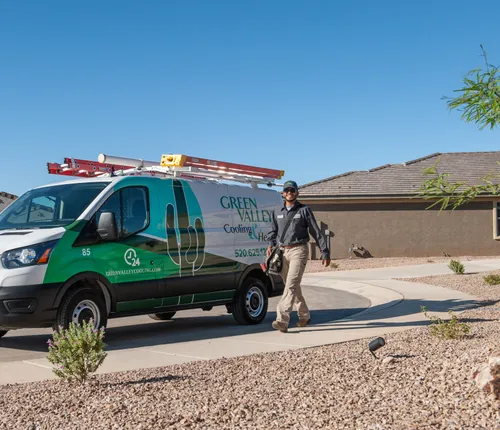
Green Valley Cooling & Heating
645 W Ward Ln, Green Valley, AZ 85614
Green Valley Cooling & Heating is an HVAC company serving Tucson, AZ, and surrounding communities including Green Valley, Sahuarita, and Vail. They provide a wide range of services including air conditioning and heating installation, repair, and maintenance, as well as duct cleaning and indoor air quality solutions. The company is a Certified Daikin Comfort Pro Dealer and offers expertise in energy-efficient upgrades and whole-home comfort systems. Established in 1968, Green Valley Cooling & Heating has over fifty years of experience in the industry. Their licensed and insured technicians are available 24/7 for emergency repair services.
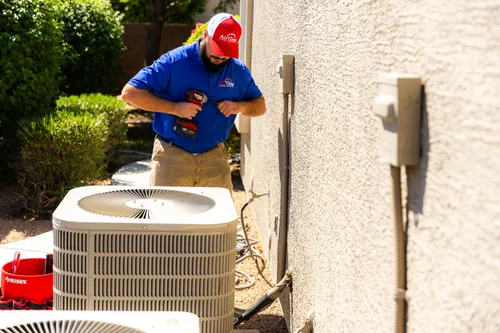
AirTime Cooling and Heating
1540 S Gilbert Rd, Mesa, AZ 85204
AirTime Cooling and Heating is a furnace repair company based in Mesa, AZ. They provide professional furnace repair services to address issues such as uneven heating, unusual noises, or failure to turn on. With over 20 years of HVAC experience, their technicians are equipped to diagnose and repair various furnace problems. The company offers 24/7 emergency service to ensure heating needs are met promptly.
AC Repair Near Me
77 W Chicago St Unit 4, Chandler, AZ 85225
AC Repair Near Me is a locally owned HVAC company serving Phoenix, AZ, and surrounding areas. They offer a full range of heating and cooling services including AC and furnace repair, installation, maintenance, and duct cleaning. The company is equipped to handle emergency repairs and provides 24/7 availability to address urgent HVAC issues. Their technicians are certified and experienced, using advanced diagnostic technology to ensure proper service. AC Repair Near Me emphasizes thorough inspections before work begins and offers customized maintenance plans to keep systems running efficiently.
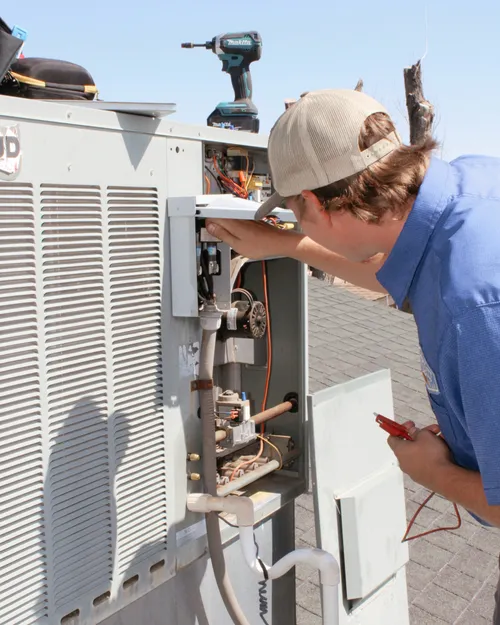
Reliance Heating and Air Conditioning
302 W Lone Cactus Dr, Phoenix, AZ 85027
Reliance Heating and Air Conditioning is a family-owned HVAC company serving Phoenix, AZ, and the surrounding areas. They offer a range of services including air conditioning, furnace, and heat pump repair and installation, as well as HVAC tune-ups and thermostat installation. As a Trane Comfort Specialist, they provide expertise with Trane systems known for reliability and quality. With over 40 years of experience as a third-generation family business, Reliance Heating and Air Conditioning emphasizes treating customers' homes with care and professionalism.
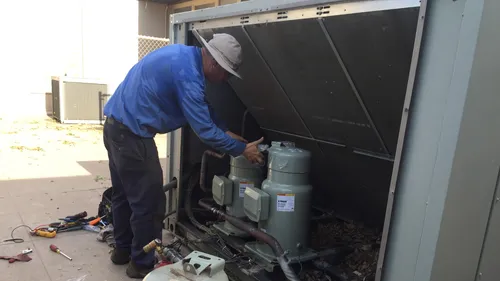
Evans Air Conditioning & Heating
Mesa, AZ
Evans Air Conditioning & Heating is a family-run business based in Mesa, AZ, operated by brothers Michael and Brian Evans, who are natives of nearby Gilbert. The company provides air conditioning repair, AC replacement, duct repair, filter service, heating repairs, and maintenance. They focus on quality products and workmanship while maintaining a straightforward, no-pressure approach to HVAC services. Evans Air Conditioning & Heating emphasizes honesty and integrity in their work and builds their business through customer referrals.
Common Furnace Problems in Arizona's Climate
Arizona's unique environment contributes to specific, recurring issues with residential heating systems. The hot, dry air is laden with fine dust and debris, which is the primary culprit behind many furnace malfunctions. Understanding these common problems can help you identify when your system needs attention.
- Dust and Debris Buildup: The pervasive desert dust can quickly clog critical components like air filters, burners, and the blower assembly. This buildup restricts airflow, forces the system to work harder, and can lead to overheating or ignition failures.
- Unusual Noises: Strange sounds are often the first sign of trouble. You might hear grinding (indicating worn motor bearings), rattling (from loose access panels or debris in the blower wheel), or clanging (potentially a serious issue with the heat exchanger or inducer motor) 1.
- Ignition or Pilot Light Problems: A furnace that won't start often has an ignition issue. This can be caused by dirty flame sensors, faulty igniters, or problems with the gas valve or supply. In systems with a standing pilot light, drafts or dirt can cause the flame to go out 2.
- Uneven Heating: If some rooms are cold while others are warm, the issue may not be with the furnace itself but with the ductwork. Leaky or poorly insulated ducts are common in Arizona homes and can significantly reduce system efficiency. Alternatively, a failing blower motor may not be moving enough air through the system 3 4.
The Importance of Seasonal Timing for Furnace Care
Proactive maintenance is far less stressful and costly than an emergency repair in the middle of a cold snap. In Arizona, the seasonal cycle of your HVAC system dictates the ideal times for service.
- Fall is Prime Time for Tune-Ups: Scheduling an annual furnace inspection and tune-up in the early fall (September through November) is the single best step you can take to ensure winter reliability 5 6. This gives a technician time to clean, test, and adjust your system before you need it most, preventing mid-winter breakdowns.
- The Strain of Summer Cooling: Your furnace and air conditioner often share the same air handler and ductwork. A system that has been working hard all summer long to combat the heat may have accumulated wear and tear. A fall checkup catches issues that developed during the cooling season.
- Late-Winter Inspections: If you missed a fall tune-up, a late-winter inspection can still be valuable. It can identify problems that have developed during partial season use and prevent them from becoming major failures just before the system is shut down for the summer 7.
Find the perfect furnace repair companies for your needs
Get personalized recommendations and expert advice
What to Expect During a Professional Furnace Repair Visit
When you call a technician for furnace repair or maintenance, a systematic process ensures a thorough and safe resolution. Here's a breakdown of what typically happens during a service visit.
1. Diagnosis and Inspection: The technician will start by asking about the symptoms you've noticed. They will then perform a visual and operational inspection, listening for unusual noises, checking for proper ignition sequence, measuring airflow from vents, and testing gas pressure and electrical components. A crucial part of this inspection is checking the heat exchanger for cracks or corrosion, which is vital for preventing carbon monoxide leaks.
2. Repair and Parts Replacement: Based on the diagnosis, the technician will explain the necessary repairs.
- Minor Fixes: These often involve cleaning components (burners, flame sensor, blower assembly), tightening electrical connections, replacing a faulty thermostat, or swapping out a worn capacitor or igniter.
- Major Repairs: More complex issues may require replacing the blower motor, control board, gas valve, or inducer motor. These are more labor and parts-intensive.
3. System Testing and Verification: After the repair is complete, the technician will restart the furnace and monitor it through several heating cycles. They will verify that the system starts correctly, heats properly, shuts off as intended, and that heat is distributed evenly throughout your home. They should also confirm that safety controls are functioning 8.
Critical Safety Checks During Furnace Service
A reputable technician will always prioritize safety. Key checks that should be part of any repair or maintenance visit include 9:
- Heat Exchanger Integrity: A visual inspection (and sometimes a combustion analysis) to detect cracks or holes that could allow carbon monoxide to mix with the circulating air.
- Gas Pressure and Combustion: Ensuring the gas valve is delivering the correct pressure and that the burner flame is the proper color and shape for clean, efficient, and safe combustion.
- Electrical Safety: Checking for loose wiring, proper grounding, and ensuring electrical components are not damaged or overheating.
Understanding Furnace Repair Costs in Arizona
Repair costs can vary widely based on the problem, the parts required, and the time needed for the job. Here is a general overview of what you might expect for different service levels in the Arizona market 10 11 12 13 14.
- Preventative Maintenance Tune-Up: A standard annual inspection and tune-up typically ranges from $100 to $200. This service is designed to prevent costly repairs.
- Minor Repairs: Fixing issues like a faulty thermostat, replacing a capacitor, cleaning a flame sensor, or tightening electrical connections generally falls in the range of $120 to $500.
- Major Component Repairs: Replacing significant parts like the blower motor, control board, or inducer motor can cost between $500 and $1,500 or more, depending on the part's complexity and accessibility.
- Heat Exchanger Replacement: This is one of the most expensive repairs, often costing $2,000 to $4,000. Due to the high cost and labor involved, if the furnace is older, a full system replacement is frequently recommended instead.
- New Furnace Installation: If repair is not economical, installing a new, high-efficiency furnace in Arizona can range from $3,000 to over $7,000, depending on the system's size, type, and efficiency rating.
Frequently asked questions
Sources
Footnotes
-
Furnace Repair in Mesa and Phoenix's East Valley - https://rustysairaz.com/heating/furnace-repairs/ ↩
-
Common Issues with Heating Systems in Arizona - https://onehourairmohavecounty.com/common-issues-with-heating-systems/ ↩
-
Stay Winter-Ready With Furnace Repair in Scottsdale, AZ - https://accurateairac.com/blog/winter-hvac-prep-with-furnace-repar-scottsdale/ ↩
-
Heating Services | Intelligent Design Tucson - https://www.idesignac.com/services/heating-tucson ↩
-
Seasonal HVAC Maintenance Checklist for Phoenix Residents - https://www.chasroberts.com/seasonal-hvac-maintenance-checklist-phoenix-residents/ ↩
-
Heating Services Marana | Intelligent Design Tucson - https://www.idesignac.com/services/heating-marana ↩
-
Why Late-Winter Furnace Inspections Prevent Costly Repairs - https://onehourairmohavecounty.com/furnace-inspections-costly-repairs/ ↩
-
What To Expect During A Fall Furnace Maintenance Visit - https://masonproservices.com/what-to-expect-during-a-fall-furnace-maintenance-visit ↩
-
Furnace Tune-Up & Maintenance in Phoenix - ProSkill Services - https://proskillservices.com/furnace/furnace-tune-up-maintenance/ ↩
-
Mid-Winter Furnace Checkup: Why It Matters | UGNasons RI - https://ugnasons.com/hvac-maintenance/why-your-furnace-needs-a-mid-winter-checkup-and-what-to-expect/ ↩
-
HVAC Services Vail | Intelligent Design Tucson - https://www.idesignac.com/services/hvac-vail ↩
-
Seasonal HVAC Maintenance Checklist & Costs (2025) - https://callcardinalplumbing.com/seasonal-hvac-maintenance/ ↩
-
How Much Does Furnace Repair Cost in Phoenix? [2026 Data] - https://www.angi.com/articles/how-much-does-common-furnace-repair-cost/az/phoenix ↩
-
How Much Should a Furnace Tune-Up or Minor Repair Cost in 2025? - https://thefurnaceoutlet.com/blogs/news/furnace-tune-up-and-minor-repair-cost-2025 ↩