Find the Best Furnace Installation & Replacement Contractors for Your Business
No obligation • Fast responses • Nationwide coverage

Why you can trust HVAC Firms
HVAC Firms is a leading United States resource for evaluating HVAC service providers. Our team researches companies, checks credentials, and reviews customer feedback to present clear, unbiased information. Listings and rankings are based on merit, and companies cannot pay to change our editorial content.
Search providers near you
Best Furnace Installation & Replacement Contractors in Vermont Ranked
Replacing your home's furnace is a significant investment that directly impacts your comfort, energy bills, and safety during Vermont's long, cold winters. This service involves the professional assessment, removal, and installation of a new heating system tailored to your home's specific needs. Choosing the right high-efficiency model and a qualified installer is crucial for reliable warmth and long-term savings. The following guide will help you understand the key considerations, processes, and local factors for a successful furnace project in the Green Mountain State.
Understanding Your Heating System Options in Vermont
Vermont homes utilize a variety of fuel sources for furnace-based heating, each with its own considerations for installation and replacement. The most common systems include natural gas, propane, oil, and electric furnaces, with wood or pellet stoves often serving as supplemental heat sources.
- Natural Gas Furnaces: These are a common and efficient choice in areas with existing gas line infrastructure. Installation involves connecting to the gas supply and ensuring proper venting. If your home isn't currently serviced by gas, extending a line can add significant cost.
- Propane Furnaces: For homes outside natural gas service areas, propane is a prevalent option. Replacement will involve the existing propane tank and supply lines. It's important to ensure the tank is adequately sized and properly maintained.
- Oil Furnaces: Many older Vermont homes rely on oil heat. Replacing an oil furnace involves the existing storage tank and fuel lines. These systems can be efficient but may require more frequent maintenance than gas or propane models.
- Electric Furnaces: While they have a lower upfront equipment cost, electric furnaces can lead to higher operating expenses in Vermont due to electricity rates, especially in severe cold. They are often considered for homes without access to other fuels or in conjunction with a heat pump system.
Key Factors for Choosing a New Furnace
Selecting the right replacement unit involves more than just matching the old system's fuel type. Key specifications determine efficiency, comfort, and cost-effectiveness.
- AFUE Rating: The Annual Fuel Utilization Efficiency (AFUE) measures how efficiently a furnace converts fuel into heat. For Vermont's climate, a high-efficiency model with an AFUE of 90% or higher is strongly recommended. This means 90 cents of every fuel dollar goes directly to heating your home, with only 10% wasted 1. Look for the ENERGY STAR label, which identifies units that meet strict efficiency guidelines 1 2.
- Proper Sizing (BTU Output): A furnace that is too large will short-cycle (turn on and off frequently), reducing efficiency and comfort, while one that is too small will struggle to keep your home warm. A professional contractor will perform a Manual J load calculation, considering your home's square footage, insulation, windows, and other factors. For example, a typical 1,800-2,400 square foot Vermont home may require a system in the range of 100,000 BTUs.
- Cold-Climate Features: Vermont's harsh winters demand robust systems. Sealed combustion furnaces, which draw outside air for burning and vent exhaust directly outside, are highly recommended. They improve safety, efficiency, and are less prone to backdrafting issues common in tightly sealed homes.
The Professional Installation Process
A proper installation is just as important as the quality of the furnace itself. A professional, licensed HVAC contractor will follow a comprehensive process to ensure safety, efficiency, and longevity.
- Initial Assessment and Load Calculation: The contractor will evaluate your current system, inspect ductwork for leaks or damage, and perform a detailed heat load calculation to determine the correct size for your new furnace.
- System and Fuel Selection: Based on the assessment, your budget, and home efficiency goals, you'll discuss the best fuel type and model. This is also the time to inquire about potential rebates from Efficiency Vermont or your fuel provider.
- Safe Removal of Old Equipment: The old furnace is safely disconnected from fuel lines, electrical connections, and the venting system, then removed from your home 3.
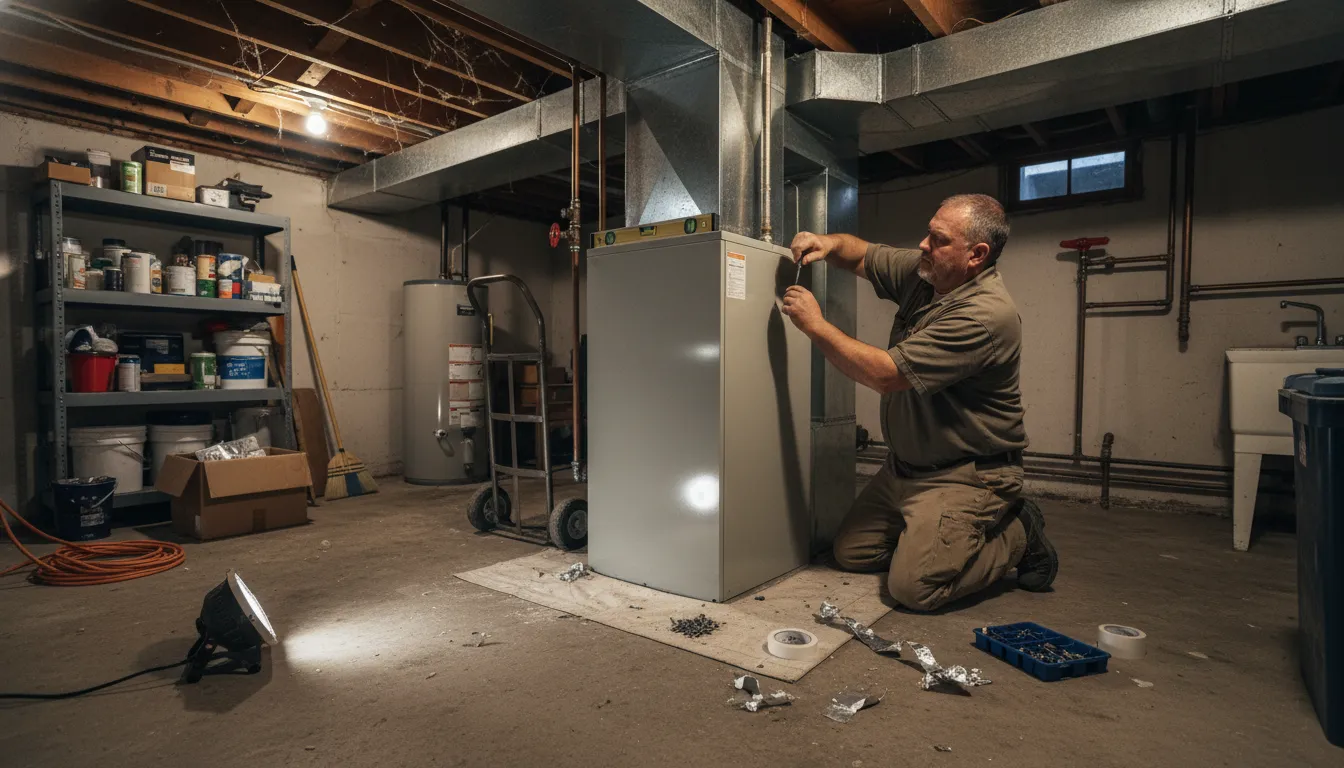
- New System Installation: The new furnace is positioned, leveled, and secured. All connections-fuel, electrical, and venting-are meticulously installed. For gas/propane systems, this includes new gas lines or connections; for oil, it involves the oil line and filter. Venting is critical, often requiring a new direct-vent system through a sidewall or a properly sized and lined chimney.
- Ductwork Evaluation and Sealing: The contractor should inspect your ductwork, sealing any leaks with mastic sealant. Clean, tight ducts are essential for delivering all the heat your new furnace produces 4.
- System Testing and Commissioning: Once installed, the system is started and tested for safe operation, proper gas pressure (if applicable), correct airflow, and thermostat communication. The contractor should explain the basic operation of your new system and its filter 5 6.
Find the perfect furnace installation & replacement contractors for your needs
Get personalized recommendations and expert advice
Vermont-Specific Considerations and Tips
Vermont's unique climate and energy landscape create specific best practices for homeowners considering a new furnace.
- Prioritize Home Efficiency First: Before sizing a new furnace, consider air sealing and adding insulation to your attic, basement, and walls. A more efficient home envelope may allow you to install a smaller, less expensive furnace, saving money upfront and on future fuel bills 7.
- Explore All Heating Options: While replacing a furnace like-for-like is common, it's an excellent time to consider if another system might better suit your needs. For instance, a cold-climate air source heat pump can be an extremely efficient primary or supplemental heating source, potentially qualifying for significant rebates 8. Discuss hybrid systems (like a heat pump paired with a gas furnace) with your contractor.
- Leverage Local Expertise and Incentives: Always work with a Vermont-licensed HVAC contractor. They understand state building codes and climate challenges. Crucially, organizations like Efficiency Vermont offer guidance, product lists, and often substantial rebates for installing high-efficiency heating equipment, making a better system more affordable 9 10.
- Understand Cost Variables: Furnace replacement costs in Vermont typically range from $3,000 to over $9,000. The final price depends on the furnace type (gas, propane, oil), its efficiency rating (AFUE), the complexity of the installation (venting, duct modifications), and the contractor's labor rates. A typical 100,000 BTU high-efficiency gas furnace installation might fall between $3,800 and $4,200 11 12 13 14.
Maintaining Your New System
Protect your investment and ensure peak performance with regular maintenance. An annual tune-up by a professional before each heating season is recommended. This service typically includes cleaning the burners and heat exchanger, checking fuel lines and connections, testing safety controls, and changing the air filter. Keeping your furnace well-maintained improves efficiency, extends its lifespan, and helps prevent mid-winter breakdowns.
Frequently asked questions
Sources
Footnotes
-
Central Heating - Vermont Energy Saver - https://energysaver.vermont.gov/heating-cooling/central-heating ↩ ↩2
-
Vermont HVAC License: Requirements, Process & Tips | ServiceWorks - https://blog.service.works/service-business/hvac/vermont-hvac-license-how-to-get-certified-as-an-hvac-contractor-in-vt/ ↩
-
HVAC Installation Guide for Vermont Homes - Peak Mechanical - https://www.peakmechanicalvt.com/expert-hvac-system-installation-guide/ ↩
-
Winter Heater Replacement: Ensure Efficient Heating - https://www.standardheatingandairconditioning.com/blog/heater-replacement-for-efficient-heating/ ↩
-
Furnace Replacement: How To Choose & Install A New ... - https://comfortsystemsofmt.com/blog/furnace-replacement/ ↩
-
The Ultimate Guide to 3-5 Ton R-32 Air Conditioner and Gas Furnace Systems - https://thefurnaceoutlet.com/blogs/news/the-ultimate-guide-to-3-5-ton-r-32-air-conditioner-and-gas-furnace-systems ↩
-
Furnace Installation and Replacement in Burlington, VT - https://www.vtenergy.com/furnace-installation-burlington-vt.php ↩
-
A guide to home heating systems | Efficiency Vermont - https://www.efficiencyvermont.com/blog/how-to/a-guide-to-home-heating-systems ↩
-
Furnaces & Boilers - Efficiency Vermont - https://www.efficiencyvermont.com/products-technologies/heating-cooling-ventilation/furnaces-boilers ↩
-
2025 Government Rebates for Heating & HVAC Systems - https://www.furnaceprices.ca/government-hvac-rebates/ ↩
-
Furnace Installation Costs Explained - Obie Comfort Solutions - https://www.obiecomfortsolutions.com/blog/heating-service/how-much-should-you-budget-for-furnace-installation-tips-and-insights/ ↩
-
Furnace Installation Costs: Your 2025 Guide - https://perfecttemprockford.com/furnace-installation-costs/ ↩
-
New Furnace Installation Guide: Paragon Service Pros in 2025 - https://www.paragonservicepros.com/install-new-furnace/ ↩
-
2026 Furnace Replacement Cost Guide - Modernize - https://modernize.com/hvac/heating-repair-installation/furnace-cost ↩