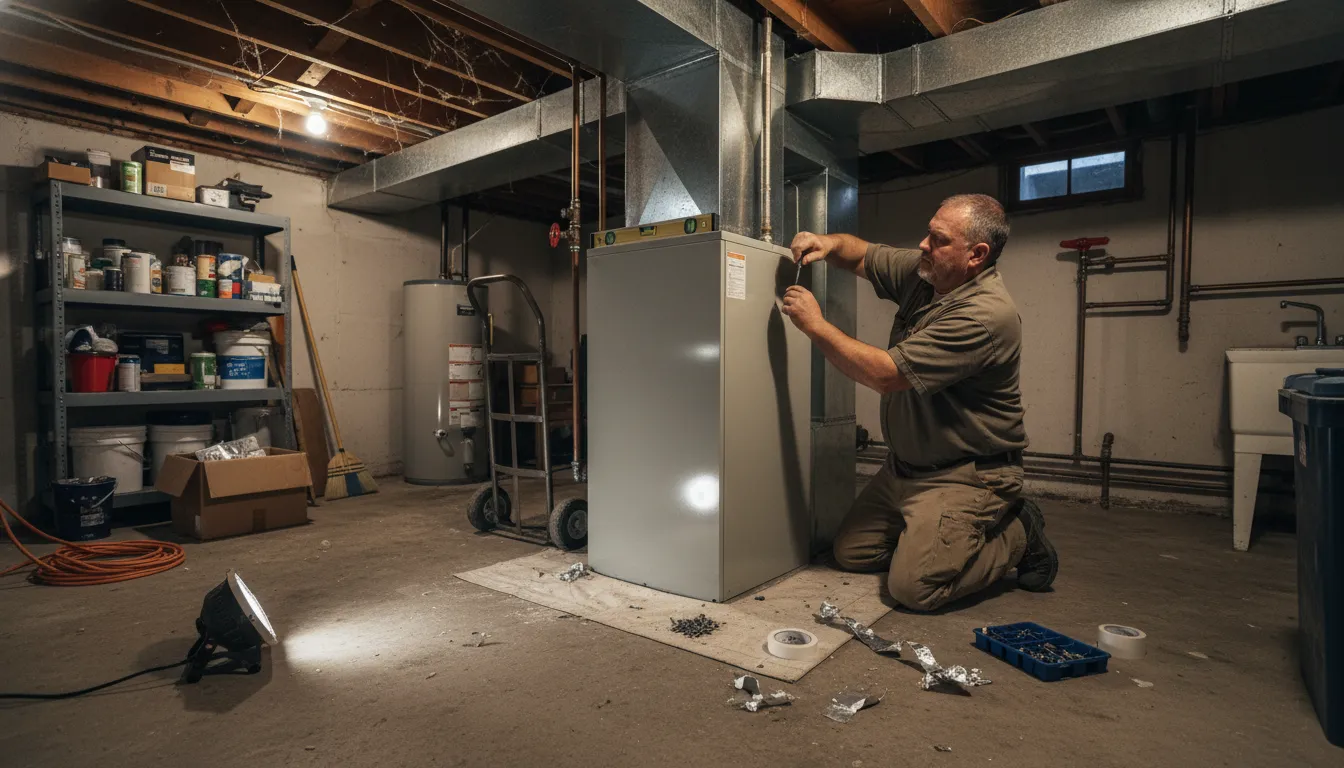
Find the Best Furnace Installation & Replacement Contractors for Your Business
No obligation • Fast responses • Nationwide coverage

Why you can trust HVAC Firms
HVAC Firms is a leading United States resource for evaluating HVAC service providers. Our team researches companies, checks credentials, and reviews customer feedback to present clear, unbiased information. Listings and rankings are based on merit, and companies cannot pay to change our editorial content.
Search providers near you
Best Furnace Installation & Replacement Contractors in Virginia Ranked
Replacing your home's furnace is a significant investment that directly impacts your comfort, energy bills, and safety. In Virginia, where winters can bring cold snaps and fluctuating temperatures, choosing the right heating system is crucial for maintaining a cozy and efficient home. This guide provides clear, practical information on furnace types, costs, and the installation process to help you make an informed decision and connect with qualified local professionals for your project.
Absolute Comfort Heating and Cooling
524 Central Dr #101, Virginia Beach, VA 23454
Absolute Comfort Heating and Cooling is a family-owned HVAC company serving Virginia Beach, VA, and nearby areas since 2003. They provide a wide range of services including air conditioning, heat pump, furnace, and boiler repair and installation, as well as indoor air quality solutions and ductless system services. Their NATE-certified technicians handle both residential and light commercial HVAC needs, offering expertise in system diagnostics, maintenance, and installations. The company also offers 24/7 emergency service for urgent HVAC issues.

Hats Off Heating and Air Conditioning Repair & Service
424 Investors Pl Suite 105, Virginia Beach, VA 23452
Hats Off Heating and Air Conditioning Repair & Service is a heating specialist based in Virginia Beach, VA. They provide furnace and boiler repair, installation, and HVAC tune-up services tailored to residential heating needs. Their experienced technicians handle everything from routine maintenance to complex repairs and system upgrades, ensuring efficient and reliable home heating. The company also offers a membership program with benefits like routine maintenance and special discounts, supporting year-round system performance.
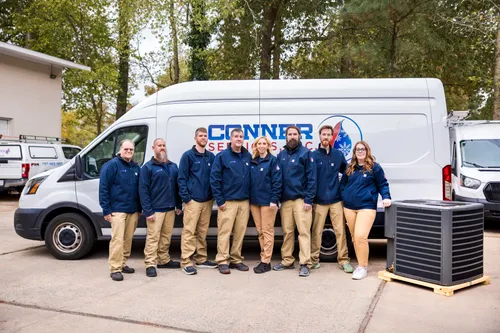
Conner Services Inc
1359 Virginia Beach Blvd, Virginia Beach, VA 23454
Conner Services Inc provides a wide range of heating, ventilation, and air conditioning services in Virginia Beach, VA. Their skilled technicians handle HVAC installation, repair, and maintenance for systems including furnaces, heat pumps, mini-splits, geothermal units, and ductwork. They also offer indoor air quality solutions such as filtration and UV lights, as well as smart home HVAC accessories. The company emphasizes energy-efficient options and comprehensive seasonal tune-ups to maintain system performance. Conner Services Inc holds multiple professional licenses and offers a one-year labor warranty on all services.

Aire Serv of Southside
4740 W Norfolk Rd, Portsmouth, VA 23703
Aire Serv of Southside is an HVAC company serving Virginia Beach, VA, and nearby areas including Chesapeake, Norfolk, and Portsmouth. They provide a range of heating and cooling services such as air conditioner repair and installation, furnace and heat pump maintenance, boiler services, and indoor air quality improvements. The company offers specialized capabilities like ductless mini split AC system installation and comprehensive HVAC tune-ups to enhance system efficiency. Aire Serv of Southside is locally owned and operated and is affiliated with a national network, providing access to extensive resources and continuing education. They also offer 24/7 availability for heating and air conditioning repairs to ensure customer comfort year-round.
Mid Atlantic Mechanical and Repair, LLC
Richmond, VA
Mid Atlantic Mechanical and Repair, LLC is an HVAC company serving Richmond, VA, and surrounding areas. They provide repair, installation, and maintenance services for air conditioning, heating, heat pumps, ductless mini-splits, and indoor air quality systems for both residential and commercial customers. The company is EPA certified, holds a master HVAC license, and operates as a Class-A contractor. Their technicians have extensive experience working with electric, oil, and gas HVAC systems. Financing options are available to assist with repair and installation costs.
Understanding Your Furnace Options in Virginia
When it's time for a new furnace, Virginia homeowners are typically choosing between gas, propane, or electric systems. The most critical decision often revolves around the unit's operational stages and efficiency rating, which determine comfort, noise levels, and long-term operating costs.
Single-Stage Furnaces: These are the most common and affordable option. They operate at 100% capacity whenever they turn on, providing a simple on/off function. While cost-effective upfront, they can create noticeable temperature swings and are generally less efficient than other models 1. They may be suitable for smaller homes or milder areas but can struggle with consistent comfort during Virginia's colder periods.
Two-Stage Furnaces: This type offers a high/low operation. It can run at a lower, quieter capacity (often around 65%) for most of the heating season, only kicking into high gear during the coldest days. This provides more even heating, reduces temperature stratification (hot and cold spots), and improves efficiency and comfort compared to a single-stage unit.
Variable-Speed or Modulating Furnaces: Representing the top tier in comfort and efficiency, these furnaces precisely adjust their output in small increments to match the exact heating demand of your home. This leads to exceptionally consistent temperatures, superior air filtration, reduced noise, and maximized energy savings. They come with a higher initial price tag but offer the best performance, especially in Virginia's variable climate.
The Importance of Proper Sizing (Manual J Calculation)
One of the most critical steps in furnace replacement is ensuring the new unit is correctly sized for your home. An oversized furnace will "short cycle"-turn on and off frequently-leading to uneven heating, increased wear and tear, and higher humidity levels. An undersized furnace will run constantly, struggling to keep up on cold days and driving up your energy bills.
A professional HVAC technician should always perform a Manual J load calculation. This is not a simple square-footage guess; it's a comprehensive assessment that considers your home's insulation, window types and placement, air infiltration, ceiling height, and even local climate data. Proper sizing based on this calculation is essential for efficiency, comfort, and the longevity of your new furnace.
Efficiency Ratings: Understanding AFUE
The Annual Fuel Utilization Efficiency (AFUE) measures how efficiently a furnace converts fuel into heat. It's expressed as a percentage. For example, an 80% AFUE furnace turns 80% of its fuel into heat, losing 20% through the flue.
- Federal Minimum: The minimum standard for new gas furnaces is 80% AFUE 2.
- High-Efficiency Models: Condensing furnaces with AFUE ratings of 90% to over 98% are widely available. These units extract so much heat from the combustion gases that the exhaust is cool enough to vent through PVC pipe 3 4. While they cost more upfront, they can lead to significant savings on your monthly heating bills, a key consideration for Virginia homeowners 5 6.
Choosing between a standard 80% and a high-efficiency 90%+ model involves weighing the initial investment against potential long-term energy savings. Your HVAC professional can help you calculate the payback period based on your local fuel costs and usage.
The Professional Installation Process
A successful furnace installation is a multi-step process that ensures safety, efficiency, and compliance with local building codes. Here's what you can expect from a qualified professional:
- Initial Assessment and Load Calculation: The technician will inspect your current system, discuss your needs, and perform the essential Manual J calculation to determine the correct furnace size.
- Safe Removal and Disposal: The old furnace is properly disconnected from fuel, electrical, and ductwork systems and removed from your home for environmentally responsible disposal.
- Preparation and Installation: The new furnace is positioned, often on a new vibration-absorbing pad. Technicians will ensure all connections-including gas line, electrical, flue/vent, and ductwork-are secure, sealed, and up to code 7. This step is critical for safety and efficiency.
- System Testing and Startup: Once installed, the system is thoroughly tested. The technician will check for gas leaks, verify proper ignition, measure airflow, and ensure the thermostat communicates correctly with the new furnace.
- Homeowner Walkthrough: A reputable installer will explain the new system's operation, review your thermostat settings, and go over maintenance requirements before completing the job 8.
Find the perfect furnace installation & replacement contractors for your needs
Get personalized recommendations and expert advice
Cost Factors for Furnace Replacement in Virginia
The total cost for a new furnace installation in Virginia typically ranges from $3,000 to over $9,000 9. This wide range is due to several key factors:
- Furnace Type and Efficiency: A basic, single-stage 80% AFUE gas furnace will be at the lower end of the cost spectrum. A high-efficiency, variable-speed modulating furnace will be at the higher end.
- Home Size and Complexity: Larger homes require larger, more powerful units. The difficulty of the installation-such as navigating tight spaces, upgrading electrical service, or modifying existing ductwork-adds to labor costs.
- Fuel Type: Natural gas furnaces are most common where gas lines are available. Propane systems may require tank installation or rental. Electric furnaces have lower equipment costs but can be very expensive to operate in Virginia's climate.
- Additional Components: The cost often includes necessary items like new flue piping, thermostat upgrades, ductwork modifications or sealing, and permits 10.
General Cost Tiers:
- Basic System: A standard-efficiency (80% AFUE), single-stage gas furnace installation often falls in the $4,000 - $5,500 range.
- Mid-Range System: A two-stage or entry-level high-efficiency (90-95% AFUE) furnace typically costs between $5,500 and $7,000 installed.
- High-Efficiency Premium System: Top-tier variable-speed modulating furnaces (96%+ AFUE) with advanced features generally start around $7,000 and can exceed $9,000 for complex installations 11 12.
Always get detailed, written estimates from multiple licensed contractors that break down equipment, labor, and any ancillary costs.
Why Professional Installation is Non-Negotiable
Furnace installation involves high-voltage electricity, combustible fuel lines, and combustion venting-all areas where mistakes can lead to fire, carbon monoxide poisoning, or gas leaks. Professional installers are trained to handle these hazards safely. They also ensure the installation meets all local Virginia building codes and manufacturer specifications, which is required to keep the unit's warranty valid. A proper installation by a certified technician is your guarantee of safety, efficiency, and reliability for the life of the furnace.
Frequently asked questions
Sources
Footnotes
-
Furnace Replacement Cost vs Furnace Repair Cost - Carrier - https://www.carrier.com/residential/en/us/products/furnaces/furnace-replacement-cost-vs-furnace-repair-cost/ ↩
-
Gas Furnaces | Installation & Repair | Richmond, VA - https://gogeothermalrva.com/residential/furnaces/ ↩
-
Furnace Installation & Replacement Services in Virginia - https://www.snellheatingandair.com/heating-services/furnace-installation-services/ ↩
-
Furnace Replacement - SM Mechanical LLC - https://www.smmechanicalhvac.com/hvac/heating/furnace-systems/furnace-replacement/ ↩
-
Heating Installation in Virginia Beach - Climatemakers of VA - https://www.climatemakers.com/heating/heating-installation/ ↩
-
How Much Does a New HVAC Cost in Virginia in 2024? - United Air Temp - https://www.unitedairtemp.com/dc-metro-area/blog/how-much-dpes-a-new-hvac-cost-in-virginia/ ↩
-
New Furnace Installation Guide: Paragon Service Pros in 2025 - https://www.paragonservicepros.com/install-new-furnace/ ↩
-
Furnace Replacement: How To Choose & Install A New ... - https://comfortsystemsofmt.com/blog/furnace-replacement/ ↩
-
Furnace Installation Cost: What Homeowners Should Know - https://callwhitney.com/furnace-installation-cost-homeowners-should-know/ ↩
-
Furnace Install Costs Guide: Pricing, Labor, And What Affects Your ... - https://www.michaelbonsbyhvac.com/blog/furnace-install-costs-guide-pricing-labor-and-what-affects-your-total/ ↩
-
What's the Cost to Install a Furnace? - Michael & Son - https://michaelandson.com/richmond/blog/cost-to-install-a-furnace ↩
-
2025 New Furnace Cost Guide by The Otter Guys - https://calltheotterguys.com/new-furnace-cost/ ↩