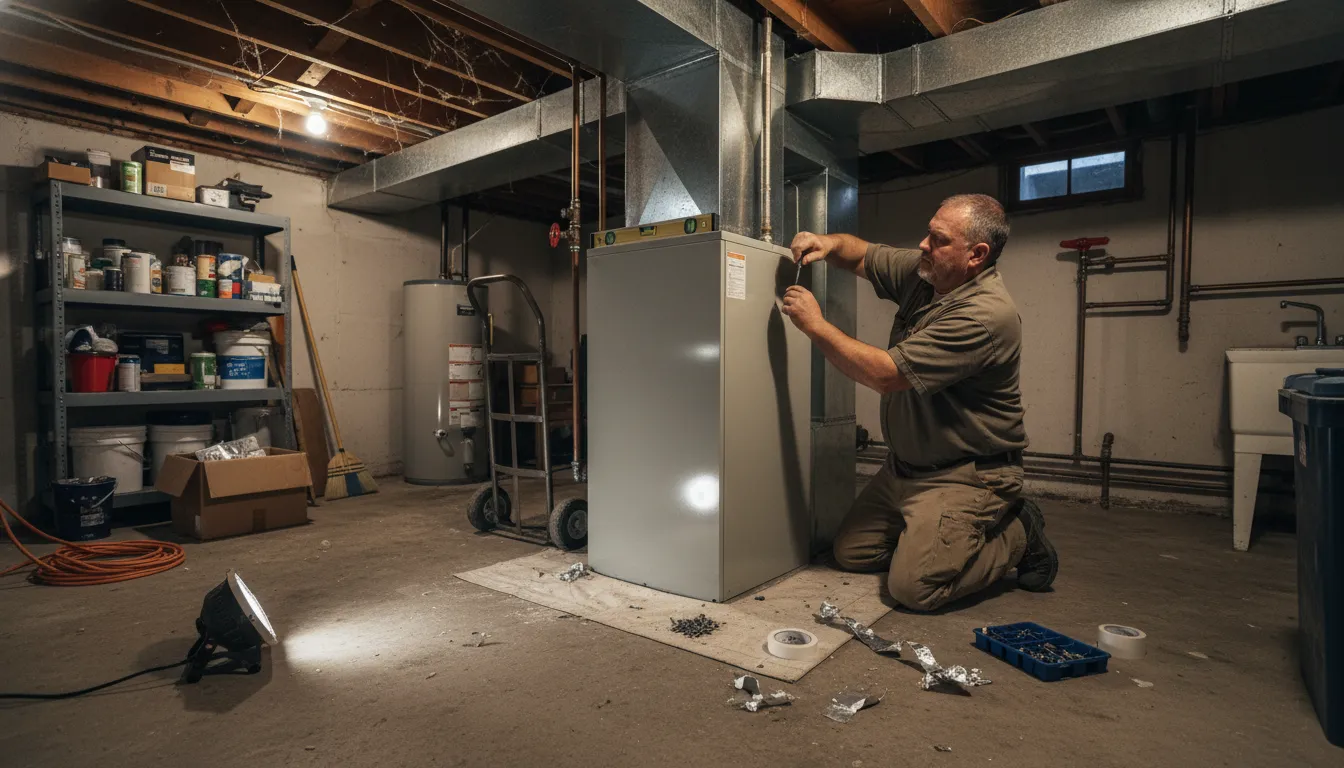
Find the Best Furnace Installation & Replacement Contractors for Your Business
No obligation • Fast responses • Nationwide coverage

Why you can trust HVAC Firms
HVAC Firms is a leading United States resource for evaluating HVAC service providers. Our team researches companies, checks credentials, and reviews customer feedback to present clear, unbiased information. Listings and rankings are based on merit, and companies cannot pay to change our editorial content.
Search providers near you
Best Furnace Installation & Replacement Contractors in South Carolina Ranked
Choosing a new heating system for your South Carolina home is a significant decision that impacts your comfort, energy bills, and home's value for years to come. With the state's unique climate-characterized by mild, short winters and long, hot, humid summers-selecting the right furnace or heating system requires careful consideration. This guide provides clear, practical information to help you understand your options, the installation process, and what to expect, empowering you to make an informed choice and connect with qualified local professionals for your project.
Understanding South Carolina's Heating Needs
South Carolina's climate presents a distinct heating and cooling profile. Winters are generally mild, but temperatures can still dip below freezing, especially in the Upstate and Piedmont regions. Summers are long, hot, and notoriously humid, placing a heavy demand on air conditioning systems.
This climate reality means your heating system doesn't need to combat extreme, prolonged cold like in northern states. However, it must be reliable for those colder snaps and work efficiently in conjunction with your cooling system. For many homes, this makes a heat pump or a dual-fuel system an exceptionally smart choice, as they provide both heating and cooling from a single unit or integrated system. The key is balancing heating performance for occasional cold weather with exceptional efficiency for the dominant cooling season.
Types of Heating Systems for SC Homes
When considering furnace installation or replacement, you have several primary options. The best choice depends on your home's existing infrastructure, local fuel availability, and your efficiency goals.
Gas Furnaces
- How They Work: Burn natural gas or propane to generate heat, which is then distributed via ductwork.
- Pros for SC: Provide quick, powerful heat, which can be comforting during sudden cold spells. They are often cost-effective to operate if natural gas is readily available in your area.
- Cons: Require a gas line and proper venting. They only provide heat, so a separate air conditioner is needed for summer cooling.
Electric Furnaces
- How They Work: Use electrical resistance coils (like a large space heater) to generate heat, which is blown through the ducts.
- Pros for SC: Lower upfront installation cost and simpler venting requirements. Can be a good option where natural gas is not available.
- Cons: Typically have the highest operating costs, as electricity is a more expensive heating fuel per unit of heat produced. This can lead to high winter bills.
Air-Source Heat Pumps
- How They Work: Act like a reversible air conditioner. In heating mode, they extract heat from the outdoor air (even in cold weather) and transfer it inside. In cooling mode, they remove heat from your home.
- Pros for SC: Exceptionally efficient for South Carolina's mild winters, often providing heat at a fraction of the cost of electric resistance heating. They also serve as your high-efficiency air conditioner in summer, making them a versatile, all-in-one solution. This is frequently the most recommended system for the SC climate.
- Cons: Their heating capacity decreases as outdoor temperatures drop significantly below freezing, though modern models are effective in most SC winter conditions.
Dual-Fuel Systems
- How They Work: A hybrid system that pairs an air-source heat pump with a gas furnace. The heat pump handles heating during milder temperatures (roughly above 35-40°F). When it gets too cold for the heat pump to work efficiently, the system automatically switches to the gas furnace for powerful, economical heat.
- Pros for SC: Offers the best of both worlds: the supreme efficiency of a heat pump for most of the heating season and the reliable, robust heat of a furnace for the coldest days. This can optimize comfort and operating costs year-round 1 2 3.
- Cons: Higher upfront cost due to the installation of two complete systems.
Key Factors in Choosing Your System
Beyond the type of system, several critical factors will determine your new furnace's performance, cost, and efficiency.
Fuel Type and Availability: Your choice may be influenced by what's available at your home. Do you have an existing natural gas line? Is propane an option? Is your electrical service panel adequate for an electric furnace or heat pump? Your local professional can assess this.
System Size and Capacity: This is arguably the most important technical aspect. A system that is too large will "short cycle"-turn on and off frequently-leading to uneven temperatures, excess humidity in summer, and wasted energy. A system that is too small will run constantly, struggling to maintain temperature and driving up bills. Proper sizing involves a Manual J load calculation, which considers your home's square footage, insulation, windows, and orientation.
Efficiency Ratings (AFUE, HSPF, SEER):
- AFUE (Annual Fuel Utilization Efficiency): Measures a furnace's efficiency in converting fuel to heat. It's expressed as a percentage. A standard efficiency model might be 80% AFUE, while a high-efficiency model can be 95% AFUE or higher, meaning it converts 95% of the fuel into usable heat for your home.
- HSPF (Heating Seasonal Performance Factor): Measures the heating efficiency of a heat pump. The higher the number, the more efficient it is.
- SEER (Seasonal Energy Efficiency Ratio): Measures the cooling efficiency of air conditioners and heat pumps. In South Carolina's hot summers, a high SEER rating (16+) is a wise investment for lower cooling costs.
For furnaces, investing in a higher AFUE unit (90%+) can lead to significant long-term savings on your gas bills, though the upfront cost is higher 4.
Find the perfect furnace installation & replacement contractors for your needs
Get personalized recommendations and expert advice
The Professional Installation Process Explained
A successful furnace replacement is more than just swapping an old box for a new one. It's a detailed process that ensures safety, efficiency, and reliability.
- Initial Consultation and Home Assessment: A qualified technician will visit your home to discuss your needs, evaluate your existing ductwork and infrastructure, and perform a load calculation to determine the correct system size.
- System Selection and Proposal: Based on the assessment, the professional will present options that fit your home, budget, and efficiency goals, providing a detailed written estimate.
- Permitting: Your contractor will typically pull any required local building permits, ensuring the installation meets all South Carolina and municipal codes for safety and efficiency.
- Preparation and Removal: The installation team will safely disconnect and remove your old furnace, taking care with refrigerant lines (if present) and disposing of the unit properly.
- Installation: The new furnace or air handler is positioned. This stage includes:
- Making necessary modifications to gas lines, electrical connections, or refrigerant lines.
- Ensuring the new unit is level and secured.
- Connecting it to the existing ductwork, often with new seals to prevent air leaks.
- Installing new venting for gas furnaces or condensate drainage for high-efficiency units.
- Setting up a new, compatible thermostat (often a programmable or smart thermostat for optimal control) 5.
- Testing, Calibration, and Walkthrough: Once installed, the system is started up. The technician will test for safe operation, check gas pressure (if applicable), measure airflow, calibrate the thermostat, and ensure all components are working in harmony. They should then explain the system's operation and basic maintenance to you 6 7.
Understanding Costs in South Carolina
Furnace replacement cost in South Carolina can vary widely based on the system type, size, efficiency, and complexity of the installation. Labor costs and regional variations also play a role.
- Basic/Economy System: A standard-efficiency (80% AFUE) gas furnace replacement might start in the range of $2,500 to $4,000, not including the cost of a new air conditioner if needed 8.
- Mid-Range/High-Efficiency System: A high-efficiency gas furnace (95%+ AFUE) or a standard heat pump system often falls in the range of $4,500 to $8,000 for the full installation 9.
- Premium/Complex Systems: A full dual-fuel system (heat pump + furnace) or a high-end variable-speed heat pump with complex ductwork modifications can range from $8,000 to $12,000 or more 10 11.
These are estimated total installed costs. It's crucial to get detailed, written estimates from multiple licensed contractors that break down equipment, labor, materials, and permit fees. The lowest price is not always the best value; prioritize quality installation and properly sized, efficient equipment.
Preparing for Your Project
To ensure a smooth furnace replacement:
- Get Multiple Estimates: Aim for at least three detailed written proposals from established, licensed, and insured local contractors.
- Check Credentials: Verify the contractor holds a valid South Carolina HVAC license and carries both liability insurance and workers' compensation.
- Ask About Experience: Inquire about their experience with your chosen system type (especially heat pumps or dual-fuel systems) and request local references.
- Review the Proposal: Ensure it includes the exact model numbers, efficiency ratings, warranty details (both manufacturer and labor), and a clear project timeline.
- Consider Financing: Many contractors offer financing options to help manage the upfront cost of a more efficient system that will save you money over time.
Frequently asked questions
Sources
Footnotes
-
5 Tips for Choosing the Right Heating Unit in South Carolina - https://tuckandhowell.com/5-tips-for-choosing-the-right-heating-unit-in-south-carolina/ ↩
-
The Ultimate Guide to Choosing the Right HVAC System for ... - https://viperservices.com/the-ultimate-guide-to-choosing-the-right-hvac-system-for-your-home-in-south-carolina/ ↩
-
Furnace Replacement: How To Choose & Install A New ... - https://comfortsystemsofmt.com/blog/furnace-replacement/ ↩
-
New Furnace Installation Guide: Paragon Service Pros in 2025 - https://www.paragonservicepros.com/install-new-furnace/ ↩
-
Furnace Installation Buyer's Guide | Horne HVAC Charlotte - https://hornehvac.com/buyers-guide/furnace-installation/ ↩
-
Heater Installation in Greenville, SC - Guthrie Heating - https://www.guthrieheating.com/hvac-services/heating-installation/ ↩
-
Furnace Installation Guide: What to Expect During Replacement - https://modernize.com/hvac/heating-repair-installation/furnace-installation ↩
-
2026 Furnace Replacement Cost Guide - Modernize - https://modernize.com/hvac/heating-repair-installation/furnace-cost ↩
-
How Much Does a New Furnace Cost in 2026? - Carrier - https://www.carrier.com/residential/en/us/products/furnaces/cost-of-a-new-furnace/ ↩
-
How Much Does It Cost To Install a Furnace in South Carolina? - https://eliteairandheatllc.com/cost-to-install-furnace-york-county/ ↩
-
How Much Does a New Furnace Cost? - https://www.wilsonsair.com/wilsons-resources/blogs/how-much-does-a-new-furnace-cost ↩