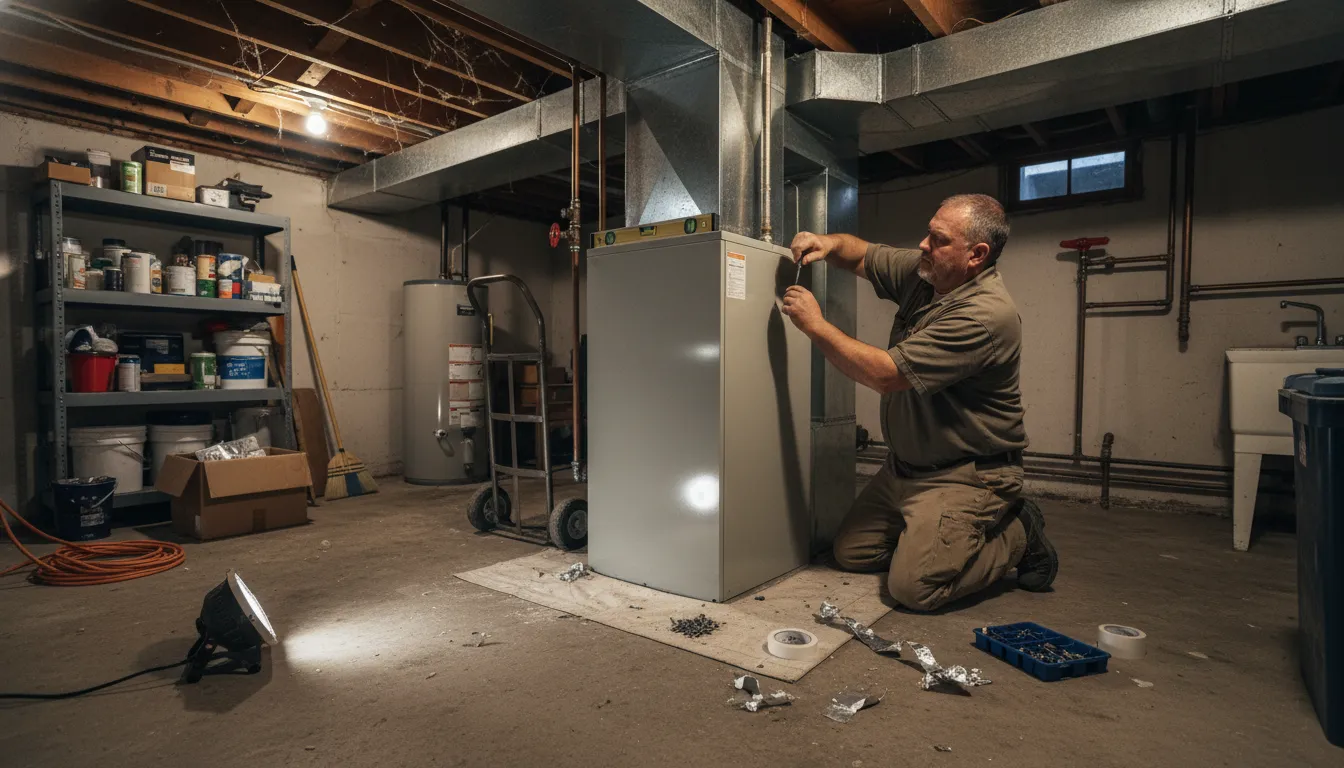
Find the Best Furnace Installation & Replacement Contractors for Your Business
No obligation • Fast responses • Nationwide coverage

Why you can trust HVAC Firms
HVAC Firms is a leading United States resource for evaluating HVAC service providers. Our team researches companies, checks credentials, and reviews customer feedback to present clear, unbiased information. Listings and rankings are based on merit, and companies cannot pay to change our editorial content.
Search providers near you
Best Furnace Installation & Replacement Contractors in Nebraska Ranked
Upgrading your home's heating system is a significant investment, especially in a state known for its cold, harsh winters. A new furnace installation or replacement is not just about staying warm; it's about ensuring energy efficiency, home safety, and long-term cost savings. For Nebraska homeowners, navigating the options-from high-efficiency gas models to heat pumps-requires understanding local climate demands, new efficiency standards, and proper installation practices. This guide provides the essential information you need to make an informed decision and connect with qualified professionals who can assess your home's specific needs, ensuring your new system delivers reliable comfort for years to come.
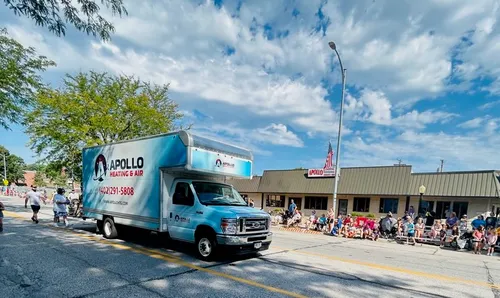
Apollo Heating & Air Conditioning
114 W Mission Ave, Bellevue, NE 68005
Apollo Heating & Air Conditioning is a family-owned HVAC company serving Omaha, NE, and the surrounding areas including southeast Nebraska and southwest Iowa. Established in 1971, they provide a wide range of heating and cooling services such as furnace, heat pump, and air conditioning installation, repair, and maintenance. The company is a Lennox Premier Dealer but works on all makes and models. They also offer specialized services including geothermal heat pump installation, ductless mini-split systems, custom sheet metal fabrication, and indoor air quality solutions. Apollo Heating & Air Conditioning supports both residential and commercial clients with comprehensive HVAC solutions.
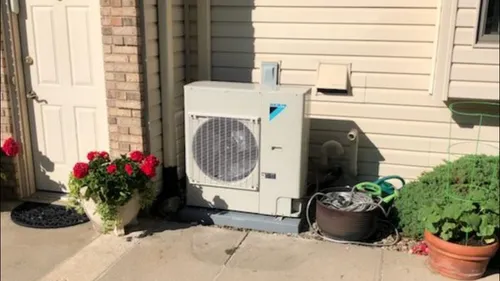
Air Care
15125 Irene St, Omaha, NE 68138
Air Care is a full-service HVAC company serving Omaha, NE, and Council Bluffs. They provide residential and commercial heating, ventilation, and air conditioning services including installation, maintenance, and repair of air conditioners, furnaces, and indoor air quality systems. Air Care is an authorized Daikin and AprilAire dealer with over 20 years of experience. They offer thorough HVAC tune-ups and air quality analysis to ensure safe and efficient system operation.
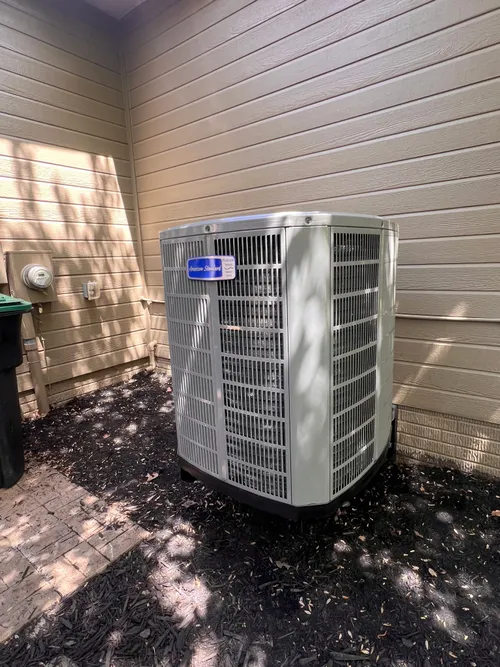
Sustainable
206 E Grant St, Papillion, NE 68046
Sustainable is an HVAC company based in Omaha, NE, offering installation, repair, and replacement services for air conditioners, furnaces, heat pumps, and boilers. They focus on seamless HVAC system installations and efficient repairs to maintain indoor comfort. Sustainable Mechanical Inc. emphasizes sustainable and energy-efficient solutions to improve system performance and contribute to energy savings. Their team is fully licensed and experienced in all aspects of HVAC services in the Omaha area.
Keats Heating and Cooling
14465 Gilder Ave, Bennington, NE 68007
Keats Heating and Cooling is a locally owned HVAC company based in Omaha, NE, offering heating and air conditioning repair, installation, and maintenance services. Serving Omaha and surrounding communities, they provide expertise in furnace, heat pump, and air conditioning systems. The company has been operating since 2015 and offers 24/7 emergency HVAC repair services to address urgent heating and cooling needs.
Titanium HVAC
4428 S 139th St, Omaha, NE 68137
Titanium HVAC provides residential and commercial heating and cooling services in Omaha, NE. They specialize in installation, repair, and maintenance of HVAC systems, including ductless mini splits. The company focuses on thorough problem-solving to ensure lasting fixes rather than temporary repairs. Titanium HVAC serves both new construction and existing buildings, aiming to keep customers comfortable despite Omaha's challenging weather.
Understanding Nebraska's Climate and Heating Needs
Nebraska experiences a continental climate with hot summers and notably cold winters. Cities like Omaha, Lincoln, and Kearney regularly see winter temperatures dip below freezing for extended periods, with substantial heating degree days. This climate makes your furnace the most critical component of your home comfort system for a significant part of the year. An undersized unit will struggle to keep up, leading to cold spots and excessive cycling, while an oversized unit will short-cycle, wasting energy, increasing humidity problems, and wearing out components prematurely. The key to optimal performance and efficiency is a system correctly sized for Nebraska's specific winter conditions and your home's unique characteristics.
Types of Furnaces Available in Nebraska
When considering a new heating system, Nebraska homeowners have several primary fuel and technology options. The right choice depends on your home's existing infrastructure, local fuel availability and costs, and your efficiency goals.
-
Natural Gas Furnaces: This is the most common heating fuel in Nebraska due to its widespread availability and historically lower operating costs. Modern gas furnaces are categorized by their Annual Fuel Utilization Efficiency (AFUE) rating.
- Standard Efficiency (80% AFUE): These units convert 80% of the fuel's energy into heat, with the rest lost through the flue. They are often less expensive upfront but have higher long-term fuel costs.
-
High-Efficiency (90% to 98.5% AFUE): Also known as condensing furnaces, these models extract more heat from the combustion gases, resulting in significant fuel savings. They require different venting (typically PVC pipe) than standard models. New federal standards are pushing the market toward a minimum of 95% AFUE for new installations in many cases.
-
Electric Furnaces: These systems use electric resistance heating elements to warm air. They are often less expensive to install than gas systems since they don't require gas lines or complex venting. However, their operational costs in Nebraska can be considerably higher due to electricity prices, especially during peak winter demand. They are commonly found in areas without natural gas service or paired with heat pumps in hybrid systems.
-
Heat Pump Systems: While often associated with cooling, modern air-source heat pumps can provide extremely efficient heating down to low outdoor temperatures. For Nebraska's climate, a cold-climate heat pump or a dual-fuel system (which pairs a heat pump with a gas furnace) can be an excellent option. The heat pump handles moderate heating needs efficiently, and the gas furnace takes over during extreme cold spells. Geothermal heat pumps, which use the stable temperature of the earth, offer the highest efficiency but come with a much higher installation cost 1.
Key Factors in Furnace Selection and Installation
Choosing a new furnace involves more than just picking a brand or a high AFUE rating. Several critical, Nebraska-specific factors must be addressed to ensure performance, efficiency, and safety.
-
Professional Sizing (Manual J Calculation): This is the non-negotiable first step. A proper load calculation, known as a Manual J, is performed by a qualified technician. It factors in your home's square footage, insulation levels (R-value), window type and orientation, air infiltration, and even the number of occupants. Guessing or replacing "ton-for-ton" is a recipe for poor performance and high utility bills 2.
-
Ductwork Assessment: Your furnace is only as good as the ductwork that distributes its air. Old, leaky, or poorly designed ducts can rob a high-efficiency furnace of 30% or more of its capacity. Before installation, your contractor should inspect the duct system for leaks, proper sizing, and insulation. Sealing and modifying ductwork can add $800 to $2,500+ to a project but is often essential for realizing the full benefits of a new furnace 3.
-
Venting and Combustion Air: High-efficiency (condensing) gas furnaces cannot use a traditional metal chimney. They require new PVC piping for intake and exhaust, which typically costs an additional $300 to $1,200+. Furthermore, all gas appliances require adequate combustion air for safe operation, which may involve adding new vents or louvers to the mechanical room.
-
Fuel Type and Availability: While natural gas is prevalent, your specific location will determine the most practical and economical fuel choice. It's important to discuss both current and projected fuel costs with your installer.
Find the perfect furnace installation & replacement contractors for your needs
Get personalized recommendations and expert advice
The Professional Installation Process Explained
A quality installation is paramount to the safety, efficiency, and longevity of your new furnace. Here's what you can expect from a reputable Nebraska contractor:
- Comprehensive In-Home Assessment: A technician will perform a visual inspection, discuss your comfort concerns, and most importantly, conduct a Manual J load calculation. They will also inspect existing ductwork, electrical service, gas lines, and venting.
- System Design and Proposal: Based on the assessment, the contractor will present options that fit your home's needs and budget, explaining the pros, cons, and estimated operating costs of each.
- Preparation and Removal: On installation day, the crew will protect your home with drop cloths, safely disconnect utilities, and remove the old furnace and any obsolete components.
- Installation and Modifications: The new furnace is set in place, leveled, and secured. Necessary modifications are made: this may include running new PVC vent pipes, upgrading gas lines or electrical connections, and sealing or adjusting ductwork transitions 4 5 6.
- System Startup and Testing: Once physically installed, the technician will start the system, calibrate the blower motor speed and gas pressure, and test for safe operation. This includes checking for gas leaks, verifying proper draft and venting, and ensuring the heat exchanger does not have any cracks (via a combustion analysis).
- Customer Orientation and Documentation: A final walk-through ensures you understand how to operate your new thermostat and system, and you will receive all manufacturer warranty paperwork and model information.
Understanding Furnace Replacement Costs in Nebraska
Furnace replacement is a significant investment, with costs varying based on system type, efficiency, and the complexity of the installation. Here is a general cost breakdown for Nebraska as of 2024:
- High-Efficiency Gas Furnace (95%+ AFUE): $3,500 - $7,500+ installed (unit and labor). The higher end includes premium brands, complex installations, or larger capacity units.
- Standard Efficiency Gas Furnace (80% AFUE): $2,500 - $5,000+ installed. Note that availability of these models may be limited due to new efficiency standards.
- Essential Add-On Costs:
- New Venting for Condensing Furnace: Adding $300 - $1,200+ for PVC piping and routing 7.
- Ductwork Modifications/Sealing: Adding $800 - $2,500+ if significant repairs or improvements are needed to ensure proper airflow.
- Electric Furnace: Costs can vary widely but generally have a lower installation cost offset by higher lifetime operating costs in Nebraska.
- Heat Pump or Dual-Fuel System: These systems involve both indoor and outdoor units and are generally more expensive than a standalone furnace replacement, with costs highly dependent on the type and capacity.
Always obtain multiple detailed written estimates that break down equipment, labor, and any ancillary costs like permits or duct modifications.
Final Recommendations for Nebraska Homeowners
Given the climate, the single most important upgrade for most Nebraska homes is moving to a high-efficiency (95%+ AFUE) natural gas furnace. The increased upfront cost is typically recouped through lower monthly gas bills over the system's lifespan. Regardless of the fuel type, insist that any contractor you consider performs a Manual J load calculation-this is the foundation of a proper installation. Do not overlook the condition of your ductwork; investing in sealing and balancing can dramatically improve comfort and efficiency. Finally, prioritize professional installation from licensed, insured, and NATE-certified technicians who will pull the necessary permits and ensure the work meets all local building and safety codes in Omaha, Lincoln, or wherever you are in the state. This due diligence protects your investment and ensures your home remains warm, safe, and efficient through many Nebraska winters to come 8 9 10.
Frequently asked questions
Sources
Footnotes
-
Furnace Replacement Costs & Budget Tips - Air Services Unlimited - https://www.airservicesunlimited.com/blog/heating-service/how-much-does-furnace-replacement-cost-2024-price-guide/ ↩
-
Ultimate Buying Guide for 3-Ton Air Conditioners with 100,000 BTU Furnaces (Including A2L Refrigerants and R-454B Costs) - https://thefurnaceoutlet.com/blogs/hvac-tips/ultimate-buying-guide-for-3-ton-air-conditioners-with-100-000-btu-furnaces-including-a2l-refrigerants-and-r-454b-costs ↩
-
Furnace Installation Guide 2026 | What to Expect and How to Prepare - https://modernize.com/hvac/heating-repair-installation/furnace-installation ↩
-
Key Considerations for Furnace Installation - https://www.burkhardtheating.com/blog/considerations-for-furnace-installation ↩
-
Furnace Replacement in Omaha, NE - https://www.justcallburton.com/heating/furnace-replacement/ ↩
-
Furnace Replacement: How To Choose & Install A New ... - https://comfortsystemsofmt.com/blog/furnace-replacement/ ↩
-
2024 Furnace Replacement Omaha Costs | Titanium HVAC - https://titaniumomaha.com/furnace-replacement-omaha-costs/ ↩
-
Complete Furnace Replacement Guide for 2026 - https://www.budgetheating.com/blog/complete-furnace-replacement-guide/ ↩
-
The 2023 Nebraska Furnace Buyer's Guide - https://www.starcityair.com/blog/2023/june/the-2023-nebraska-furnace-buyer-s-guide/ ↩
-
What You Need to Know About New Furnace Efficiency Standards - https://www.a1united.net/blog/what-you-need-to-know-about-new-furnace-efficiency-standards/ ↩