Find the Best Furnace Installation & Replacement Contractors for Your Business
No obligation • Fast responses • Nationwide coverage

Why you can trust HVAC Firms
HVAC Firms is a leading United States resource for evaluating HVAC service providers. Our team researches companies, checks credentials, and reviews customer feedback to present clear, unbiased information. Listings and rankings are based on merit, and companies cannot pay to change our editorial content.
Search providers near you
Best Furnace Installation & Replacement Contractors in Indiana Ranked
A new furnace is a significant investment in your Indiana home's comfort, safety, and energy efficiency. The state's cold winters demand a reliable heating system, and modern, high-efficiency furnaces offer substantial savings on utility bills compared to older models. This guide explains the key considerations for Indiana homeowners, from choosing the right fuel type and efficiency rating to understanding the professional installation process, helping you make an informed decision for your home's heating needs.

Home Heroes Plumbing Heating & Air
7768 Kane Ct, Fishers, IN 46038
Home Heroes Plumbing Heating & Air is a locally owned company serving Indianapolis, IN, and nearby areas. They provide a range of services including air conditioning and furnace repair and installation, plumbing, and heating system maintenance. The company has over a decade of experience and offers emergency services during business hours. They are known for their sump pump maintenance and installation, as well as water heater services including tankless models.
Northeast Mechanical Services, Inc.
3620 Metro Park Dr N, Fort Wayne, IN 46818
Northeast Mechanical Services, Inc. is an HVAC and plumbing contractor based in Fort Wayne, IN. They provide a wide range of services including installation and repair of air conditioning, furnaces, heat pumps, boilers, mini splits, geothermal heat pumps, and indoor air quality systems. The company also offers generator installation and maintenance, ensuring reliable power solutions for homes and businesses. Northeast Mechanical Services emphasizes honest recommendations and fair pricing, serving Fort Wayne and nearby communities such as New Haven, Auburn, and Huntington. Their expertise includes energy consultations and eco-friendly geothermal HVAC systems.
Economy HVAC
9116 Karen Dr, Mooresville, IN 46158
Economy HVAC is a family-owned company based in Indianapolis, IN, offering heating, air conditioning, and plumbing services. They provide installation, repair, and maintenance for furnaces, air conditioners, heat pumps, and HVAC systems. Economy HVAC is a certified Trane dealer and offers 24/7 emergency service to address urgent heating and cooling needs. Their technicians are highly trained and NATE certified, ensuring professional diagnostics and repairs. The company emphasizes quality workmanship and customer care in every project.
Flow-Tech Plumbing & Heating, Inc.
8131 N Clinton St, Fort Wayne, IN 46825
Flow-Tech Plumbing & Heating, Inc. has been serving Fort Wayne, IN, and surrounding areas since 1991. They provide a wide range of plumbing and HVAC services including installation, repair, and maintenance of air conditioners, furnaces, boilers, and indoor air quality systems. Their team handles both residential and commercial projects, offering specialized services such as backflow prevention, gas line work, and water purification system installation. Flow-Tech also provides 24/7 emergency service to address urgent plumbing and HVAC needs at any time.
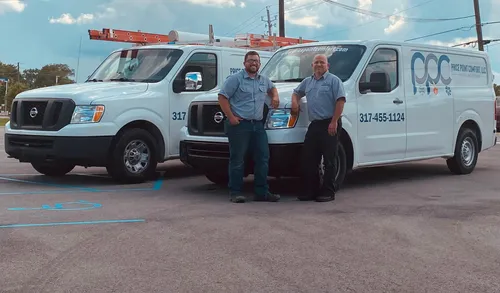
Price Point Comfort,llc
6329 S Mooresville Rd # A, Indianapolis, IN 46221
Price Point Comfort, llc is a locally family-owned HVAC company serving Indianapolis, IN, and surrounding areas. With over 30 years of experience, they provide heating and cooling services including installation, repair, and tune-ups for residential and commercial clients. Their expertise covers air conditioning, furnace, and full HVAC system services. The company offers personalized consultations to help clients select the right HVAC solutions and uses high-quality parts and equipment. Price Point Comfort emphasizes individualized service and includes warranties with their work.
Understanding Furnace Types for Indiana Homes
Choosing the right furnace starts with selecting a fuel source. Each type has distinct advantages and considerations, particularly for Indiana's climate.
Gas Furnaces (Natural Gas or Propane): This is the most common and often most cost-effective choice for Indiana homes with access to natural gas lines. Gas furnaces provide powerful, consistent heat, making them ideal for the state's cold winters. They are generally less expensive to operate than electric models in cold climates, offering a strong balance of performance and running costs.
Electric Furnaces: These units typically have a lower upfront purchase price than gas models. However, they can be significantly more expensive to operate, especially during Indiana's long heating season, because electricity is often a costlier heat source than natural gas. They are sometimes paired with heat pump systems.
Oil Furnaces: Less common today, oil furnaces are typically found in rural areas where natural gas is not available. They require on-site fuel storage (a tank) and regular fuel delivery. While they provide strong heat, homeowners must factor in the volatility of oil prices and the maintenance of the storage system.
The Critical Role of Efficiency (AFUE)
A furnace's efficiency is measured by its Annual Fuel Utilization Efficiency (AFUE) rating, expressed as a percentage. This number tells you how much of the fuel consumed is converted directly into heat for your home, with the rest lost, typically through the flue.
- Standard Efficiency: Models with an AFUE of 80% are the minimum allowed by federal standards. This means 80 cents of every fuel dollar heats your home, while 20 cents is wasted.
- High Efficiency: Modern high-efficiency furnaces have AFUE ratings from 90% to over 98% 1. For example, a 95% AFUE furnace wastes only 5 cents per dollar. Upgrading from an old system (often 70% AFUE or lower) to a high-efficiency model can lead to dramatic reductions in your winter heating bills.
For Indiana's climate, where the furnace runs frequently, investing in a high-efficiency unit (90% AFUE or higher) usually provides the best long-term value through energy savings.
Climate Considerations: Heat Pumps and Backup Heat
Many Indiana homeowners consider heat pumps, which provide both heating and cooling. While modern heat pumps are effective in moderate cold, their efficiency can drop during Indiana's deepest winter freezes. In these conditions, the system needs a backup or auxiliary heat source to maintain comfort.
This is often provided by electric "heat strips" inside the air handler. While effective, using this electric backup frequently can lead to high operating costs. A common and efficient setup for Indiana is a dual-fuel system, which pairs a heat pump with a gas furnace. The heat pump handles heating during milder weather, and the system automatically switches to the more cost-effective gas furnace when temperatures plummet.
The Professional Installation Process
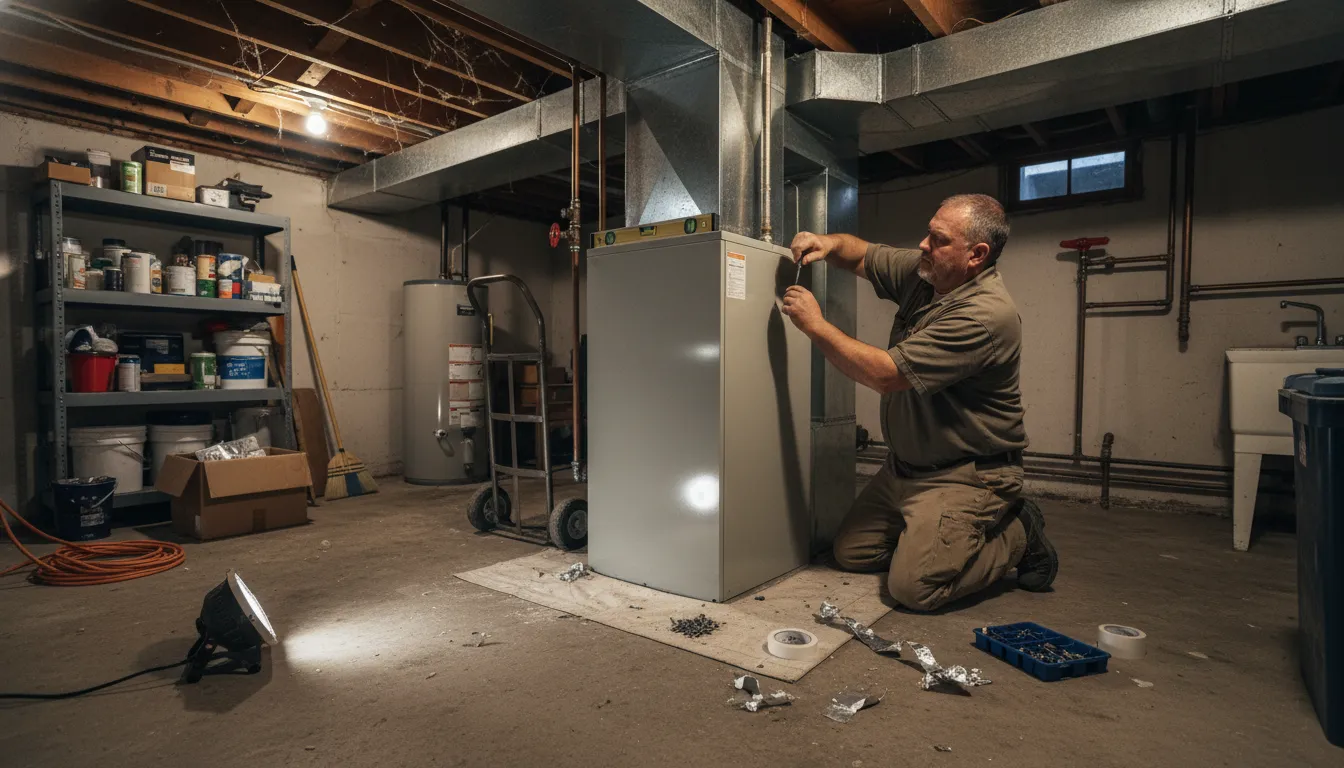
A proper furnace installation is a multi-step process that ensures safety, efficiency, and compliance with local codes. It should always be performed by a licensed HVAC professional.
- Comprehensive Assessment: A technician will evaluate your home's heating needs, considering square footage, insulation, window quality, and existing ductwork. This determines the correct furnace size (in BTUs)-a unit that is too large or too small will be inefficient and uncomfortable.
- System Selection: Based on the assessment, you'll choose the appropriate furnace model, fuel type, and efficiency rating that fits your home and budget.
- Permitting: Your HVAC contractor will obtain any necessary local building permits before work begins, ensuring the installation meets safety codes.
- Safe Removal & Disposal: The old furnace is disconnected, carefully removed, and responsibly disposed of or recycled.
- Precise Installation: The new unit is positioned, leveled, and connected to the fuel supply line, electrical system, ductwork, and venting. For high-efficiency gas furnaces, this often involves installing new PVC piping for venting 2.
- System Testing & Calibration: The technician will start the system, check for gas leaks (if applicable), test safety controls, measure airflow, and calibrate the thermostat for optimal performance 3 4.
- Homeowner Walkthrough: Finally, the installer should explain the system's operation, basic maintenance, and the features of your new furnace and thermostat.
Find the perfect furnace installation & replacement contractors for your needs
Get personalized recommendations and expert advice
Understanding Furnace Costs in Indiana
The total cost for a furnace replacement in Indiana typically ranges from $3,000 to over $10,000, depending on the equipment and complexity of the job 5 6. This includes both the unit itself and professional installation labor.
- Gas Furnace (Equipment & Installation): $2,500 - $7,000+ 7. Higher efficiency models (95%+ AFUE) are at the upper end of this range but offer greater savings.
- Heat Pump System (with backup heat): $6,000 - $15,000+ 8. The wide range accounts for the heat pump's efficiency tier and the type of backup system installed.
- Key Cost Factors: The final price is influenced by the furnace's BTU capacity and AFUE rating, the type of fuel, labor costs, and any additional work needed, such as modifying ductwork, updating electrical service, or installing new venting.
While price is important, the quality of the installation is paramount. A poorly installed high-end furnace will not perform efficiently or reliably. Always prioritize licensed, insured, and experienced professionals who provide detailed quotes.
Maximizing Your Investment: Lifespan and Value
A correctly sized and professionally installed high-efficiency furnace can last 15 to 30 years with proper maintenance 9. To get the best value from your Indiana furnace replacement:
- Prioritize Proper Sizing: An accurate load calculation (Manual J) is non-negotiable for efficiency and comfort.
- Choose High Efficiency: For most Indiana homes using natural gas, a furnace with an AFUE of 90% or higher provides the best balance of upfront cost and long-term operational savings 10 11 12.
- Select a Qualified Installer: Verify licenses, insurance, and check reviews. The installer's expertise directly impacts the system's performance and lifespan 13.
- Consider Full System Compatibility: Ensure your new furnace is compatible with your existing thermostat and air conditioning coil if you're not replacing the entire HVAC system simultaneously.
- Plan for Maintenance: Factor in the importance of annual professional tune-ups to maintain efficiency, ensure safety, and uphold the manufacturer's warranty.
Frequently asked questions
Sources
Footnotes
-
Furnace Replacement: How To Choose & Install A New ... - https://comfortsystemsofmt.com/blog/furnace-replacement/ ↩
-
Furnace Installation: Expert Considerations in Indianapolis - https://lcsheatingandcooling.com/blog/expert-furnace-installation-considerations ↩
-
Commercial furnace installation in Carmel, IN: Expert Care 2025 - https://lcsheatingandcooling.com/blog/commercial-furnace-installation-carmel-guide ↩
-
The Furnace Replacement Checklist Every Draper Homeowner Needs Before Winter - https://www.proformanceutah.com/the-furnace-replacement-checklist-every-draper-homeowner-needs-before-winter/ ↩
-
Furnace Installation Cost: What Homeowners Need to Know - https://callwhitney.com/furnace-installation-cost-homeowners-should-know/ ↩
-
Furnace Replacement Cost vs Furnace Repair Cost - Carrier - https://www.carrier.com/residential/en/us/products/furnaces/furnace-replacement-cost-vs-furnace-repair-cost/ ↩
-
2025 Guide: How Much Does Furnace Installation Cost - https://www.armorair.com/blog/furnace-installation-cost/ ↩
-
How Much Should I Expect to Spend on a New Furnace? - https://callthiele.com/blog/how-much-spend-on-a-new-furnace/ ↩
-
Furnace Replacement Guide For 2023 | HVAC Indiana - https://trusthomesense.com/blog/furnace-replacement-guide-for-2023/ ↩
-
How Much Does a New Furnace Cost in Indianapolis? | Homesense - https://trusthomesense.com/blog/how-much-new-furnace-cost-indianapolis/ ↩
-
Gas Furnace Installation - Indiana Home Comfort Solutions - https://indianahomecomfortsolutions.com/heating/gas-furnace-installation-replacement/ ↩
-
Fishers IN Furnace Installation Guide for 2025 - https://lcsheatingandcooling.com/blog/furnace-installation-fishers-in-guide ↩
-
How Much Does a New Furnace Cost in 2026? - Carrier - https://www.carrier.com/residential/en/us/products/furnaces/cost-of-a-new-furnace/ ↩