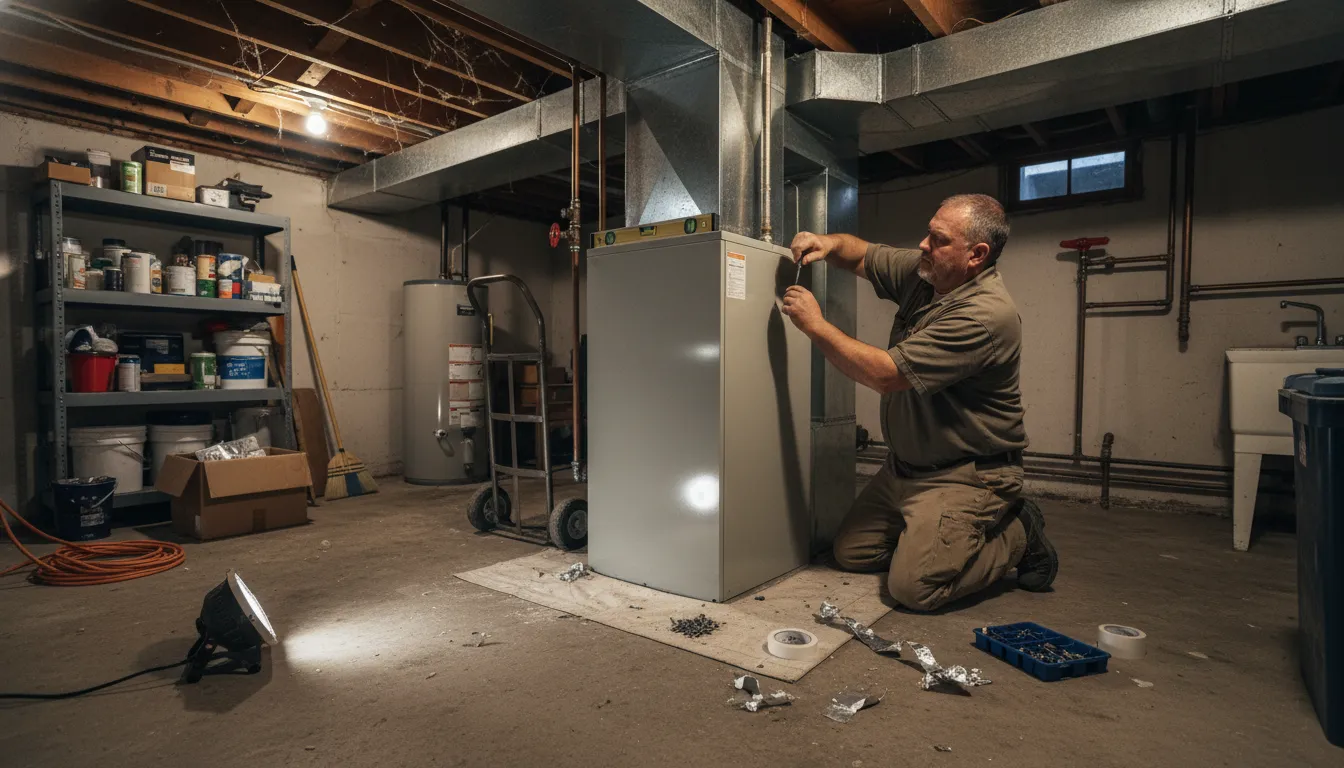
Find the Best Furnace Installation & Replacement Contractors for Your Business
No obligation • Fast responses • Nationwide coverage

Why you can trust HVAC Firms
HVAC Firms is a leading United States resource for evaluating HVAC service providers. Our team researches companies, checks credentials, and reviews customer feedback to present clear, unbiased information. Listings and rankings are based on merit, and companies cannot pay to change our editorial content.
Search providers near you
Best Furnace Installation & Replacement Contractors in Hawaii Ranked
While Hawaii's tropical climate makes central heating less of a necessity than in other states, there are still situations where a reliable furnace is important. For homes in cooler upland areas, older properties, or those seeking a dedicated heat source, professional furnace installation ensures safety, efficiency, and comfort. This guide explains the unique considerations for installing or replacing a heating system in Hawaii, helping you understand your options and connect with qualified local professionals for the job.
Calvin's Air Conditioning & Refrigeration
98-447 Ponohale St, Aiea, HI 96701
Calvin's Air Conditioning & Refrigeration is an HVAC company based in Honolulu, HI, serving both residential and commercial clients. They provide a range of services including air conditioning and furnace repair, installation, and tune-ups. The company offers individualized HVAC solutions and full consultations to help customers select the right heating and cooling systems. Their services include maintenance checks and emergency repairs, using high-quality parts and equipment with warranties included.

Cool living llc
Mililani, HI 96789
Cool Living LLC is an HVAC company based in Honolulu, HI, offering services for heating, cooling, and ventilation systems. They provide maintenance, repair, installation, and tune-up services for both residential and commercial clients. The company works closely with customers to offer individualized HVAC solutions and full consultations to help select the best system for their needs.
Understanding Heating Needs in Hawaii's Climate
Hawaii's warm, mild weather significantly influences home heating choices. For most residents, a furnace is not the primary system for year-round comfort. Instead, heat pumps or ductless mini-split systems are often the preferred choice because they provide both efficient cooling and heating from a single unit. These systems are exceptionally well-suited to Hawaii's climate.
However, furnaces-particularly electric models-are still installed. They may serve as a primary heat source in specific cooler microclimates (like parts of Maui or the Big Island), as supplemental heat in larger homes, or as a replacement in an existing home with ductwork already in place. The key is to assess whether a furnace is the most practical and cost-effective solution for your specific situation versus other technologies like heat pumps 1.
Types of Furnaces Available in Hawaii
When considering a new heating system installation, you'll encounter a few primary types. The availability and practicality of each depend heavily on local infrastructure and fuel costs.
Electric Furnaces: These are the most common type of furnace installed in Hawaii due to the widespread availability of electricity. They convert electrical energy directly into heat. While they have high AFUE (Annual Fuel Utilization Efficiency) ratings, often nearing 100%, they can be expensive to operate because electricity costs in Hawaii are among the highest in the nation 2. If choosing an electric furnace, selecting a high-efficiency model is crucial to managing long-term energy bills.
Gas Furnaces: These can be powered by natural gas or propane. Natural gas is not widely available across the Hawaiian islands, making propane (which requires an on-site storage tank) a more common gas option. Gas furnaces are typically more cost-effective to operate than electric ones in climates where they run frequently, but their advantage diminishes in Hawaii's mild winters. Installation can also be more complex due to the need for gas line and venting work.
Heat Pumps (The Leading Alternative): It's impossible to discuss heating in Hawaii without highlighting heat pumps. A heat pump is not a furnace, but it performs the heating function far more efficiently in mild climates. It works by transferring heat from the outside air into your home, a process that uses significantly less electricity than generating heat directly. Modern heat pumps also provide highly efficient air conditioning, making them an ideal year-round solution for Hawaii and often a better value than installing a separate furnace and AC system.
The Professional Installation Process
A proper furnace or heating system installation is a detailed process that ensures safety, efficiency, and reliability. Here's what you can expect when working with a qualified HVAC technician in Hawaii:
- Initial Assessment and Load Calculation: The process begins with a thorough evaluation of your home. A critical step is performing a Manual J calculation, which determines the precise heating (and cooling) load of your home based on its size, insulation, window types, and local climate. This prevents installing an incorrectly sized unit, which can lead to poor performance, higher costs, and uneven temperatures 3.
- Ductwork Evaluation (Manual D): If your home uses ducted air distribution, the technician will assess your existing ductwork using principles from Manual D. They will check for leaks, proper sizing, and insulation. Inefficient ducts can waste over 30% of the energy used to heat your home, so repairs or upgrades may be recommended 4.
- System and Fuel Source Selection: Based on the assessment, your budget, and your home's infrastructure (electrical service, gas availability), you'll discuss the best system type-whether it's an electric furnace, a propane furnace, or a ducted heat pump system.
- Removal and Preparation: The old heating unit is safely disconnected and removed. The new unit's location is prepared, which may involve installing a new pad, checking electrical connections, or setting up gas lines and venting according to strict safety codes like the International Residential Code (IRC) and local regulations.
- Installation and Connection: The new furnace or heat pump is placed, secured, and connected. This includes all electrical wiring, refrigerant lines (for heat pumps), gas lines and venting (for gas furnaces), and the connection to the ductwork or air handler.
- Testing and Commissioning: Finally, the system is started and tested. The technician will verify safe operation, correct airflow, proper thermostat communication, and that the system meets all performance specifications. They will also explain the basic operation and maintenance requirements to you.
Find the perfect furnace installation & replacement contractors for your needs
Get personalized recommendations and expert advice
Cost Considerations for Installation & Replacement
The total cost for a new heating system in Hawaii varies based on the system type, your home's specifications, and labor. It's important to get detailed, written estimates from multiple licensed contractors.
- Electric Furnace Installation: Typically ranges from $2,000 to $7,000, including the unit and standard installation 5.
- Gas (Propane) Furnace Installation: Generally costs between $3,800 and $10,000, with the higher end reflecting the complexity of gas line and venting work 6 7.
- Heat Pump System Installation: While costs can overlap with furnaces, installing a new central ducted heat pump system often falls in a similar range, from $5,000 to $10,000+, but provides both heating and cooling 8.
These are average ranges. The final price can be influenced by:
- Unit Efficiency: Higher AFUE (for furnaces) or SEER/HSPF (for heat pumps) ratings usually cost more upfront but save on energy bills.
- Ductwork Modifications: Significant repairs, sealing, or redesign of existing ducts add to the project cost.
- Electrical Upgrades: Older homes may require a panel upgrade to support a new electric furnace or heat pump.
- Permits and Local Codes: Required permits and adherence to Hawaii's specific building codes are part of professional installation.
Efficiency and Hawaii-Specific Tips
Maximizing efficiency is paramount in Hawaii due to high energy costs. For any heating system, proper sizing and duct sealing are the first and most important steps to efficiency.
If you are considering a furnace, look for units with a high AFUE rating. For electric furnaces, this rating will be very high (95-100%), but remember the operating cost is tied to your electric rate. For a gas furnace, aim for an AFUE of 90% or higher.
However, for most Hawaiian homes, the most efficient heating (and cooling) solution will be a heat pump. Look for models with a high HSPF (Heating Seasonal Performance Factor) for heating efficiency and a high SEER (Seasonal Energy Efficiency Ratio) for cooling efficiency. Many qualify for local rebates.
Rebates and Incentives: Always check with Hawaii Energy for current rebates, programs, and their Technical Reference Manual (TRM) which lists qualifying efficient equipment 9. These incentives can substantially reduce the net cost of installing a high-efficiency heat pump or other qualifying system.
Making the Right Choice for Your Home
Choosing between a furnace and a heat pump in Hawaii often comes down to your home's existing setup and your primary comfort needs.
- Choose a Heat Pump if: Your home needs both heating and cooling, you are installing a new system, or you want the highest possible energy efficiency for your climate. It is generally the recommended choice for comprehensive home comfort in Hawaii 10.
- Consider a Furnace if: You live in a cooler upland area where heating is the dominant need, you are replacing a like-for-like system in a home with existing ductwork and no need for AC, or you require a specific supplemental heat source.
A reputable HVAC professional in Hawaii will perform the necessary calculations and provide a clear comparison of options, operating costs, and long-term value for your specific home.
Frequently asked questions
Sources
Footnotes
-
Furnace Replacement Costs & Budget Tips - Air Services Unlimited - https://www.airservicesunlimited.com/blog/heating-service/how-much-does-furnace-replacement-cost-2024-price-guide/ ↩
-
Hawaii Homeowner's Guide to Energy, Comfort & Value - https://energy.hawaii.gov/wp-content/uploads/2022/06/HI-Home-Owners-Guide.pdf ↩
-
Furnace Installation Guide 2026 | What to Expect and How to Prepare - https://modernize.com/hvac/heating-repair-installation/furnace-installation ↩
-
The Furnace Installation Process - Apollo Heating & Air Conditioning - https://callapollo.com/the-furnace-installation-process/ ↩
-
Furnace Installation Costs Breakdown - Affordable Heating & AC - https://www.affordablehvac.com/blog/air-conditioning-service/2024-furnace-installation-costs-a-complete-guide/ ↩
-
Furnace Installation Cost: What Homeowners Should Know - https://callwhitney.com/furnace-installation-cost-homeowners-should-know/ ↩
-
Furnace Installation Costs Explained - Obie Comfort Solutions - https://www.obiecomfortsolutions.com/blog/heating-service/how-much-should-you-budget-for-furnace-installation-tips-and-insights/ ↩
-
HVAC Replacement Costs: A Homeowner's Guide | AHS - https://www.ahs.com/home-matters/cost-savers/hvac-replacement-costs/ ↩
-
Technical Reference Manual (TRM) - Hawaii Energy - https://hawaiienergy.com/wp-content/uploads/PY19-TRM-v1.pdf ↩
-
How to Evaluate and Choose an HVAC System | Louisville, KY - https://jarboes.com/knowledge-center/tips-to-select-a-new-hvac-system/ ↩