Find the Best Furnace Installation & Replacement Contractors for Your Business
No obligation • Fast responses • Nationwide coverage

Why you can trust HVAC Firms
HVAC Firms is a leading United States resource for evaluating HVAC service providers. Our team researches companies, checks credentials, and reviews customer feedback to present clear, unbiased information. Listings and rankings are based on merit, and companies cannot pay to change our editorial content.
Search providers near you
Top Furnace Installation & Replacement Contractors in Greenwich, Connecticut Ranked
A new furnace installation or replacement is a significant investment in your Greenwich home's comfort, safety, and energy efficiency. Given Connecticut's cold winters, a reliable heating system isn't just a luxury-it's a necessity. This guide will help you understand your options, the process, and what to consider when selecting a new heating system for your home, connecting you with the information needed to make an informed decision with a local professional.
KOKA-TECH HVAC INC
60-21 Menahan St, Ridgewood, NY 11385
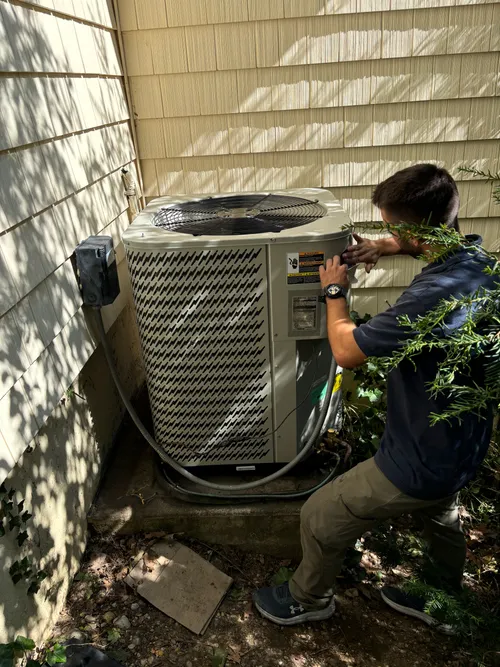
KOKA-TECH HVAC INC provides professional heating and cooling services in New York, NY, including installation, repair, and tune-ups for air conditioners, furnaces, heat pumps, boilers, and mini splits. They offer 24/7 emergency support and same-day availability, serving Queens, Brooklyn, Manhattan, Bronx, and Long Island. The company is licensed and insured, with a strong local presence and expertise in NYC buildings. With nearly 300 five-star reviews, KOKA-TECH HVAC INC is recognized for upfront quotes and customer approval before starting work.
Airtek Mechanical Heating & Cooling LLC
400 Valley Brook Ave, Lyndhurst, NJ 07071
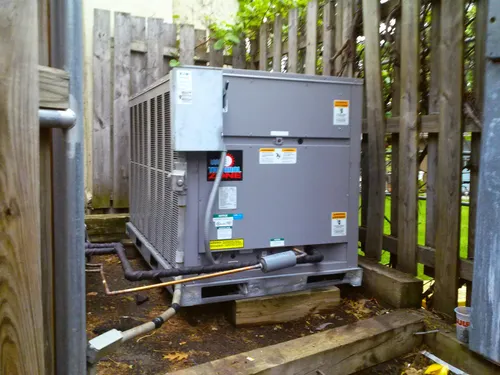
Airtek Mechanical Heating & Cooling LLC is an HVAC contractor based in Newark, NJ, providing residential and commercial heating, cooling, and refrigeration services. They offer repairs, installations, and maintenance for air conditioning, furnaces, boilers, and ductless mini-split systems. Their capabilities include 24-hour emergency HVAC repairs and servicing a variety of unit types such as rooftop package units and wall air conditioners. With over 10 years of experience, Airtek Mechanical serves Newark and surrounding areas with a focus on comprehensive HVAC solutions.
American HVAC Corp - Brooklyn, Heating, Air Conditioning, Refrigeration, Ductless Mini Split, Rooftop, Commercial HVAC NYC
77 Sands St 6th Floor, Brooklyn, NY 11201
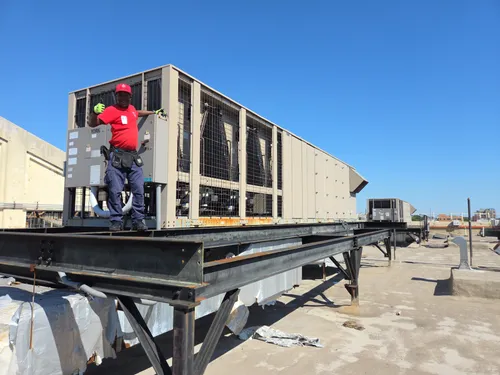
American HVAC Corp - Brooklyn, Heating, Air Conditioning, Refrigeration, Ductless Mini Split, Rooftop, Commercial HVAC NYC provides HVAC repair, installation, and maintenance services in New York, NY. Their certified technicians handle a wide range of heating and air conditioning equipment, including furnaces, heat pumps, mini splits, and rooftop systems. The company serves numerous neighborhoods across Brooklyn and extends service to Queens, Manhattan, Staten Island, and The Bronx. They support various industries such as banks, data centers, educational institutions, and commercial office buildings. Their technicians are accredited by EPA and NATE, ensuring professional expertise.
212 HVAC Brooklyn
300 Morgan Ave Suite P, Brooklyn, NY 11211
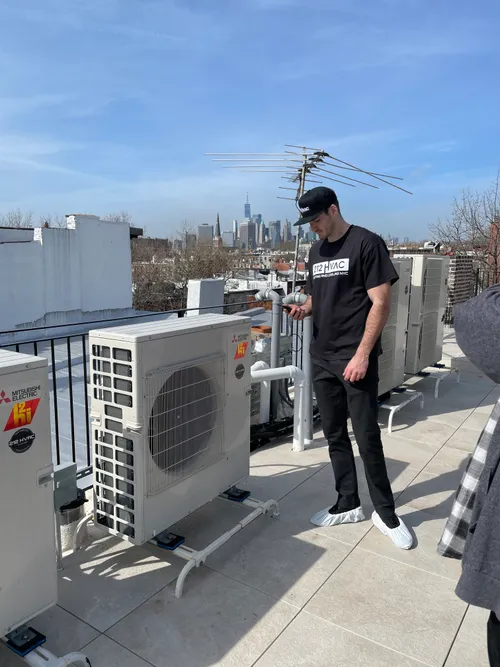
212 HVAC Brooklyn is an HVAC service company based in New York, NY, providing heating and air conditioning solutions for residential and commercial properties. They offer a range of services including AC and furnace installation, repairs, routine maintenance, duct cleaning, and indoor air quality improvements. Their licensed technicians specialize in customized HVAC installations and advanced ductless mini-split systems to meet various comfort needs. With years of experience, 212 HVAC Brooklyn emphasizes the use of the latest technology and offers emergency repair services to address urgent HVAC issues promptly.
Richie Brothers Heating & AC Repair
91 Plain Ave, New Rochelle, NY 10801
Richie Brothers Heating & AC Repair is a third-generation family-owned HVAC company serving New York, NY. Founded in 1912 and operating under its current name since 1986, the company provides heating and air conditioning installation, repair, and tune-up services for both residential and commercial clients. Richie Brothers is known for its long-standing experience and commitment to addressing customer needs, including emergency repairs.
Understanding Greenwich's Heating Needs
Greenwich experiences significant temperature variations, with long winters that can include occasional sub-zero temperatures 1. This climate demands a robust and efficient heating system capable of maintaining consistent indoor comfort without causing energy bills to skyrocket. The right furnace for your home isn't just about the highest BTU output; it's about a properly sized, high-efficiency unit that matches your specific home's characteristics, including square footage, insulation quality, and window efficiency.
Choosing a system designed for Northeastern winters ensures reliable performance when you need it most. Working with a provider familiar with local Greenwich and Connecticut requirements is crucial, as they can navigate local building codes and may be knowledgeable about state energy efficiency programs, such as those offered by EnergizeCT 2.
Types of Furnaces for Connecticut Homes
Several furnace types are common in Greenwich, each with distinct advantages. The primary fuel sources are natural gas, oil, and electricity.
- Natural Gas Furnaces: This is the most popular option in areas with access to natural gas lines. Modern gas furnaces offer high efficiency, lower operational costs compared to electric models, and provide strong, consistent heat.
- Oil Furnaces: A common choice, especially in parts of Greenwich without natural gas access. Oil furnaces are known for their reliability in extremely cold weather and produce powerful heat. While fuel costs can fluctuate, they remain a trusted option for many homeowners.
- Electric Furnaces: These units typically have a lower upfront cost for the equipment and installation. However, they are generally more expensive to operate in Connecticut due to electricity rates, making them more suitable for smaller homes, additions, or as a supplemental heat source 3.
- Dual-Fuel Systems: An increasingly popular option for maximizing efficiency. These systems combine an electric heat pump for milder weather with a gas or oil furnace for extreme cold. The system automatically switches to the most cost-effective heat source based on the outdoor temperature 4 5 6.
The Importance of Proper Sizing and Efficiency
One of the most critical steps in a furnace replacement is determining the correct size, measured in British Thermal Units (BTUs). An oversized furnace will short-cycle (turn on and off frequently), leading to uneven temperatures, increased wear, and higher humidity levels. An undersized unit will run constantly, struggling to heat your home and driving up energy costs.
A professional contractor should perform a Manual J load calculation, which considers your home's square footage, insulation, window types and orientation, air infiltration, and more. This precise calculation ensures your new furnace is perfectly matched to your home's needs.
Efficiency is measured by the Annual Fuel Utilization Efficiency (AFUE) rating, expressed as a percentage. In Greenwich's climate, investing in a high-efficiency furnace (90% AFUE or higher) is often recommended. While these units have a higher initial cost, they convert more fuel into usable heat, significantly reducing your monthly heating bills over the system's lifespan. Features like two-stage or modulating burners further enhance comfort and efficiency by allowing the furnace to operate at lower capacities most of the time, maintaining a steady temperature 7 8 9.
The Professional Installation Process
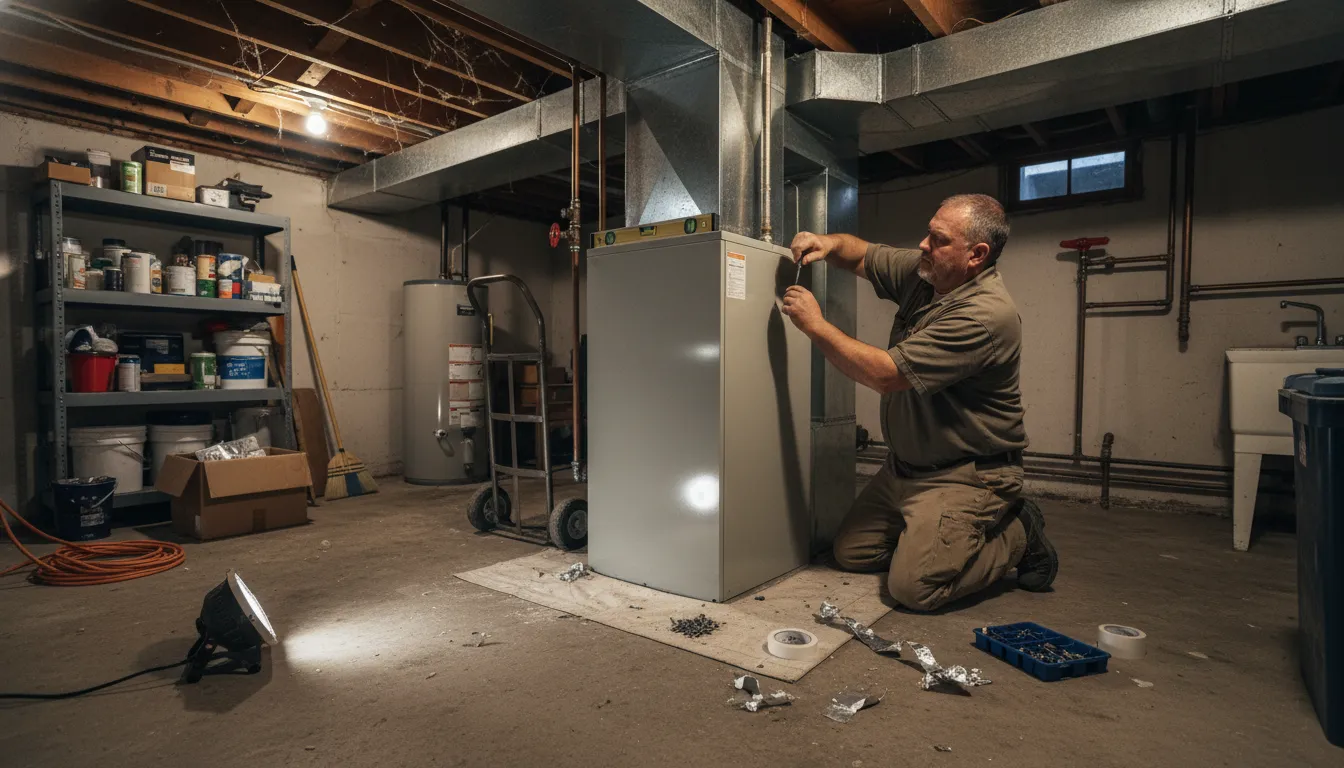
A professional, licensed HVAC technician should always handle furnace installation to ensure safety, efficiency, and compliance with local building codes. The process typically follows these key steps:
- Assessment and Evaluation: A technician assesses your home's heating needs, inspects existing ductwork, and discusses your options to recommend the correct furnace type and size.
- Permitting: Your contractor will obtain the necessary HVAC permits from the Town of Greenwich Building Inspection Division, a required step for safety and compliance 10.
- Removal of Old Unit: The existing furnace is safely disconnected from fuel lines, electricity, and ductwork, then removed from the premises.
- Installation and Connection: The new unit is carefully positioned, leveled, and connected to the ductwork, gas/oil lines, venting, electrical supply, and thermostat.
- Testing and Calibration: The system is started and rigorously tested for proper airflow, combustion safety, gas pressure, and thermostat communication. The technician will calibrate the system for optimal performance 11 12 13.
- Final Inspection: Often, the local building department will conduct a final inspection to verify the installation meets all safety and building standards 14.
Find the perfect furnace installation & replacement contractors for your needs
Get personalized recommendations and expert advice
Cost Considerations for Furnace Replacement in Greenwich
In Greenwich, typical residential furnace installation or replacement costs generally range from $4,500 to $8,500 for a standard replacement, with the final price depending on the furnace type, efficiency (AFUE) rating, and the complexity of the installation 15 16 17. The total cost includes the unit, professional labor, and necessary permits.
Here is a general guideline for typical installed costs in Connecticut, though Greenwich-specific pricing may vary:
| Home Size (approx.) | BTU Requirement (approx.) | Typical Installed Cost Range |
|---|---|---|
| 1,500 - 2,000 sq. ft. | 60,000 - 80,000 BTU | $5,000 - $7,500 |
| 2,000 - 2,500 sq. ft. | 80,000 - 100,000 BTU | $6,000 - $9,000 |
Several factors can influence the final cost:
- Efficiency: High-efficiency (95%+ AFUE) condensing furnaces cost more upfront but offer significant long-term energy savings 18 19.
- Ductwork Modifications: If your existing ductwork needs repairs, sealing, or modifications to accommodate the new system, this can add $500 to $3,000 or more to the project 20 21.
- Fuel Source Conversion: Switching from an oil furnace to a natural gas system (or vice versa) involves new piping and fuel lines, which incurs additional material and labor costs 22.
- Contractor Selection: Prices and service quality can vary between local HVAC companies. It is highly recommended to obtain multiple detailed quotes to compare options.
Planning Your Project: Key Questions to Ask
When meeting with potential contractors for your heating system installation, come prepared with questions to ensure you're choosing the right partner:
- Are you licensed and insured to work in Greenwich, Connecticut?
- Will you perform a Manual J load calculation to determine the correct furnace size?
- Do you handle the permit application and scheduling of the final inspection?
- What is the estimated timeline for the complete installation?
- What does your warranty cover for both parts and labor?
- Can you provide references from recent furnace installations in the area?
Maintaining Your New Heating System
Once your new furnace is installed, proper maintenance is key to ensuring its longevity, efficiency, and safe operation. Schedule an annual professional tune-up, typically in the fall before the heating season begins. This service includes cleaning critical components, checking for safe operation, and ensuring the system is running at peak efficiency. Homeowners should also remember to change the air filter regularly-typically every 1-3 months-to maintain good airflow and indoor air quality.
Frequently asked questions
Sources
Footnotes
-
Choose the Right Heating System for Your Connecticut Home - https://heatingrepairct.com/how-to-choose-the-right-heating-system-for-your-connecticut-home/ ↩
-
CT X1931-1 Connecticut (CT) Industry Standard Practices for ... - https://www.energizect.com/sites/default/files/documents/X1931-1%20Com%20Boiler%20and%20Furnace%20ISP%20Final%20Memo.pdf ↩
-
Connecticut Furnace Guide: Residential Installs and ... - https://egreenhvac.com/blog/connecticut-furnace-guide-residential-installs-and-replacements/ ↩
-
Choose the Right Heating System for Your Connecticut Home - https://heatingrepairct.com/how-to-choose-the-right-heating-system-for-your-connecticut-home/ ↩
-
The Different Types of Furnaces for Winter Heating - https://shackelfordheating.com/the-different-types-of-furnaces-for-winter-heating/ ↩
-
Different Types of Furnaces for Your Home Heating Needs - https://totalcomfortcooling.com/different-types-of-furnaces-for-your-home-heating-needs/ ↩
-
12 Things to Consider When Choosing a Gas Furnace - F.F. Hitchcock - https://ffhitchcock.com/12-things-to-consider-when-choosing-a-gas-furnace-in-cheshire-ct/ ↩
-
How to Choose a Furnace Based on Your Climate - AC Direct - https://www.acdirect.com/blog/how-to-choose-a-furnace-based-on-climate/ ↩
-
How to Choose the Right Furnace for Your Home - W.H. Riley - https://www.whriley.com/2026/01/05/how-to-choose-a-furnace/ ↩
-
HVAC (Associated with Building Permit) - Greenwich, CT - https://www.greenwichct.gov/2834/HVAC-Associated-with-Building-Permit ↩
-
Furnace Installation Process From Start to Finish | Fire & Ice - https://indoortemp.com/resources/furnace-installation-process ↩
-
Furnace Replacement: Step By Step Instructions - https://palmettoairconditioning.com/blog/furnace-replacement/ ↩
-
The Step-By-Step Process of Furnace Replacement - https://www.anyseasonhvac.com/furnace-replacement-process-blog ↩
-
How Long Does it Take to Replace a Commercial HVAC System: A Complete Guide - https://www.jmsokc.com/blog/how-long-does-it-take-to-replace-a-commercial-hvac-system-your-complete-guide/ ↩
-
What's the Cost to Install a Furnace? - Michael & Son - https://michaelandson.com/blog/how-much-does-it-cost-to-install-a-furnace ↩
-
How Much Does It Cost to Install a Furnace in Connecticut? - https://www.aiellohomeservices.com/blog/furnace-install-cost-ct ↩
-
Furnace Installation Cost: What Does It Include? - https://www.degreeheatingandcooling.com/news/furnace-installation-cost-what-does-it-include/ ↩
-
How Much Does it Cost to Replace Your Furnace? - Synchrony - https://www.synchrony.com/blog/home/furnace-replacement-cost ↩
-
How Much Does a Gas Furnace Cost to Install? - Modernize - https://modernize.com/hvac/heating-repair-installation/furnace-cost/gas ↩
-
The Essential Guide to Furnace Replacement for Homeowners. - https://www.tcmemt.com/post/the-essential-guide-to-furnace-replacement-for-homeowners ↩
-
Complete Furnace Replacement Guide for 2026 - https://www.budgetheating.com/blog/complete-furnace-replacement-guide/ ↩
-
Furnace Cost to Replace in Oregon: A Complete Guide Best Trained Craftsmen In The Area - https://advantageheatingllc.com/blog/furnace-cost-to-replace/ ↩