Find the Best Boiler Repair Contractors for Your Business
No obligation • Fast responses • Nationwide coverage

Why you can trust HVAC Firms
HVAC Firms is a leading United States resource for evaluating HVAC service providers. Our team researches companies, checks credentials, and reviews customer feedback to present clear, unbiased information. Listings and rankings are based on merit, and companies cannot pay to change our editorial content.
Search providers near you
Best Boiler Repair Contractors in Vermont Ranked
A reliable boiler is the heart of your home's heating system, especially during Vermont's long, cold winters. When your hydronic (hot water) boiler malfunctions, it can lead to a lack of heat, hot water, and even safety concerns. This guide provides essential information for Vermont homeowners on common boiler problems, your responsibilities, state-specific safety rules, and what to expect from professional service. Use this resource to understand your system and connect with qualified local technicians who can ensure your home stays warm and safe.
Understanding Your Hydronic Boiler System
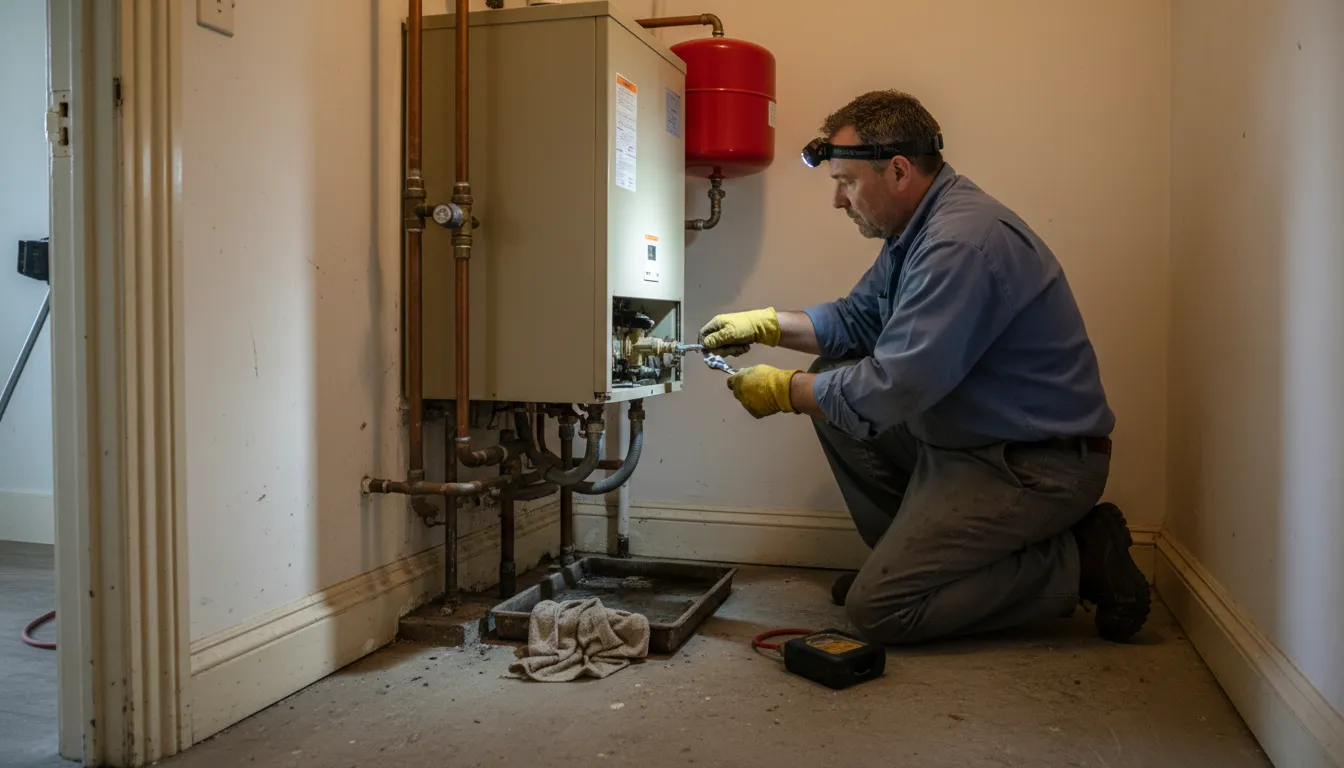
Most Vermont homes rely on hydronic boiler systems to provide radiant heat through baseboards, radiators, or in-floor tubing. These systems heat water, which is then circulated throughout the house. Key components include the boiler itself, circulator pumps, expansion tanks, pressure relief valves, and zone valves. Understanding that your system is a pressurized network helps explain why issues like low pressure or strange noises are urgent signs that need attention.
Regular monitoring is a homeowner's first line of defense. You should periodically check the system's pressure gauge, which should typically read between 12 and 15 PSI when the system is cold. Also, ensure the area around the pressure relief valve is clear. These simple checks can help you catch problems early before they escalate into a full system failure on the coldest night of the year.
Common Boiler Problems in Vermont Homes
Recognizing the signs of trouble can help you describe issues accurately to a technician. Here are the most frequent problems faced by Vermont boiler owners:
- No Heat or Hot Water: This is the most alarming symptom. Causes can range from a failed circulator pump, malfunctioning zone valves, or a pilot/ignition issue to simply having low system pressure.
- Strange Noises: Banging, whistling, or gurgling sounds are not normal. They often indicate air trapped in the pipes (which needs bleeding), mineral scaling (lime buildup), or a circulator pump that is beginning to fail.
- Leaks: Any sign of water around the boiler or pipes warrants immediate investigation. Leaks can stem from worn pump seals, corroded pipes, or faulty valves. Even a small drip can lead to significant water damage and pressure loss over time.
- Low System Pressure: If the pressure gauge consistently reads low, you may have a leak or a malfunctioning pressure relief valve. The system may need to be repressurized, but the underlying cause must be diagnosed by a professional.
- Unusual Odors: A burning plastic or rubber smell could indicate an electrical component failing. An oily smell from an oil-fired boiler can signal a leak or combustion issue. These odors should be addressed promptly for safety.
Homeowner Responsibilities and Preventative Maintenance
Proactive care is the most effective way to ensure reliability, efficiency, and longevity for your boiler. Homeowner responsibilities extend beyond just calling for repairs.
Annual Professional Tune-Up: This is the single most important task. A certified technician will perform a comprehensive cleaning and inspection, checking combustion efficiency, cleaning components, testing safety controls, and ensuring all parts are in good working order. This preventative service can identify minor issues before they become major, costly repairs and helps your system run more efficiently, saving on fuel costs.
Basic Ongoing Monitoring: As mentioned, make it a habit to visually inspect your boiler area. Check the pressure gauge monthly during the heating season. Look for any signs of corrosion, moisture, or rust. Listen for changes in operational sounds. Keeping the area around the boiler clean and unobstructed is also crucial for safety and accessibility 1.
Knowing When to Call a Professional: Don't attempt DIY repairs on a pressurized boiler system beyond very basic troubleshooting like resetting a circuit breaker. For any persistent noise, leak, pressure problem, or performance issue, contact a qualified Vermont boiler repair specialist. Prompt action prevents further damage and ensures safety.
Find the perfect boiler repair contractors for your needs
Get personalized recommendations and expert advice
Vermont-Specific Safety and Inspection Regulations
Vermont has specific legal requirements for boiler safety that homeowners must be aware of. These are in place to prevent catastrophic failures and ensure public safety.
Mandatory State Inspections: The Vermont Division of Fire Safety requires that most boilers undergo periodic inspections by a Commissioned Boiler Inspector 2. These inspections are often facilitated through your insurance provider. The inspector will examine the boiler for safe operation, proper installation, and compliance with state codes, focusing on critical safety components like the pressure relief valve, water level controls, and combustion venting 2.
Air Quality Permitting: For certain larger boilers, particularly commercial systems, the Vermont Department of Environmental Conservation has air quality regulations that may require permitting and periodic efficiency tuning, sometimes as often as every two years, to control emissions 3.
What Inspectors Look For: A typical inspection checklist includes verifying there are no leaks, ensuring all safety valves and controls function correctly, checking for proper ventilation and combustion, and assessing the general condition of the boiler and its related piping 4 5. Compliance with these inspections is not just a legal formality; it's a vital layer of protection for your home and family.
Understanding Repair and Service Costs in Vermont
Repair costs can vary based on the complexity of the job, the part needed, and your location within the state. The following are general price ranges to help you budget, but always get a detailed estimate from your service provider.
- Annual Tune-Up/Service: A preventative maintenance visit typically ranges from $100 to over $300, depending on the depth of service and any minor adjustments made.
- Component Repairs:
- Replacing an ignitor or flame sensor might cost between $125 and $350.
- Replacing a failed expansion tank can range from $140 to $380.
Investing in an annual tune-up is almost always more cost-effective than emergency repairs. A well-maintained boiler operates more efficiently, uses less fuel, and has a significantly longer lifespan, providing peace of mind throughout the Vermont winter 8.
Choosing the Right Service Provider in Vermont
When you need service, look for a technician who is not only licensed and insured but also familiar with Vermont's specific inspection codes and the common issues faced by systems in the local climate. They should be able to clearly explain problems, provide written estimates, and prioritize safety in all their work. A reputable professional will also be able to guide you on the state's inspection requirements and how they apply to your specific boiler.
Frequently asked questions
Sources
Footnotes
-
Furnace and Boiler Repair - Energy Co-op of Vermont - https://www.ecvt.net/service/repair/ ↩
-
Boilers And Pressure Vessels | Division of Fire Safety - https://firesafety.vermont.gov/licensing/boilers-and-pressure-vessels ↩ ↩2
-
Boilers - Vermont Department of Environmental Conservation - https://dec.vermont.gov/air-quality/permits/source-categories/boilers ↩
-
Boiler Safety Inspections Checklist - PlumbersStock - https://www.plumbersstock.com/how-to-hvac/boilers/safety-inspection-checklist.html ↩
-
Common Problems and Inspection Requirements During Boiler ... - https://www.epcbboiler.com/boiler-periodic-inspection.html ↩
-
Furnace or Boiler Service and Cleaning - Jackman Fuels Inc - https://jackmanfuels.com/furnace-maintenance-and-home-heating-services/furnace-or-boiler-service-and-cleaning/ ↩
-
Boiler Replacement Costs: Smart Budgeting and Planning Guide - https://www.tcmemt.com/post/the-cost-of-boiler-replacement-expert-guide-to-smart-budgeting-and-installation-planning ↩
-
Do I need to get my boiler serviced and what does it include? - https://www.britishgas.co.uk/heating/guides/boiler-servicing.html ↩