Find the Best Boiler Repair Contractors for Your Business
No obligation • Fast responses • Nationwide coverage

Why you can trust HVAC Firms
HVAC Firms is a leading United States resource for evaluating HVAC service providers. Our team researches companies, checks credentials, and reviews customer feedback to present clear, unbiased information. Listings and rankings are based on merit, and companies cannot pay to change our editorial content.
Search providers near you
Best Boiler Repair Contractors in New Hampshire Ranked
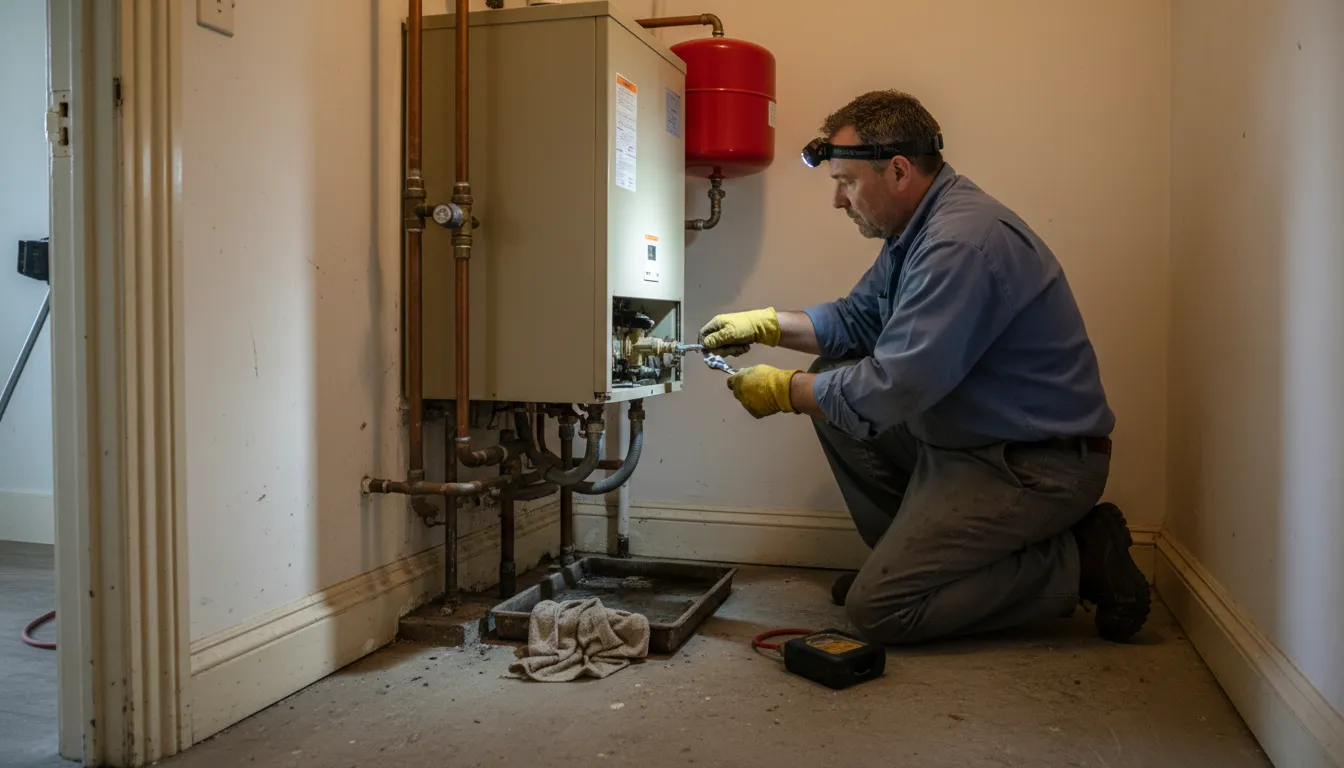
A reliable boiler is essential for comfort and safety during New Hampshire's long, cold winters. When your heating system fails, it's more than an inconvenience-it's a risk to your property and well-being. This guide provides clear, practical information on common boiler problems, essential maintenance, and state-specific regulations to help you understand your system and make informed decisions about professional repair and service.
Common Boiler Problems in NH Homes
Hydronic (hot water) heating systems are prevalent in New Hampshire, and they face a consistent set of issues, especially in older homes. Recognizing these problems early can prevent more extensive damage.
- No Heat or Uneven Heating: This is often the first sign of trouble. Before calling for help, perform simple checks: ensure your thermostat has fresh batteries, confirm the system has power, check your fuel level (oil or propane), and listen for gurgling or banging noises which indicate trapped air in the lines. Bleeding your radiators can often restore heat to cold spots.
- Circulator Pump Failure: The pump is the heart of your hydronic system, moving hot water through the pipes. When it fails, heat won't distribute. Symptoms include no heat despite a hot boiler, unusual humming or grinding noises, or leaks around the pump seal.
- Ignition or Burner Issues: If your boiler won't fire up, the problem could be a faulty ignitor, a dirty or malfunctioning flame sensor, a closed gas valve, or a clogged oil nozzle. These components require professional diagnosis and repair for safety.
- Leaks: Water leaks can originate from corroded pipes, faulty pressure relief valves, pump seals, or internal tank corrosion. Even a small drip can lead to significant water damage and system inefficiency. If you spot a leak, shut off the water supply to the boiler and contact a professional immediately.
- Sludge and Corrosion: Over time, minerals and corrosion byproducts (often called "sludge") can accumulate in the system, restricting water flow and reducing efficiency. This manifests as some radiators staying cold while others are hot, or the boiler cycling on and off frequently. A professional power flush may be necessary to clean the system.
What Homeowners Can Safely Check
While most repairs require a licensed technician, there are several troubleshooting steps you can take safely.
- Basic System Checks: Always start with the fundamentals. Verify your thermostat is set to "heat" and at a temperature above the room's current reading. Check for tripped circuit breakers or blown fuses. For oil systems, confirm you have fuel. For all systems, ensure air intakes, exhaust vents, and the immediate area around the boiler are clear of snow, ice, leaves, or debris.
- Bleeding Radiators: If you have hot water baseboards or radiators with bleed valves, this is a common homeowner task. Use a radiator key to slowly open the valve at the end of the unit until a steady stream of water replaces the spurting air. This resolves gurgling sounds and cold spots 1 2.
- Monitor Pressure and Sounds: Note your boiler's pressure gauge; typical systems operate between 12-25 psi. Significant deviations can indicate a problem. Be alert to new or unusual sounds like banging (water hammer), whistling (kettling from limescale), or rumbling, which are clues for your technician 3.
- Safety Vigilance: Never ignore the smell of fuel (oil or gas) or the smell of exhaust fumes inside your home. If you detect a gas odor, evacuate immediately and call your utility company from outside. Also, ensure your carbon monoxide (CO) detectors are installed near sleeping areas and are functioning with fresh batteries 4.
Find the perfect boiler repair contractors for your needs
Get personalized recommendations and expert advice
The Critical Importance of Annual Maintenance
Scheduling an annual boiler tune-up before each heating season is not just a recommendation; it's a critical investment in safety, efficiency, and longevity. A professional inspection can identify small issues before they become catastrophic failures.
During a standard maintenance visit, a technician will:
- Conduct Safety Checks: Test for carbon monoxide leaks, verify the integrity of the heat exchanger for cracks, and ensure all safety switches and valves (like the pressure relief valve) are operational 5.
- Clean and Adjust Key Components: Clean the burner assembly, heat exchanger surfaces, and the flame sensor. For oil boilers, they will replace the nozzle and oil filter and adjust the fuel-air mixture for optimal, clean combustion 6.
- Inspect System Health: Check for leaks, test water pressure, inspect venting and chimney liners for blockages or deterioration, and lubricate moving parts like the circulator pump 7 8.
- Improve Efficiency: A clean, well-adjusted boiler uses less fuel to produce the same amount of heat, lowering your energy bills. Regular maintenance also extends the system's overall life 9.
The cost for an annual service typically ranges from $150 to $300, which is minor compared to the cost of an emergency repair or the risks associated with a malfunctioning boiler.
New Hampshire State Boiler Regulations
New Hampshire has specific codes governing boiler operation and safety, primarily enforced by the NH Department of Labor.
- Mandatory State Inspections: Boilers with an input rating of 200,000 BTU/hour or greater located in buildings with three or more dwelling units are required to undergo an annual internal inspection and an external inspection while under pressure. These inspections must be performed by a licensed NH boiler inspector.
- Inspection Costs: The state charges for these inspections, typically at a rate of approximately $100 per hour10. Building owners are responsible for this fee.
- Purpose of Regulation: These laws are designed to protect public safety in multi-family dwellings by ensuring large, complex heating systems are operating safely and to code, preventing incidents like explosions or widespread carbon monoxide poisoning.
Even if your residential boiler is not subject to state inspection, adhering to the principle of an annual professional check-up aligns with these safety standards.
Understanding Repair and Replacement Costs
Being prepared for potential costs helps in planning and decision-making. Prices can vary based on the boiler type, part availability, and labor rates in your area of New Hampshire.
- Common Minor Repairs: Fixing issues like replacing a circulator pump, a zone valve, an ignitor, or a thermocouple generally falls in the range of $190 to $66011. These repairs often resolve the immediate problem and can extend the life of an otherwise healthy system.
- Major Repairs or Component Replacement: If the heat exchanger is cracked or the burner assembly is severely compromised, repair costs can climb to $1,500 or more. At this point, it's crucial to weigh the cost against the age and condition of the entire boiler.
- Full Boiler Replacement: When repairs are no longer cost-effective or your system is over 15-20 years old, replacement becomes the prudent choice. The installed cost for a new, high-efficiency boiler in New Hampshire typically ranges from $3,600 to $8,40012. This includes removal of the old unit, installation, and all necessary materials. A new system brings improved efficiency, reliability, and often better warranties.
Choosing the Right Service Professional in NH
Selecting a qualified technician is paramount. Look for a company that:
- Is licensed and insured to work on boilers in New Hampshire.
- Has specific experience with your type of system (oil, gas, propane, steam, or hot water).
- Provides clear, upfront estimates and explains the necessary work.
- Emphasizes safety testing and can show you documentation of combustion efficiency (like a stack temperature test).
- Has positive, verifiable reviews from other local homeowners.
A trustworthy professional will prioritize your safety and system efficiency, not just a quick fix.
Frequently asked questions
Sources
Footnotes
-
Boiler Maintenance Checklist: Heating System Upkeep Guide - https://skaggswalsh.com/boiler-maintenance-checklist-sw/ ↩
-
Common Hydronic Heating Problems and Quick Fixes - JNR Plumbing - https://www.jnrplumbing.com/winter-troubleshooting-guide-common-hydronic-heating-problems-and-quick-fixes/ ↩
-
Hydronic Heating Troubleshooting: 5 Common Issues - https://www.metropolitanheatingandcooling.com.au/blog/hydronic-heating-troubleshooting-5-common-issues-and-how-to-fix-them/ ↩
-
STATE OF NEW HAMPSHIRE - NH.gov - https://www.das.nh.gov/purchasing/docs/Notices_of_Contract/8003311%20Boiler%20Maintenance.pdf ↩
-
Repair & Maintenance | Londonderry NH - SNH Energy - https://www.snhenergy.com/our-services/repair-maintenance ↩
-
Boiler Cleaning, Maintenance, and Repair in NH - https://leblanchvac.com/new-hampshire/service/boiler-maintenance-service ↩
-
Annual Boiler Maintenance Checklist | Cellino Plumbing - https://cellinoplumbing.com/blog/annual-boiler-maintenance-checklist/ ↩
-
What is Involved in a Boiler Inspection? - Paul the Plumber - https://paultheplumbernh.com/what-is-involved-in-a-boiler-inspection/ ↩
-
The Homeowner's Guide to Home Heating Maintenance - https://energysaversnh.com/2025/02/03/homeowners-guide-home-heating-maintenance/ ↩
-
Boilers FAQs | State of New Hampshire Department of Labor - https://www.dol.nh.gov/resource-center/frequently-asked-questions/boilers-faqs ↩
-
Boiler Repair & Maintenance in New Hampshire - https://justcallheritage.com/heating-cooling/heating-services/boiler-repair/ ↩
-
Boiler Maintenance Guide for Homeowners - Angie's List - https://www.angi.com/articles/boiler-maintenance.htm ↩