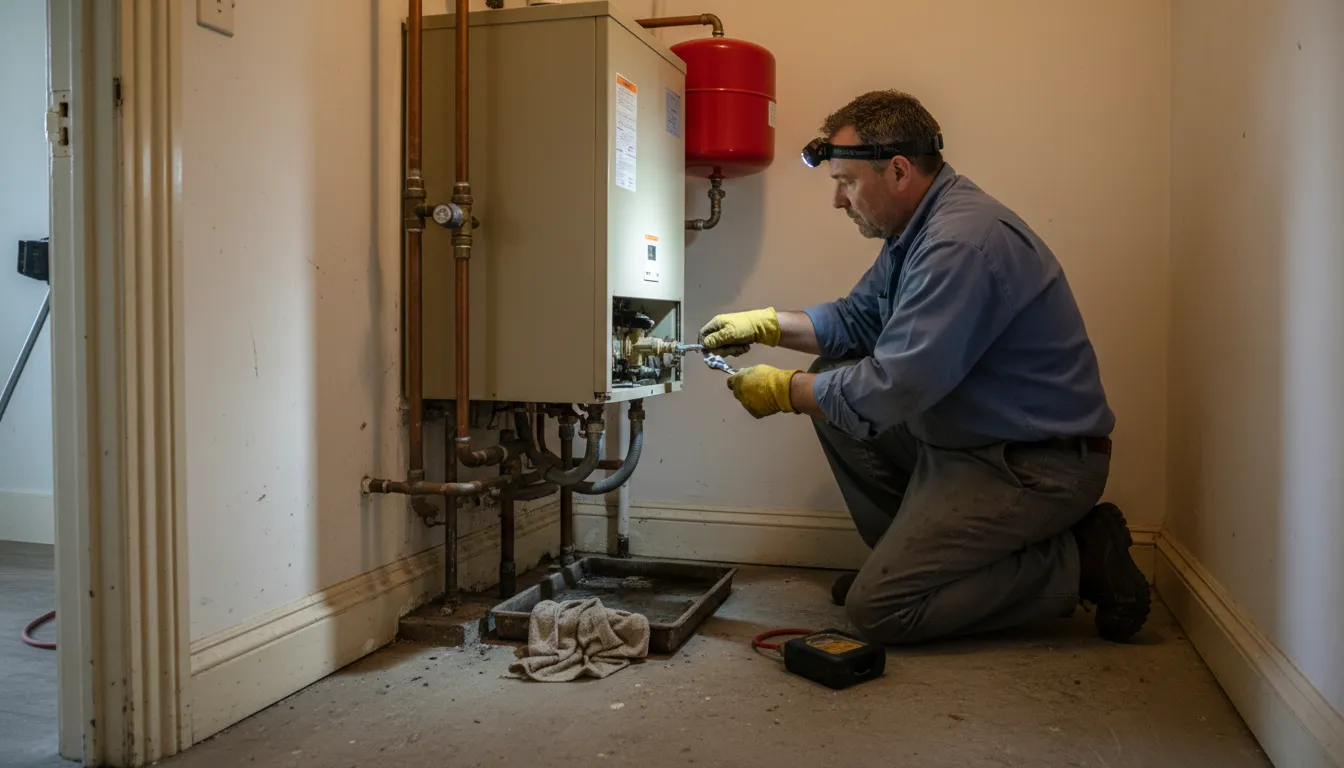
Find the Best Boiler Repair Contractors for Your Business
No obligation • Fast responses • Nationwide coverage

Why you can trust HVAC Firms
HVAC Firms is a leading United States resource for evaluating HVAC service providers. Our team researches companies, checks credentials, and reviews customer feedback to present clear, unbiased information. Listings and rankings are based on merit, and companies cannot pay to change our editorial content.
Search providers near you
Top Boiler Repair Contractors in Chesterfield, Missouri Ranked
A reliable boiler is the heart of your home's heating system, especially during Chesterfield's cold winters. When your hydronic heating system fails, it's more than an inconvenience-it's a threat to your comfort and safety. This guide helps you understand your boiler system, recognize common issues, and make informed decisions between repair and replacement, connecting you with the expertise needed to restore warmth to your home efficiently.
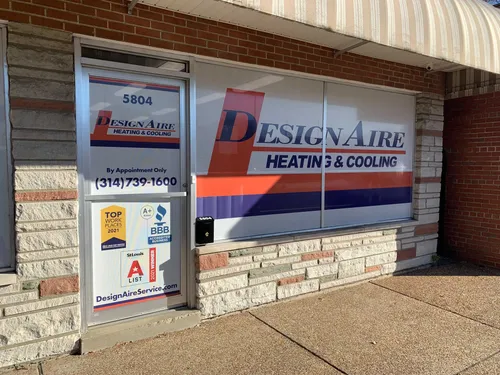
Design Aire Heating & Cooling - St. Louis
5804 Hampton Ave, St. Louis, MO 63109
Design Aire Heating & Cooling - St. Louis provides a full range of HVAC services in St. Louis, MO, including installation, maintenance, and repair of air conditioners, furnaces, boilers, and heat pumps. They also offer indoor air quality improvements such as air duct cleaning and advanced air purifiers. The company specializes in commercial and residential HVAC solutions, using the latest technologies to ensure systems run efficiently and safely. Established in 1904, Design Aire has a long history of serving the St. Louis area with a focus on quality and customer satisfaction.
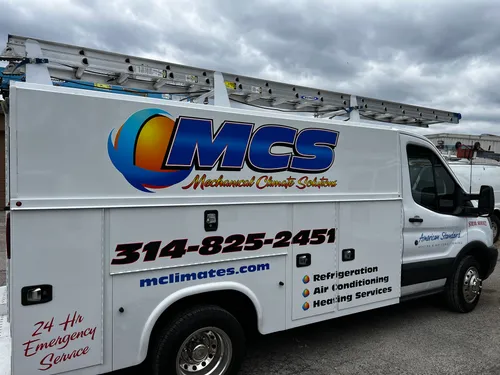
Mechanical Climate Solutions, LLC
1021 Fox Chase Industrial Dr, Arnold, MO 63010
Mechanical Climate Solutions, LLC is an HVAC company serving St Louis, MO, specializing in residential, commercial, and industrial heating and cooling systems. They provide services including air conditioning, furnace, and boiler repair and installation, as well as HVAC tune-ups. The company offers 24-hour service and works closely with clients to design and deliver tailored HVAC solutions that consider budget, time, and environmental impact. Their team has over 100 years of combined experience, and they are fully insured for added protection. Mechanical Climate Solutions is a dealer for American Standard and Mitsubishi Electric and maintains an A+ rating with the Better Business Bureau.
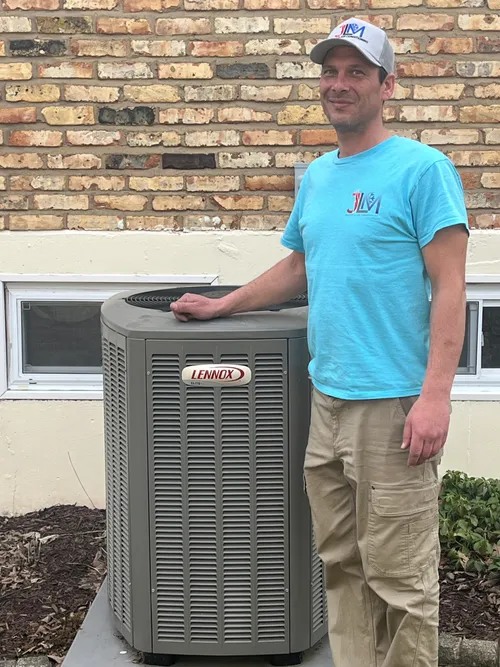
JLM Heating and Air Conditioning
3976 Royal Estates Dr, St. Louis, MO 63129
JLM Heating and Air Conditioning serves St. Louis, MO, and surrounding areas with a range of HVAC services including installation and repair of air conditioners, furnaces, heat pumps, boilers, and geothermal systems. With over 14 years of experience, their factory-trained technicians work on all makes and models and carry fully stocked service vehicles to handle most repairs efficiently. They are authorized dealers for several brands and offer flexible financing options to assist with new installations and major repairs.
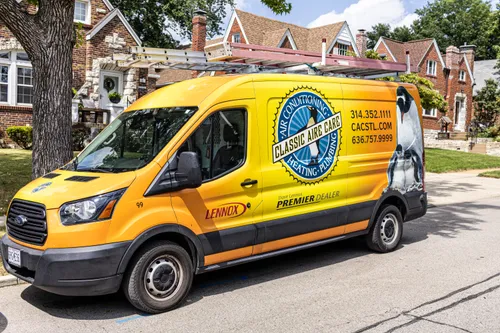
Classic Aire Care
1276 N Warson Rd, St. Louis, MO 63132
Classic Aire Care is an established HVAC and plumbing company serving St Louis, MO, and the surrounding areas. With a history dating back to 1926, they provide a wide range of services including installation, repair, and maintenance of air conditioners, furnaces, heat pumps, boilers, and geothermal systems. They also offer indoor air quality solutions such as air purifiers and humidifiers, along with expert plumbing services. Classic Aire Care is equipped to handle 24/7 emergency heating and cooling repairs, ensuring reliable service year-round.
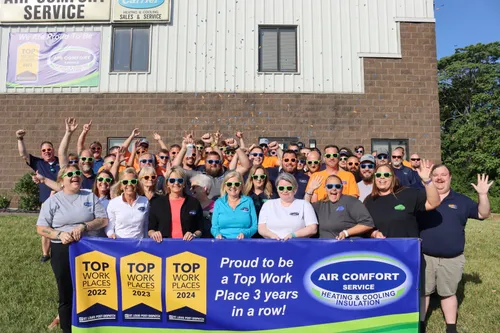
Air Comfort Service, Inc.
11920 Missouri Bottom Rd, Hazelwood, MO 63042
Air Comfort Service, Inc. is an HVAC company serving the St Louis, MO area. They provide heating, cooling, and insulation solutions including AC repair, furnace repair, heat pump services, boiler repair, duct cleaning, indoor air quality services, and insulation installation. The company is a Carrier® Factory Authorized Dealer and has received the Carrier® President's Award nine times, reflecting their technical expertise and customer satisfaction. Air Comfort Service, Inc. has been serving customers for over 25 years, offering comprehensive HVAC maintenance and repair services.
Understanding Your Hydronic Heating System
Before diving into repairs, it's helpful to know what makes up your system. A boiler, or hydronic heating system, uses heated water to warm your home. It's a closed-loop system comprising several key components 1:
- The Boiler: The appliance itself, which heats water using gas, oil, or electricity.
- Circulation Pumps: Move the hot water from the boiler through the pipes.
- Distribution Piping: A network of pipes that transports the heated water.
- Heat Emitters: The components that release heat into your rooms, such as traditional radiators, baseboard heaters, or in-floor radiant tubing.
In Chesterfield, you'll commonly find systems built around cast iron or steel boilers paired with radiators or baseboards. Understanding this basic flow-heat generation, circulation, and emission-is the first step in diagnosing where a problem might originate.
Common Boiler Types in Chesterfield Homes
Not all boilers are the same. The type you have can influence repair strategies and replacement options.
- Traditional (Conventional) Boilers: These are the workhorses, often made of durable cast iron or steel. They heat water in a storage tank and are known for their longevity and compatibility with existing radiator systems.
- Combination (Combi) Boilers: These space-saving units provide both heating for your home and on-demand hot water for your taps, eliminating the need for a separate water heater tank.
- Condensing Boilers: Representing the modern standard for efficiency, these units capture and reuse heat from exhaust gases that would otherwise be wasted. They are characterized by very high Annual Fuel Utilization Efficiency (AFUE) ratings.
Why Boiler Health is Critical in Chesterfield
Chesterfield's climate isn't just cold; it demands a heating system that can perform reliably under severe, sustained temperature drops. This makes boiler maintenance and timely repair non-negotiable.
- Efficiency Equals Savings: An inefficient boiler works harder, using more fuel to produce the same amount of heat. During a long Missouri heating season, even a small drop in efficiency can lead to significantly higher energy bills. Modern high-efficiency condensing boilers are specifically designed to combat this cost.
- Reliability During Deep Freezes: A boiler failure in the middle of a winter storm is more than uncomfortable; it can lead to frozen pipes and extensive property damage. A well-maintained, properly sized system is your best defense against the coldest weather.
Recognizing Common Boiler Problems
Knowing the signs of trouble can help you call for service before a minor issue becomes a major breakdown.
- No Heat or Insufficient Heat: This could stem from a faulty thermostat, a failed circulation pump, a problem with the ignition system (for gas boilers), or low water pressure.
- Strange Noises: Banging, whistling, or gurgling sounds (often called "kettling") are usually caused by limescale buildup on the heat exchanger, trapped air in the system, or a failing pump.
- Leaks: Water pooling around the boiler or pipes indicates a leak, which can come from a corroded pipe, a faulty pressure valve, or a failing seal. This requires immediate attention to prevent water damage and system pressure loss.
- Pilot Light or Ignition Issues: If the pilot light keeps going out or the boiler won't ignite, it could be due to a faulty thermocouple, a gas supply problem, or an issue with electronic ignition components.
- Pressure Problems: Boilers operate within a specific pressure range. Consistently low pressure may indicate a leak, while excessively high pressure can be a safety hazard and is often related to a faulty pressure relief valve or expansion tank.
Find the perfect boiler repair contractors for your needs
Get personalized recommendations and expert advice
The Repair vs. Replacement Decision
One of the most critical decisions homeowners face is whether to fix an existing boiler or invest in a new one. A useful guideline is the "50% Rule": if the cost of a repair exceeds 50% of the cost of a new, high-efficiency boiler installation, replacement often becomes the more economical long-term choice.
When Repair is the Right Choice
Repair is typically the most cost-effective path for newer systems or when addressing isolated, minor issues.
- Minor Component Failure: Replacing a single part like a circulation pump, zone valve, pressure relief valve, or control board.
- System is Relatively New: If your boiler is less than 10-15 years old and has been reliable, a repair can extend its service life.
- High-Efficiency Unit: It often makes financial sense to repair a modern, high-AFUE condensing boiler to preserve its energy-saving benefits.
When Replacement Makes More Sense
There are several scenarios where investing in a new boiler installation is the smarter financial and practical decision.
- The 50% Rule Threshold is Crossed: As mentioned, a major repair that approaches half the cost of a new system.
- Advanced Age: Most boilers have a lifespan of 15-25 years. If yours is nearing or has exceeded this age, replacement parts may become hard to find, and efficiency will have dropped significantly.
- Chronic Breakdowns: If you're calling for repairs every season, you're pouring money into a failing system. The cumulative cost and hassle often justify a new unit.
- Poor Efficiency (Low AFUE): An old boiler with an AFUE rating below 80% is wasting a substantial amount of your money on fuel. Upgrading to a modern unit with an AFUE of 95% or higher can cut your heating bills dramatically2 3.
- Desiring New Features: Modern boilers offer advantages like modulating burners for precise temperature control, compatibility with zoning systems for room-by-room comfort, and integration with smart thermostats.
Understanding Costs: Repair and Replacement
Costs can vary widely based on the brand, complexity of your system, and the specific work required.
- Boiler Repair Costs: Repairs in Chesterfield can range from $200 to over $1,000. A simple fix like replacing a pressure valve or thermostat is on the lower end, while replacing a circulation pump or a complex control board will be more expensive.
- Boiler Replacement Costs: A full boiler replacement, including the new unit and professional installation, is a more significant investment, typically ranging from $4,000 to $10,000 or more4 5 6. The final price depends on the boiler's size (BTU output), type (traditional, combi, condensing), efficiency rating, and the complexity of the installation (e.g., moving gas lines, updating piping).
Choosing the Right Professional in Chesterfield
For a job this important, selecting a qualified technician is paramount.
- Seek Specialized Experience: Look for companies that specifically list boiler and hydronic system service, not just general HVAC. Familiarity with the common cast iron and steel systems in the area is a plus.
- Get Multiple Quotes: For both repairs and replacements, obtain detailed estimates from at least two or three reputable local providers. This allows you to compare not just price, but also proposed solutions, equipment brands, and warranty offerings.
- Ask About Efficiency: When discussing replacement, inquire about high-efficiency condensing boiler options and their projected AFUE ratings. Also, ask if your home could benefit from a zoning system to enhance comfort and savings 7.
- Discuss Financing and Incentives: Don't hesitate to ask about available financing plans for a new system. Also, check with your technician about any potential local utility rebates or federal tax credits for installing high-efficiency equipment.
Frequently asked questions
Sources
Footnotes
-
Learn Hydronic System Fundamentals - https://www.bluegrasshydronics.com/post/mastering-the-basics-of-hydronic-systems ↩
-
Boiler Replacement in St. Louis, MO - Unique Heating & Cooling - https://www.uniqueheatingcooling.com/boilers/boiler-replacement-in-st-louis-mo ↩
-
A Systematic Approach to Hydronic Design: the 4 Essentials - https://sobieskiinc.com/blog/systematic-approach-hydronic-design-4-essentials/ ↩
-
Chesterfield, MO Boiler Repair & Installation | Heating Services - https://www.chesterfieldservice.com/boiler-repair-installation/ ↩
-
Who Do You Call to Fix a Boiler? - One Hour Heating & Air Conditioning - https://www.onehourheatandair.com/charleston/about-us/blog/2024/september/fix-a-boiler/ ↩
-
Who Do You Call to Fix a Boiler? - Allied Air Conditioning & Heating - https://alliedairheat.com/blog/who-do-you-call-to-fix-a-boiler/ ↩
-
What Are the Different Boilers Types? | BWS Plumbing, Heat & Air - https://bwsheatingandair.com/blog/what-are-the-different-types-of-boilers/ ↩