Find the Best Boiler Repair Contractors for Your Business
No obligation • Fast responses • Nationwide coverage

Why you can trust HVAC Firms
HVAC Firms is a leading United States resource for evaluating HVAC service providers. Our team researches companies, checks credentials, and reviews customer feedback to present clear, unbiased information. Listings and rankings are based on merit, and companies cannot pay to change our editorial content.
Search providers near you
Top Boiler Repair Contractors in Peabody, Massachusetts Ranked
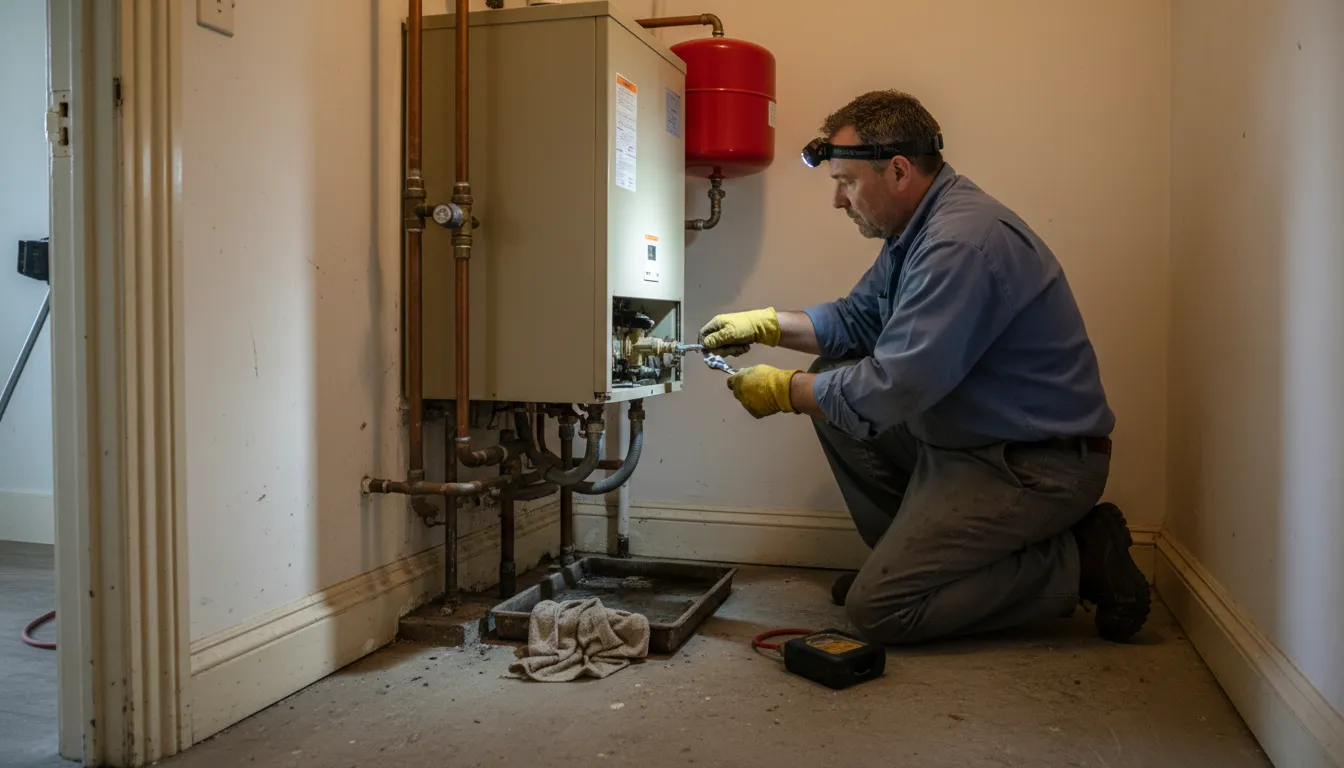
When the winter chill settles into Peabody, a reliable heating system isn't just a comfort-it's a necessity. Boiler repair involves diagnosing and fixing issues with your home's hydronic or steam heating system, which uses hot water or steam to provide warmth through radiators, baseboards, or radiant floors. This service is critical for maintaining a safe, efficient, and comfortable home, especially given our region's cold climate. Finding a qualified local specialist ensures your system is handled by someone familiar with the common types of boilers in our older homes and the specific demands of our coastal New England weather.
Minuteman Plumbing, Heating & Cooling
100 Garden St, Cambridge, MA 02138
Minuteman Plumbing, Heating & Cooling is a full-service provider based in Boston, MA, offering plumbing, heating, and air conditioning services for homes and small businesses. They cover Greater Boston and the South Shore, including suburbs such as Allston, Belmont, Brookline, and Somerville, as well as towns like Weymouth, Braintree, and Hingham. Their services include AC installation and repair, furnace and boiler installation and repair, HVAC tune-ups, and plumbing repairs. The company emphasizes expert assessment, clear communication, and efficient execution, with every installation backed by a lifetime workmanship guarantee. With decades of combined experience, their veteran-led team provides 24/7 emergency services and a one-hour business response time.
Yellow Dog Plumbing, Heating & Cooling
19 Kearney Rd, Needham, MA 02494
Yellow Dog Plumbing, Heating & Cooling is a plumbing and HVAC company serving Boston, MA, and nearby areas. They offer a wide range of services including air conditioning, furnace, heat pump, and boiler repair and installation, as well as HVAC tune-ups and indoor air quality solutions. Their technicians are equipped to handle both residential and light commercial HVAC needs, with well-stocked trucks to complete most repairs on the first visit. Yellow Dog emphasizes clear communication and customer care, providing same-day service and 24/7 live answering to support their clients' comfort and safety.
Royal Air Systems, Inc.
210 Main St, North Reading, MA 01864
Royal Air Systems, Inc. is an HVAC company serving Boston, MA, and the surrounding North Shore communities. They offer a wide range of services including repair and installation of air conditioners, furnaces, heat pumps, and boilers. The company is known for its expertise in heat pump systems, providing flexible heating and cooling solutions that adapt to seasonal changes. Established in 1980, Royal Air Systems has over 46 years of experience in the HVAC industry. They also provide emergency after-hours service for heating repairs.
Back Bay Mechanical AC Repair & Heating
654 Washington St, Braintree, MA 02184
Back Bay Mechanical AC Repair & Heating is a licensed and insured HVAC company serving Boston, MA. They provide a range of services including furnace, heat pump, boiler, and water heater repair, as well as AC installation and duct cleaning. Their technicians evaluate all furnace components such as the combustion chamber, burners, heat exchanger, and thermostat to ensure safe and efficient operation. The company is recognized for its thorough maintenance plans and does not push unnecessary repairs or replacements. They offer emergency service and cover multiple Boston neighborhoods and surrounding areas.
Accurate Baker Elman
671 Saw Mill Brook Pkwy, Newton, MA 02459
Accurate Baker Elman is a plumbing and HVAC service provider located in Boston, MA. They offer a range of services including AC repair and installation, furnace and boiler repair and installation, HVAC tune-ups, and indoor air quality services. With over 76 years of experience since 1943, they handle plumbing projects such as kitchen and bath remodeling, water heater and boiler installations, and freeze-up repairs. The company also provides 24/7 emergency plumbing services to their customers. Serving Boston and surrounding areas, Accurate Baker Elman emphasizes customized solutions and preventative maintenance to extend equipment life. Their technicians work closely with customers to explain options and ensure informed decisions. The company maintains a broad service area covering many communities around Boston.
Understanding Your Peabody Home's Heating System
Most homes in Peabody with boiler-based heating use one of two main types: hot water (hydronic) systems or steam systems. Knowing which you have is the first step in understanding potential repairs.
Hot Water Boilers are more common and work by heating water in a vessel, which is then circulated through a network of pipes to terminal units like baseboard heaters, cast-iron radiators, or in-floor radiant tubing 1. These systems are known for providing consistent, quiet, and zone-controllable heat, which can enhance comfort and efficiency.
Steam Boilers, often found in Peabody's historic homes, operate by boiling water to create steam. The steam rises through pipes to radiators, condenses back into water, and returns to the boiler to be reheated 2. These systems are robust but can be less efficient and may require technicians with specific expertise for older components.
Another distinction is whether your system is autonomous (serving only your single-family home) or part of a central system (common in condominiums or apartment complexes where a large boiler serves multiple units) 3. This affects who is responsible for maintenance and the scope of any repair work.
Why Local Climate Makes Boiler Care Essential
Peabody's weather profile directly impacts the stress and performance of your heating equipment. Our cold winters demand a system that can run reliably for extended periods. An aging or poorly maintained boiler is at a much higher risk of failure during a deep freeze, which isn't just an inconvenience-it can lead to frozen pipes and significant property damage. This makes proactive maintenance and prompt repair non-negotiable for Peabody homeowners.
Additionally, while indoor boiler components are largely protected, our proximity to the coast means salt air can be a factor for any exterior venting or ancillary equipment, potentially accelerating corrosion. A local technician will be attuned to these environmental factors during an inspection.
Common Boiler Issues Requiring Repair
Several components within a boiler system can malfunction. Recognizing the symptoms can help you describe the problem to your technician.
- Circulator Pump Failure: In hot water systems, this pump moves heated water through the pipes. If it fails, you'll have hot water in the boiler but no heat reaching your radiators or baseboards.
- Ignition or Pilot Light Problems: For gas-fired boilers, issues with the ignitor, flame sensor, or pilot light will prevent the boiler from firing up. You may hear it attempt to start and then shut down.
- Faulty Thermostat or Controls: If your boiler isn't responding to temperature settings or is short-cycling (turning on and off frequently), the issue could be with the thermostat, aquastat (water temperature control), or other system controls.
- Leaks: Water leaks can occur from corroded pipes, faulty pressure relief valves, or from within the heat exchanger itself. Even a small drip can cause water damage and indicate a larger problem.
- Low Pressure: Hydronic systems operate within a specific pressure range. If pressure is too low, the system may not circulate properly. This can be due to a leak or an issue with the pressure-filling valve.
- Kettling or Rumbling Noises: Limescale buildup on the heat exchanger can cause water to overheat and steam, creating a loud banging or rumbling noise known as "kettling." This reduces efficiency and strains the boiler.
Find the perfect boiler repair contractors for your needs
Get personalized recommendations and expert advice
The Repair vs. Replacement Decision
One of the most significant decisions a Peabody homeowner will face is whether to repair an ailing boiler or invest in a replacement. The right choice depends on several factors specific to your system and situation 4.
When Repair is Often the Best Path:
- Age: Your boiler is less than 10-15 years old.
- Efficiency: It has a relatively good Annual Fuel Utilization Efficiency (AFUE) rating (typically above 80%).
- Issue Severity: The problem is a minor or isolated component failure, like a pump or valve.
- Budget: Immediate costs are a primary concern, and the repair is expected to provide several more years of service.
When Replacement Should Be Seriously Considered:
- Age: Your boiler is over 15-20 years old. Efficiency drops and failure risk increases significantly with age.
- Efficiency: The AFUE is low (often below 80% for very old units). Upgrading to a high-efficiency model (95% AFUE or higher) can drastically reduce your winter fuel bills.
- Repair Frequency: You are facing frequent, costly repairs. The cumulative cost may approach or exceed the investment in a new unit.
- Comfort & Goals: You want more consistent heat, zoning capabilities, or to integrate with modern smart home controls.
Understanding Costs and Incentives
Repair and replacement costs can vary widely based on the job's complexity, the boiler type, and labor rates. Here are general estimates to help frame your expectations 5:
- Service Call/Diagnostic Fee: Typically ranges from $100 to $200.
- Minor Repairs (e.g., circulator pump, pressure valve, thermostat): Often between $200 and $600.
- Major Repairs (e.g., heat exchanger, gas valve, ignition assembly): Can range from $500 to $1,500 or more.
- Complete Boiler Replacement (including installation): A significant investment, usually between $4,000 and $8,000+. The final price depends on the unit's size, efficiency, fuel type (natural gas, oil, propane), and the complexity of the installation.
Crucially for Massachusetts residents, upfront costs for high-efficiency upgrades can be offset by rebates and incentives. Programs like Mass Save and the New England Clean Energy Council (NECEC) offer substantial rebates for installing qualifying high-efficiency boilers 6 7. For example, replacing an old 70% efficient boiler with a new 95% efficient model might have a gross cost of $6,000. A Mass Save rebate could reduce that by $1,000 or more, lowering your net cost to around $5,000 while saving you hundreds of dollars annually on fuel 7. Always ask your local HVAC professional about available programs.
Choosing a Qualified Peabody Boiler Specialist
Given the complexity and safety implications of boiler work-especially with gas-fired systems-selecting the right technician is paramount. Look for a licensed, insured professional with specific experience in hydronic and steam heating. They should perform a thorough assessment, clearly explain your options (repair vs. replace), provide a detailed written estimate, and discuss how local rebates might apply to your project 8. A reputable pro will help you weigh the long-term savings of a new, efficient system against the short-term fix of a repair, ensuring your Peabody home stays warm and efficient for winters to come.
Frequently asked questions
Sources
Footnotes
-
Pros and Cons of Hydronic Heating | First Supply - https://www.firstsupply.com/Knowledge-Center/pros-and-cons-of-hydronic-heating ↩
-
Furnaces and Boilers | Department of Energy - https://www.energy.gov/energysaver/furnaces-and-boilers ↩
-
Central or autonomous heating: which is better? - https://www.irsap.com/en/blog/central-or-autonomous-heating ↩
-
The Pros and Cons of Boiler Replacement vs. Repair - AN Heating - https://anheating.co.uk/the-pros-and-cons-of-boiler-replacement-vs-repair/ ↩
-
UK Average Cost of Boiler Repair Explained - Go Assist - https://go-assist.co.uk/blog/average-cost-of-boiler-repair ↩
-
Furnace Boiler Repair Service Peabody MA - https://www.mainstreammechanical.com/towns/furnace-boiler-repair-service-peabody-ma ↩
-
BHA_Arup_final_decarb_report.pdf - Boston Housing Authority - https://www.bostonhousing.org/BHA/media/Documents/Departments/Procurement/BHA_Arup_final_decarb_report.pdf ↩ ↩2
-
Who Do You Call to Fix a Boiler? - One Hour Heating & Air Conditioning - https://www.onehourheatandair.com/charleston/about-us/blog/2024/september/fix-a-boiler/ ↩