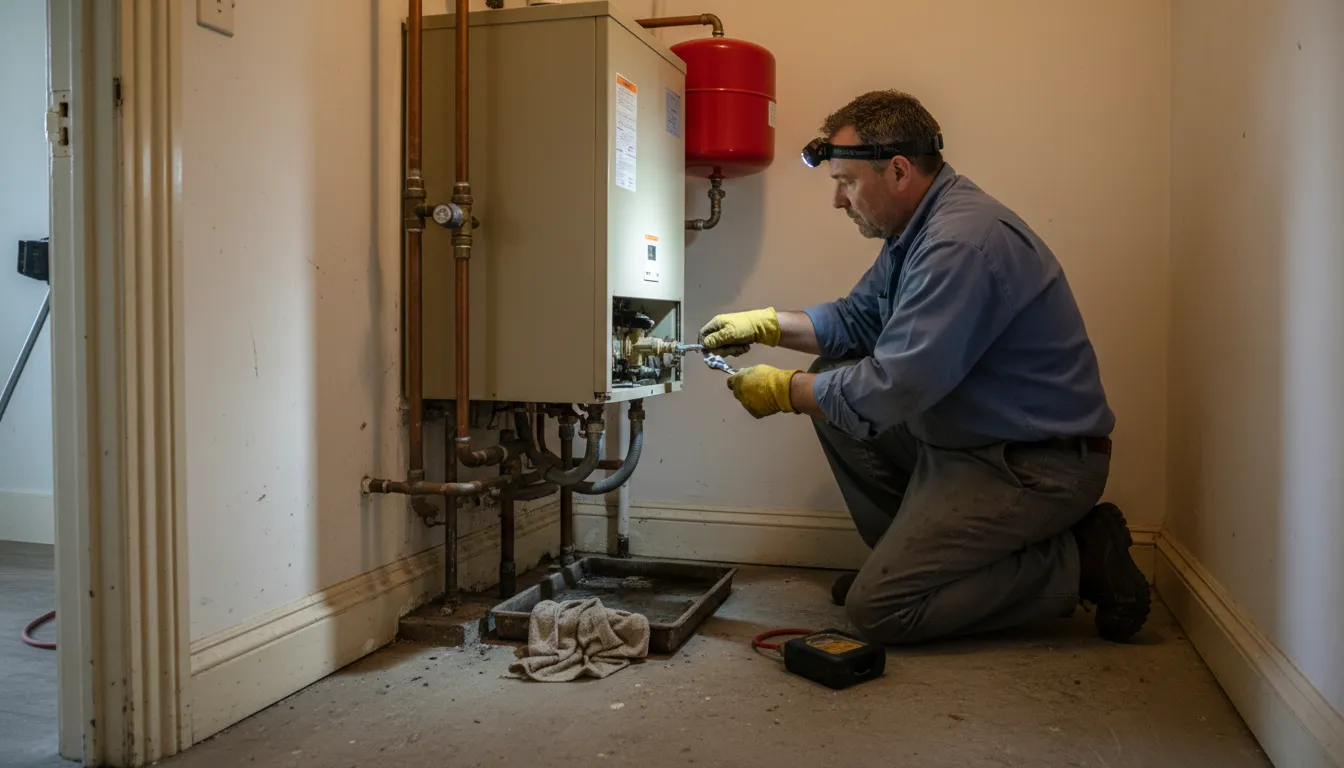
Find the Best Boiler Repair Contractors for Your Business
No obligation • Fast responses • Nationwide coverage

Why you can trust HVAC Firms
HVAC Firms is a leading United States resource for evaluating HVAC service providers. Our team researches companies, checks credentials, and reviews customer feedback to present clear, unbiased information. Listings and rankings are based on merit, and companies cannot pay to change our editorial content.
Search providers near you
Best Boiler Repair Contractors in Kentucky Ranked
A reliable boiler is essential for staying warm and comfortable during Kentucky's chilly winters. When your hydronic heating system fails, it can lead to cold homes, high energy bills, and even safety risks. This guide provides practical information on common boiler problems, maintenance tips, and what to expect from professional service, helping you make informed decisions to keep your Kentucky home's heating system running safely and efficiently.
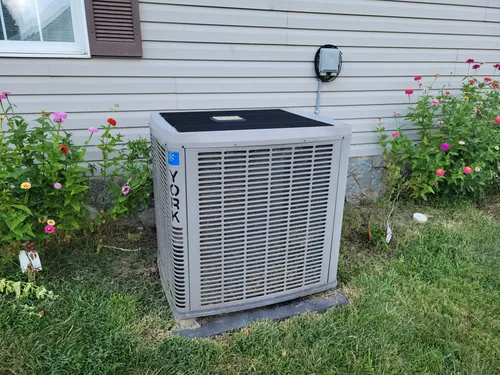
GraceLand Air
314 Stanford St, Lancaster, KY 40444
GraceLand Air is a local HVAC company serving Lexington, KY, and nearby areas including Lancaster. They provide a full range of heating and cooling services such as air conditioning and furnace repair, heat pump and boiler installation, ductless mini-split systems, and indoor air quality solutions. With over ten years of experience, GraceLand Air offers tailored solutions based on thorough diagnostics to ensure effective and long-term results. The company is a YORK® Certified Comfort Expert™ and serves all brands.
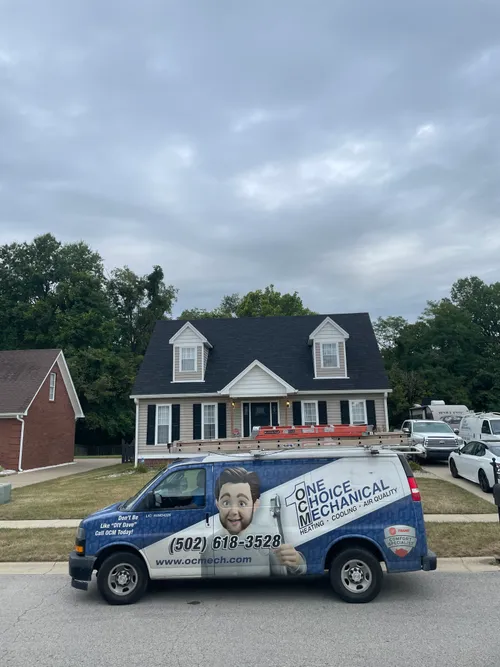
One Choice Mechanical
8611 National Tpke, Fairdale, KY 40118
One Choice Mechanical is an HVAC company serving Louisville, KY, offering a full range of heating and cooling services for residential and commercial clients. Their expertise includes installation, repair, and tune-ups for air conditioners, furnaces, heat pumps, boilers, mini splits, and geothermal heat pumps. Established in 2007, the company provides 24/7 emergency HVAC services to ensure reliable support whenever needed.
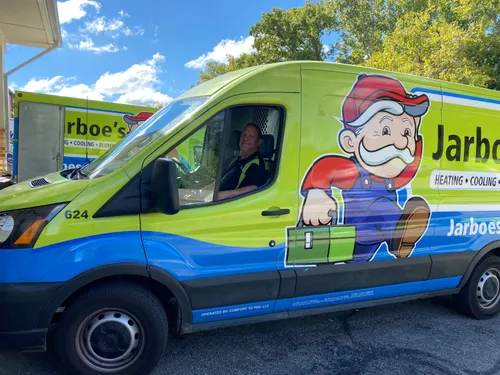
Jarboe's Heating Cooling Plumbing
2620 Gleeson Ln #4C, Jeffersontown, KY 40299
Jarboe's Heating Cooling Plumbing is a locally owned HVAC and plumbing company serving Louisville, KY. They provide a wide range of services including repair, installation, and maintenance for furnaces, heat pumps, air conditioners, boilers, mini splits, geothermal heat pumps, and duct cleaning. The company is known for its NATE-certified technicians and offers 24/7 emergency service to address heating, cooling, and plumbing issues promptly. With over 35 years of experience, Jarboe's specializes in HVAC system tune-ups, replacements, and indoor air quality improvements, ensuring homes stay comfortable year-round.
Jarboe's Plumbing, Heating & Cooling
503 Washburn Ave Suite 201B, Louisville, KY 40222
Jarboe's Plumbing, Heating & Cooling is a full-service HVAC and plumbing company serving Louisville, KY. They offer a wide range of services including repair, installation, and maintenance of air conditioners, furnaces, heat pumps, boilers, and duct cleaning. As a Carrier Factory Authorized Dealer, they provide expert installation of high-quality heating and cooling systems, including geothermal heat pumps and mini splits. With over 35 years of experience, Jarboe's is known for their NATE-certified technicians and 24/7 emergency repair availability to address urgent heating and cooling needs.
Comfort Air Heating & Cooling
471 Adena Dr, Mt Sterling, KY 40353
Comfort Air Heating & Cooling is an HVAC contractor based in Lexington, KY, offering a wide range of heating and cooling services. They provide installation, repair, and maintenance for air conditioners, furnaces, heat pumps, boilers, mini splits, geothermal heat pumps, and indoor air quality systems. As a licensed Carrier dealer, they supply various indoor comfort products including programmable thermostats, humidifiers, air cleaners, and zoning products. Comfort Air Heating & Cooling has experience servicing all brands and offers 24/7 emergency service to their customers. They also provide service agreements to help maintain system efficiency and reduce emergencies.
Common Boiler Problems in Kentucky Homes
Boiler systems, while durable, can develop issues over time. Recognizing the signs early can prevent minor problems from becoming major, costly repairs. Here are the most frequent issues faced by Kentucky homeowners.
No Heat or Poor Heat Circulation This is the most obvious and urgent problem. It can stem from several causes:
- Trapped Air: Air pockets in the radiators or baseboards block hot water flow. This is often fixed by bleeding the radiators.
- Sediment Buildup: Minerals in Kentucky's water can accumulate in the heat exchanger, reducing efficiency and heat output.
- Circulator Pump Failure: The pump that moves water through the system can wear out, stopping circulation entirely.
- Low Water Pressure: The system may lose pressure due to a small leak or a faulty pressure relief valve, triggering a safety shutdown.
Leaks Water leaks are a serious concern. They can originate from:
- Pipe Connections: Loose fittings or corroded pipes.
- Pressure Relief Valve: A valve that discharges water if pressure gets too high may be faulty or stuck open.
- The Boiler Body: Corrosion or cracks in the boiler tank itself, which often indicates the need for replacement.
Unusual Noises Your boiler should operate relatively quietly. Strange sounds are a key diagnostic clue:
- Banging or Kettling: Often caused by limescale buildup (kettling) on the heat exchanger, causing water to overheat and steam 1.
- Gurgling or Whistling: Typically indicates trapped air in the system.
- Humming or Vibrating: Could point to a failing circulator pump2.
Flame and Combustion Issues For gas-fired boilers, the burner flame should be a steady blue. A yellow or orange flickering flame signals incomplete combustion, which is inefficient and can produce dangerous carbon monoxide (CO). This requires immediate professional attention.
Essential Maintenance and Safety Tips
Proactive care can extend your boiler's life, improve efficiency, and keep your family safe.
Homeowner Maintenance Tasks
- Bleed Your Radiators: If parts of your radiator are cold at the top, it likely has trapped air. Use a radiator key to open the bleed valve until water drips out consistently 3.
- Monitor System Pressure: Check the boiler's pressure gauge regularly. Most systems operate between 12-15 psi when cold. Consult your manual for the correct range 4.
- Keep Vents Clear: Ensure all air vents and intakes near the boiler are unobstructed.
- Visual Inspections: Periodically look for signs of water leaks, rust, or soot around the boiler.
Critical Safety Measures
- Install Carbon Monoxide Detectors: This is non-negotiable. Install CO detectors on every level of your home, especially near sleeping areas, and test them monthly 5. A faulty boiler is a common source of CO.
- Schedule Annual Professional Service: A licensed technician will perform crucial safety checks you cannot do yourself.
- Know Your Shut-Offs: Be familiar with how to turn off the gas and water supply to your boiler in an emergency.
What to Expect from Professional Service & Kentucky Regulations
Hiring a qualified professional is vital for repairs and annual maintenance. In Kentucky, boiler work involves specific safety standards.
The Role of a Licensed Technician Boiler repair is specialized work. You need a licensed HVAC or boiler technician, not just a general plumber 6. They have the training to work on gas lines, electrical components, and complex combustion systems safely. A professional will:
- Perform a combustion analysis to ensure safe, efficient operation.
- Clean the burner assembly and heat exchanger to remove soot and debris.
- Test all safety controls and relief valves.
- Inspect the heat exchanger for cracks, which can leak CO into your home 7.
- Diagnose and repair faulty components like circulator pumps, valves, and ignition systems.
Kentucky Inspection Requirements The Kentucky Department of Housing, Buildings and Construction has jurisdiction over boiler inspections8. While routine annual inspections by the state are not typically required for most residential insured boilers, the department inspects new installations and uninsured boilers in service8. More importantly, a professional tune-up serves as a de facto inspection, ensuring your system meets safety and efficiency standards.
The Professional Service Visit During an annual maintenance visit, a technician will follow a comprehensive checklist 9:
- Visual Inspection: Check for leaks, corrosion, and proper ventilation.
- Combustion Testing: Analyze flue gases for safe CO and oxygen levels.
- Component Cleaning: Clean the burner, pilot assembly, and flame sensor.
- Safety Device Test: Manually test the pressure relief valve, high-limit switch, and other controls.
- System Performance Check: Verify water pressure, pump operation, and thermostat communication.
- Recommendations: Provide a report on the system's condition and any advised repairs.
Find the perfect boiler repair contractors for your needs
Get personalized recommendations and expert advice
Understanding Repair Costs in Kentucky
The cost to repair a boiler in Kentucky varies widely based on the problem, the part needed, and labor rates. Here's a general breakdown to help you budget:
- Minor Repairs & Adjustments: Tasks like bleeding the entire system, repressurizing, replacing a thermostat, or fixing a minor leak often range from $150 to $400 10.
- Component Replacement: Replacing a key part such as a circulator pump, gas valve, pressure relief valve, or ignition control module typically falls between $400 and $1,000+, including parts and labor11 12.
- Major Repairs: Fixing a cracked heat exchanger is one of the most expensive repairs, often costing several thousand dollars. At this point, replacement of the entire boiler is usually a more cost-effective and reliable long-term solution.
Repair vs. Replacement A good rule of thumb is the "5,000 Rule": Multiply the age of your boiler by the repair cost. If the result is over $5,000, replacement is often the better option. For example, a $1,200 repair on a 10-year-old boiler (10 x 1200 = 12,000) suggests replacement. Newer, high-efficiency models can also significantly reduce your monthly heating bills.
Choosing the Right Service Provider
Selecting a qualified professional is the most important step in addressing your boiler needs.
- Verify Licensing & Insurance: Ensure the company holds current Kentucky HVAC licensing and carries both liability and worker's compensation insurance.
- Check Experience & Specialization: Look for companies that specifically list boiler or hydronic heating service as a core offering.
- Ask About Diagnostics: A reputable technician will explain the problem clearly, show you any faulty parts, and provide a detailed written estimate before starting work.
- Seek References & Reviews: Check online reviews and ask for references from past customers with similar repair needs.
- Get Multiple Estimates: For repairs over a few hundred dollars, it's wise to get 2-3 detailed quotes to compare.
Frequently asked questions
Sources
Footnotes
-
Hydronic Heating Systems - Home Inspections by US Inspect - https://www.usinspect.com/blog/hydronic-heating-systems/ ↩
-
Professional Boiler repair solutions in Louisville, KY - https://alliancecomfortsys.com/boiler-repair-2/ ↩
-
Troubleshoot Your Hydronic Heating System - InMotion Mechanical - https://inmotionheating.com/troubleshooting-hydronic-heating-system/ ↩
-
Common Hydronic Heating Problems and Quick Fixes - JNR Plumbing - https://www.jnrplumbing.com/winter-troubleshooting-guide-common-hydronic-heating-problems-and-quick-fixes/ ↩
-
Boiler Safety Inspections Checklist - PlumbersStock - https://www.plumbersstock.com/how-to-hvac/boilers/safety-inspection-checklist.html ↩
-
Fixing Boiler Issues: 10 Common Problems & Easy Solutions - https://www.youtube.com/watch?v=kmPLlrh-nPE ↩
-
Common Problems and Inspection Requirements During Boiler ... - https://www.epcbboiler.com/boiler-periodic-inspection.html ↩
-
Boiler Inspections - https://dhbc.ky.gov/new_Docs.aspx?cat=167 ↩ ↩2
-
Annual Boiler Maintenance Checklist - Cellino Plumbing - https://cellinoplumbing.com/blog/annual-boiler-maintenance-checklist/ ↩
-
Understanding Boiler Repairs: A Comprehensive Guide - Chambersburg Super Techs - https://chambersburgsupertechs.com/boiler-repair/understanding-boiler-repairs-a-comprehensive-guide/ ↩
-
How Much Should a Boiler Repair Cost? - Louisville - https://www.glanz-buffatphc.com/how-much-should-a-boiler-repair-cost/ ↩
-
Boiler Maintenance Checklist: Heating System Upkeep Guide - https://skaggswalsh.com/boiler-maintenance-checklist-sw/ ↩