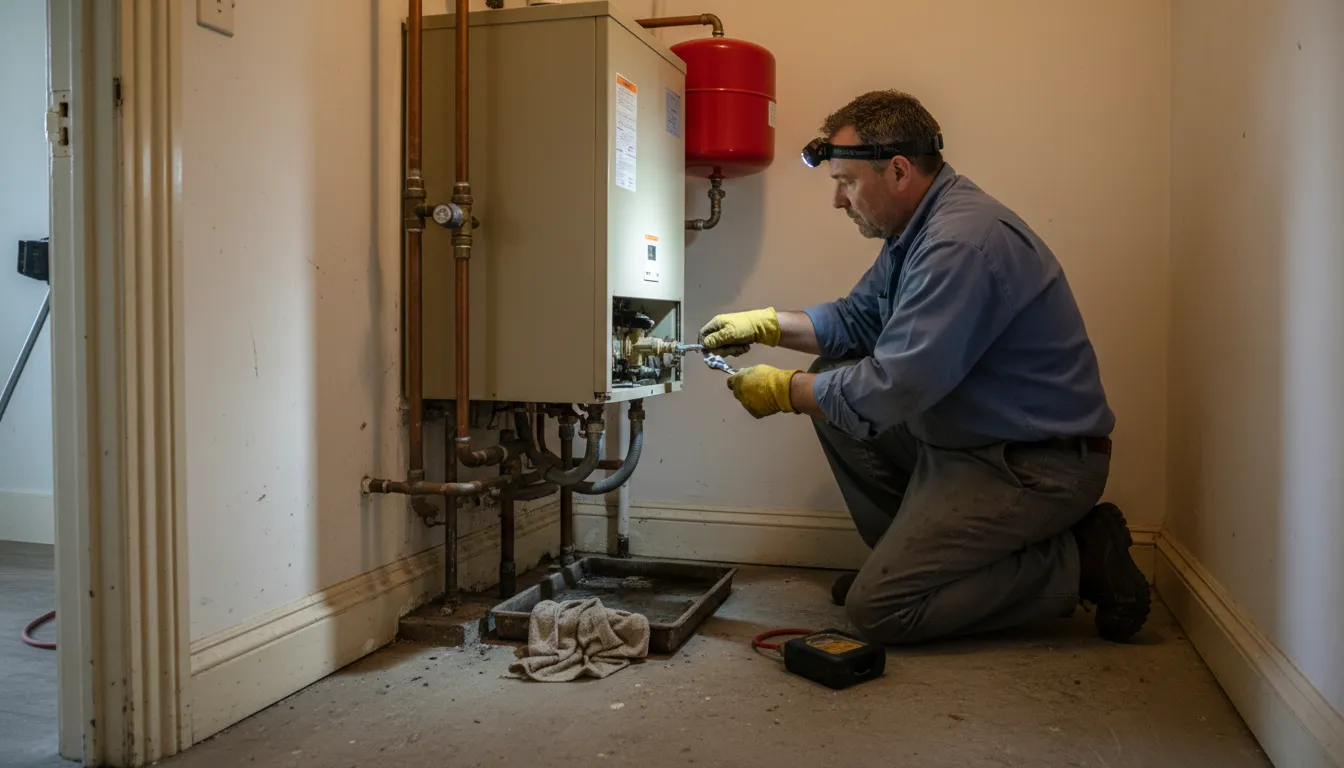
Find the Best Boiler Repair Contractors for Your Business
No obligation • Fast responses • Nationwide coverage

Why you can trust HVAC Firms
HVAC Firms is a leading United States resource for evaluating HVAC service providers. Our team researches companies, checks credentials, and reviews customer feedback to present clear, unbiased information. Listings and rankings are based on merit, and companies cannot pay to change our editorial content.
Search providers near you
Best Boiler Repair Contractors in Kansas Ranked
A reliable boiler is essential for comfort and safety in Kansas homes, especially during the state's cold winters. When your hydronic heating system fails, it can leave you without heat or hot water and may even pose safety risks like carbon monoxide exposure. This guide provides clear, practical information to help you understand common boiler problems, know when to attempt a fix yourself, and recognize when it's time to call a licensed professional for repair or maintenance.
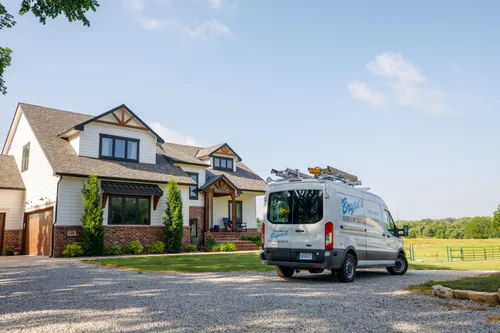
Bryan's Heating & Air Conditioning, Inc.
700 S Ramsey Dr, Valley Center, KS 67147
Bryan's Heating & Air Conditioning, Inc. has been providing residential and commercial HVAC services in Wichita, KS since 1986. They offer a wide range of heating and cooling solutions including repair, installation, and maintenance for furnaces, heat pumps, boilers, geothermal systems, central air conditioners, and ductless mini splits. The company also specializes in indoor air quality services such as humidity control and air purification, as well as custom ductwork fabrication and repair through their in-house sheet metal shop. Bryan's serves the Greater Wichita area with a focus on energy-efficient commercial HVAC solutions and comprehensive maintenance plans.
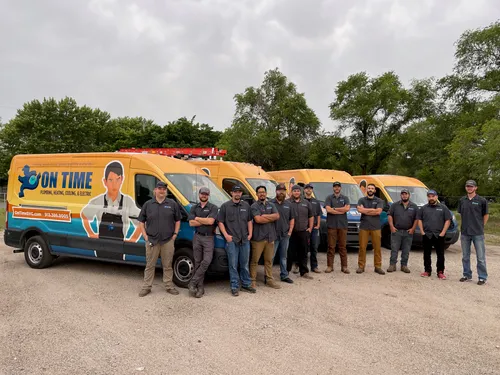
On Time Plumbing, Heating, Cooling & Electric
4065 N Woodlawn Blvd Suite 3, Bel Aire, KS 67220
On Time Plumbing, Heating, Cooling & Electric is a full-service provider based in Wichita, KS, offering plumbing, electrical, and HVAC services. They serve residential customers with repairs, installations, and maintenance for heating systems including furnaces, heat pumps, geothermal systems, and boilers, as well as air conditioning units and mini-splits. The company has been operating since 2004 and provides 24/7 emergency service to address urgent plumbing, heating, cooling, and electrical needs.
Reddi Heating and Cooling
Wichita, KS
Reddi Heating and Cooling is a locally owned HVAC company serving Wichita, KS, with over 60 years of experience. They offer a wide range of residential and commercial heating and cooling services, including AC and furnace repair, new HVAC installations, geothermal systems, ductless mini-splits, thermostats, and indoor air quality solutions. Reddi provides 24/7 service and specializes in installing and repairing systems from brands like Trane, Ruud, and Amana. Their expertise includes geothermal heat pump installation and maintenance.
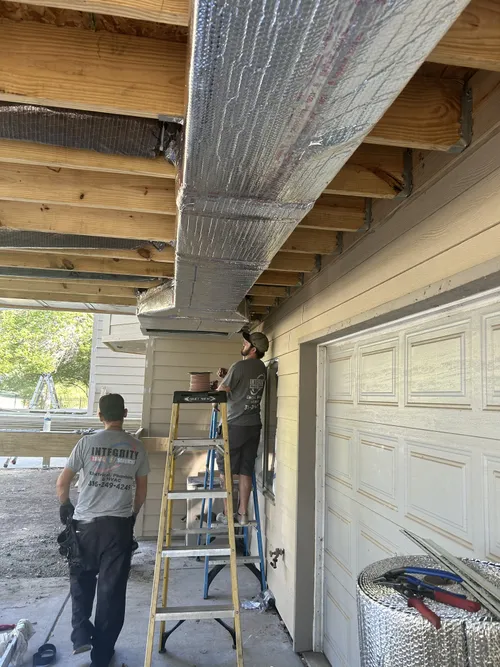
Integrity Trade Services LLC
225 S Ida St #102, Wichita, KS 67211
Integrity Trade Services is a Wichita, KS-based company offering electrical, plumbing, heating, and cooling services for residential and commercial clients. They specialize in HVAC installation, repair, and maintenance, including air conditioning, furnace, heat pump, and boiler systems. With over 20 years of experience, the company employs skilled technicians who have passed thorough background and skills screenings to ensure quality work.

Fahnestock Plumbing HVAC & Electric
3532 N Comotara St, Wichita, KS 67226
Fahnestock Plumbing HVAC & Electric is a full-service provider based in Wichita, KS, offering HVAC, plumbing, and electrical services. Their team handles repairs, installations, and maintenance for heat pumps, boilers, furnaces, air conditioning systems, and geothermal heat pumps. With over 75 years of experience since 1946, they employ NATE-certified technicians and hold certifications from the National Comfort Institute and the EPA. Fahnestock also offers emergency services to address urgent HVAC, plumbing, and electrical issues.
Common Boiler Problems and Immediate Actions
Recognizing the signs of a struggling boiler can help you take swift action, potentially preventing a minor issue from becoming a major, costly repair. Here are the most frequent problems Kansas homeowners encounter.
No Heat or Hot Water
This is the most urgent issue. Before calling for service, perform two basic checks:
- Thermostat & Power: Ensure your thermostat is set to "heat" and at a temperature higher than the current room reading. Check that the boiler has power-look for a tripped circuit breaker or a blown fuse.
- System Pressure: Many modern boilers have a pressure gauge. If the pressure is too low (often below 1 bar or 12 psi), it can prevent the system from firing. Consult your manual for repressurization instructions, as this sometimes requires a professional.
If these checks don't restore heat, the issue could be a failed component like a pump, valve, or diaphragm, requiring professional diagnosis.
Kettling (Loud Banging or Gurgling Noises)
This alarming sound is often caused by limescale buildup on the heat exchanger or trapped air in the system. The restricted water flow causes steam bubbles to form and collapse violently. For air-related kettling, bleeding your radiators can often resolve the noise 1. If the noise persists, it likely indicates mineral buildup, which a professional can descale.
Pilot Light Issues
For older boilers with a standing pilot light, it going out is a common complaint. You can attempt to relight it by carefully following the manufacturer's instructions on the unit. If the pilot light won't stay lit after several attempts, stop. A faulty thermocouple (the safety device that senses the pilot flame) or a draft blowing it out are likely causes that need professional attention 2.
Low System Pressure
A gradual drop in pressure is normal, but a rapid or continuous loss indicates a leak. Check around the boiler and visible pipes for moisture. While you may be able to top up the pressure via the filling loop (see your manual), a persistent leak must be located and repaired by a technician to prevent damage and inefficiency 3.
Uneven Heating or Cold Spots on Radiators
If some radiators are hot while others are cold, or if a radiator is cold at the top, you likely have trapped air. Bleeding the radiators is the standard fix for this problem and is a task most homeowners can safely perform 4. In zoned hydronic systems, check that zone valves are functioning correctly.
When to Call a Professional: Safety First
While some troubleshooting is safe, certain situations demand immediate professional intervention. Your safety and the integrity of your home are paramount.
- Smell of Gas: If you smell natural gas (a rotten egg odor) near your boiler, leave the area immediately and call your gas company or 911 from a safe location. Do not operate light switches or create any sparks.
- Suspected Carbon Monoxide (CO): Symptoms of CO poisoning include headaches, dizziness, nausea, and flu-like feelings. If your CO alarm sounds or you suspect a leak, evacuate and call for help. A cracked heat exchanger, blocked flue, or improper venting can cause CO to enter your home 5.
- Visible Water Leaks: A significant leak can cause water damage and indicate a failed internal component. Turn off the water supply to the boiler if possible and call for service.
- Persistent or Unfamiliar Problems: If a simple fix like bleeding radiators doesn't work, or if you're uncomfortable with any step in the troubleshooting process, call a licensed HVAC or boiler technician.
Find the perfect boiler repair contractors for your needs
Get personalized recommendations and expert advice
Understanding Maintenance and Kansas Regulations
Proactive care is the best way to ensure your boiler runs efficiently, safely, and reliably for years to come.
Homeowner Maintenance Checklist
You can perform several basic tasks to keep your system in good shape:
- Annual Visual Check: Look for signs of rust, corrosion, or water stains on or around the boiler.
- Keep It Clear: Ensure the area around your boiler is free of clutter, dust, and flammable materials to allow for proper airflow and safe access.
- Listen and Observe: Pay attention to new or unusual noises, odors, or changes in performance and document them for your technician.
- Bleed Radiators Annually: This simple task improves efficiency and heat distribution 6.
Professional Annual Tune-Up
Scheduling an annual inspection and tune-up by a qualified technician is a critical investment. A professional service typically includes:
- Checking for gas leaks and verifying safe combustion.
- Testing for carbon monoxide in the exhaust flue.
- Inspecting the heat exchanger for cracks or corrosion.
- Cleaning essential components like the burner and pilot assembly.
- Checking and adjusting system pressure and water chemistry.
- Verifying that all safety controls and valves are operating correctly 7.
This service, which generally costs between $190 and $660 for minor adjustments and cleaning, can identify small problems before they lead to a costly breakdown or unsafe condition.
Kansas Boiler Safety Regulations
Kansas has specific regulations governing boiler safety, primarily focused on larger commercial and institutional units. The Kansas Boiler Safety Act requires regular inspections for boilers that exceed certain size thresholds (e.g., more than 85 gallons of hot water supply or units over 200,000 BTUH) 8 9. These "certificate inspections" are conducted by state-licensed inspectors.
While most residential boilers fall below these thresholds and are not subject to mandatory state inspection, the law underscores the importance of professional oversight for all heating equipment. All new boiler installations must be registered with the state 10. When buying a home, an inspector will evaluate the boiler's age (systems over 20 years old are near the end of their typical lifespan), look for visible defects, and note any signs of past problems 11.
Cost Considerations for Repair and Replacement
Understanding potential costs can help you budget and make informed decisions when issues arise.
- Minor Repairs: Fixing common issues like a faulty thermocouple, pressure valve, or pump seal typically ranges from $190 to $660.
- Major Repairs or Component Replacement: Replacing a circulator pump, heat exchanger, or control board can cost significantly more, often from $600 to $1,500 or more, depending on the part and labor.
- Full Boiler Replacement: If your boiler is old, inefficient, or has a catastrophic failure like a cracked heat exchanger, replacement is often the most economical long-term choice. The total cost for a new high-efficiency boiler installation in Kansas, including removal of the old unit, typically ranges from $3,600 to $8,40012. The final price depends on the unit's size, efficiency rating, complexity of the installation (like moving gas or water lines), and any necessary updates to venting.
Investing in a new, efficient model can lead to substantial savings on your monthly energy bills, especially during Kansas's heating season.
Frequently asked questions
Sources
Footnotes
-
Top 10 Common Boiler Issues and How to Resolve Them - https://www.farnendermer.com/blog/2018/november/top-10-common-boiler-issues-and-how-to-resolve-t/ ↩
-
Common Boiler Issues and When to Call a Professional - https://www.climatecontrolkc.com/blog/boilers/common-boiler-issues-and-fixes/ ↩
-
Troubleshoot Your Hydronic Heating System - InMotion Mechanical - https://inmotionheating.com/troubleshooting-hydronic-heating-system/ ↩
-
Common Hydronic Heating Problems and Quick Fixes - JNR Plumbing - https://www.jnrplumbing.com/winter-troubleshooting-guide-common-hydronic-heating-problems-and-quick-fixes/ ↩
-
Boiler Repair: Ensuring Your Home Stays Warm and Safe - https://goendlessenergy.com/blog/boilers/boiler-repair-ensuring-your-home-stays-warm-and-safe/ ↩
-
Essential Boiler Maintenance Tips for Kansas City Homeowners - https://boilerrepairkansascity.com/essential-boiler-maintenance-tips-for-kansas-city-homeowners/ ↩
-
Boiler Maintenance Checklist: Heating System Upkeep Guide - https://skaggswalsh.com/boiler-maintenance-checklist-sw/ ↩
-
Kansas Boiler Safety Act Amendment Goes into Effect July 1 - https://firemarshal.ks.gov/CivicAlerts.aspx?AID=95 ↩
-
Kan. Admin. Regs. § 49-48-1 - Certificate inspections; type and frequency | State Regulations - https://www.law.cornell.edu/regulations/kansas/K-A-R-49-48-1 ↩
-
Boilers | State Fire Marshal, KS - https://www.firemarshal.ks.gov/175/Boilers ↩
-
Home Inspection Checklist - Kansas City ... - https://apronorthkc.com/resources/home-inspection-checklist/ ↩
-
Boiler Maintenance Guide for Homeowners - Angie's List - https://www.angi.com/articles/boiler-maintenance.htm ↩