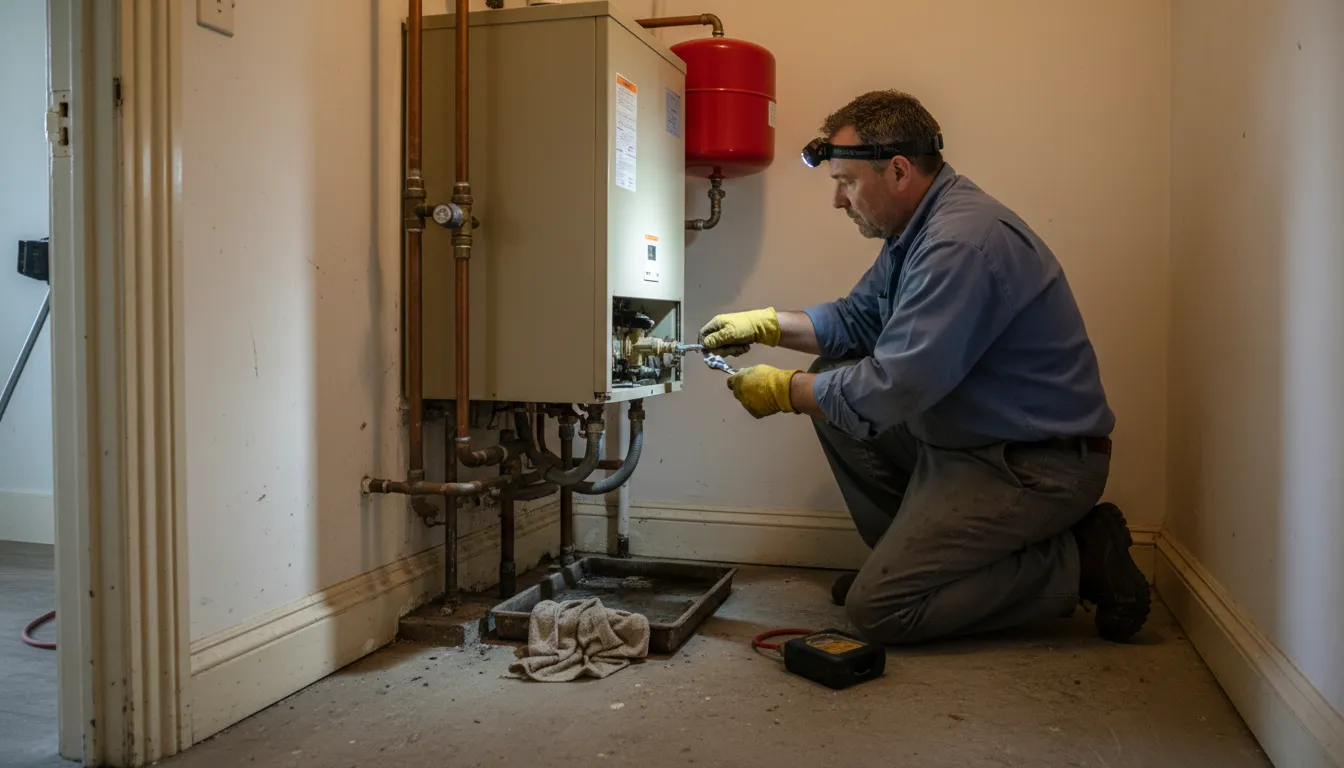
Find the Best Boiler Repair Contractors for Your Business
No obligation • Fast responses • Nationwide coverage

Why you can trust HVAC Firms
HVAC Firms is a leading United States resource for evaluating HVAC service providers. Our team researches companies, checks credentials, and reviews customer feedback to present clear, unbiased information. Listings and rankings are based on merit, and companies cannot pay to change our editorial content.
Search providers near you
Best Boiler Repair Contractors in Idaho Ranked
Keeping your boiler or hydronic heating system in good working order is essential for comfort, safety, and efficiency in your Idaho home or business. These systems provide reliable warmth, but like any complex equipment, they require regular attention to prevent breakdowns. This guide provides practical information on recognizing common boiler problems, understanding maintenance and inspection requirements specific to Idaho, and knowing what to expect in terms of service and repair costs. Use this information to make informed decisions about maintaining your heating system and connecting with qualified local professionals when you need service.
Fox Heating and Cooling
4255 Banner St, Boise, ID 83709
Fox Heating and Cooling is an HVAC contractor based in Boise, ID, offering a range of heating and cooling services for residential and commercial customers. They provide installation, repair, and maintenance for air conditioners, furnaces, heat pumps, boilers, mini split systems, and geothermal heat pumps. As a Carrier® dealer, they supply various indoor comfort products including programmable thermostats, humidifiers, air cleaners, and zoning systems. Fox Heating and Cooling also specializes in indoor air quality solutions and services all makes and models. The company offers 24/7 emergency service and preventative maintenance agreements to help maintain system performance.

Perfect Plumbing Heating & Air
109 W 44th St, Garden City, ID 83714
Perfect Plumbing Heating & Air is a Boise, ID-based company providing plumbing and HVAC services. They offer repair and installation for air conditioning, furnaces, heat pumps, boilers, and HVAC tune-ups. With nearly 40 years of experience serving the Treasure Valley, they handle a wide range of home comfort needs. Their team is equipped to resolve most issues in a single visit, emphasizing efficient service.
Boise Valley Heating & Air
146 E Fairview Ave Suite 120, Meridian, ID 83642
Boise Valley Heating & Air is a full-service HVAC company serving Boise, ID, and the surrounding areas. Since 2007, they have provided installation, repair, and maintenance for residential and commercial heating and cooling systems, including furnaces, air conditioners, heat pumps, boilers, and ductless mini-splits. The company is an authorized dealer for American Standard and offers specialized services such as ductwork installation and repair, thermostat installation and repair, and routine HVAC tune-ups. They provide 24/7 emergency furnace repair to ensure heating needs are met during critical times.
Drake Mechanical | HVAC & Plumbing Services
5551 W Gowen Rd, Boise, ID 83709
Drake Mechanical | HVAC & Plumbing Services has been serving Boise, ID, and the Treasure Valley for over 100 years. They provide residential and commercial plumbing, heating, and air conditioning services, including installation and repair of furnaces, boilers, and AC systems. Their technicians are certified and handle a variety of systems such as chillers, pumps, and waste lines. The company offers 24/7 emergency service and same-day repairs, with a focus on straightforward, no-pressure consultations.
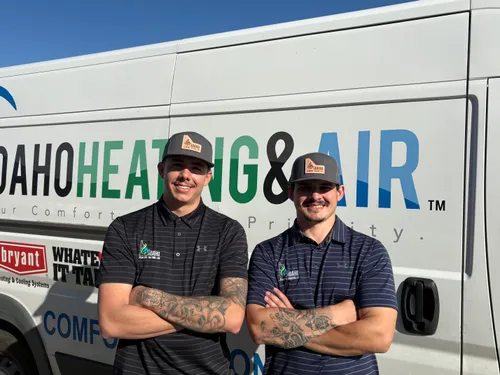
Everything Air Heating and Cooling LLC
1471 E Commercial Dr, Meridian, ID 83642
Everything Air Heating and Cooling LLC is a family-owned HVAC company serving Boise, ID, and the surrounding Treasure Valley area. They provide residential and commercial heating and air conditioning services, including repair, installation, maintenance, and indoor air quality solutions. Their capabilities include working with a variety of systems such as furnaces, heat pumps, boilers, air conditioners, ductless solutions, and thermostats. With over 20 years of experience, they offer 24/7 emergency services including nights, weekends, and holidays.
Recognizing Common Boiler Problems in Idaho
Early detection of issues can prevent minor problems from escalating into expensive, cold-weather emergencies. Here are the most frequent signs that your Idaho boiler may need attention.
Low System Pressure or Leaks A dropping pressure gauge on your boiler is a primary indicator of trouble. Most hot water (hydronic) systems operate optimally between 12-15 PSI. If you notice the gauge consistently reading low, it often points to a leak somewhere in the system. Visually check around the boiler unit, pipes, and radiators for any signs of water puddles or dampness. Even a small leak can lead to a loss of pressure, causing the system to shut down or fail to heat properly.
Unusual Noises Your heating system should run relatively quietly. New sounds are a clear signal:
- Gurgling or Bubbling: This typically indicates air trapped in the lines or radiators, which blocks hot water flow and reduces efficiency.
- Banging or Kettling: Loud knocking sounds often result from limescale or sludge buildup on the boiler's heat exchanger. This insulates the metal, causing water to overheat, steam, and create noisy vibrations.
Cold or Unevenly Heated Radiators If some radiators are cold while others are hot, or if a radiator is cool at the top but hot at the bottom, you likely have an obstruction. Cold spots at the top are usually caused by trapped air that needs bleeding. If the radiator is cooler at the bottom, it's often a sign of sludge-a mixture of rust and mineral deposits-accumulating and blocking the flow of hot water.
Inefficient Heating and High Bills A boiler that runs constantly but fails to reach the desired temperature, or one that leads to unexpectedly high fuel bills, is suffering from inefficiency. This can stem from several issues, including a dirty or faulty burner, a malfunctioning thermostat, or significant scale buildup inside the system. The system has to work harder to produce less heat, wasting energy and money.
Homeowner Maintenance Checklist
Proactive maintenance by the homeowner is the first line of defense. Performing these simple checks can extend the life of your system and help you identify issues early.
Monthly Checks:
- Pressure Gauge: Verify the system pressure is within the normal range (typically 12-15 PSI for hot water systems).
- Visual Inspection: Look for any signs of new leaks, corrosion, or water stains around the boiler and piping.
- Listen: Pay attention to any new or unusual sounds during startup and operation.
- Bleed Radiators: If you feel cold spots at the top of radiators, use a radiator key to bleed out trapped air until a steady stream of water appears.
Seasonal Tasks:
- Clear Access: Before the heating season begins, ensure the area around your boiler is clear of clutter, storage items, and flammable materials. Technicians and inspectors need safe, unobstructed access.
- Test Shutoff: Know the location of your emergency shutoff valve and ensure it operates freely.
Annual Professional Service: The most critical task is to schedule a professional tune-up and inspection before each heating season. This goes beyond homeowner checks and is essential for safety, efficiency, and often required by state code.
Find the perfect boiler repair contractors for your needs
Get personalized recommendations and expert advice
Idaho's Boiler Inspection Requirements
Idaho has specific rules governing boiler and pressure vessel safety. Understanding these requirements helps ensure your system remains compliant and safe.
Mandatory Inspection Schedule Idaho law requires regular inspections by a "competent inspector". The frequency and type of inspection depend on the boiler:
- Low-Pressure Boilers: Typically require an annual external inspection.
- Steel Steam or Hot Water Boilers: May require both external and internal inspections annually, unless the chief inspector grants an extension.
- Water Heaters and Storage Tanks: Also fall under the rules and generally require annual checks.
What to Expect During an Inspection A state-mandated inspection is a thorough examination conducted to verify safety. The inspector will:
- Visually examine the boiler's overall condition for corrosion, leaks, or damage.
- Test critical safety devices, such as pressure relief valves, low-water cutoffs, and operating controls.
- Check that all safety and data plates are legible and intact.
- Review maintenance and repair records.
- Ensure the installation and operation comply with Idaho safety rules 1.
As the owner, your responsibility is to prepare the boiler for inspection by ensuring it is cool, drained (if an internal inspection is needed), and that the inspector has clear, safe access to all components 2.
Understanding Repair Costs in Idaho
The cost to repair a boiler in Idaho varies widely based on the system's type, the problem's complexity, and the parts required. Here is a general breakdown of what you might expect:
-
Minor Repairs & Component Replacement: $100 - $400. This range covers common fixes like replacing a circulator pump, a pressure relief valve, an aquastat, or repairing minor leaks. Bleeding radiators or fixing a faulty thermostat also typically fall into this category.
-
Moderate Repairs: $300 - $800+. More involved issues fall into this bracket. Examples include repairing or replacing a burner assembly, fixing ignition system problems, addressing issues with the heat exchanger (if accessible), or replacing a control board 3 4. System flushing to remove sludge and scale is also a moderate-level service that can significantly improve efficiency 5.
-
Major Repairs or Full Replacement: Costs can climb into the thousands of dollars. This includes scenarios like a cracked heat exchanger (which often necessitates replacement for safety reasons), a completely failed boiler, or a full system repiping project. At this point, it's crucial to get detailed estimates and weigh the cost of major repair against the investment in a new, more efficient system.
Investing in annual professional maintenance is the most effective way to manage these costs, as it helps catch small issues before they become major, costly failures 6.
The Value of Professional Maintenance & Service
While homeowner checks are valuable, they are not a substitute for professional service. A certified technician performs comprehensive tasks that ensure long-term reliability:
- Cleaning & Adjusting: They will clean the burner and heat exchanger surfaces, check and adjust the fuel-to-air ratio for optimal combustion, and test for dangerous carbon monoxide emissions.
- System Testing: All electrical connections, safety controls, and the pressure relief valve are rigorously tested.
- Performance Verification: The technician will verify the system is operating at its rated efficiency and make necessary adjustments.
- Code Compliance: A professional service ensures your system continues to meet Idaho's safety standards.
Proactive maintenance is not an expense; it's an investment that pays for itself through improved safety, lower utility bills, fewer emergency repairs, and a longer system lifespan 7.
Frequently asked questions
Sources
Footnotes
-
17.06.03, Boiler and Pressure Vessel Safety Rules - Inspections - https://adminrules.idaho.gov/rules/1999/17/0603.pdf ↩
-
Maintaining Proper Boiler Inspections Through Proper Relationships - https://www.nationalboard.org/index.aspx?pageID=164&ID=233 ↩
-
Commercial Boiler Repair in Idaho Falls, ID - Costs 12 / 2025 - https://www.homeyou.com/id/commercial-boiler-repair-idaho-falls-costs ↩
-
Components of a Boiler - Powerhouse-Combustion - https://powerhouse-combustion.com/components-of-a-boiler/ ↩
-
Should Hydronic Heating Systems Be Flushed? - Fante's HVAC - https://fantesphvac.com/should-hydronic-heating-systems-be-flushed/ ↩
-
Boiler Maintenance Checklist: Heating System Upkeep Guide - https://skaggswalsh.com/boiler-maintenance-checklist-sw/ ↩
-
Do I need to get my boiler serviced and what does it include? - https://www.britishgas.co.uk/heating/guides/boiler-servicing.html ↩