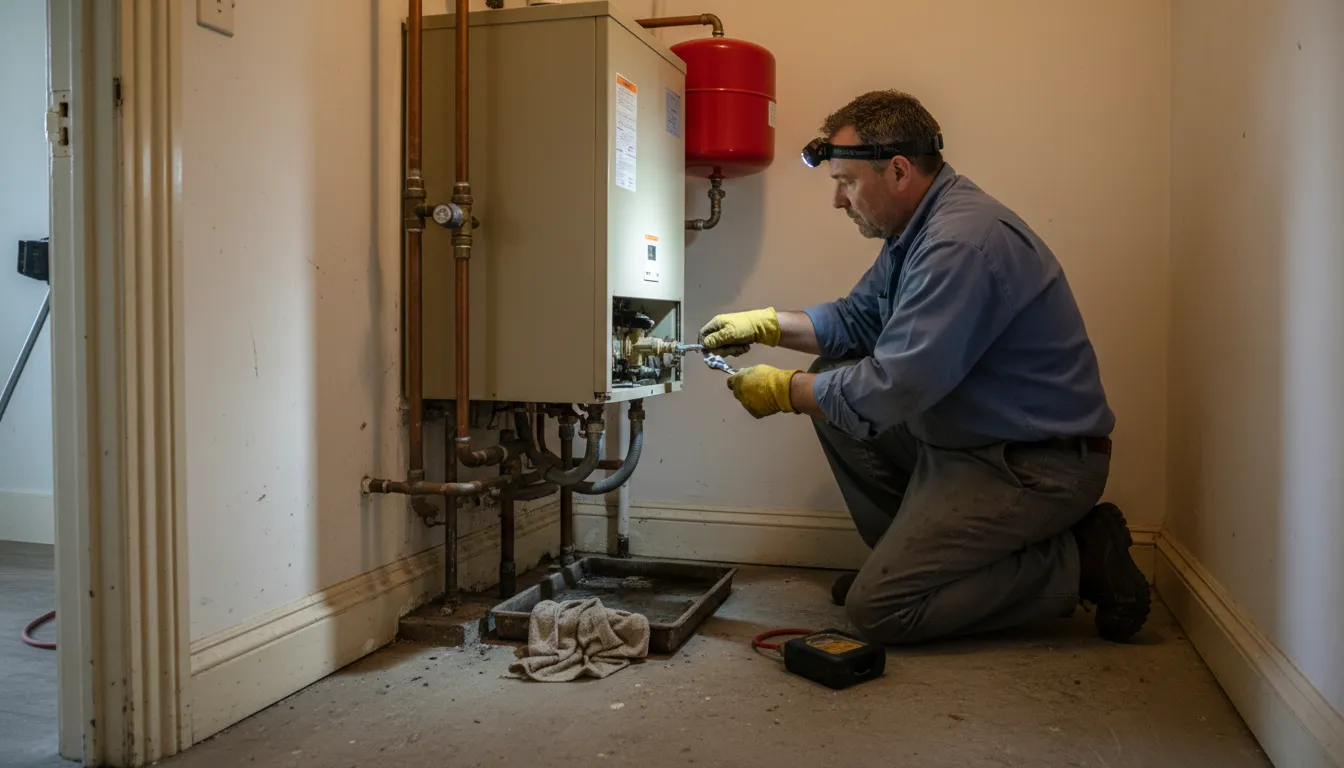
Find the Best Boiler Repair Contractors for Your Business
No obligation • Fast responses • Nationwide coverage

Why you can trust HVAC Firms
HVAC Firms is a leading United States resource for evaluating HVAC service providers. Our team researches companies, checks credentials, and reviews customer feedback to present clear, unbiased information. Listings and rankings are based on merit, and companies cannot pay to change our editorial content.
Search providers near you
Top Boiler Repair Contractors in Ocoee, Florida Ranked
While central Florida's warm climate means boilers and hydronic heating systems aren't as common as in northern states, many Ocoee homes-particularly older builds or custom residences-rely on them for comfortable, even heat. A malfunctioning boiler can disrupt your home's comfort and lead to higher energy bills. This guide will help you understand your hydronic heating system, recognize when it needs attention, and navigate the decision between repair and replacement with the help of local professionals.
Benzah Vent Cleaning LLC
Orlando, FL
Benzah Vent Cleaning LLC is a full-service HVAC and duct cleaning company serving Orlando, FL. They specialize in duct cleaning, air conditioning repair and installation, heat pump and boiler services, and chimney sweeping. The company is certified in duct cleaning and emphasizes safety and thorough inspections to maintain system efficiency. Founded in 2019, Benzah Vent Cleaning LLC offers a range of HVAC services including maintenance and repairs, with a focus on affordable and reliable solutions.
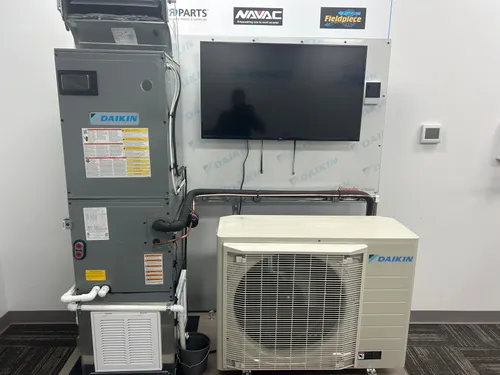
Heating & Cooling | Mafer AC
1317 Edgewater Dr Suite 3594, Orlando, FL 32804
Heating & Cooling | Mafer AC is an HVAC company based in Orlando, FL, providing a wide range of heating and cooling services. They offer installation, repair, and maintenance for air conditioners, furnaces, heat pumps, boilers, and geothermal systems, along with duct cleaning and indoor air quality services. The company is known for handling both residential and commercial HVAC needs with certified professionals. Established in 2021, Mafer AC serves the Central Florida area and provides 24/7 emergency support for urgent HVAC issues.
Ingenuity Air
2785 Wrights Rd #1133, Oviedo, FL 32765
Ingenuity Air is an HVAC contractor serving Orlando, FL, specializing in residential and commercial HVAC installation, repair, and maintenance. They provide services for air conditioning, furnaces, heat pumps, boilers, mini splits, and geothermal heat pumps. The company covers the Orlando area including Oviedo and Winter Park, offering comprehensive HVAC solutions to keep homes and businesses comfortable year-round.
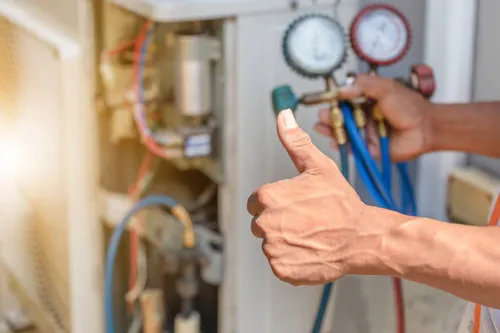
E&G HVAC services
430 Sheoah Blvd #218, Winter Springs, FL 32708
E&G HVAC Services offers a range of heating, ventilation, and air conditioning solutions in Orlando, FL. They provide repair and installation services for air conditioners, furnaces, heat pumps, and boilers, along with duct cleaning and HVAC tune-ups. With over 20 years of experience, the company serves both residential and commercial customers, focusing on comfort and efficiency through preventative maintenance and insulation services.
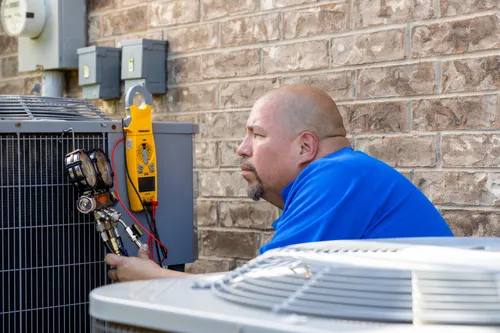
Sears Heating and Air Conditioning
500 S Park Ave, Winter Park, FL 32789
Sears Heating and Air Conditioning provides comprehensive HVAC repair and installation services in Orlando, FL. Their certified technicians handle a wide range of systems including central air conditioners, furnaces, heat pumps, boilers, and mini-split units. They offer accurate diagnostics, component replacements, routine maintenance, and full system installations to maintain year-round comfort. With over 100 years of experience, Sears uses genuine manufacturer parts and certified installers to ensure reliable service. They also provide same-day and next-day appointments for many services, enhancing convenience for customers.
Understanding Hydronic Heating Systems in Ocoee
Unlike forced-air systems that blow heated air through ducts, a boiler heats water, which is then circulated through a network of pipes to deliver warmth. This method, known as hydronic heating, provides a consistent and often quieter heat. In Ocoee homes, the most common setup involves a gas-fired boiler (using natural gas or propane) that sends hot water to radiators or baseboard heaters. Some higher-end installations may include in-floor radiant tubing, though this is less common in our region.
The key components you should be aware of include the boiler itself, the circulation pump, zone valves that control heat to different areas, and the thermostat. Understanding this basic layout can help you communicate more effectively with a technician when issues arise.
Why Climate Matters for Your Boiler
Ocoee's humid subtropical climate presents unique considerations for heating systems 1. Our winters are mild and short, with only occasional freezing temperatures. This means your boiler doesn't face the same relentless demand as systems in colder climates, but it also may sit idle for long periods.
- Mild Winter Operation: Because heavy-duty heating isn't constantly needed, efficiency during shorter, intermittent use cycles becomes important. A system that takes a long time to heat up or that loses heat quickly can be inefficient.
- Humidity and Comfort: High ambient humidity can make a home feel cooler and impact overall energy use. A well-functioning heating system contributes to a balanced indoor environment.
- The Case for Zoning: Given that you may only need to heat certain parts of your home at specific times, a zoned hydronic system is highly advantageous. Zoning allows you to control temperatures in different areas independently, preventing energy waste and tailoring comfort to your daily routine.
Recognizing Common Boiler Problems
Knowing the signs of a struggling boiler can help you address issues before they lead to a complete breakdown or safety hazards.
- No Heat or Insufficient Heat: This is the most obvious sign. The cause could range from a faulty thermostat or a broken circulator pump to issues with the gas valve or ignition system.
- Strange Noises: Kettling (a rumbling or banging sound) often indicates limescale buildup on the heat exchanger, which restricts water flow and causes overheating. Whistling or gurgling sounds can point to air in the system or problems with water pressure.
- Leaks: Any sign of water around the boiler, pipes, or radiators needs immediate attention. Leaks can cause water damage and indicate failing seals, corroded pipes, or excessive pressure.
- Pilot Light Issues: For older systems, a pilot light that won't stay lit or is an irregular color (yellow instead of blue) can signal a thermocouple problem or a gas supply issue.
- Rising Energy Bills: A gradual, unexplained increase in your gas bills often points to declining boiler efficiency, meaning the unit has to work harder and longer to achieve the same level of heat.
Find the perfect boiler repair contractors for your needs
Get personalized recommendations and expert advice
The Critical Decision: Repair or Replace Your Boiler?
When your boiler acts up, you're faced with a choice: invest in a repair or consider a full replacement. This decision hinges on several key factors.
When Repair is the Right Choice
Opting for a repair is typically the best path forward in these scenarios:
- The System is Relatively New: If your boiler is less than 10-15 years old, it likely has significant life left.
- The Problem is Isolated and Minor: Issues like a failed circulator pump, a faulty zone valve, or a worn-out thermostat are often cost-effective to fix.
- The Repair Cost is Low Relative to Replacement: A repair that costs a fraction of a new system installation makes financial sense in the short term.
When Replacement Should Be Considered
There comes a point when pouring money into an old boiler is like throwing good money after bad. Consider a new boiler installation if:
- Age is a Factor: Most boilers have a lifespan of 15-20 years. If yours is approaching or has exceeded this age, components are wearing out, and efficiency is plummeting.
- Frequent Breakdowns: If you're calling for repairs every season, the cumulative cost and hassle likely justify a new, reliable system.
- Inefficiency is Costing You: Older boilers can operate at efficiencies as low as 70% or less. An inefficient unit directly translates to higher monthly utility bills.
Understanding Efficiency: The UEF Rating
When evaluating new boilers, one of the most important metrics to understand is the Uniform Energy Factor (UEF) 2. This rating measures how efficiently a unit converts energy into hot water over a typical day. The higher the UEF, the more efficient the boiler.
- For Modern Gas Boilers: Look for a UEF of 0.90 or higher. High-efficiency condensing models can achieve ratings well above this, capturing heat from exhaust gases that traditional models waste.
- Long-Term Savings: While a high-UEF boiler may have a higher upfront cost, the energy savings over its lifetime can be substantial, especially when you factor in Ocoee's utility rates. Investing in efficiency is an investment in lower operating costs for years to come 3 4.
Cost Considerations in Ocoee
Costs can vary widely based on the complexity of your system, the type of new boiler selected, and labor rates. However, here are general estimates to help you budget:
- Repair Costs: Typically range from $200 for a simple component replacement to $1,000 or more for complex repairs involving major parts.
- Replacement Costs: A full boiler replacement in Ocoee can range from $4,000 for a straightforward swap to $10,000 or more for a high-efficiency system with new controls, zoning, or piping updates.
Pro Tip: Always seek multiple professional quotes. A reputable technician will perform a full assessment of your home's heating load and existing infrastructure to provide an accurate estimate for either repair or replacement.
Maximizing Your Investment: Rebates and Best Practices
Before making a purchase, check for rebates. Local utilities like Florida Power & Light (FPL) or state energy programs sometimes offer incentives for upgrading to high-efficiency heating equipment. These rebates can significantly offset the initial cost of a new, efficient boiler.
To extend the life of any boiler system, commit to annual professional maintenance. A fall tune-up can clean critical components, check for leaks, test safety controls, and ensure the system is operating at peak efficiency before you need it most.
Frequently asked questions
Sources
Footnotes
-
GAINESVILLE FLORIDA ALACHUA COUNTY - https://asapplumbinggainesville.com/?page_id=18 ↩
-
Understanding Energy Efficiency in Water Heaters - Rheem - https://www.rheem.com/understanding-energy-efficiency-in-water-heaters/ ↩
-
Understanding the Various Types of Heating Systems - https://www.trustedhvacsolutions.com/expert-tips/understanding-the-various-types-of-heating-systems/ ↩
-
Understanding UEF Ratings for Water Heaters | What You Need to Know - https://modernize.com/homeowner-resources/plumbing/uef-ratings-for-water-heaters ↩