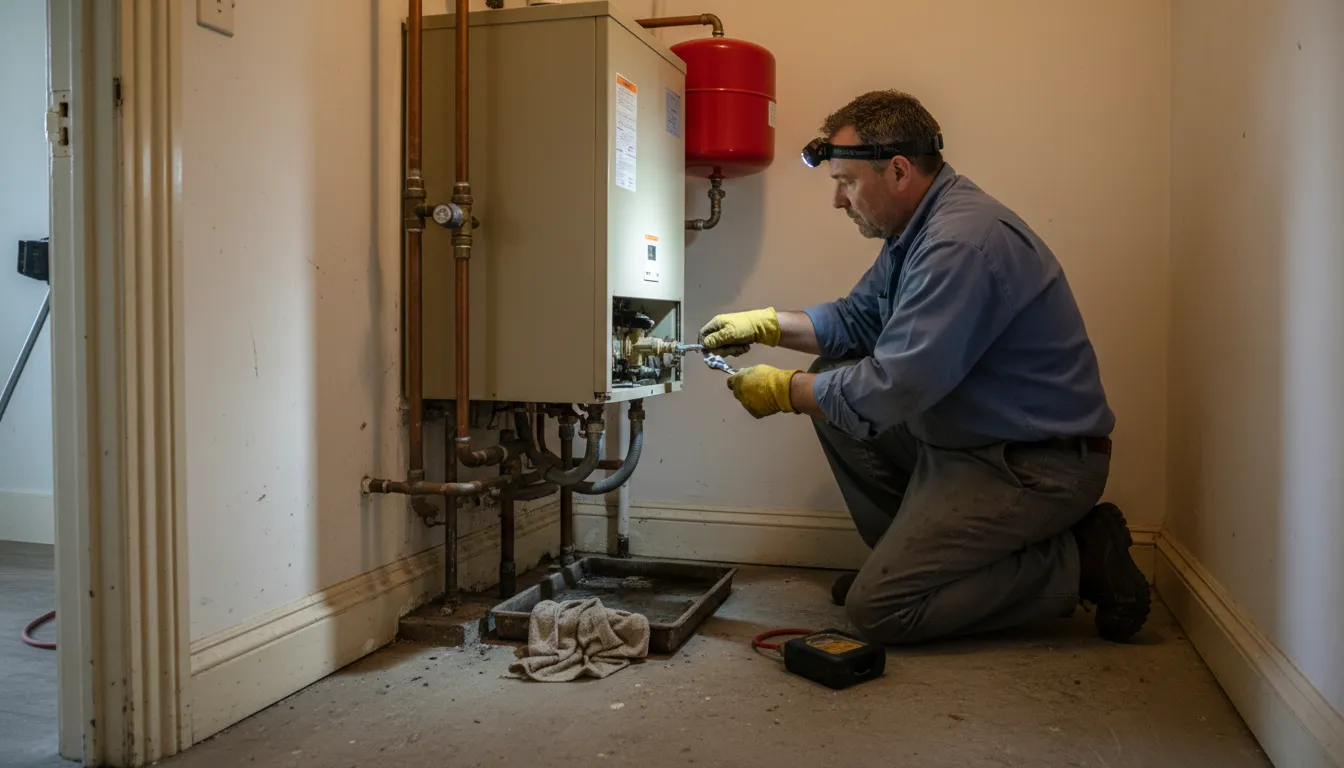
Find the Best Boiler Repair Contractors for Your Business
No obligation • Fast responses • Nationwide coverage

Why you can trust HVAC Firms
HVAC Firms is a leading United States resource for evaluating HVAC service providers. Our team researches companies, checks credentials, and reviews customer feedback to present clear, unbiased information. Listings and rankings are based on merit, and companies cannot pay to change our editorial content.
Search providers near you
Top Boiler Repair Contractors in Santa Monica, California Ranked
For Santa Monica homes and businesses with hydronic heating systems, a well-functioning boiler is key to reliable, comfortable radiant heat. When your boiler malfunctions, you face a critical decision: repair the existing unit or invest in a replacement. This guide explains how boiler systems work in our coastal climate, provides a clear framework for making the repair-versus-replace decision, and outlines the modern heating options available, including high-efficiency heat pumps that are particularly well-suited to our mild winters. You can use the information here to evaluate your situation and connect with local specialists who can provide accurate assessments and quotes.
Comfort Time Plumbing Heating & Cooling
8038 Freestone Ave, Santa Fe Springs, CA 90670
Comfort Time Plumbing Heating & Cooling is a family-owned company based in Los Angeles, CA, providing comprehensive HVAC and plumbing services for homes and businesses. They specialize in the repair and installation of air conditioning, furnaces, heat pumps, boilers, mini splits, and commercial refrigeration systems. Comfort Time Plumbing Heating & Cooling offers same-day service and uses advanced techniques such as trenchless sewer line replacement to address plumbing issues efficiently. Since 2008, they have served the local community with trained technicians who maintain up-to-date certifications and prioritize respect for customers' homes.
All City Plumbing, Air & Electrical
221 Allen Ave, Glendale, CA 91201
All City Plumbing, Air & Electrical is a family-owned business serving Los Angeles, CA, and nearby areas with plumbing, heating, air conditioning, and electrical services. Their team handles a wide range of HVAC needs including furnace, heat pump, boiler, and mini split installation and repair, as well as indoor air quality and thermostat services. The company is known for its ACE-certified technicians and offers comprehensive capabilities such as hydro-jetting and whole house filtration system installation. With over 13 years of experience, All City Plumbing, Air & Electrical emphasizes quality workmanship and customer satisfaction.
Orange Coast Plumbing
22427 Funston Ave, Hawaiian Gardens, CA 90716
Orange Coast Plumbing is a family-owned plumbing and HVAC company serving Long Beach, CA. They offer a wide range of services including air conditioning, furnace, heat pump, and boiler repair and installation. The company is known for its certified technicians and uses environmentally safe products. Established in 1977, Orange Coast Plumbing has decades of experience and provides 24/7 emergency service to address urgent needs at any time.
Just Rite Air Heating & Cooling Santa Clarita
25030 Avenue Stanford suite 70, Santa Clarita, CA 91355
Just Rite Air Heating & Cooling Santa Clarita provides comprehensive HVAC services in Santa Clarita, CA. They specialize in the installation, repair, and maintenance of heating and cooling systems including furnaces, air conditioners, heat pumps, boilers, ductless mini-splits, and geothermal heat pumps. Their services also cover indoor air quality solutions such as air purifiers, humidifiers, and duct cleaning. The company handles diagnostics and repairs for various HVAC components and offers system tune-ups to maintain efficiency. They serve the entire Santa Clarita Valley including Valencia, Saugus, Canyon Country, and Newhall.

Monkey Wrench Plumbing, Heating, Air & Electric
4000 Long Beach Blvd #303, Long Beach, CA 90807
Monkey Wrench Plumbing, Heating, Air & Electric is an HVAC and plumbing company based in Long Beach, CA. They offer a range of services including air conditioning, furnace, heat pump, and boiler repair and installation. The company emphasizes eco-friendly solutions and sustainable home comfort, serving Long Beach and the surrounding Los Angeles area.
Understanding Hydronic Heating in Santa Monica
A boiler is the heart of a hydronic heating system. Unlike a furnace that heats air, a boiler heats water or steam, which is then circulated through pipes to radiators, baseboard heaters, or in-floor tubing to provide radiant warmth. This method is prized for its quiet operation, consistent comfort, and ability to create distinct temperature zones in different rooms.
Santa Monica's coastal climate presents a unique context for heating. Our mild winters mean systems aren't subjected to the extreme, constant demand seen in colder regions 1. This influences both the wear on equipment and the economic calculations for repair and replacement. The relatively low heating load also makes advanced technologies like electric heat pumps exceptionally efficient and cost-effective choices for many homes, aligning with broader state goals for building electrification and decarbonization.
When to Consider Boiler Repair
Repairing your existing boiler is often the most straightforward and economical path, especially for newer systems. Here are the key indicators that a repair is likely the right choice:
- Age Under 15 Years: Modern boilers have a typical lifespan of 15-20 years or more. If your unit is on the younger side of this range, a repair can often restore it to reliable service for many more seasons.
- Minor or Infrequent Issues: Problems like a faulty pressure relief valve, a malfunctioning circulator pump, or a minor leak are often isolated component failures that can be fixed without replacing the entire system.
- Cost-Effective Fix: A general rule of thumb is to consider repair if the estimated cost is less than 50% of the price of a brand-new, high-efficiency boiler installation 2. This makes financial sense for extending the life of a fundamentally sound unit.
- System is Otherwise Efficient: If your boiler has been reliably maintaining temperature and your energy bills haven't shown an unusual spike, a single repair can be a smart investment.
A qualified technician can diagnose the specific issue-whether it's a problem with the heat exchanger, ignition system, or controls-and provide a transparent estimate for the repair.
Signs It's Time for a Boiler Replacement
There comes a point when continual repairs are no longer prudent. Investing in a new system improves reliability, comfort, and efficiency. Consider replacement if you encounter the following:
- Advanced Age (Over 15 Years): As a boiler approaches and exceeds its expected lifespan, the frequency and cost of repairs inevitably increase. Components wear out, and finding parts for older models can become difficult and expensive 3.
- Declining Efficiency and Rising Bills: Older boilers, especially those with a standing pilot light or low AFUE (Annual Fuel Utilization Efficiency) ratings, waste a significant amount of fuel. If your winter heating costs are climbing year-over-year despite similar usage, your boiler's efficiency is likely degrading.
- Frequent or Major Breakdowns: If you're calling for service multiple times a season or facing a repair bill that exceeds 50% of the cost of a new unit, you're essentially pouring money into a failing system 4 5. This "nickel-and-diming" adds up quickly.
- Inconsistent Heating or Comfort Issues: Cold spots, strange noises (like kettling or rumbling), or an inability to maintain a set temperature are signs of a system struggling to perform its core function.
- Desire to Upgrade Technology: Many homeowners use a boiler failure as an opportunity to switch to a more efficient and versatile system, such as a ductless or ducted heat pump, which provides both heating and cooling from one unit.
Find the perfect boiler repair contractors for your needs
Get personalized recommendations and expert advice
Modern Heating Options: Boilers and Beyond
When replacing a heating system in Santa Monica, you have several efficient paths forward. The best choice depends on your home's layout, existing infrastructure, and comfort goals.
High-Efficiency Boilers: Modern condensing gas boilers can achieve AFUE ratings of 90% or higher, meaning they convert nearly all the fuel into usable heat for your home 6. They are a direct replacement for an old boiler and work with your existing hydronic distribution system (radiators, baseboards).
Heat Pump Systems: For our climate, an air-source heat pump is often the most energy-efficient and cost-effective option for whole-home heating and cooling 7. Heat pumps move heat rather than generate it, making them incredibly efficient. They can be installed as ducted systems (if you have existing air ducts) or as ductless mini-splits. Because they provide both heating and cooling, they are an excellent choice for Santa Monica homes that may also want efficient air conditioning.
Hybrid Systems: Some homes opt for a dual-fuel system that pairs a heat pump with a gas boiler. The heat pump handles heating during milder temperatures, and the boiler provides supplemental heat during the few colder nights, optimizing for both efficiency and comfort.
Navigating Costs and Incentives
Understanding the financial landscape is crucial for planning.
Boiler Repair Costs: Repair costs vary widely based on the component and labor. A simple fix like replacing a thermostat or valve may cost a few hundred dollars, while repairing or replacing a major component like a heat exchanger or circulator pump can run into the thousands.
Replacement Costs:
- New High-Efficiency Boiler: Installation typically ranges from $4,000 to $10,000+, depending on the unit's size, efficiency, and complexity of the installation (e.g., re-piping, zoning).
- Heat Pump System: Installing a whole-home heat pump system (which often replaces both a furnace and an air conditioner) generally falls in the range of $10,000 to $20,000+ 8. Ductless mini-split systems for single zones or smaller homes can be less.
Financial Incentives: There are significant incentives to offset the cost of high-efficiency upgrades. The federal Energy Efficient Home Improvement Credit (IRS Form 5695, Section 25C) allows for a tax credit of up to $2,000 per year for the installation of qualified heat pumps and other energy-efficient equipment 9. Always check for additional rebates that may be available through the state of California or local utility providers.
Finding the Right Professional in Santa Monica
Making an informed decision requires expert input. Look for local HVAC contractors who specialize in hydronic systems and have proven experience with both boiler service and heat pump installations. A reputable professional will:
- Perform a thorough inspection of your current system and home.
- Clearly explain all viable options, including repair, boiler replacement, and heat pump installation.
- Provide detailed, written estimates that break down equipment, labor, and projected energy savings.
- Help you understand and apply for available federal and state tax credits and rebates.
Frequently asked questions
Sources
Footnotes
-
Pros and Cons of Hydronic Heating | First Supply - https://www.firstsupply.com/Knowledge-Center/pros-and-cons-of-hydronic-heating ↩
-
Should You Repair or Replace Your Boiler? | Westmore Fuel - https://www.westmorefuel.com/blog/planning-your-boiler-upgrade/ ↩
-
Boiler Troubles? How to Tell If It's Time for Repair or Replacement - https://www.halcoenergy.com/about-us/blog/49647-boiler-troubles-how-to-tell-if-its-time-for-repair-or-replacement.html ↩
-
Boiler Repair vs Replacement Guide - Hahn Plumbing - https://hahnplumbing.com/is-it-better-to-repair-or-replace-a-broiler/ ↩
-
Boiler Repair vs Replacement: How to Make the Right Choice - https://www.grossiservicesinc.com/boiler-repair-vs-replacement-how-to-make-the-right-choice ↩
-
Furnaces and Boilers | Department of Energy - https://www.energy.gov/energysaver/furnaces-and-boilers ↩
-
A New Construction Guide to Support Santa Monica's Energy ... - https://9021zeroemissions.rinconconsultants.com/wp-content/uploads/2021/11/3.-SantaMonica_Climate-Friendly-Buidings_2020.pdf ↩
-
2025 Reference Appendices - California Energy Commission - https://www.energy.ca.gov/sites/default/files/2025-07/CEC-400-2025-010-AP.pdf ↩
-
Energy Efficient Home Improvement Credit | Internal Revenue Service - https://www.irs.gov/credits-deductions/energy-efficient-home-improvement-credit ↩