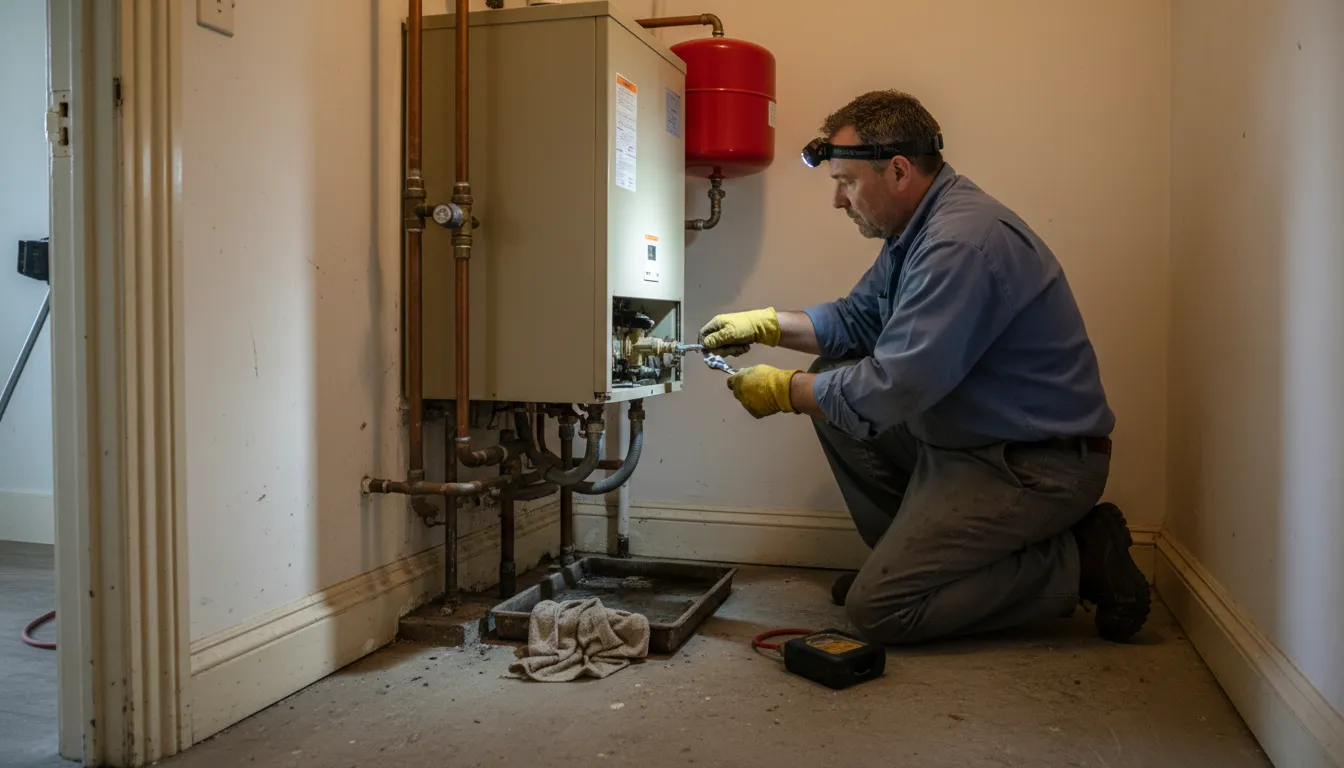
Find the Best Boiler Repair Contractors for Your Business
No obligation • Fast responses • Nationwide coverage

Why you can trust HVAC Firms
HVAC Firms is a leading United States resource for evaluating HVAC service providers. Our team researches companies, checks credentials, and reviews customer feedback to present clear, unbiased information. Listings and rankings are based on merit, and companies cannot pay to change our editorial content.
Search providers near you
Top Boiler Repair Contractors in San Ramon, California Ranked
When your hydronic heating system falters, it's more than an inconvenience-it's a disruption to your home's comfort and efficiency. Boiler repair in San Ramon addresses the heart of your home's heating, ensuring warm radiators, cozy floors, and reliable hot water. This resource helps you understand your system, recognize common issues, and make informed decisions about maintenance and service for your home's heating needs.
Heating And Air Experts - Affordable HVAC Contractor in Fremont, California
4991 Seneca Park Loop, Fremont, CA 94538
Heating And Air Experts - Affordable HVAC Contractor in Fremont, California provides heating and cooling services in San Jose, CA. They handle installation and repair of air conditioners, furnaces, heat pumps, and boilers. Their work covers both new system setups and emergency repairs to maintain efficient and safe climate control throughout the year.
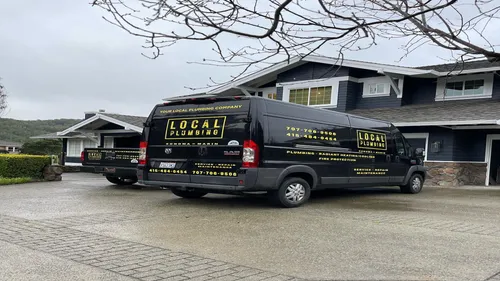
Local Plumbing
323 Pine St Ste. F, Sausalito, CA 94965
Local Plumbing is a plumbing and hydronic heating specialist serving San Francisco, CA, and the surrounding North Bay area including Marin and Sonoma counties. They provide a range of services such as boiler installation and repair, radiant floor heating, water heater services, leak detection, and general plumbing repairs. The company is experienced in working with various systems including NTI boilers and radiant manifolds, offering skilled diagnostics and installations tailored to local plumbing challenges. Local Plumbing serves multiple communities from Sausalito to Petaluma and beyond, ensuring comprehensive coverage in the region. Their team emphasizes clear communication and stands behind their work to support both residential and commercial clients.

L.J. Kruse Company
920 Pardee St, Berkeley, CA 94710
L.J. Kruse Company is a family-owned plumbing, heating, and cooling business based in Berkeley, California, serving Oakland, CA, and the surrounding Northern California region. They offer a range of HVAC services including air conditioning, furnace, heat pump, and boiler repair and installation, as well as HVAC tune-ups. With over 100 years of experience, L.J. Kruse Company combines traditional values with skilled expertise to serve both residential and commercial clients across Alameda County, Contra Costa County, San Francisco, and Silicon Valley.
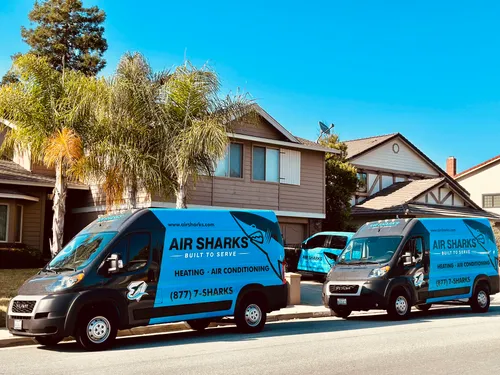
Air Sharks
1560 N 4th St #102, San Jose, CA 95112
Air Sharks is a licensed and insured HVAC company serving San Jose, CA, and nearby communities. They provide a full range of heating and cooling services including installation, repair, and maintenance for central and ductless air conditioning systems, furnaces, and boilers. Their expertise also covers ductwork cleaning, inspection, repair, and replacement to improve indoor air quality. The company emphasizes thorough inspections and offers detailed reports after service. Air Sharks has been serving the San Jose area for several years and employs background-checked and drug-tested technicians. They also provide emergency support and financing options to assist customers.
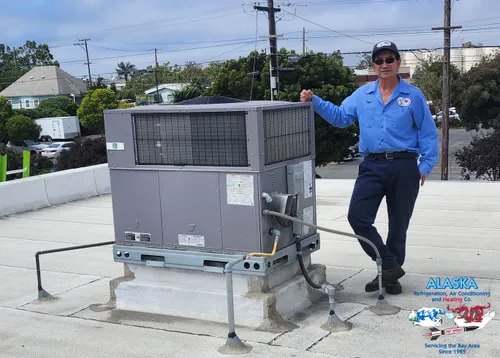
Alaska Refrigeration Air Conditioning & Heating Co
San Francisco, CA
Alaska Refrigeration Air Conditioning & Heating Co is a locally owned and operated company serving San Francisco, CA. They provide a wide range of services including commercial refrigeration, heating, air conditioning, ventilation, boilers, water heaters, and indoor air quality solutions. With over 40 years in the industry, they offer skilled technicians who handle repair, maintenance, and installation for both residential and commercial clients. The company is licensed, insured, and available 24/7 for emergency repairs, ensuring continuous support for their customers' HVAC and refrigeration needs.
Understanding Hydronic Heating in San Ramon Homes
Most homes in San Ramon and the broader Bay Area utilize natural gas-fired boilers as the core of their hydronic (hot water) heating systems 1. This technology heats water, which is then circulated through a network of pipes to deliver warmth via radiators, baseboard heaters, or in-floor radiant tubing 2 3. The system's key components include the boiler itself, circulator pumps, expansion tanks, and zone control valves, all working in concert. Recognizing that your heating relies on this closed-loop water system is the first step in understanding repair needs, as issues can stem from the heat exchanger, water flow, or distribution components.
San Ramon's climate plays a significant role in system wear and required maintenance. While our mild winters mean less intense heating demand compared to colder regions, systems still run consistently from late fall through early spring 4. Furthermore, local water quality is a critical factor. Areas with hard water can lead to mineral scale and sediment buildup within the boiler and piping over time. This buildup reduces efficiency, strains components like pumps, and can lead to overheating or failure if not addressed.
Common Boiler Repairs and Maintenance
Regular maintenance is the most effective way to avoid major repairs and extend the life of your hydronic system. A professional annual tune-up typically includes inspecting the burner and heat exchanger, checking pressure and temperature settings, testing safety controls, and examining vents and flues.
One of the most vital maintenance tasks for San Ramon homes is system flushing. Over years of operation, sludge, rust, and minerals accumulate in the piping, acting like plaque in arteries and restricting water flow. A power flush cleanses the system, restoring proper circulation and heat transfer. Experts generally recommend flushing a hydronic heating system every 5 to 7 years, though homes with very hard water may need it more frequently.
When repairs are necessary, several issues are common with local systems:
- Circulator Pump Failure: The pump that moves hot water through the pipes can wear out or seize. Symptoms include cold radiators in some zones while others are hot, or unusual humming noises.
- Zone Valve Malfunction: These valves control hot water flow to different house areas (zones). A faulty valve may leave one zone cold or prevent the boiler from firing correctly.
- Pressure and Leak Issues: A dropping system pressure gauge often indicates a leak in the piping, a radiator, or a failing pressure relief valve. Leaks require prompt attention to prevent water damage and system corrosion.
- Ignition or Pilot Problems: For gas boilers, issues with the electronic ignition or pilot light will prevent the boiler from firing. This can be due to a faulty component, a gas supply issue, or a dirty sensor.
- Thermostat and Control Failures: Sometimes the problem isn't the boiler but the thermostat or system controller sending incorrect signals.
Find the perfect boiler repair contractors for your needs
Get personalized recommendations and expert advice
Repair vs. Replacement: Making the Right Choice
Facing a significant boiler repair often leads homeowners to a critical question: should I fix it or replace it? The answer depends on the age, condition, and efficiency of your existing unit, as well as future regulations.
When Repair is the Best Path: Repair is typically the most cost-effective choice for newer systems (under 10-15 years old) experiencing isolated, minor issues. Replacing a circulator pump, a zone valve, or a thermostat are common repairs that can restore full function for years. If the boiler's heat exchanger-its core component-is intact and the unit has been well-maintained, investing in repairs often makes sense.
Signs It's Time to Consider Replacement:
- Age: Most boilers have a lifespan of 15-20 years. If yours is approaching or exceeding this age, especially with increasing repair frequency, replacement becomes more economical.
- Declining Efficiency: Older boilers may have Annual Fuel Utilization Efficiency (AFUE) ratings as low as 70-80%. Modern high-efficiency condensing boilers can achieve over 95% AFUE, significantly reducing natural gas consumption and utility bills.
- Major Component Failure: If the heat exchanger is cracked or a repair quote is substantial (often 50% or more of the cost of a new system), investing in a new, reliable unit is usually wiser.
Future-Proofing Your Home Heating
A crucial factor for every San Ramon homeowner is California's forward-looking energy policy. The state has moved to phase out the sale of new natural gas-fired space heaters and water heaters by 2030. This regulation makes "future-proofing" a primary consideration in any replacement decision.
While repairing an existing gas boiler remains perfectly acceptable, choosing a new gas boiler for a replacement today means its lifespan may intersect with a future where gas appliances are phased out. Consequently, exploring high-efficiency electric alternatives is a strategic move.
The Rise of Heat Pump Technology: Electric heat pumps are becoming the premier solution for whole-home heating and cooling. Air-to-water heat pumps can integrate with your existing hydronic distribution system (radiators or radiant floors), providing efficient heating by extracting warmth from the outdoor air. While the upfront installation cost for a heat pump hydronic system can be higher, the long-term energy savings and alignment with California's clean energy goals are significant advantages.
Costs, Rebates, and Incentives
Understanding potential costs helps in planning. For repairs in San Ramon, common services fall within general ranges: a system flush and tune-up may cost between $200 and $400, while replacing a circulator pump or repairing zone valves can range from $500 to $2,000 depending on complexity 5.
Replacement costs vary widely based on system type and home size. A new high-efficiency natural gas boiler installation typically ranges from $4,000 to $8,000 or more. Transitioning to an electric air-to-water heat pump system for hydronic heating involves a greater initial investment, often between $10,000 and $20,000+, due to equipment and potential electrical service upgrades 6 7.
Important Financial Incentives: To offset the cost of high-efficiency upgrades, several rebate and incentive programs are available:
- Utility Rebates: Pacific Gas & Electric (PG&E) and the Bay Area Air Quality Management District (BAAQMD) frequently offer rebates for upgrading to high-efficiency HVAC systems, including heat pumps.
- Federal Tax Credits: The federal government provides tax credits for the installation of qualifying heat pump systems, which can reduce your tax liability 8. It's highly recommended to consult with a qualified professional about current rebates at the time of purchase, as programs and amounts can change.
Choosing a Service Provider in San Ramon
Selecting the right technician is as important as understanding the repair. Look for a licensed, insured professional with specific experience in hydronic heating systems, not just forced-air furnaces. A reputable provider will perform a thorough diagnostic assessment, explain your options clearly (both repair and replacement), provide a detailed written estimate, and discuss how local rebates may apply to your situation. They should also be knowledgeable about California's specific codes and the upcoming transition to electric-focused home heating.
Frequently asked questions
Sources
Footnotes
-
Hydronic Heating | AHRI - https://www.ahrinet.org/scholarships-education/education/contractors-and-specifiers/hvacr-equipmentcomponents/hydronic-heating ↩
-
Learn Hydronic System Fundamentals - https://www.bluegrasshydronics.com/post/mastering-the-basics-of-hydronic-systems ↩
-
What Is A Hydronic Heating System? - Ace Robbins - https://www.acerobbins.com/blog/what-is-a-hydronic-heating-system/ ↩
-
Pros and Cons of Hydronic Heating | First Supply - https://www.firstsupply.com/Knowledge-Center/pros-and-cons-of-hydronic-heating ↩
-
Should Hydronic Heating Systems Be Flushed? - Fante's HVAC - https://fantesphvac.com/should-hydronic-heating-systems-be-flushed/ ↩
-
What Are The State Requirements For Hot Water Heaters In California? - https://rrelectrichvac.com/blog/what-are-the-state-requirements-for-hot-water-heaters-in-california/ ↩
-
Foster Hydronic FAQ - https://www.hydronic.com.au/faq/ ↩
-
San Ramon Water Heater Repair - https://waterheatersonly.com/find-a-local-installer/san-francisco-bay-area-water-heater-repair/san-ramon-water-heater-repair/ ↩