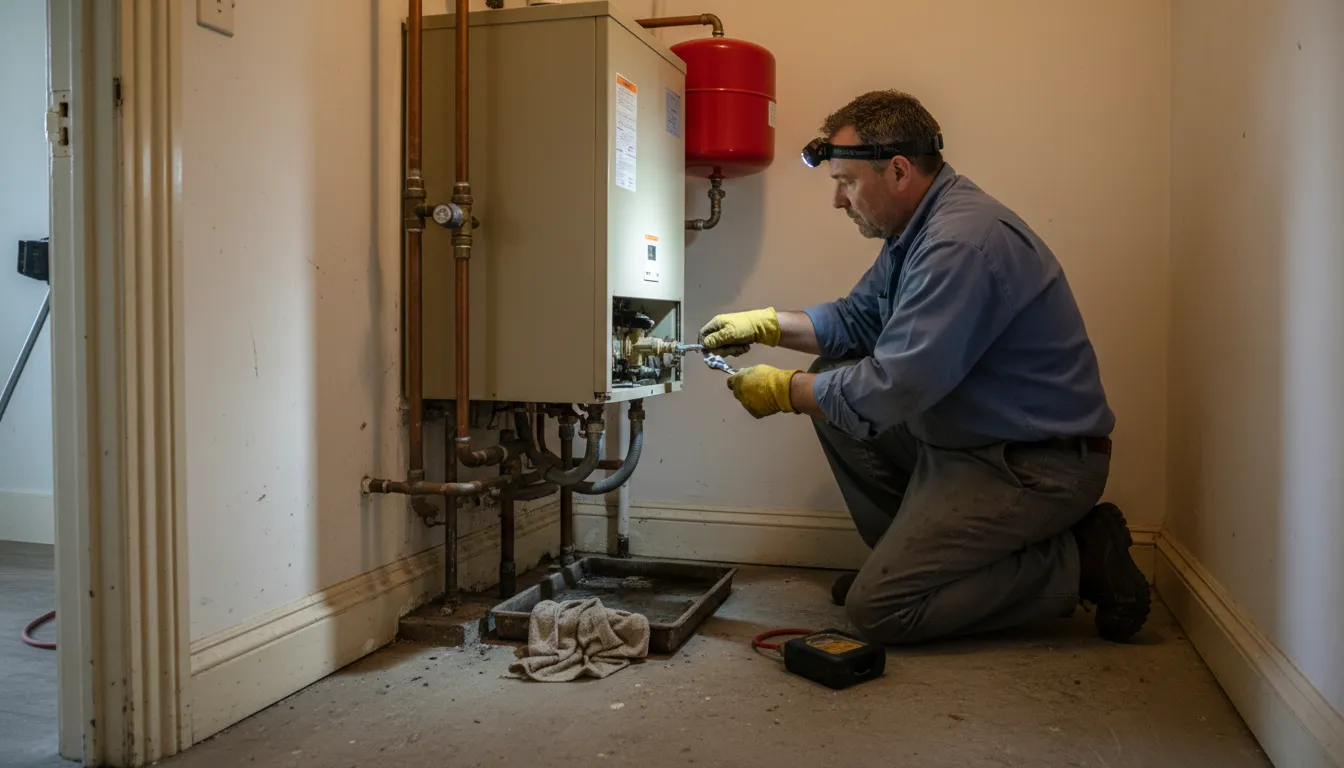
Find the Best Boiler Repair Contractors for Your Business
No obligation • Fast responses • Nationwide coverage

Why you can trust HVAC Firms
HVAC Firms is a leading United States resource for evaluating HVAC service providers. Our team researches companies, checks credentials, and reviews customer feedback to present clear, unbiased information. Listings and rankings are based on merit, and companies cannot pay to change our editorial content.
Search providers near you
Top Boiler Repair Contractors in Pleasanton, California Ranked
When your boiler stops working, it's more than an inconvenience-it's a disruption to your home's comfort and hot water supply. Boiler repair and maintenance services are essential for keeping your hydronic heating system running safely and efficiently, especially as systems age or face issues with components like pumps, valves, or heat exchangers. This guide is designed to help Pleasanton homeowners understand their boiler systems, recognize common problems, and make informed decisions about when to repair or replace. You can use the information here to identify local, qualified professionals who specialize in servicing the specific types of boilers common in our area.
Heating And Air Experts - Affordable HVAC Contractor in Fremont, California
4991 Seneca Park Loop, Fremont, CA 94538
Heating And Air Experts - Affordable HVAC Contractor in Fremont, California provides heating and cooling services in San Jose, CA. They handle installation and repair of air conditioners, furnaces, heat pumps, and boilers. Their work covers both new system setups and emergency repairs to maintain efficient and safe climate control throughout the year.

L.J. Kruse Company
920 Pardee St, Berkeley, CA 94710
L.J. Kruse Company is a family-owned plumbing, heating, and cooling business based in Berkeley, California, serving Oakland, CA, and the surrounding Northern California region. They offer a range of HVAC services including air conditioning, furnace, heat pump, and boiler repair and installation, as well as HVAC tune-ups. With over 100 years of experience, L.J. Kruse Company combines traditional values with skilled expertise to serve both residential and commercial clients across Alameda County, Contra Costa County, San Francisco, and Silicon Valley.
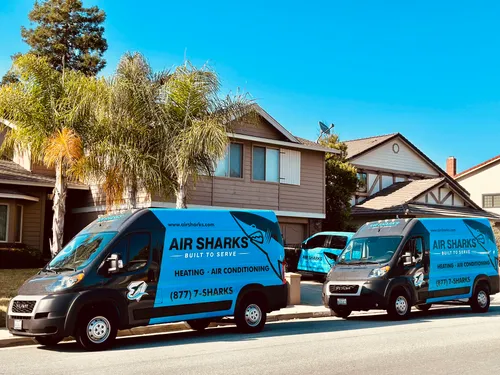
Air Sharks
1560 N 4th St #102, San Jose, CA 95112
Air Sharks is a licensed and insured HVAC company serving San Jose, CA, and nearby communities. They provide a full range of heating and cooling services including installation, repair, and maintenance for central and ductless air conditioning systems, furnaces, and boilers. Their expertise also covers ductwork cleaning, inspection, repair, and replacement to improve indoor air quality. The company emphasizes thorough inspections and offers detailed reports after service. Air Sharks has been serving the San Jose area for several years and employs background-checked and drug-tested technicians. They also provide emergency support and financing options to assist customers.
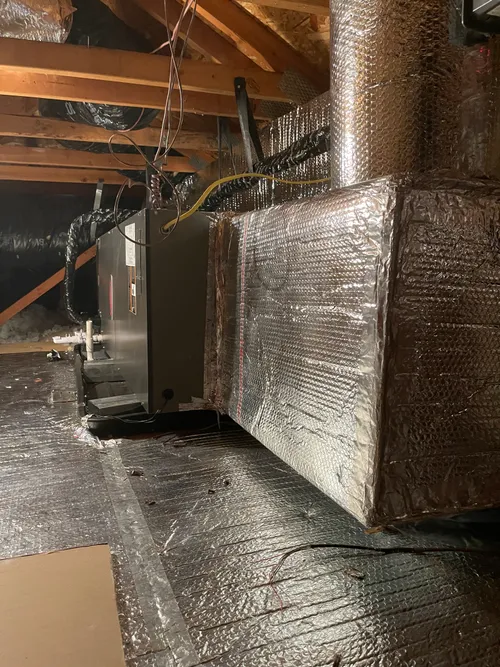
Aire Serv of Campbell and Saratoga
San Jose, CA
Aire Serv of Campbell and Saratoga provides heating, air conditioning, and indoor air quality services in San Jose, CA. They offer repair, installation, and maintenance for HVAC systems including furnaces, heat pumps, boilers, and air conditioners. Their services also include duct cleaning, thermostat installation, and air purification to improve indoor air quality. The company supports emergency HVAC repairs with 24/7 availability, ensuring comfort during unexpected breakdowns. Aire Serv is part of the Neighborly brand and serves residential and commercial customers in San Jose and nearby communities.
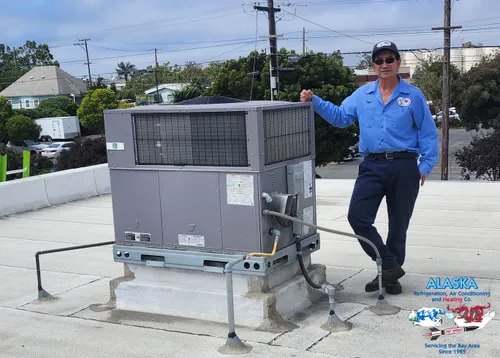
Alaska Refrigeration Air Conditioning & Heating Co
San Francisco, CA
Alaska Refrigeration Air Conditioning & Heating Co is a locally owned and operated company serving San Francisco, CA. They provide a wide range of services including commercial refrigeration, heating, air conditioning, ventilation, boilers, water heaters, and indoor air quality solutions. With over 40 years in the industry, they offer skilled technicians who handle repair, maintenance, and installation for both residential and commercial clients. The company is licensed, insured, and available 24/7 for emergency repairs, ensuring continuous support for their customers' HVAC and refrigeration needs.
Understanding Your Pleasanton Home's Boiler System
Unlike forced-air furnaces that blow heated air through ducts, boilers provide warmth by heating water or steam, which is then circulated through pipes to radiators, baseboard heaters, or in-floor radiant systems. This method, known as hydronic heating, is prized for its consistent, quiet, and draft-free warmth. In Pleasanton, the most common residential boiler types include:
- Standard Gas Boilers: These traditional systems heat water for distribution to baseboard radiators or radiant panels. They are typically powered by natural gas and come in cast iron or steel models, known for their durability 1.
- Combi Boilers (Combination Boilers): An increasingly popular choice, especially for homes with limited space. A combi boiler provides both space heating and on-demand domestic hot water from a single, compact unit, eliminating the need for a separate water storage tank 2.
- Systems for Radiant Floor Heating: This luxurious option involves a network of PEX tubing embedded in the floor. A boiler heats water that circulates through these tubes, providing exceptionally even and comfortable heat from the ground up.
The mild Tri-Valley climate is a key factor in system performance and choice. While our winters are moderate compared to other regions, meaning systems don't run at maximum capacity year-round, investing in a high-efficiency model can still lead to significant long-term energy savings on your PG&E bill.
Common Boiler Problems and Repair Solutions
A malfunctioning boiler can manifest in several ways. Recognizing the symptoms can help you communicate effectively with a technician.
- No Heat or Hot Water: This is the most obvious sign of trouble. Causes can range from a broken diaphragm or valve in a combi boiler, a failed circulator pump, low water pressure, or issues with the thermostat or electronic controls.
- Leaking or Dripping: Any sign of water around the boiler or pipes is a cause for immediate attention. Leaks can originate from corroded pipes, a faulty pressure valve, or a cracked internal component like a heat exchanger. While a small seal leak might be a simple fix, a major leak can cause water damage and indicate a need for replacement.
- Unusual Noises: Boilers should operate relatively quietly. Banging, whistling, or gurgling sounds (often called "kettling") are typically due to limescale or sludge buildup on the heat exchanger, trapped air in the system, or a failing pump.
- Pilot Light or Ignition Issues: For older boilers, a pilot light that frequently goes out can point to a faulty thermocouple. Modern boilers with electronic ignition may fail to start due to a problem with the ignition board, gas supply, or air pressure switch.
- Pressure Problems: Boilers have a pressure gauge, usually indicating between 1 and 1.5 bar when cold. Consistently low pressure often signals a leak in the system. Extremely high pressure, which triggers the pressure relief valve to discharge, can be dangerous and requires urgent professional diagnosis.
Repair costs in Pleasanton can vary widely based on the issue, from a few hundred dollars for replacing a valve or thermostat to over $1,000 for a new circulator pump or complex control board replacement.
Repair vs. Replacement: Making the Right Choice for Your Home
One of the most critical decisions homeowners face is whether to fix an existing boiler or invest in a new one. Here's a framework to help you decide, based on common industry guidance 3.
When Repair is Often the Best Path:
- The Boiler is Relatively New: If your unit is less than 10-15 years old, repairs are usually cost-effective.
- The Problem is Minor and Isolated: Issues like a single faulty valve, a minor leak from a seal, or a thermostat malfunction are typically repairable.
- You Plan to Sell Your Home Soon: A functional, repaired system may be sufficient for the short term without the upfront cost of a full replacement.
When Replacement May Be the Smarter Long-Term Investment:
- Age is a Factor: Most boilers have a lifespan of 15-20 years. If yours is approaching or has exceeded this age, components are more prone to failure, and efficiency has likely declined 4.
- Inefficiency is Costing You: Older boilers, especially non-condensing models, operate at much lower Annual Fuel Utilization Efficiency (AFUE). Upgrading to a modern high-efficiency condensing boiler can drastically reduce your natural gas consumption 5.
- Repair Costs are Mounting: A good rule of thumb is to consider replacement if the cost of a repair is more than 50% of the price of a new, high-efficiency unit, or if you're calling for repairs multiple times a season 6 7.
- You Want Improved Features and Reliability: New models offer better modulation, smarter controls (including Wi-Fi thermostats), quieter operation, and more consistent performance.
Find the perfect boiler repair contractors for your needs
Get personalized recommendations and expert advice
What to Expect with a Boiler Replacement in Pleasanton
If you decide to replace your boiler, understanding the process and costs will help you plan. A full replacement is more than just swapping an old box for a new one; it's a system upgrade.
The Replacement Process:
- Professional Assessment: A qualified technician will evaluate your home's heating load, existing piping and radiation (radiators/baseboards), venting requirements, and domestic hot water needs.
- System Selection: Based on the assessment, you'll discuss options. For many Pleasanton homes, a high-efficiency condensing combi boiler is an excellent choice due to its compact size and dual functionality. The technician will ensure any selected model complies with current California energy codes.
- Installation Day: The old unit is safely disconnected and removed. The new boiler is positioned, connected to gas, water, and electrical lines, and integrated with your heating distribution system and controls. Proper venting for condensing units is critical.
- Commissioning and Testing: The system is filled, purged of air, and fired up. The technician will check for leaks, verify proper operation, and set the controls for optimal efficiency.
Understanding Replacement Costs: The total investment for a new boiler system in Pleasanton depends on the unit type, capacity, brand, and complexity of the installation. For a standard swap-out with minimal piping changes, costs might start in the $5,000 range. However, for a high-efficiency combi boiler installation that includes updating some piping, adding a condensate pump, or integrating with a radiant floor system, total costs can range from $8,000 to $12,000 or more 8. It's important to get detailed, written estimates that break down equipment and labor.
Financial Incentives: Always ask your contractor about available rebates. Pacific Gas and Electric (PG&E) often offers rebates for upgrading to high-efficiency natural gas appliances, and there may be federal tax credits for energy-efficient home improvements that can help offset the initial cost.
Finding a Qualified Boiler Service Professional
Your boiler is a complex appliance that integrates plumbing, gas fitting, and electrical components. Choosing the right professional is paramount for safety and quality work.
- Licensing and Insurance: In California, a contractor must hold a valid CSLB license. For boiler work, this is often a C-20 (Warm-Air Heating, Ventilating and Air-Conditioning) license or a C-36 (Plumbing) license. Always verify the license is active and insured.
- Specialization and Experience: Look for companies that specifically list boiler service, hydronic heating, or radiant heat as core services. Experience with your specific boiler brand or system type (like radiant floors) is a plus.
- Local Reputation and Reviews: Check reviews on trusted platforms. In Pleasanton, homeowners have positively noted local HVAC and plumbing companies for their boiler expertise 9. Look for consistent praise regarding professionalism, clear communication, and fair pricing.
- Detailed Estimates and Warranties: A reputable pro will provide a thorough, written estimate that details the scope of work, parts to be used (including model numbers if replacing), labor costs, and timeline. They should also clearly explain the warranties on both parts and labor.
Maintaining Your Boiler for Longevity
Annual maintenance is the best way to prevent costly breakdowns, ensure safe operation, and maintain efficiency. A professional tune-up typically includes:
- Inspecting the heat exchanger for cracks or corrosion.
- Checking and cleaning the burner and combustion chamber.
- Testing all safety controls and the pressure relief valve.
- Flushing the system (if needed) to remove sludge and improve heat transfer.
- Checking water pressure and the expansion tank.
- Inspecting the venting system for blockages or damage.
Homeowners can also help by keeping the area around the boiler clear, monitoring the system pressure gauge, and listening for any new or unusual sounds.
Frequently asked questions
Sources
Footnotes
-
4 Different Types of Heating Systems | Martel Plumbing and Heating - https://www.martelplumbingri.com/blog/4-different-types-of-heating-systems/ ↩
-
What Are the Different Boilers Types? | BWS Plumbing, Heat & Air - https://bwsheatingandair.com/blog/what-are-the-different-types-of-boilers/ ↩
-
Boiler Repair vs Replacement Guide - Hahn Plumbing - https://hahnplumbing.com/is-it-better-to-repair-or-replace-a-broiler/ ↩
-
When to replace vs repair your boiler - https://yorkshireheatingrenewables.co.uk/advice/when-to-replace-vs-repair-your-boiler/ ↩
-
2025 Reference Appendices - California Energy Commission - https://www.energy.ca.gov/sites/default/files/2025-07/CEC-400-2025-010-AP.pdf ↩
-
Boiler Repair vs Replacement: How to Make the Right Choice - https://www.grossiservicesinc.com/boiler-repair-vs-replacement-how-to-make-the-right-choice ↩
-
Boiler Troubles? How to Tell If It's Time for Repair or Replacement - https://www.halcoenergy.com/about-us/blog/49647-boiler-troubles-how-to-tell-if-its-time-for-repair-or-replacement.html ↩
-
Hydronic Heating vs Forced-Air Heating: Complete 2025 Guide - https://dynamicheatandcool.ca/hydronic-heating-vs-forced-air-heating-complete-2025-guide/ ↩
-
Top 10 Best Boiler Repair in Pleasanton, CA - Yelp - https://m.yelp.com/search?find_desc=Boiler+Repair&find_loc=Pleasanton%2C+CA ↩