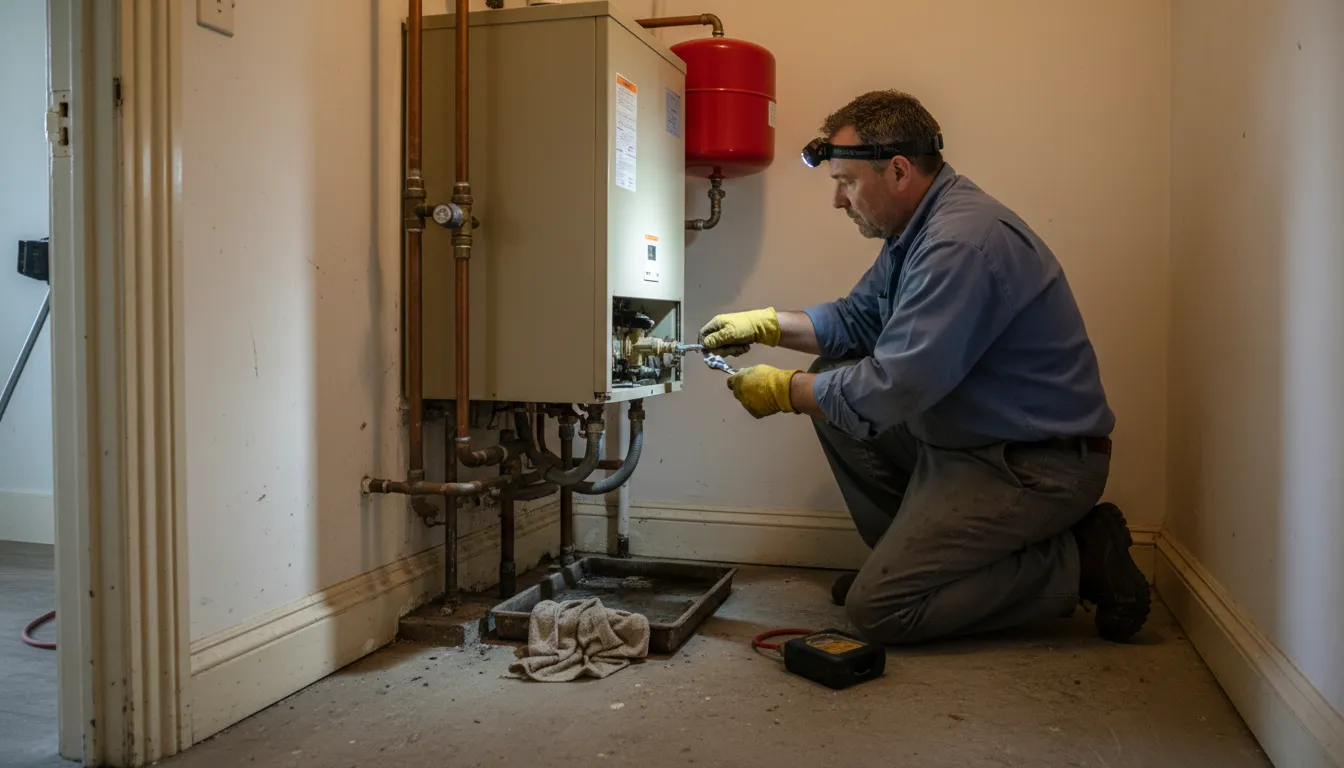
Find the Best Boiler Repair Contractors for Your Business
No obligation • Fast responses • Nationwide coverage

Why you can trust HVAC Firms
HVAC Firms is a leading United States resource for evaluating HVAC service providers. Our team researches companies, checks credentials, and reviews customer feedback to present clear, unbiased information. Listings and rankings are based on merit, and companies cannot pay to change our editorial content.
Search providers near you
Top Boiler Repair Contractors in Palo Alto, California Ranked
When your boiler isn't working, it can disrupt the comfort of your entire home. In Palo Alto's mild climate, a well-functioning hydronic heating system provides efficient, even warmth. This guide helps you understand your options for boiler service, from troubleshooting common repairs to navigating the decision of a full system upgrade, so you can find the right local expertise to restore your home's heat.
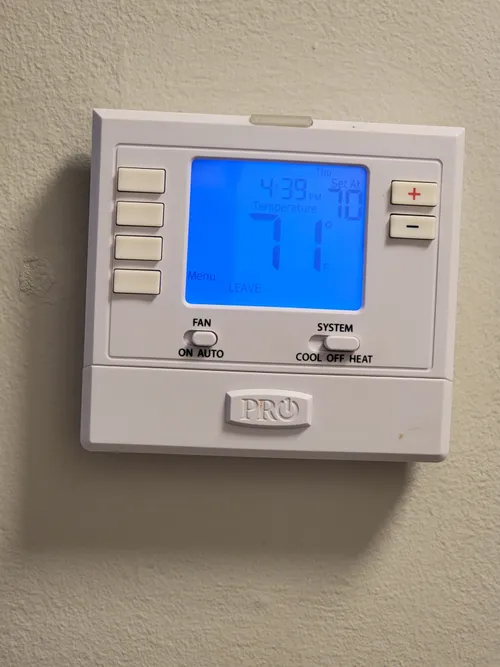
Heating And Air Experts - Affordable HVAC Contractor in Fremont, California
4991 Seneca Park Loop, Fremont, CA 94538
Heating And Air Experts - Affordable HVAC Contractor in Fremont, California provides heating and cooling services in San Jose, CA. They handle installation and repair of air conditioners, furnaces, heat pumps, and boilers. Their work covers both new system setups and emergency repairs to maintain efficient and safe climate control throughout the year.

L.J. Kruse Company
920 Pardee St, Berkeley, CA 94710
L.J. Kruse Company is a family-owned plumbing, heating, and cooling business based in Berkeley, California, serving Oakland, CA, and the surrounding Northern California region. They offer a range of HVAC services including air conditioning, furnace, heat pump, and boiler repair and installation, as well as HVAC tune-ups. With over 100 years of experience, L.J. Kruse Company combines traditional values with skilled expertise to serve both residential and commercial clients across Alameda County, Contra Costa County, San Francisco, and Silicon Valley.
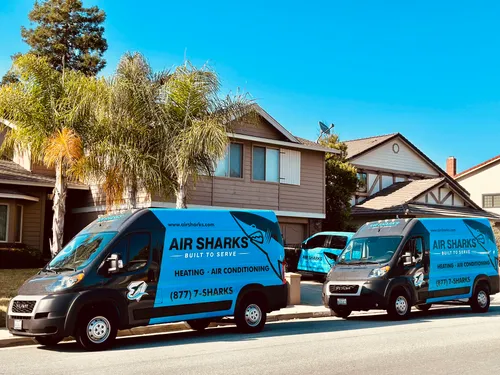
Air Sharks
1560 N 4th St #102, San Jose, CA 95112
Air Sharks is a licensed and insured HVAC company serving San Jose, CA, and nearby communities. They provide a full range of heating and cooling services including installation, repair, and maintenance for central and ductless air conditioning systems, furnaces, and boilers. Their expertise also covers ductwork cleaning, inspection, repair, and replacement to improve indoor air quality. The company emphasizes thorough inspections and offers detailed reports after service. Air Sharks has been serving the San Jose area for several years and employs background-checked and drug-tested technicians. They also provide emergency support and financing options to assist customers.
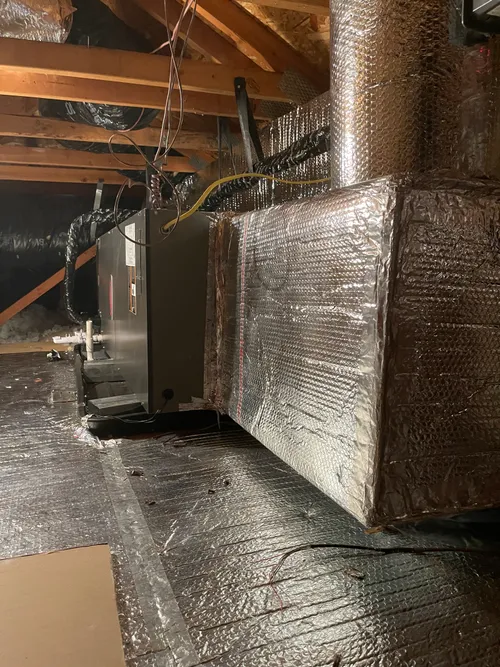
Aire Serv of Campbell and Saratoga
San Jose, CA
Aire Serv of Campbell and Saratoga provides heating, air conditioning, and indoor air quality services in San Jose, CA. They offer repair, installation, and maintenance for HVAC systems including furnaces, heat pumps, boilers, and air conditioners. Their services also include duct cleaning, thermostat installation, and air purification to improve indoor air quality. The company supports emergency HVAC repairs with 24/7 availability, ensuring comfort during unexpected breakdowns. Aire Serv is part of the Neighborly brand and serves residential and commercial customers in San Jose and nearby communities.
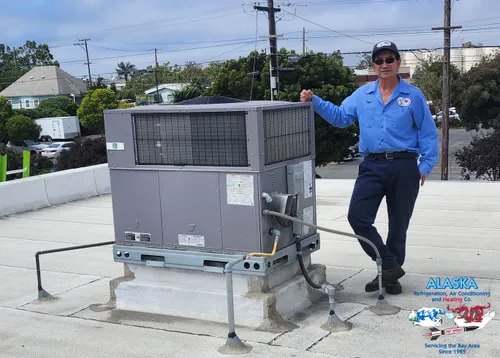
Alaska Refrigeration Air Conditioning & Heating Co
San Francisco, CA
Alaska Refrigeration Air Conditioning & Heating Co is a locally owned and operated company serving San Francisco, CA. They provide a wide range of services including commercial refrigeration, heating, air conditioning, ventilation, boilers, water heaters, and indoor air quality solutions. With over 40 years in the industry, they offer skilled technicians who handle repair, maintenance, and installation for both residential and commercial clients. The company is licensed, insured, and available 24/7 for emergency repairs, ensuring continuous support for their customers' HVAC and refrigeration needs.
Understanding Your Home Heating System in Palo Alto
Most homes in Palo Alto rely on one of a few primary heating system types. Knowing which one you have is the first step in addressing any repair needs.
- Hydronic (Hot Water) Systems: These systems use a boiler to heat water, which is then circulated through pipes to radiators, baseboard heaters, or in-floor tubing. This method is known for providing consistent, comfortable heat without the drafts associated with forced air.
- Forced-Air Systems (Furnaces): More common in many parts of the country, these systems heat air and distribute it through a network of ducts. While prevalent, they can be less efficient at distributing heat evenly compared to hydronic systems in certain applications. 1
- Heat Pumps and Ductless Mini-Splits: These are increasingly popular electric options that provide both heating and cooling. They are exceptionally efficient in Palo Alto's mild winters and are often considered during heating system upgrades or replacements.
Common Boiler Issues and Repairs
Even the most reliable boiler can experience problems. Here are some of the frequent issues that require professional boiler repair service in Palo Alto homes.
- Leaks and Dripping: Corrosion, failed seals, or high pressure can cause water to leak from the boiler, pressure relief valve, or associated piping. This requires immediate attention to prevent water damage and system inefficiency.
- Circulator Pump Failure: The pump that moves hot water through your radiators or baseboards can fail, leading to cold spots or a complete lack of heat. Symptoms include strange noises (humming, grinding) or a pump that feels hot but isn't moving water.
- Faulty Zone Valves: In systems with multiple heating zones (e.g., upstairs and downstairs controlled separately), electronic zone valves can stick open or closed, preventing heat from reaching certain areas of your home.
- Ignition or Pilot Light Problems: For gas-fired boilers, issues with the ignition system, thermocouple, or pilot light can prevent the boiler from firing up. This is a common repair that restores heat quickly.
- Pressure Problems: Boilers operate within a specific pressure range. A loss of pressure (often due to a leak) or excessively high pressure can trigger safety shut-offs or reduce heating performance.
The Climate Factor: Heating in a Mild Winter Region
Palo Alto's climate significantly influences heating system choices and repair decisions. Our mild winters mean systems are not typically subjected to extreme, prolonged stress, but efficiency becomes a paramount concern. The demand is for moderate, reliable warmth rather than brute-force heating capacity. This environment favors high-efficiency systems, including modern condensing boilers and electric heat pumps, which operate very effectively without the need for extreme output. When considering repairs or replacements, the local focus on sustainability and energy conservation is a key factor, often aligning with broader goals for reduced fossil fuel use.
Repair vs. Replacement: Making the Right Choice
A critical decision homeowners face is whether to repair an existing boiler or invest in a new heating system. Here's guidance to help you evaluate.
When Repair is Often the Best Path:
- Your boiler is relatively new (less than 10-15 years old) and has been reliable.
- The issue is isolated, like a single faulty zone valve, pump, or pressure relief valve.
- The repair cost is modest compared to the value and expected remaining life of the unit.
- The system's efficiency is still acceptable, and it meets your comfort needs.
When Replacement Should Be Considered:
- Your boiler is old (15+ years) and operating below 80% Annual Fuel Utilization Efficiency (AFUE).
- You are facing frequent, costly breakdowns-the "nickel and dime" effect.
- A major component like the heat exchanger fails, which is often a prohibitively expensive repair.
- You want to improve home comfort, increase efficiency significantly, or integrate modern controls.
- You are considering a switch from a fossil-fuel boiler to an electric heat pump to align with local sustainability goals and available incentives. 2
Replacing an old, inefficient boiler with a high-efficiency condensing model or a heat pump can offer substantial long-term savings on energy bills, often justifying the upfront investment. 3
Find the perfect boiler repair contractors for your needs
Get personalized recommendations and expert advice
Navigating Costs and Financial Incentives
The cost for boiler service in Palo Alto varies based on the job's complexity, the system type, and the parts required.
- Repair Costs: Common repairs like replacing a circulator pump or zone valve can range from a few hundred to over a thousand dollars, including parts and labor.
- Replacement Costs: Installing a new high-efficiency boiler typically ranges from $3,000 to $8,000 or more. Switching to a ducted or ductless heat pump system involves a higher initial investment, often between $8,000 and $15,000+, but provides both heating and cooling. 4
Important Financial Incentives: To offset these costs, several incentives are available:
- Federal Tax Credits: The IRS Energy Efficient Home Improvement Credit offers up to $2,000 per year for qualifying heat pump and biomass boiler installations. This can directly reduce your federal income tax liability. 5
- Local Rebates: Always check for current rebates from the City of Palo Alto, Bay Area air quality districts, or state programs like those from the CPUC, which may offer incentives for upgrading to high-efficiency heat pumps or other approved equipment. 6
- Title 24 Compliance: For major replacements in California, Title 24 energy codes apply. While this adds steps to the installation process, it ensures your new system meets state efficiency standards. Your contractor should handle this permitting and compliance process.
Planning a Boiler Installation or Major Upgrade
If you've decided on a replacement, proper planning ensures a smooth process and optimal results.
- Professional Assessment: Have a qualified technician evaluate your home's heating load, existing infrastructure (pipes, radiators, electrical), and your goals (efficiency, comfort, dual-fuel systems).
- System Selection: Based on the assessment, discuss options like condensing gas boilers, air-source heat pumps, or hybrid systems. In Palo Alto's climate, heat pumps are a compelling, efficient choice for all-electric homes. 7
- Permitting: Your contractor should pull the necessary building permits from the City of Palo Alto to ensure the installation meets all safety and energy codes (Title 24). 8
- Installation: A professional installation is critical for safety, efficiency, and warranty validation. This includes proper sizing, placement, venting, and integration with your home's distribution system.
- Post-Installation: Ensure you receive all warranty documentation, a walk-through of the new system's operation, and information on maintenance schedules.
Maintaining Your Boiler for Longevity
Regular maintenance is the best way to avoid unexpected breakdowns and extend the life of your heating system.
- Annual Professional Service: A yearly tune-up by a technician should include checking the heat exchanger, cleaning components, testing safety controls, verifying combustion efficiency, and inspecting the venting system.
- Monitor System Pressure: Keep an eye on the boiler's pressure gauge and add water if it drops below the recommended range (usually indicated on the unit).
- Bleed Radiators: If you have hot water radiators, bleeding them at the start of the heating season removes trapped air, ensuring quiet and efficient operation.
- Keep Areas Clear: Ensure the boiler and its vents have ample clearance for airflow and safety. Do not store items around the unit.
Frequently asked questions
Sources
Footnotes
-
4 Different Types of Heating Systems | Martel Plumbing and Heating - https://www.martelplumbingri.com/blog/4-different-types-of-heating-systems/ ↩
-
City of Palo Alto - https://www.cityofpaloalto.org/files/assets/public/agendas-minutes-reports/reports/city-manager-reports-cmrs/year-archive/2017/final-memo-agenda-item-number-11-sip.pdf ↩
-
Pros and Cons of Hydronic Heating | First Supply - https://www.firstsupply.com/Knowledge-Center/pros-and-cons-of-hydronic-heating ↩
-
Boiler Replacement Costs: Smart Budgeting and Planning Guide - https://www.tcmemt.com/post/the-cost-of-boiler-replacement-expert-guide-to-smart-budgeting-and-installation-planning ↩
-
Energy Efficient Home Improvement Credit | Internal Revenue Service - https://www.irs.gov/credits-deductions/energy-efficient-home-improvement-credit ↩
-
2025 Energy Efficiency Potential and Goals Study - Final - https://www.cpuc.ca.gov/-/media/cpuc-website/divisions/energy-division/documents/energy-efficiency/2025-potential-goals-study/2025-group-e-potential--goals-study-final-report-20250717.pdf ↩
-
Top 2 Proven Heating Equipment For Southern California Homes - https://socalclimatecontrol.com/furnaces-and-heat-pumps-southern-ca/ ↩
-
RESIDENTIAL WATER HEATER REPLACEMENT - https://www.paloalto.gov/files/assets/public/v/6/development-services/building-division/checklists/simplified/res-gas-water-heater-replace-3.pdf ↩