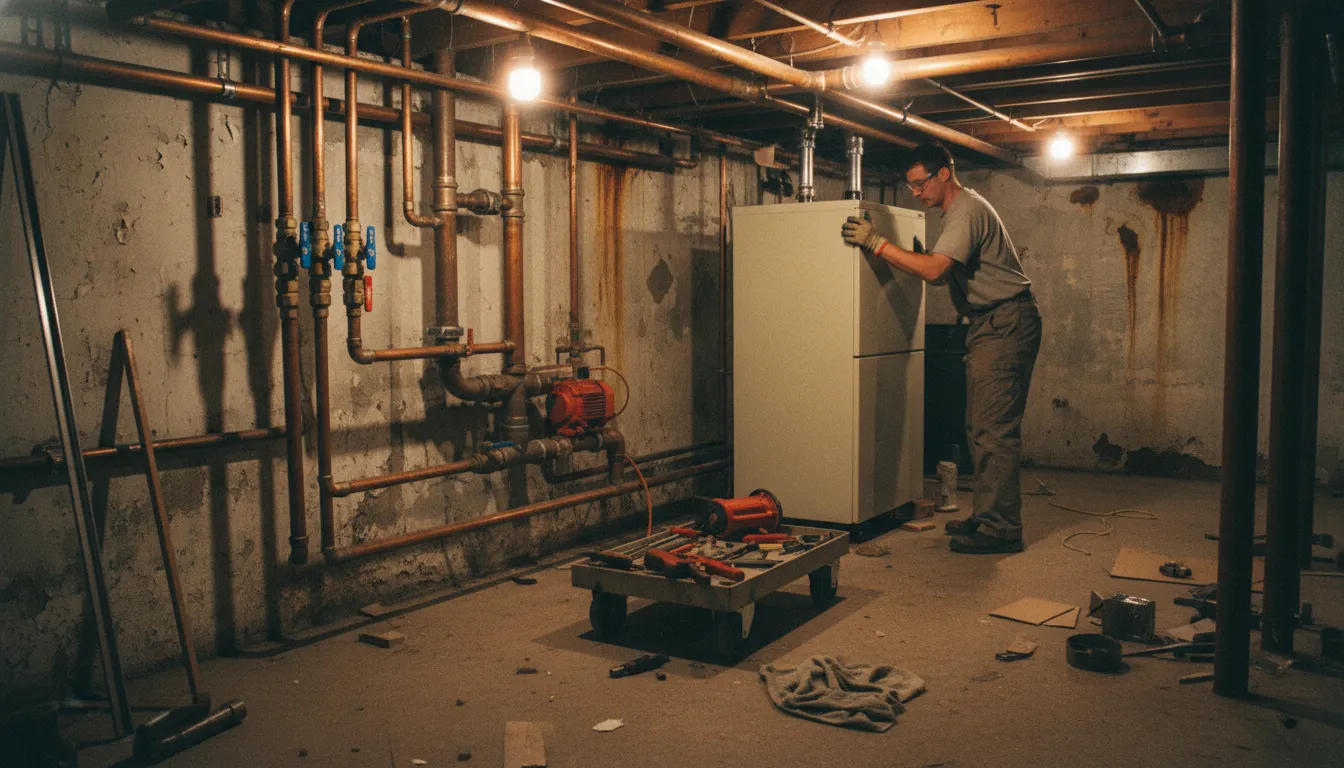
Find the Best Boiler Installation & Replacement Contractors for Your Business
No obligation • Fast responses • Nationwide coverage

Why you can trust HVAC Firms
HVAC Firms is a leading United States resource for evaluating HVAC service providers. Our team researches companies, checks credentials, and reviews customer feedback to present clear, unbiased information. Listings and rankings are based on merit, and companies cannot pay to change our editorial content.
Search providers near you
Best Boiler Installation & Replacement Contractors in Wisconsin Ranked
Installing or replacing a boiler is a significant home improvement decision that directly impacts your comfort, energy bills, and safety. In Wisconsin's climate, a reliable, efficient heating system is essential. This guide provides clear, practical information on the process, costs, and regulations for boiler projects in the state. You can use this resource to understand your options, ask the right questions, and connect with qualified local professionals to ensure a successful installation.
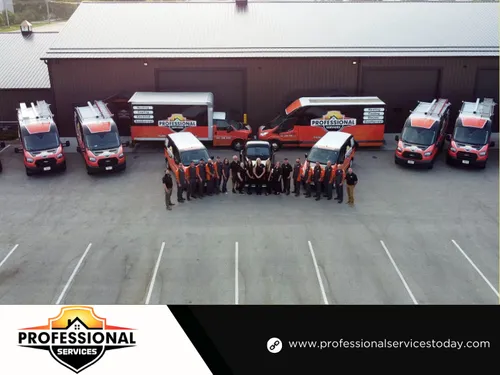
Professional Services Heating, AC & Electric Repair
113 Riverview Dr, Thiensville, WI 53092
Professional Services Heating, AC & Electric Repair is an HVAC company serving Milwaukee, WI, and the surrounding Ozaukee and Washington counties. They provide a range of heating and cooling services including furnace, heat pump, boiler, and geothermal system repair and installation. The company is equipped to handle both standard and high-efficiency furnaces, as well as ductless split systems. They emphasize practical advice and offer warranties on parts and labor. Professional Services also offers 24/7 emergency service to address urgent heating and cooling needs.
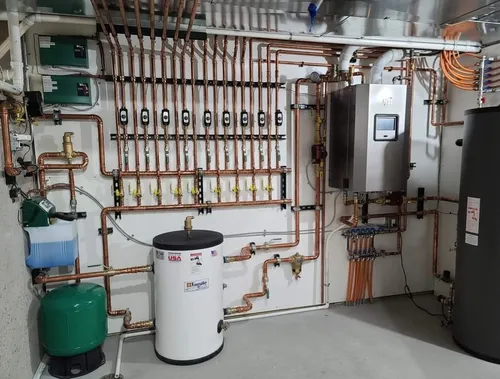
HoneyCreek Heating, Cooling & Electric, LLC
N63W22633 Main St Ste. 107, Sussex, WI 53089
HoneyCreek Heating, Cooling & Electric, LLC is a full-service HVAC and electrical company serving Milwaukee, WI, and the surrounding areas. They provide repair, installation, and maintenance for heating and cooling systems including furnaces, air conditioners, boilers, heat pumps, and thermostats. Their licensed electricians also handle electrical panel upgrades, wiring repairs, and ceiling fan installations. HoneyCreek offers 24/7 emergency service and covers a broad range of locations in Southeastern Wisconsin. Their technicians are experienced with many HVAC brands and emphasize safety and clear communication throughout their work.
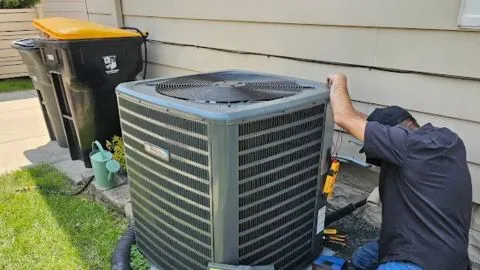
Absolute Comfort HVAC LLC
W220N1560 Jericho Ct, Waukesha, WI 53186
Absolute Comfort HVAC LLC provides heating, cooling, and ventilation services in Milwaukee, WI. They offer maintenance, repair, and installation for air conditioners, furnaces, boilers, mini splits, and indoor air quality systems. The company serves residential, commercial, light commercial, and new construction clients across multiple nearby communities. Their capabilities include HVAC tune-ups and installation of inverter and rooftop units. Absolute Comfort HVAC LLC covers a wide service area including Waterford, Waukesha, Brookfield, and surrounding locations.
Heating and Cooling Drs of Brookfield and Wauwatosa LLC
2511 N 124th St Suite 204, Brookfield, WI 53005
Heating and Cooling Drs of Brookfield and Wauwatosa LLC is an HVAC company serving Milwaukee, WI, and the surrounding southeastern Wisconsin area. They provide a range of services including furnace, boiler, and central air repair, installation, and maintenance. The company offers 24/7 emergency service and handles all brands of equipment. With over 20 years in business, they operate three offices across Milwaukee and Waukesha counties, ensuring experienced technicians are available for every call. Their services also include thermostat installation, air filter replacement, and ductwork installation.
Roman Home Services - Electric, Plumbing, Heating & Cooling
2220 S 114th St, West Allis, WI 53227
Roman Home Services - Electric, Plumbing, Heating & Cooling is a family-owned home service contractor based in Milwaukee, WI. Serving Southeastern Wisconsin since 1929, they provide a wide range of residential electrical, plumbing, and HVAC services including installation, repair, and maintenance of air conditioning, furnaces, heat pumps, and boilers. Their team is equipped to handle projects of all sizes, from new construction to remodeling and service upgrades. Roman Home Services offers 24/7 availability with over 50 service trucks on the road, ensuring timely support whenever needed.
Understanding Wisconsin's Boiler Rules and Regulations
Before any work begins, it's crucial to understand the regulatory landscape. In Wisconsin, boiler installations are primarily overseen by the Department of Safety and Professional Services (DSPS). While some small residential units may be exempt, most boiler installations require state registration with the DSPS before they can be operated. This means your installer will typically need to pull a permit, and the installation must be inspected to ensure it meets code.
The installation must adhere to strict standards, including the International Mechanical Code (IMC) and American Society of Mechanical Engineers (ASME) standards 1. Key safety requirements include proper installation of pressure relief valves with correct discharge piping (requiring an air break and no trapped sections) and ensuring the boiler room has adequate lighting, clear access, and is isolated from drafts 2 3 4. Furthermore, Wisconsin code mandates the installation of carbon monoxide (CO) detectors in homes with fuel-fired appliances like boilers.
The Importance of Professional Sizing and Installation
One of the most critical steps is correctly sizing your new boiler. An oversized unit will short-cycle, reducing efficiency and comfort, while an undersized one will struggle to heat your home. Professionals use industry-standard calculations like the ACCA Manual J to determine the precise heating load of your home, considering factors like insulation, window quality, and floor plan. For replacement projects, they also evaluate the condition of the existing distribution system (pipes, radiators, or baseboards).
Proper installation goes beyond just connecting pipes. It involves ensuring correct venting for exhaust gases, integrating with your domestic hot water system if it's a combi-boiler, and setting up controls for optimal performance. Always hire a licensed HVAC professional. While the state does not require a specific boiler operator license for residential installations, local municipalities may have their own licensing requirements for installers, and using a licensed professional is the best way to guarantee code compliance and safety 5.
Types of Boilers Common in Wisconsin
Wisconsin homeowners have several options, each with pros and cons tied to fuel availability and efficiency.
- High-Efficiency Condensing Boilers: For gas or oil systems, modern condensing boilers are the efficiency leaders. They capture heat from exhaust gases that would otherwise be lost, achieving Annual Fuel Utilization Efficiency (AFUE) ratings of 90% or higher. These are a common and recommended choice for replacements 6 7.
- Standard Efficiency Boilers: These non-condensing models are typically less expensive upfront but operate at lower efficiencies (usually 80-85% AFUE). They may be suitable for certain replacement situations where venting constraints exist.
- Wood-Fired Boilers: Outdoor wood boilers (OWBs) are used in some rural areas. It's important to note that any new wood boiler installed must meet stringent U.S. Environmental Protection Agency (EPA) emission standards to burn cleanly and efficiently. The Wisconsin DNR provides specific guidelines on their proper use and installation.
Navigating Replacements vs. New Construction
The rules differ slightly depending on whether you're replacing an existing boiler or installing one in new construction. For replacements in existing homes, Wisconsin Administrative Code SPS 322.52 allows the new boiler to meet current federal appliance efficiency standards if the existing distribution system is specifically tested and meets airtightness requirements. This can sometimes provide flexibility in certain retrofit situations.
For new construction or when completely replacing the heating system, the installation must fully comply with all current state and national codes for efficiency, safety, and venting. This ensures the system is optimized for the home from the start.
Cost Breakdown for Boiler Installation
Understanding the costs helps in budgeting. The total price is influenced by the unit type, labor, and complexity.
- Boiler Unit Cost: The price of the boiler itself varies widely by fuel type (gas, oil, propane, wood), efficiency rating, and capacity (BTUs). High-efficiency condensing models command a premium over standard units.
- Labor Costs: Professional installation is not a place to cut corners. Labor typically ranges from $1,000 to $2,500 for complex jobs, with installers often charging between $75 and $150 per hour. A standard replacement might take 6-10 hours of skilled labor.
- Additional Components & Complexity: Costs can increase if the job requires new venting, upgraded gas lines, electrical work, moving the boiler location, or integrating complex zoning controls. Permits and inspection fees are also a factor.
- Total Installed Cost: For a full boiler replacement in Wisconsin, homeowners can expect a total installed cost starting around $3,000 for a straightforward, standard-efficiency swap, and ranging up to $10,000 or more for a high-end, high-efficiency unit with complex installation requirements 8 9 10. The Wisconsin DNR notes that outdoor wood boilers can also represent a significant investment 11.
Find the perfect boiler installation & replacement contractors for your needs
Get personalized recommendations and expert advice
Key Safety Considerations
Safety is paramount when dealing with fuel-burning appliances. Beyond the code requirements, consider these points:
- Carbon Monoxide Detectors: Wisconsin law requires CO alarms on every level of a home, including the basement, and within 10 feet of each bedroom door. Ensure these are installed and tested regularly.
- Clearances: Maintain proper clearances around the boiler for combustion air, service access, and to prevent fire hazards from nearby combustible materials. Your installer will follow manufacturer and code specifications.
- Water Pressure & Temperature Controls: The boiler's controls must be properly set to prevent excessive pressure or dangerously high water temperatures, especially in systems that also provide domestic hot water.
- Annual Maintenance: After installation, schedule annual maintenance with a qualified technician. This includes checking the heat exchanger, burners, controls, and safety devices to ensure safe and efficient operation for years to come.
The Installation Process: What to Expect
A professional installation typically follows these steps:
- Consultation & Load Calculation: A technician assesses your home, discusses your needs, and performs a Manual J calculation.
- System Design & Proposal: They recommend a specific boiler model and layout, providing a detailed written estimate.
- Permitting: The contractor obtains the necessary local and state permits.
- Preparation & Removal: The old boiler is safely disconnected and removed. The new location is prepared.
- Installation: The new boiler is set, connected to fuel, water, electrical, and venting systems. Controls and safety devices are installed.
- Testing & Commissioning: The system is filled, purged of air, fired up, and tested for proper operation, safety, and efficiency.
- Inspection: A municipal or state inspector verifies the installation meets code.
- Customer Orientation: The installer explains the system operation, basic troubleshooting, and maintenance schedule to the homeowner.
Frequently asked questions
Sources
Footnotes
-
Chapter 10 Boilers, Water Heaters and Pressure Vessels - International Mechanical Code (Wisconsin) - https://up.codes/viewer/wisconsin/imc-2021/chapter/10/boilers-water-heaters-and-pressure-vessels ↩
-
SPS 341.30(1)(a) - Wisconsin Legislative Documents - https://docs.legis.wisconsin.gov/document/administrativecode/SPS%20341.30%281%29%28a%29 ↩
-
SPS 341.18 - Wisconsin Legislative Documents - https://docs.legis.wisconsin.gov/document/administrativecode/sps%20341.18 ↩
-
FAQPermitToOperate.pdf - DSPS - Wisconsin.gov - https://dsps.wi.gov/Documents/Programs/Boilers/FAQPermitToOperate.pdf ↩
-
Boiler Operators/Licensing FAQs - DSPS - Wisconsin.gov - https://dsps.wi.gov/Documents/Programs/Boilers/FAQOperatorsLicensing.pdf ↩
-
Chapter 3: Heating System Measures - Wisconsin Weatherization Manual - https://energyandhousing.wi.gov/Documents/Weatherization/Chapter%203%20-%20Heating%20Systems%20Measures.pdf ↩
-
SPS 322.52 - Wisconsin Legislative Documents - https://docs.legis.wisconsin.gov/document/administrativecode/SPS%20322.52 ↩
-
Boiler Replacement Costs: Smart Budgeting and Planning ... - Tri County Mechanical - https://www.tcmemt.com/post/the-cost-of-boiler-replacement-expert-guide-to-smart-budgeting-and-installation-planning ↩
-
Boiler Installation & Replacement in Milwaukee, WI - Capital HVAC - https://www.capitalhvac.com/boilers/ ↩
-
A Guide to Boiler Replacement Costs - HVAC.com - https://www.hvac.com/expert-advice/boiler-replacement-costs/ ↩
-
Outdoor wood boilers - Wisconsin DNR - https://dnr.wisconsin.gov/topic/OpenBurning/Boilers.html ↩