Find the Best Boiler Installation & Replacement Contractors for Your Business
No obligation • Fast responses • Nationwide coverage

Why you can trust HVAC Firms
HVAC Firms is a leading United States resource for evaluating HVAC service providers. Our team researches companies, checks credentials, and reviews customer feedback to present clear, unbiased information. Listings and rankings are based on merit, and companies cannot pay to change our editorial content.
Search providers near you
Best Boiler Installation & Replacement Contractors in Nevada Ranked
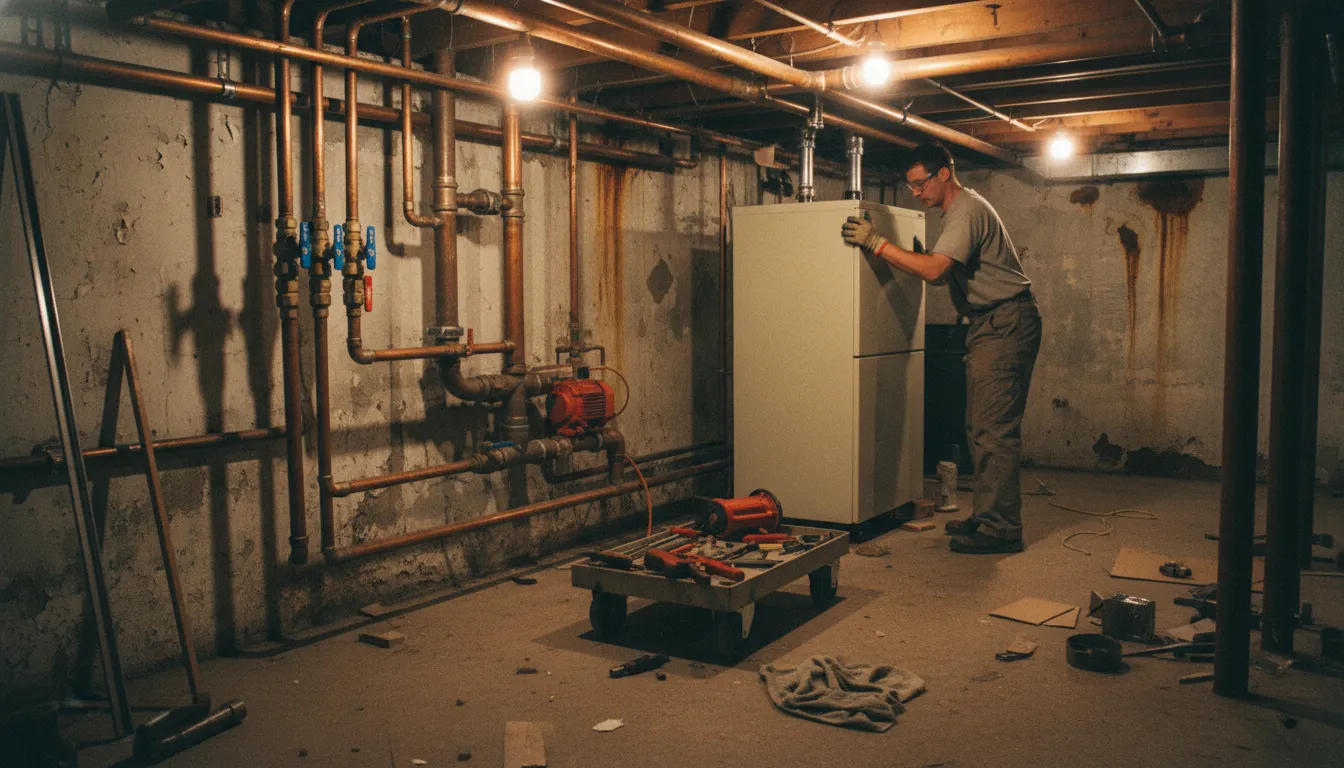
A new boiler is a significant investment in your home's comfort, safety, and energy efficiency. In Nevada's climate, where winters can be cold and energy costs are a concern, a properly installed, high-efficiency boiler system is essential for reliable heat and hot water. This guide provides a detailed overview of the process, costs, and critical state and local regulations to help you navigate your boiler installation or replacement project and connect with qualified local professionals.
DeHart Plumbing, Heating, and Air Inc.
1842 Hymer Ave, Sparks, NV 89431
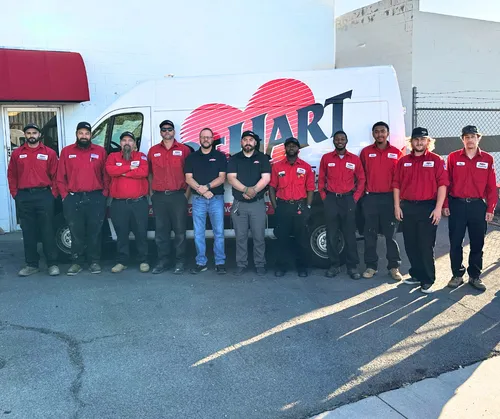
DeHart Plumbing, Heating, and Air Inc. is an HVAC and plumbing contractor serving Reno, NV, as well as the Central Valley and Modesto, CA. They offer a range of services including air conditioning, furnace, heat pump, and boiler repair and installation, along with HVAC tune-up services. Established in 1946, DeHart has a long history of providing heating and cooling solutions with NATE-certified technicians and offers an industry-leading 10-year parts and labor warranty. Their Love Club maintenance program includes biannual HVAC tune-ups and plumbing inspections, supporting ongoing home comfort and efficiency.
Express Home Services
4050 Schiff Dr, Las Vegas, NV 89103
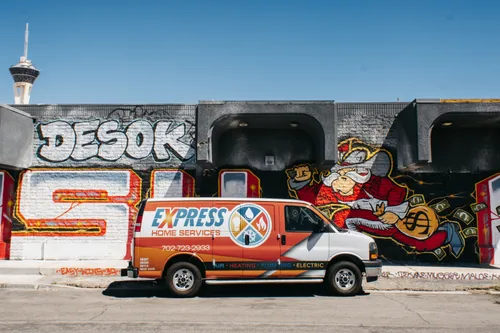
Express Home Services is a licensed HVAC, plumbing, and electrical company serving Las Vegas, NV, and surrounding areas. They provide repair, replacement, and maintenance for heating and cooling systems, including air conditioners, furnaces, heat pumps, and boilers. Their technicians also handle plumbing and electrical work, ensuring safe and code-compliant installations and repairs. The company operates in both Nevada and Utah, with dedicated teams in Las Vegas and Bountiful. Express Home Services offers flexible financing options and a membership program for ongoing maintenance and savings.
Lund Mechanical
Reno, NV
Lund Mechanical is an HVAC company based in Reno, NV, offering residential and commercial heating and cooling services. They provide repair, installation, and maintenance for air conditioners, furnaces, heat pumps, boilers, mini split systems, and geothermal heating solutions. The company emphasizes honest service without unnecessary upselling and has experience working with complex systems like Variable Refrigerant Flow (VRF) and combination boilers. Founded by Brian Lund, who has deep local roots and years of experience, Lund Mechanical is committed to clear communication and practical solutions for home comfort needs.
RW Mechanical Inc.
3111 S Valley View Blvd I 103, Las Vegas, NV 89102
RW Mechanical Inc. is a family-owned HVAC company based in Las Vegas, NV, providing residential and commercial heating and cooling services. They offer installation, repair, maintenance, and consultation for systems including air conditioners, furnaces, heat pumps, and boilers. The company emphasizes using high-quality materials and certified professionals to ensure reliable system performance. RW Mechanical Inc. operates a 24/7 emergency hotline to address urgent HVAC needs promptly.
USA Plumbing & Air
3859 S Valley View Blvd Unit 10, Las Vegas, NV 89103
USA Plumbing & Air is a plumbing and HVAC company serving North Las Vegas, NV. They provide a wide range of services including repair, installation, and maintenance for air conditioning, furnaces, heat pumps, boilers, and plumbing systems. The company offers expert repairs and professional installations designed to improve efficiency and comfort. With over 10 years of experience, USA Plumbing & Air emphasizes precision work and customer satisfaction to ensure systems are functional and reliable year-round.
Understanding Nevada's Boiler Codes and Permit Requirements
Installing or replacing a boiler in Nevada is not a simple DIY project; it is governed by a strict set of state and local codes designed to ensure safety, efficiency, and reliability. Compliance is mandatory and typically verified through a permitting and inspection process.
Permits are required for the installation or alteration of any boiler system 1. Homeowners can pull permits for work on their primary residence, but if the property is a rental, a licensed contractor must obtain the permit 1. The permitting process ensures your installation will be reviewed for code compliance before it is put into use.
Nevada primarily adopts and enforces two key model codes for residential boiler work:
- 2024 International Energy Conservation Code (IECC): This code sets the minimum energy efficiency standards for new installations 2. Its primary goal is to reduce energy consumption, which directly impacts your utility bills.
- International Residential Code (IRC): This comprehensive code covers the mechanical installation, venting, safety devices, and location requirements for boilers and water heaters.
Furthermore, installers must follow all manufacturer instructions for the specific boiler model being installed. These instructions are considered part of the code compliance and cover critical details like clearances, wiring, and piping that are unique to the equipment 3.
Key Installation and Safety Standards
Adherence to specific installation standards is non-negotiable for safety and performance. Key requirements include:
- Combustion Air: Fuel-burning boilers require a dedicated source of combustion air. Codes specify precise requirements for where this air comes from to prevent dangerous backdrafting of exhaust gases like carbon monoxide into the home. In many modern, tightly-sealed Nevada homes, this often necessitates a direct-vent or sealed-combustion system that pulls air directly from outside.
- Temperature & Pressure (T&P) Relief Valve: This critical safety device must be installed on the boiler and piped to within 6 inches of a floor drain or to the exterior. This ensures that if pressure or temperature becomes dangerously high, scalding water and steam are safely discharged.
- Seismic Restraints: In seismic zones like Las Vegas and much of Nevada, boilers and water heaters must be anchored or strapped to resist movement during an earthquake. Local amendments to the IRC provide specific bracing requirements 4.
- ASME Standards: The boiler vessel itself must be constructed and labeled to meet the standards of the American Society of Mechanical Engineers (ASME), and upon installation, it must be registered with the National Board 5.
Efficiency Requirements: Investing in High-Performance Equipment
Nevada's energy codes strongly incentivize the installation of high-efficiency boilers. For gas-fired boilers, the code mandates a minimum 90% Thermal Efficiency (Et) 6. In practice, this means most new installations will be condensing boilers, which can achieve Annual Fuel Utilization Efficiency (AFUE) ratings of 95% or higher.
While these high-efficiency models have a higher upfront cost, they capture significantly more heat from the combustion gases, wasting less fuel and saving you money on your natural gas bills for the life of the unit. This is a crucial consideration given Nevada's energy costs.
Critical Planning Factors for Your Project
Successful boiler installation hinges on more than just buying a unit. Several planning factors directly impact cost, efficiency, and satisfaction.
- Correct Sizing: This is the most critical step. An oversized boiler will "short cycle"-turn on and off frequently-leading to wear, inefficiency, and uneven heating. An undersized boiler will struggle to meet demand, leaving your home cold. A professional should perform a Manual J heat load calculation, which considers your home's square footage, insulation, window quality, and local climate 7.
- Fuel Type: Most Nevada boilers are natural gas. If you're converting from an oil or electric system, you must factor in the substantial additional cost of running a new gas line to the boiler location, which requires coordination with your gas utility 8.
- Location and Access: The boiler must be installed in a location that allows for proper clearances for service and combustion air, typically a mechanical room, garage, or basement. Ease of access for installation and future maintenance is a key cost factor 9.
Find the perfect boiler installation & replacement contractors for your needs
Get personalized recommendations and expert advice
Understanding Boiler Replacement Costs in Nevada
The total cost of a boiler replacement in Nevada is influenced by equipment choice, labor, and ancillary costs. Strategic timing can also lead to savings.
Equipment Costs: The boiler unit itself is the largest variable.
- Standard-Efficiency Models: Start around $3,500 for the unit and basic installation, but may not meet current Nevada efficiency codes for new installations 10.
- High-Efficiency Condensing Boilers: The standard for new installs, these range from $6,000 to $8,500 or more for a full system replacement. The price reflects advanced technology, higher AFUE ratings (90%+), and often includes necessary upgrades to venting (using PVC pipe instead of metal) 11.
Installation and Ancillary Costs:
- Labor: Professional installation typically costs between $1,500 and $2,500, depending on the job's complexity, location, and any required system modifications.
- Permits: Plan for $50 to $200 for the required city or county building permit.
- Old Unit Removal: Disposing of the old boiler, which is heavy and may contain hazardous materials, can cost $500 to $1,000 12.
- Additional Work: Replacing ancillary components like circulator pumps, zone valves, or upgrading the flue/venting system will add to the total.
Strategic Timing: Like most HVAC work, boiler replacement is subject to seasonal demand. Scheduling your installation or replacement in the spring or fall-outside of peak heating season-can sometimes result in lower costs and greater scheduling flexibility compared to an emergency winter replacement.
The Importance of Professional Installation
Given the complex interplay of codes, safety requirements, and mechanical systems, professional installation is not just recommended-it's a practical necessity. A licensed, insured HVAC contractor with specific boiler experience will:
- Ensure code compliance for permits and inspections.
- Correctly size and select the right equipment for your home.
- Perform the installation to manufacturer specifications, preserving warranties.
- Address critical safety requirements like combustion air, seismic bracing, and T&P valve drainage.
- Optimize the system for maximum efficiency and longevity.
Frequently asked questions
Sources
Footnotes
-
Nev. Admin. Code § 455C.182 - Requirements for installation or alteration | State Regulations - https://www.law.cornell.edu/regulations/nevada/NAC-455C-182 ↩ ↩2
-
Chapter 4 [RE] Residential Energy Efficiency - UpCodes - https://up.codes/viewer/nevada/iecc-2024/chapter/RE_4/re-residential-energy-efficiency ↩
-
Chapter 11 [RE] Energy Efficiency: Nevada PW Residential Code 2024 - https://up.codes/viewer/nevada/irc-2024/chapter/11/re-energy-efficiency ↩
-
RESIDENTIAL WATER HEAT INSTALLATION REQUIREMENTS - https://files.lasvegasnevada.gov/planning/Residential-Water-Heater-Installation-Requirements.pdf ↩
-
Chapter 20 Boilers and Water Heaters - UpCodes - https://up.codes/viewer/nevada/irc-2012/chapter/20/boilers-and-water-heaters ↩
-
Boiler Efficiency - UpCodes - https://up.codes/s/boiler-efficiency ↩
-
Guide to Installing a New Boiler System - Aspen Creek HVAC - https://www.aspencreekhc.com/guide-to-installing-a-new-boiler-system/ ↩
-
Nevada State Public Works Division Adopted Standards - https://publicworks.nv.gov/uploadedFiles/publicworksnvgov/content/Documents/SPWB/adopted_standards_%281-1-14%29.pdf ↩
-
Chapter 20 Boilers and Water Heaters - UpCodes - https://up.codes/viewer/nevada/irc-2018/chapter/20/boilers-and-water-heaters ↩
-
Boiler Replacement Cost and Price - Carrier - https://www.carrier.com/residential/en/us/products/boilers/cost-buying-boiler-replacement/ ↩
-
Boiler Replacement ROI - Skaggs-Walsh - https://skaggswalsh.com/boiler-replacement-roi-sw/ ↩
-
Boiler Replacement Costs: Smart Budgeting and Planning ... - https://www.tcmemt.com/post/the-cost-of-boiler-replacement-expert-guide-to-smart-budgeting-and-installation-planning ↩