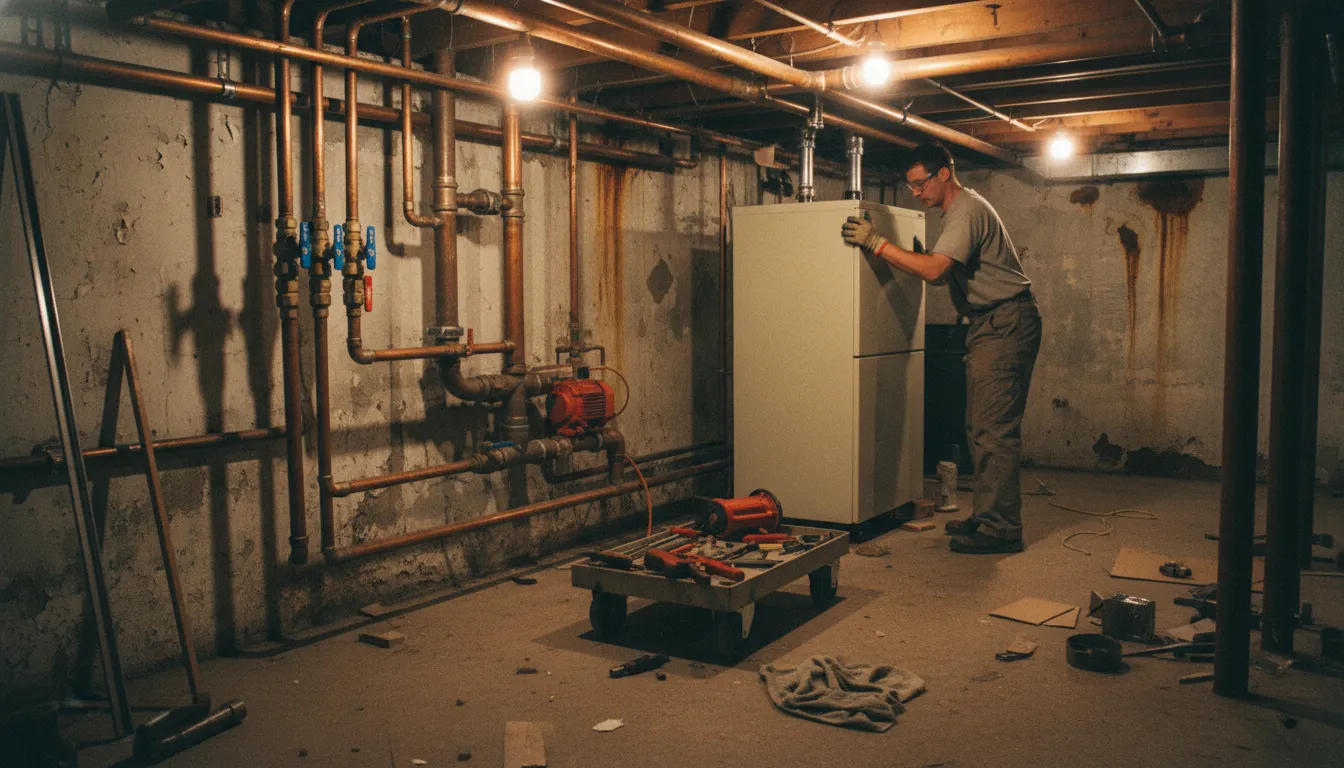
Find the Best Boiler Installation & Replacement Contractors for Your Business
No obligation • Fast responses • Nationwide coverage

Why you can trust HVAC Firms
HVAC Firms is a leading United States resource for evaluating HVAC service providers. Our team researches companies, checks credentials, and reviews customer feedback to present clear, unbiased information. Listings and rankings are based on merit, and companies cannot pay to change our editorial content.
Search providers near you
Best Boiler Installation & Replacement Contractors in New Jersey Ranked
Replacing or installing a new boiler is a significant home improvement project that directly impacts your comfort, safety, and energy bills. In New Jersey, this process is governed by specific state and local codes designed to ensure efficiency and safety. This guide explains the key regulations, costs, and steps involved in a New Jersey boiler installation or replacement, helping you navigate the process and connect with qualified local professionals who understand these requirements.
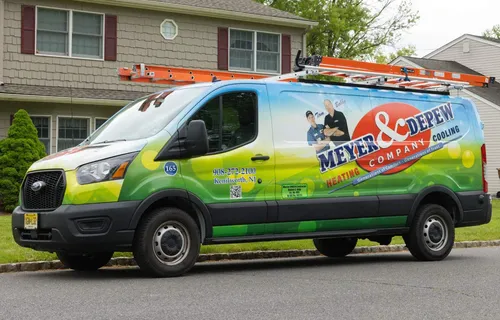
Meyer & Depew Co., Inc.
309 Lafayette Ave, Kenilworth, NJ 07033
Meyer & Depew Co., Inc. is an HVAC company serving Newark, NJ, specializing in air conditioning, furnace, and boiler installation, repair, and maintenance. They offer services including central AC installation, heating system tune-ups, and ductless mini split system installations. The company provides 24/7 availability for heating and air conditioning repairs and maintenance. Their technicians are licensed and experienced in handling high-efficiency heating and cooling systems, including Energy Star® boilers and furnaces. Meyer & Depew has a strong presence in central and northern New Jersey and is known for its preventative maintenance plans and technical expertise.
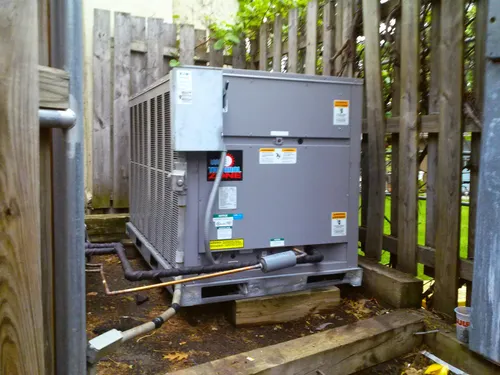
Airtek Mechanical Heating & Cooling LLC
400 Valley Brook Ave, Lyndhurst, NJ 07071
Airtek Mechanical Heating & Cooling LLC is an HVAC contractor based in Newark, NJ, providing residential and commercial heating, cooling, and refrigeration services. They offer repairs, installations, and maintenance for air conditioning, furnaces, boilers, and ductless mini-split systems. Their capabilities include 24-hour emergency HVAC repairs and servicing a variety of unit types such as rooftop package units and wall air conditioners. With over 10 years of experience, Airtek Mechanical serves Newark and surrounding areas with a focus on comprehensive HVAC solutions.
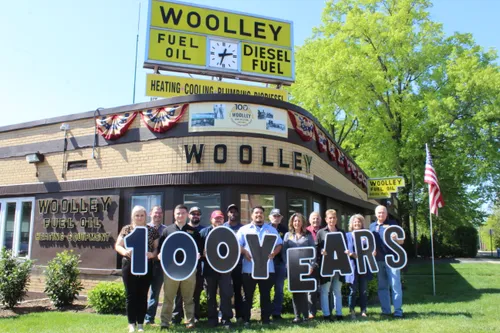
Woolley Home Solutions
12 Burnet Ave, Maplewood, NJ 07040
Woolley Home Solutions is a family-owned HVAC and plumbing company serving Newark, NJ, and surrounding counties. They provide heating and cooling services including installation and repair of oil and gas furnaces, boilers, dual fuel systems, and air conditioning units. Woolley Home Solutions also offers plumbing services such as repairs and fixture installations. With over 100 years of experience, the company emphasizes reliable home comfort solutions and incorporates Bioheat® fuel, a low-carbon energy source compatible with existing heating equipment.
Liberty Heating & Cooling
66 Lincoln Pl, Garfield, NJ 07026
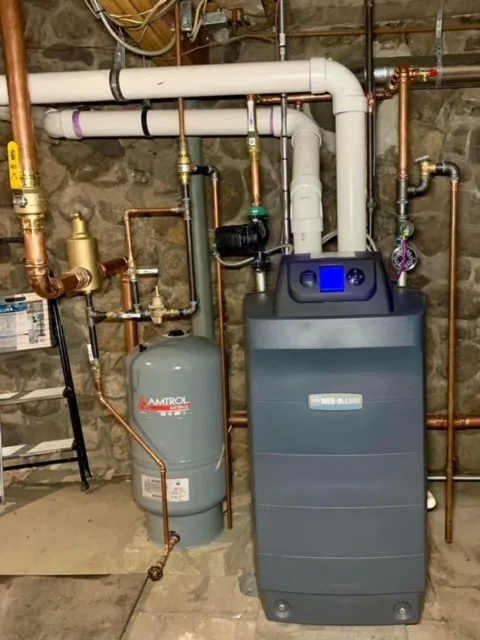
Liberty Heating & Cooling is a family-owned HVAC company based in Newark, NJ. They provide heating and air conditioning services for both residential and commercial properties, including installation, repair, and maintenance of boilers, furnaces, air conditioners, and ductless mini split systems. Their certified technicians have extensive experience in boiler and AC repairs as well as HVAC tune-ups, ensuring reliable system performance.
Total HVACR Services LLC
Newark, NJ
Total HVACR Services LLC is an HVAC company based in Newark, NJ, offering a full range of heating, ventilation, air conditioning, and refrigeration repair and installation services. They provide expertise in AC, furnace, heat pump, and boiler systems, covering both repairs and new installations. The company has built a reputation over many years by maintaining professional and timely service standards.
Understanding New Jersey's Boiler Efficiency Standards
New Jersey has adopted strict energy efficiency standards for new heating equipment. These rules are not just suggestions; they are mandatory for any boiler replacement to receive a permit and pass inspection. The primary metric is the Annual Fuel Utilization Efficiency (AFUE) rating, which measures how efficiently fuel is converted into heat over a typical year.
For most residential replacements in New Jersey:
- New gas or oil-fired hot water boilers must have a minimum AFUE of 85% 1.
- New steam boilers must have a minimum AFUE of 82% 2.
- High-efficiency condensing boilers, which can achieve AFUE ratings of 90% to 98%, are excellent options that exceed these minimums and can lead to substantial long-term savings on fuel costs.
These standards ensure that outdated, inefficient models are phased out, reducing both your household energy consumption and environmental impact. When evaluating new equipment, look for the bright yellow EnergyGuide label, which clearly states the unit's AFUE rating.
The Permit Process: A Non-Negotiable Step
One of the most critical aspects of a boiler project in New Jersey is obtaining the proper permits. This is not a step you or your contractor can skip. Permits are mandatory and are issued by your local municipal Construction Office (often called the Building Department or Code Enforcement Office) 3.
Why are permits required? The permit process triggers a required inspection by a municipal building official. This inspection verifies that the installation complies with all applicable safety and building codes, including the New Jersey Uniform Construction Code (UCC), International Residential Code (IRC), and manufacturer specifications. It's a vital consumer protection measure that ensures the work is done correctly and safely.
The process typically involves:
- Application Submission: Your licensed HVAC contractor will usually handle this, submitting an application along with details of the planned work.
- Plan Review: Some municipalities may require basic mechanical plans or diagrams, especially for complex installations.
- Permit Issuance and Fee Payment: Once approved, a permit is issued, and a fee is paid (typically ranging from $50 to $200).
- Scheduling Inspections: The contractor will call for a rough inspection (if needed) and a final inspection once the boiler is installed and operational.
Never work with a contractor who suggests bypassing the permit process. It is illegal, voids equipment warranties, creates safety hazards, and can cause major issues when you try to sell your home.
Key Installation Rules and Safety Codes
Beyond efficiency, New Jersey codes specify detailed requirements for how a boiler must be installed. A professional installer will be well-versed in these critical areas:
- Correct Sizing (BTUH Output): A boiler must be properly sized for your home's heat loss. An oversized boiler will short-cycle (turn on and off frequently), reducing efficiency and lifespan. An undersized boiler will struggle to keep your home warm. A professional performs a heat load calculation to determine the correct size 4.
- Venting and Combustion Air: This is paramount for safety. The boiler must be vented to the outdoors to exhaust deadly carbon monoxide (CO). Codes dictate the type of vent material (e.g., specialized metal liners for masonry chimneys or approved direct vent/PVC for high-efficiency units), proper sizing, and clearances. Equally important is providing an adequate supply of fresh combustion air for the burner to operate safely and efficiently.
- Controls and Safety Devices: The installation must include proper operating controls (thermostats, circulator controls) and mandatory safety devices like a pressure relief valve, low-water cutoff (for steam boilers), and backflow prevention devices 5.
- Clearances and Location: The boiler must be installed with proper clearances from combustible materials as specified by both the manufacturer and state code.
Find the perfect boiler installation & replacement contractors for your needs
Get personalized recommendations and expert advice
Breakdown of Boiler Replacement Costs in NJ
The total cost of a boiler replacement in New Jersey varies widely based on equipment type, home complexity, and labor. The following ranges include typical equipment and professional installation labor, with permits and basic components.
- Basic/Standard Efficiency Replacement: $3,500 - $9,000. This covers a standard gas or oil boiler meeting the 85% AFUE minimum, including removal of the old unit, basic materials, and installation in a straightforward location.
- High-Efficiency Condensing Boiler Replacement: $6,000 - $12,000+. This higher cost reflects the more advanced technology of condensing boilers (90%+ AFUE), which often require different venting materials (like PVC) and condensate drainage lines. The long-term fuel savings can offset the higher initial investment 6.
- Complex or High-End Installations: $12,000 - $18,000+. Costs can climb for large homes, complex heating system zoning, radiant floor integration, or premium boiler brands with advanced features.
What Drives the Cost?
- Equipment ($2,000 - $5,000+): The boiler unit itself is the largest variable.
- Labor ($1,500 - $2,500+): Includes removal, installation, and testing.
- Additional Materials & Complexity ($500 - $3,000+): New venting, gas lines, water piping, electrical updates, thermostatic radiator valves, or system flushing.
- Permits & Fees ($50 - $200): Municipal permit costs 7 8.
- Old Unit Disposal ($100 - $300): Responsible disposal of the old boiler and any hazardous materials.
Choosing the Right Professional for the Job
Given the technical and regulatory complexity, hiring the right contractor is essential. Look for a licensed, insured HVAC professional with specific experience in boiler installations in New Jersey. They should:
- Pull all required permits from your local municipality.
- Perform a manual heat load calculation (not a rule-of-thumb guess).
- Provide a detailed written estimate that includes equipment model numbers, labor, materials, and permit fees.
- Explain the installation plan, including venting and combustion air solutions.
- Offer references from recent boiler jobs in your area.
- Clearly outline warranty coverage for both parts and labor.
A reputable pro will ensure the system is not only installed to code but is optimized for performance and efficiency in your specific home.
The Importance of Post-Installation Inspection
The final step in the legal and safe completion of your project is the municipal inspection. After installation, your contractor will schedule a final inspection with the local building official. The inspector will check for:
- Proper permit display.
- Compliance with approved plans (if any).
- Correct boiler sizing and rating plate information.
- Safe and code-compliant venting and combustion air.
- Proper installation of all safety devices and controls.
- Correct fuel line and electrical connections.
Once the installation passes inspection, you will receive a final approval or certificate of occupancy (if required). Keep this documentation with your home records; it is crucial for warranty validation and future real estate transactions.
Frequently asked questions
Sources
Footnotes
-
Chapter 20 Boilers and Water Heaters: New Jersey ... - https://up.codes/viewer/new_jersey/irc-2015/chapter/20/boilers-and-water-heaters ↩
-
Chapter 6 Heating Systems - NJ.gov - https://nj.gov/dca/divisions/dhcr/offices/docs/wap/Wap_Chapter_6.pdf ↩
-
Boiler Installation Permits in New Jersey - AME Plumbing - https://ameplumbingnj.com/boiler-installation-permits-and-regulations-in-nj-what-homeowners-need-to-know/ ↩
-
Furnace Replacement Guidelines - Mendham Borough - https://www.mendhamnj.org/cn/webpage.cfm?tpid=18348 ↩
-
Chapter 6 Heating Systems - NJ.gov - https://www.nj.gov/dca/dhcr/offices/docs/Chapter%206%20-%20Heating%20Systems.pdf ↩
-
Boiler Replacement Costs: Smart Budgeting and Planning Guide - https://www.tcmemt.com/post/the-cost-of-boiler-replacement-expert-guide-to-smart-budgeting-and-installation-planning ↩
-
How Much Does a Boiler Replacement Cost in New Jersey ... - https://queenbplumbing.com/how-much-does-a-boiler-replacement-cost-in-new-jersey-homes ↩
-
NJ Boiler Replacement Costs in 2024 | What to Expect - https://ameplumbingnj.com/boiler-replacement-costs-explained-what-to-expect-in-2024-in-nj/ ↩