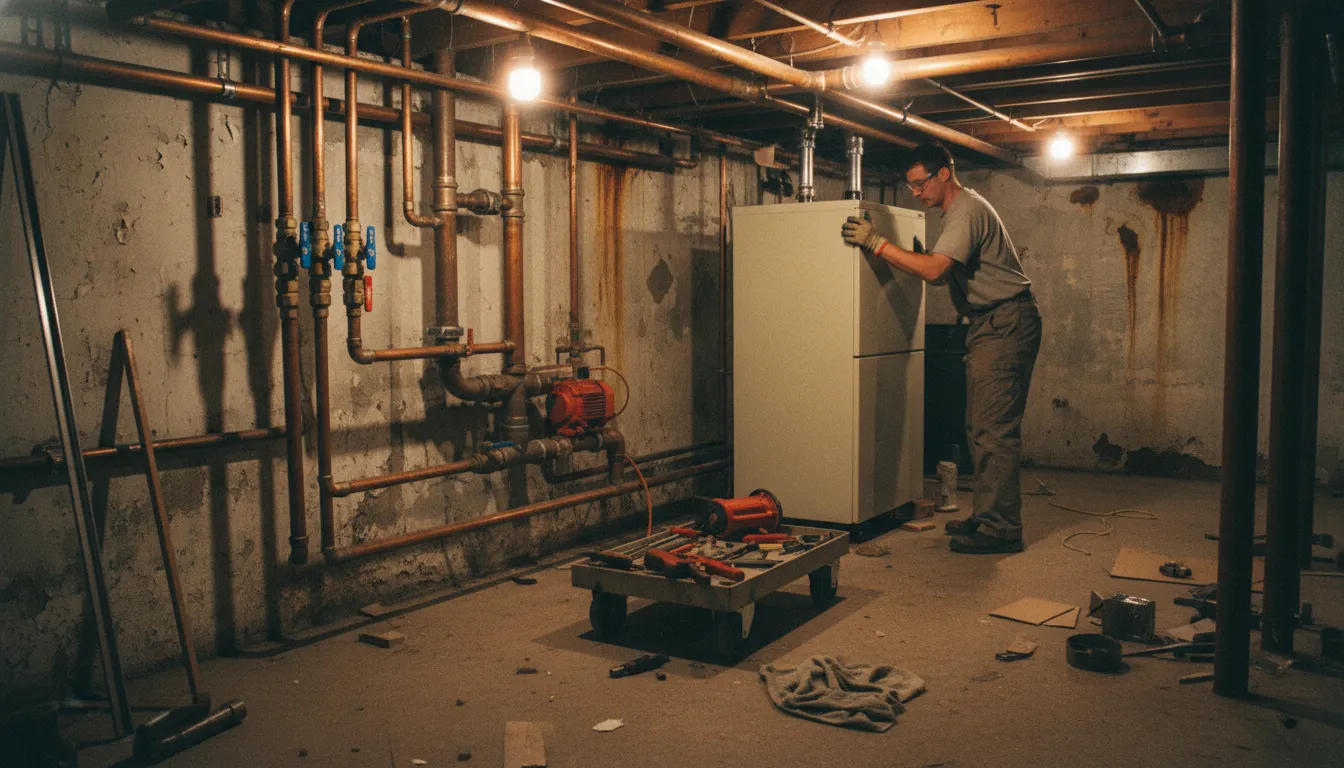
Find the Best Boiler Installation & Replacement Contractors for Your Business
No obligation • Fast responses • Nationwide coverage

Why you can trust HVAC Firms
HVAC Firms is a leading United States resource for evaluating HVAC service providers. Our team researches companies, checks credentials, and reviews customer feedback to present clear, unbiased information. Listings and rankings are based on merit, and companies cannot pay to change our editorial content.
Search providers near you
Best Boiler Installation & Replacement Contractors in Nebraska Ranked
Installing or replacing a boiler is a significant home investment that directly impacts your comfort, safety, and energy bills. In Nebraska, this process is governed by specific state and local codes designed to ensure safe, efficient operation. This guide explains the key regulations, efficiency standards, and practical steps for a successful boiler project, helping you connect with qualified local professionals who understand Nebraska's requirements.
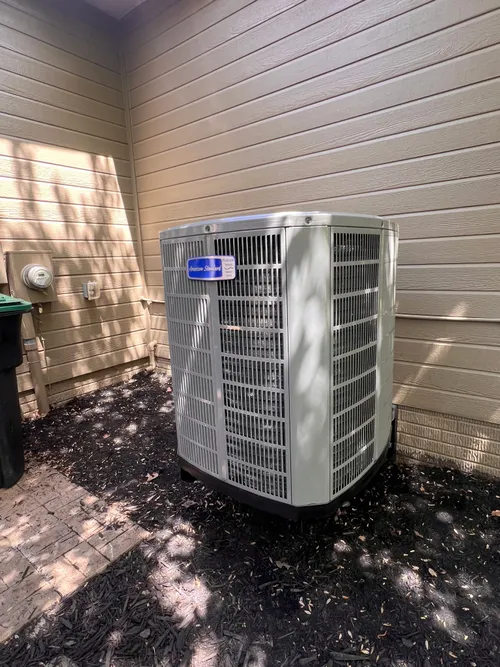
Sustainable
206 E Grant St, Papillion, NE 68046
Sustainable is an HVAC company based in Omaha, NE, offering installation, repair, and replacement services for air conditioners, furnaces, heat pumps, and boilers. They focus on seamless HVAC system installations and efficient repairs to maintain indoor comfort. Sustainable Mechanical Inc. emphasizes sustainable and energy-efficient solutions to improve system performance and contribute to energy savings. Their team is fully licensed and experienced in all aspects of HVAC services in the Omaha area.
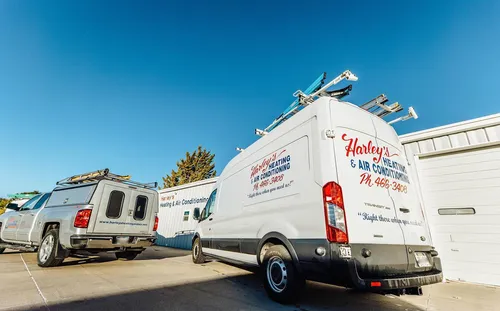
Harley's Heating & Air Conditioning
4224 Progressive Ave, Lincoln, NE 68504
Harley's Heating & Air Conditioning is a family-owned HVAC company serving Lincoln, NE, and surrounding areas since 1970. They provide a full range of heating and cooling services, including installation, repair, and maintenance of furnaces, heat pumps, boilers, air conditioners, and indoor air quality systems. Their NATE-certified technicians handle complex diagnostics and offer transparent solutions focused on energy efficiency and system reliability. Harley's also offers 24/7 emergency service without overtime fees, ensuring support when urgent heating or cooling issues arise.
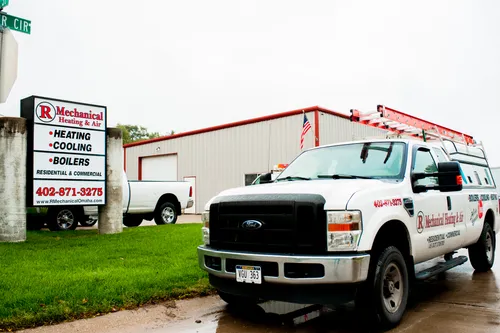
R Mechanical Heating & Air
7660 Sadler Cir, Ralston, NE 68127
R Mechanical Heating & Air is a family owned and operated HVAC company serving Omaha, NE. They provide installation, repair, and maintenance services for furnaces, air conditioners, boilers, heat pumps, water heaters, and thermostats. With over 25 years of experience, the company handles both residential and light commercial projects. They offer 24/7 emergency service and specialize in efficient, energy-saving equipment options. Their team also installs infloor heating and snow and ice melt systems to enhance home comfort and safety. Founded in 2013, R Mechanical Heating & Air is licensed, insured, and accredited by the Better Business Bureau.
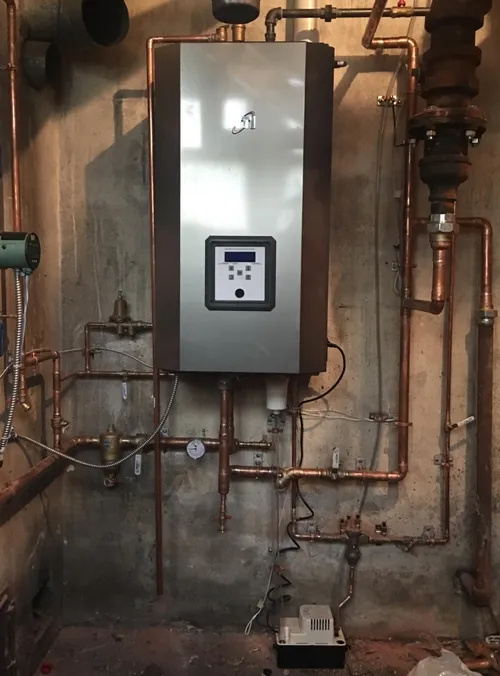
Bryant Air Conditioning, Heating, Electrical & Plumbing
3324 Ox Bow Rd, Lincoln, NE 68504
Bryant Air Conditioning, Heating, Electrical & Plumbing has been serving Lincoln, NE, for over 70 years. They provide a wide range of HVAC services including installation, repair, and tune-ups for air conditioners, furnaces, heat pumps, and boilers. The company also offers indoor air quality services such as air purification and radon mitigation. One notable capability is their use of advanced technology like the Bryant® Evolution™ System with Perfect Humidity™ Plus, which helps maintain precise temperature and humidity control. With a history dating back to 1952, Bryant Air Conditioning, Heating, Electrical & Plumbing is a long-established provider in the area.
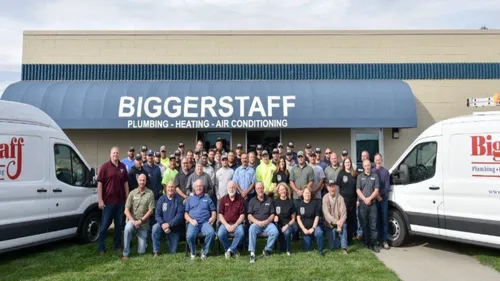
Biggerstaff Plumbing Heating & Air
3605 N 40th St, Lincoln, NE 68504
Biggerstaff Plumbing Heating & Air is a family-owned plumbing and HVAC company serving Lincoln, NE. Established in 1957, they provide a wide range of services including air conditioning, furnace, heat pump, boiler repair and installation, as well as geothermal system installation and indoor air quality solutions. Their NATE certified technicians offer specialized capabilities such as sewer camera inspections and sewer jetting. The company has over 65 years of experience in the industry.
Understanding Nebraska's Boiler Regulations
Boiler installation in Nebraska is not a simple DIY project; it's a regulated activity to protect homeowners and property. The state's framework ensures all work meets stringent safety and performance standards.
State Oversight and Key Codes The Nebraska Department of Labor administers the state's Boiler Safety Act (Title 229 of the Nebraska Administrative Code) 1. This act requires that all new boilers be constructed to the American Society of Mechanical Engineers (ASME) codes and registered with the National Board of Boiler and Pressure Vessel Inspectors. At the local level, most jurisdictions in Nebraska adopt modified versions of the International Residential Code (IRC) and International Mechanical Code (IMC). For homeowners, this means your project must comply with both the state's boiler safety rules and your city or county's specific building codes, which often incorporate detailed chapters on boilers and water heaters.
The Permit and Inspection Process A critical first step is obtaining the proper permits from your local building department. The permit process triggers mandatory inspections that verify the installation meets all code requirements. Your installer is typically responsible for pulling this permit and ensuring the work is ready for inspection. The inspector will check that the boiler is properly sized, installed according to the manufacturer's instructions, and that all safety devices are correctly in place. Skipping this step can lead to unsafe conditions, voided equipment warranties, and difficulties when selling your home.
Installation Standards and Safety Requirements
Adherence to specific installation standards is non-negotiable for safety and longevity. Nebraska codes outline clear requirements that professional installers must follow.
Following Manufacturer Instructions Above all, the installation must conform to the boiler manufacturer's printed instructions. These instructions provide model-specific details for clearances, piping, wiring, and venting that are essential for safe operation and to maintain the manufacturer's warranty.
Essential Safety Components Several key safety devices are mandated by code:
- Shutoff Valves: Isolating valves are required on both the supply and return piping connected to the boiler (with an exception for certain single-pipe steam systems) 2. These allow for safe servicing without draining the entire system.
- Pressure Relief Valves: Every boiler must have an approved and properly sized safety or relief valve to prevent dangerous over-pressurization. For steam boilers, this is a safety valve; for hot water boilers, it's a combination temperature and pressure relief valve. These valves must be listed and labeled by an approved testing agency.
- ASME Stamping: The boiler vessel itself must bear the required ASME stamp-typically "H" for standard boilers or "HC" for low-pressure heating boilers-as proof it was built to national safety standards 3 4.
Combustion Air and Venting Proper venting of combustion gases and adequate supply of fresh air for combustion are vital. Solid and liquid fuel-burning boilers have specific requirements for combustion air intake 5. Gas-fired boilers must be vented according to the manufacturer's instructions and code requirements to prevent the deadly backdraft of carbon monoxide into the home.
Efficiency Standards and Modern Boiler Options
Modern boilers are far more efficient than models from just 10-15 years ago. Nebraska's energy codes mandate minimum efficiency levels, but upgrading to a high-efficiency model can offer substantial savings.
Understanding AFUE The primary measure of boiler efficiency is the Annual Fuel Utilization Efficiency (AFUE) rating. This percentage tells you how much of the fuel's energy is converted into usable heat over a typical year. For example, a boiler with a 95% AFUE rating turns 95 cents of every dollar spent on fuel into heat for your home, with the rest lost up the flue.
High-Efficiency Condensing Boilers The most efficient models available today are condensing boilers. These units capture so much heat from the combustion gases that the water vapor in the exhaust condenses, extracting additional latent energy. Condensing boilers typically achieve AFUE ratings of 90% to over 98%. While they have a higher upfront cost, they significantly reduce monthly fuel consumption, especially important in Nebraska's cold winters. State and local codes are increasingly encouraging or recognizing these high-performance systems 6.
Sizing and System Design Efficiency isn't just about the appliance rating; it's also about correct sizing. An oversized boiler will "short cycle"-turn on and off frequently-which wastes fuel, increases wear, and reduces comfort. A professional installer will perform a heat load calculation, considering your home's square footage, insulation levels, window quality, and other factors to specify a boiler that is the right size for your actual heating needs.
Find the perfect boiler installation & replacement contractors for your needs
Get personalized recommendations and expert advice
Cost Considerations for Nebraska Homeowners
The total cost of a boiler installation or replacement involves several components. While prices can vary based on location, system complexity, and equipment choice, understanding the breakdown helps in planning.
Equipment and Labor Costs The boiler unit itself is the largest variable. A standard-efficiency gas boiler may range from $2,000 to $5,000 for the equipment. High-efficiency condensing models are more advanced and cost more, typically between $3,500 and $6,500 for the unit alone. Professional installation labor is a crucial investment for safety and performance, generally adding $1,500 to $2,500 to the total project cost.
Additional Project Expenses Beyond the boiler and labor, budget for these necessary items:
- Permit Fees: Typically range from $50 to $200, depending on your locality.
- Removal & Disposal: Professionally removing the old boiler and disposing of it properly can cost between $500 and $1,000.
- System Upgrades: The installation may reveal needed updates to piping, electrical service, or the chimney/flue liner, especially when switching to a high-efficiency model that requires different venting materials.
Total Project Estimates Considering all factors, a full standard-efficiency boiler replacement in Nebraska often falls in the range of $3,500 to $6,000 installed. For a high-efficiency condensing boiler replacement, homeowners should plan for an investment of $6,000 to $8,500 or more 7. While the initial outlay is higher for efficient models, the reduction in annual heating bills provides a return on investment over time.
Steps to a Successful Boiler Project
- Verify Local Requirements: Before anything else, contact your local building department to understand the specific permits, codes, and inspection schedule required in your city or county.
- Consult Licensed Professionals: Obtain detailed quotes from multiple licensed, insured, and bonded HVAC contractors who are familiar with Nebraska's Title 229 and local codes. Ask for references and proof of licensing.
- Evaluate Your System: A reputable professional will assess not just the boiler, but your entire heating distribution system (radiators, baseboards, etc.) to ensure compatibility and optimal performance.
- Check for Rebates and Incentives: Investigate whether your utility company (such as NPPD, OPPD, or LES) or the state offers rebates for installing high-efficiency heating equipment. These can substantially offset the upfront cost.
- Secure Permits and Schedule Inspections: Ensure your chosen contractor handles the permit application and coordinates all required inspections throughout the installation process.
Frequently asked questions
Sources
Footnotes
-
nebraska administrative code - department of labor - https://dol.nebraska.gov/webdocs/Regulations/229%20-%20Boilers/229-02.pdf ↩
-
Chapter 20 Boilers and Water Heaters: Omaha Residential Code 2018 - https://up.codes/viewer/omaha/irc-2018/chapter/20/boilers-and-water-heaters ↩
-
Nebraska Administrative Code Title 229 - Boiler Safety Code ... - https://sfm.nebraska.gov/sites/default/files/doc/Title%20229%20With%20TOC.pdf ↩
-
Chapter 10 Boilers, Water Heaters and Pressure Vessels - https://up.codes/viewer/omaha/imc-2012/chapter/10/boilers-water-heaters-and-pressure-vessels ↩
-
Chapter 20 Boilers and Water Heaters: Nebraska Residential Code 2018 | UpCodes - https://up.codes/viewer/nebraska/irc-2018/chapter/20/boilers-and-water-heaters ↩
-
Chapter 11 [RE] Energy Efficiency: Nebraska Residential Code 2018 - https://up.codes/viewer/nebraska/irc-2018/chapter/11/re-energy-efficiency ↩
-
Boiler Replacement Costs: Smart Budgeting and Planning ... - https://www.tcmemt.com/post/the-cost-of-boiler-replacement-expert-guide-to-smart-budgeting-and-installation-planning ↩