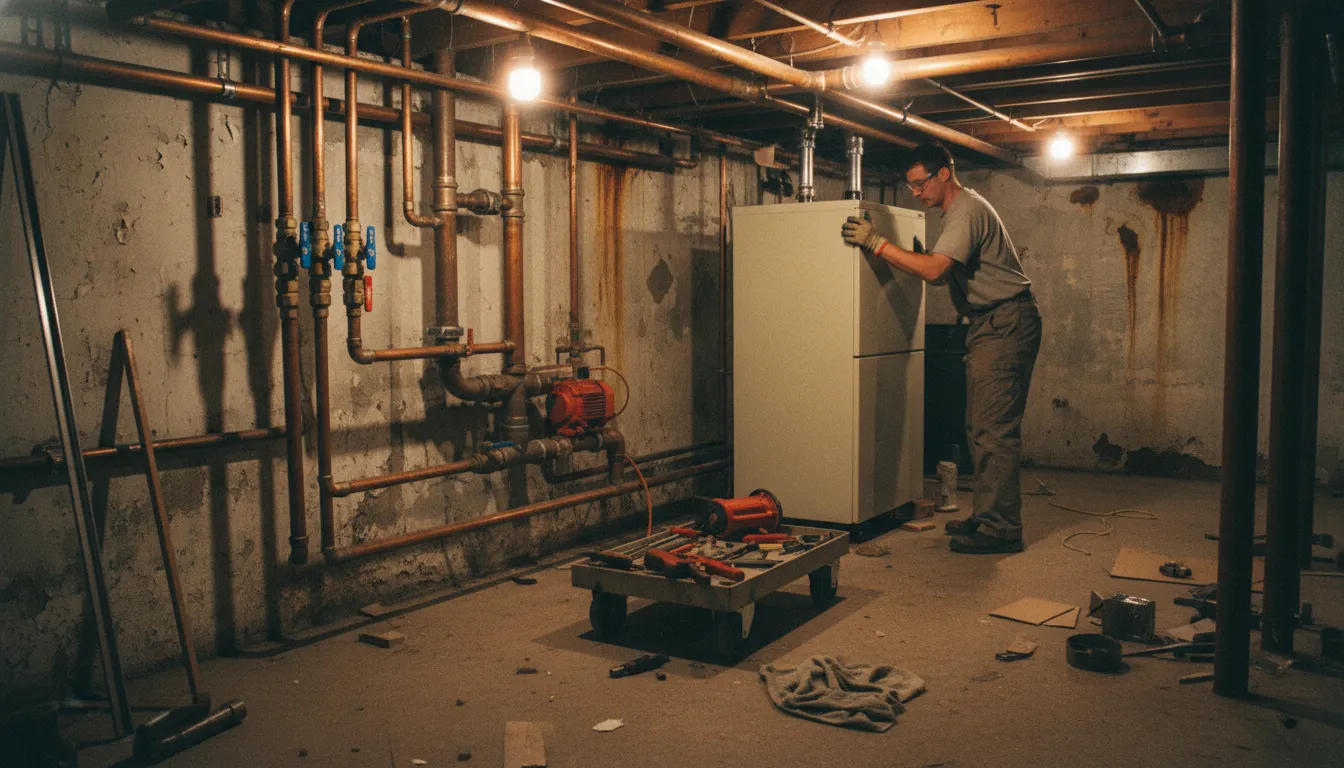
Find the Best Boiler Installation & Replacement Contractors for Your Business
No obligation • Fast responses • Nationwide coverage

Why you can trust HVAC Firms
HVAC Firms is a leading United States resource for evaluating HVAC service providers. Our team researches companies, checks credentials, and reviews customer feedback to present clear, unbiased information. Listings and rankings are based on merit, and companies cannot pay to change our editorial content.
Search providers near you
Top Boiler Installation & Replacement Contractors in Blue Springs, Missouri Ranked
Replacing or installing a new boiler is a significant home improvement decision that directly impacts your comfort, energy bills, and safety. A modern, efficient boiler system provides reliable heat for your home's radiators or baseboards, ensuring a warm and cozy environment during Missouri's chilly winters. This guide will help you understand the types of systems available, the associated costs, and the critical local regulations, so you can make an informed choice when selecting a professional for your project.
Air Care
10332 W 79th St, Shawnee, KS 66214
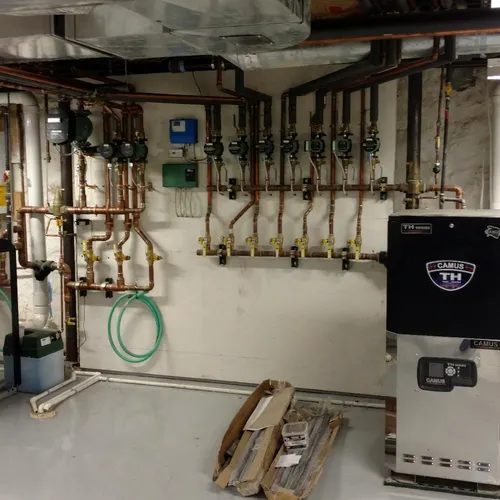
Air Care is an HVAC company serving Kansas City, MO, and the surrounding Shawnee area. Established in 1981, they provide a wide range of heating and cooling services including installation, repair, and maintenance of furnaces, air conditioners, boilers, mini-splits, and geothermal heat pumps. Their NATE-certified technicians handle both residential and light commercial work, with capabilities in duct design and indoor air quality services. Air Care offers 24/7 emergency repair service to address urgent heating or cooling issues.
Anthony Plumbing, Heating, Cooling & Electric
17331 East 40th Terrace S Units 111-112, Independence, MO 64055
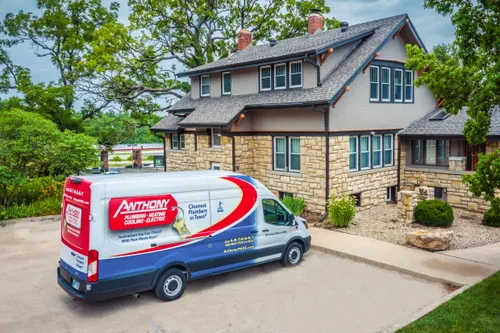
Anthony Plumbing, Heating, Cooling & Electric provides comprehensive HVAC, plumbing, and electrical services in Kansas City, MO. With over 70 years of experience, they offer repair and installation for air conditioners, furnaces, heat pumps, boilers, geothermal heat pumps, and thermostats. Their technicians are trained annually and vetted for trustworthiness, allowing them to work in customers' homes even when the homeowner is not present. The company also offers 24/7 emergency support and services the broader Kansas City metro area and surrounding communities. One notable capability includes installing Maestro zoning systems for customized home temperature control.
Anthony Plumbing, Heating, Cooling & Electric
7667 NW Prairie View Rd # 200, Kansas City, MO 64151
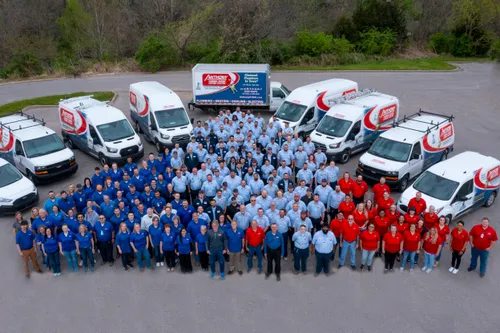
Anthony Plumbing, Heating, Cooling & Electric provides comprehensive HVAC, plumbing, and electrical services in Kansas City, MO. With over 70 years of experience, the company offers installation, repair, and maintenance for air conditioners, furnaces, heat pumps, boilers, geothermal systems, and thermostats. Their technicians are trained annually and background-checked, ensuring trusted service. They also provide 24/7 emergency support to address urgent heating and cooling needs. Anthony serves the Greater Kansas City Metro and surrounding areas, delivering solutions for a variety of residential systems.
Ultra LLC
5845 Horton St # 8, Mission, KS 66202
Ultra LLC served the Kansas City, MO area with heating and cooling services including repair and installation of air conditioners, furnaces, heat pumps, and boilers. The company had decades of experience, with leadership in the industry since 1985 and 2000. Recently, Ultra LLC merged with Mission Plumbing, Heating & Cooling, a company established in 1978, which continues to honor all existing service agreements and warranties while expanding service capabilities in the region.
Steve's Heating & Cooling
4252 NW Riverside St, Riverside, MO 64150
Steve's Heating & Cooling is a family-owned HVAC company serving Kansas City, MO, specializing in heating and cooling system installation, repair, and maintenance. Their services include air conditioner, furnace, heat pump, and boiler repair and installation, as well as duct cleaning and thermostat installation. The company has been in business since 1979, offering expertise with both modern and older systems, including boilers. They provide same-day service and weekend availability to address urgent heating and cooling needs.
Understanding Your Boiler System Options
Before contacting professionals, it's helpful to understand the basic types of boiler systems commonly installed in Blue Springs homes. The primary distinction is between hot water (hydronic) and steam systems.
Hydronic systems are by far the most common. They heat water in the boiler, which is then circulated through a network of pipes to radiators, baseboard heaters, or even in-floor radiant tubing. These systems are known for their consistent, comfortable heat and quiet operation.
Steam systems are less common in modern residential installations but may be found in older homes. These units boil water to create steam, which travels through pipes to radiators. Installing or replacing a steam boiler requires specific expertise, as components like steam vents and proper piping are crucial for safe and efficient operation 1.
Boiler Efficiency: Standard vs. High-Efficiency Condensing
One of the most important choices you'll make is the efficiency rating of your new boiler, measured by Annual Fuel Utilization Efficiency (AFUE). This choice has a major long-term impact on your heating costs.
- Standard Efficiency Boilers: These units typically have an AFUE between 80% and 89%. They are less expensive upfront but lose more heat through the exhaust flue. They are often non-condensing models.
- High-Efficiency Condensing Boilers: These are the modern standard for new installations, with AFUE ratings of 90% and above, often reaching 95% or more. They capture heat from exhaust gases that would otherwise be wasted, condensing water vapor in the process. This extra step makes them significantly more efficient, leading to substantial savings on your gas or oil bill. Their popularity in Blue Springs is growing due to these long-term energy savings.
Fuel Types: Natural Gas and Oil
The fuel your boiler uses is another key factor, often determined by what's available at your property.
- Natural Gas: This is the most popular and commonly available fuel source in Blue Springs. If your home already has a gas line, installation is straightforward. If a new gas line is needed from the meter to the boiler location, this will add to the project cost.
- Oil: Some homes, particularly in more rural areas, may use oil-fired boilers. While oil can be an effective fuel, conversions from oil to natural gas (or vice versa) involve additional work for tank installation or line running, which adds to the overall project expense 2.
Navigating Permits and Codes in Blue Springs
Boiler installation is not a DIY project. For safety and compliance, all work must be permitted and inspected. In Missouri, boiler installations are regulated at both the state and local levels.
State Requirements: The Missouri Division of Fire Safety (DFS) requires a permit for the installation of any boiler 3. The permit fee is typically based on the boiler's size or capacity. After installation, a state inspector must approve the work to ensure it meets all safety codes, including proper venting and pressure vessel standards 4.
Local Blue Springs & Jackson County Codes: While the state sets the baseline, local jurisdictions like Blue Springs may have additional requirements or amendments to the state code. This is why hiring a licensed, local professional is non-negotiable. A qualified Blue Springs HVAC contractor will be familiar with both state and local codes, ensuring your installation passes inspection the first time and operates safely for years to come 5.
Find the perfect boiler installation & replacement contractors for your needs
Get personalized recommendations and expert advice
Detailed Cost Breakdown for Boiler Replacement
The total cost for a new boiler installation in Blue Springs can vary widely based on the system's complexity, efficiency, and your home's specific needs. Homeowners can expect a total project cost generally ranging from $4,000 to $12,000 or more 6.
Here's a breakdown of what contributes to that price:
- Boiler Equipment: The unit itself is the largest variable, typically costing between $2,000 and $5,000. A standard-efficiency gas boiler will be on the lower end, while a high-efficiency condensing model will be higher.
- Labor: Professional installation labor usually ranges from $1,500 to $2,500. This covers removing the old unit, installing the new boiler, connecting fuel and water lines, and integrating it with your existing heating distribution system (radiators, etc.).
- Permits: The required Missouri DFS permit and local fees typically add $50 to $200+ to the project cost 7.
- Old Unit Removal & Disposal: Safely disconnecting and hauling away your old boiler and any associated components (like an old oil tank) can cost $500 to $1,000 8.
- Additional Work & Upgrades: These are common cost-adders:
- Gas Line Upgrade: Running a new or larger gas line from the meter can add around $2,000.
- System Conversion: Switching from steam to hydronic or changing fuel types significantly increases complexity and cost.
- New Distribution Components: Adding or updating radiators, baseboards, or circulating pumps.
For a standard-efficiency gas boiler replacement with no major extras, the total installed cost often falls between $3,500 and $6,000. For a high-efficiency condensing boiler installation, plan for a total investment of $6,000 to $12,000+ 9 10.
The Professional Installation Process
Working with a licensed professional ensures a smooth and compliant installation. The process typically follows these steps:
- Consultation and Load Calculation: A good contractor will assess your home's size, insulation, and heat loss to properly size the new boiler-a critical step for efficiency and comfort.
- System Selection and Quote: Based on the assessment, they will recommend a boiler type, efficiency, and size, providing a detailed written estimate covering all equipment, labor, and permits.
- Permit Procurement: Your contractor will pull the necessary Missouri DFS and local permits before any work begins.
- Preparation and Removal: The old boiler is safely disconnected, and the area is prepped for the new unit.
- New Installation: The new boiler is set, connected to fuel, water, electrical, and venting systems, and integrated with your home's heating distribution.
- Testing and Inspection: The system is filled, tested for leaks, and fired up to ensure proper operation. Once complete, the contractor will schedule the required state inspection.
- Customer Walkthrough: The installer should explain the system's operation, basic maintenance, and warranty details to you.
Why Proper Sizing and Professional Installation Matter
Choosing the right-sized boiler is not about getting the biggest unit possible. An oversized boiler will short-cycle (turn on and off frequently), leading to uneven heat, higher wear and tear, and reduced efficiency. An undersized boiler will struggle to keep your home warm on the coldest days. A professional load calculation prevents these issues.
Furthermore, improper installation can void manufacturer warranties, create safety hazards (like carbon monoxide risk from faulty venting), and lead to premature system failure. The investment in a qualified Blue Springs professional for your boiler installation or replacement protects your larger investment in the equipment itself.
Frequently asked questions
Sources
Footnotes
-
How Much Does Boiler Replacement Cost in 2026? Price by Type - https://modernize.com/hvac/heating-repair-installation/boiler ↩
-
How much does a new boiler cost to install or replace? - HomeGuide - https://homeguide.com/costs/boiler-replacement-cost ↩
-
Boiler & Pressure Vessel Safety - https://dfs.dps.mo.gov/programs/bpv/ ↩
-
Guide for Completing Installation Permit Application | Fire Safety - https://dfs.dps.mo.gov/programs/bpv/guide-complete-installation-permit.php/1000 ↩
-
Blue Springs MO - Furnace Heating Services | KB Complete - https://kbcomplete.com/blue-springs-furnace-heating-services/ ↩
-
Boiler Replacement Costs: Smart Budgeting and Planning ... - https://www.tcmemt.com/post/the-cost-of-boiler-replacement-expert-guide-to-smart-budgeting-and-installation-planning ↩
-
What Does Boiler Replacement Cost? [2025 Data] - HomeAdvisor - https://www.homeadvisor.com/cost/heating-and-cooling/install-a-boiler/ ↩
-
How Much Does Residential Boiler Installation Cost? - Aero Energy - https://www.aeroenergy.com/how-much-does-residential-boiler-installation-cost/ ↩
-
Boiler Replacement Cost and Price - Carrier - https://www.carrier.com/residential/en/us/products/boilers/cost-buying-boiler-replacement/ ↩
-
How Much Does It Cost to Replace a Boiler? - United State Solutions - https://unitedstatesolutions.com/how-much-does-it-cost-to-replace-a-boiler/ ↩