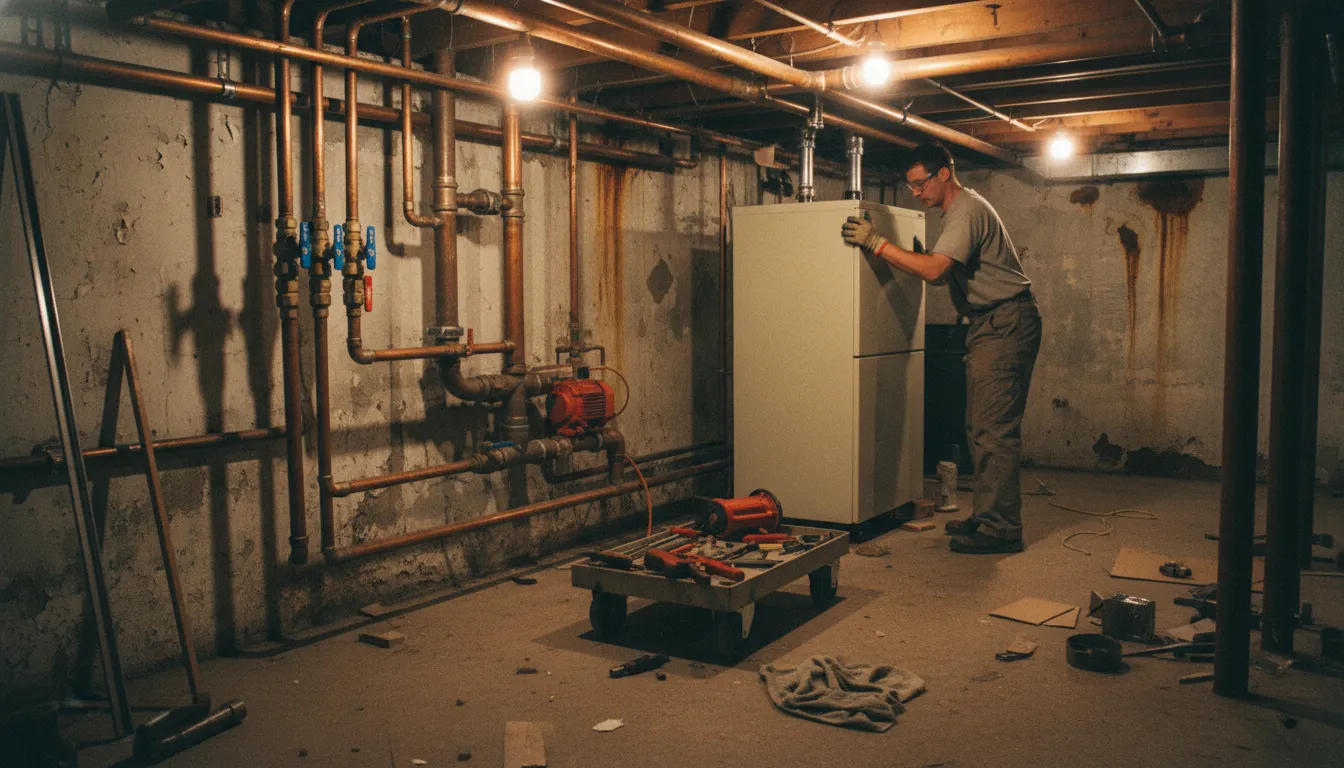
Find the Best Boiler Installation & Replacement Contractors for Your Business
No obligation • Fast responses • Nationwide coverage

Why you can trust HVAC Firms
HVAC Firms is a leading United States resource for evaluating HVAC service providers. Our team researches companies, checks credentials, and reviews customer feedback to present clear, unbiased information. Listings and rankings are based on merit, and companies cannot pay to change our editorial content.
Search providers near you
Best Boiler Installation & Replacement Contractors in Massachusetts Ranked
Replacing or installing a new boiler in your Massachusetts home is a significant investment that directly impacts your comfort, energy bills, and safety. This process is governed by a complex web of state and local codes designed to ensure efficiency and safety. For homeowners, navigating these requirements-from securing permits to choosing the right high-efficiency system-can be daunting. This guide provides clear, practical information to help you understand the process, costs, and regulations, empowering you to make informed decisions and connect with qualified local professionals for your project.
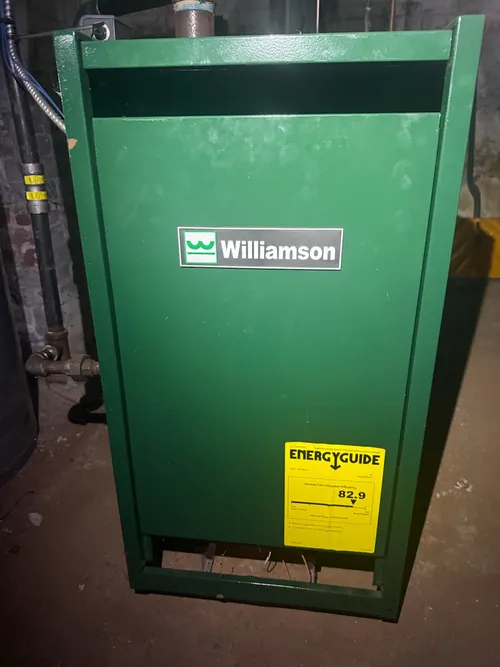
Minuteman Plumbing, Heating & Cooling
100 Garden St, Cambridge, MA 02138
Minuteman Plumbing, Heating & Cooling is a full-service provider based in Boston, MA, offering plumbing, heating, and air conditioning services for homes and small businesses. They cover Greater Boston and the South Shore, including suburbs such as Allston, Belmont, Brookline, and Somerville, as well as towns like Weymouth, Braintree, and Hingham. Their services include AC installation and repair, furnace and boiler installation and repair, HVAC tune-ups, and plumbing repairs. The company emphasizes expert assessment, clear communication, and efficient execution, with every installation backed by a lifetime workmanship guarantee. With decades of combined experience, their veteran-led team provides 24/7 emergency services and a one-hour business response time.
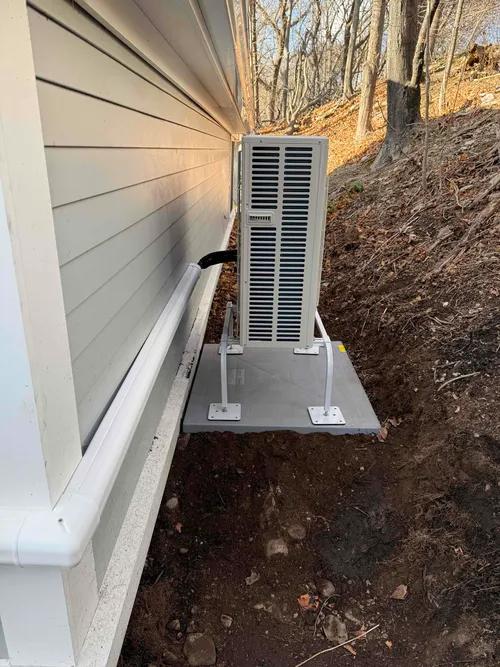
Yellow Dog Plumbing, Heating & Cooling
19 Kearney Rd, Needham, MA 02494
Yellow Dog Plumbing, Heating & Cooling is a plumbing and HVAC company serving Boston, MA, and nearby areas. They offer a wide range of services including air conditioning, furnace, heat pump, and boiler repair and installation, as well as HVAC tune-ups and indoor air quality solutions. Their technicians are equipped to handle both residential and light commercial HVAC needs, with well-stocked trucks to complete most repairs on the first visit. Yellow Dog emphasizes clear communication and customer care, providing same-day service and 24/7 live answering to support their clients' comfort and safety.
Royal Air Systems, Inc.
210 Main St, North Reading, MA 01864
Royal Air Systems, Inc. is an HVAC company serving Boston, MA, and the surrounding North Shore communities. They offer a wide range of services including repair and installation of air conditioners, furnaces, heat pumps, and boilers. The company is known for its expertise in heat pump systems, providing flexible heating and cooling solutions that adapt to seasonal changes. Established in 1980, Royal Air Systems has over 46 years of experience in the HVAC industry. They also provide emergency after-hours service for heating repairs.
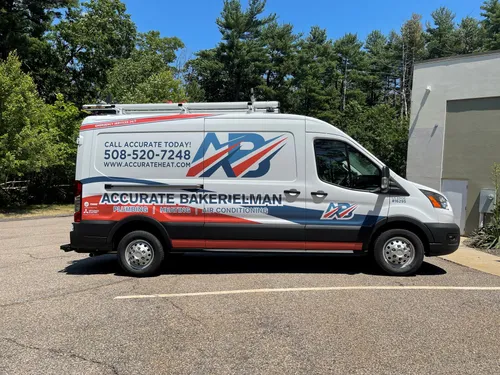
Accurate Baker Elman
671 Saw Mill Brook Pkwy, Newton, MA 02459
Accurate Baker Elman is a plumbing and HVAC service provider located in Boston, MA. They offer a range of services including AC repair and installation, furnace and boiler repair and installation, HVAC tune-ups, and indoor air quality services. With over 76 years of experience since 1943, they handle plumbing projects such as kitchen and bath remodeling, water heater and boiler installations, and freeze-up repairs. The company also provides 24/7 emergency plumbing services to their customers. Serving Boston and surrounding areas, Accurate Baker Elman emphasizes customized solutions and preventative maintenance to extend equipment life. Their technicians work closely with customers to explain options and ensure informed decisions. The company maintains a broad service area covering many communities around Boston.
CMS Plumbing, Heating, and Cooling
210 Andover St, Wilmington, MA 01887
CMS Plumbing, Heating, and Cooling is a family-owned business serving Boston, MA, since 1976. They provide a range of services including installation, repair, and maintenance for HVAC systems such as air conditioners, furnaces, heat pumps, and boilers, along with plumbing and water treatment solutions. CMS offers expertise in HVAC tune-ups and indoor air quality services, ensuring customers receive informed guidance on their home comfort needs. The company is known for offering one of the industry's longest warranties on HVAC equipment and flexible financing options.
Understanding Massachusetts Boiler Codes and Regulations
Installing a boiler in Massachusetts is not a simple DIY project. The state enforces strict regulations to ensure safety and energy efficiency, requiring work to be performed by licensed professionals. The primary codes governing residential boiler work are:
- 780 CMR (Massachusetts State Building Code): This is the overarching code, which includes Chapter 61 for energy efficiency standards 1. It often references national model codes like the International Mechanical Code (IMC) and International Fuel Gas Code (IFGC) for specific installation details.
- 248 CMR (Board of State Examiners of Plumbers and Gas Fitters): This code specifically regulates the installation of all gas-fired appliances, including boilers. Your installer must hold the appropriate plumbing or gas-fitting license.
- 527 CMR (Board of Fire Prevention Regulations): This code governs the installation of oil-fired appliances and critical safety components like combustion air provisions.
A fundamental rule across all these codes is that manufacturer installation instructions must be followed 2. This means the certified guidelines that come with your specific boiler model carry the force of law.
The Permit and Inspection Process
Virtually all boiler replacements and new installations require permits and inspections. This is a non-negotiable step for legal and safety compliance.
- Local Building Permit: You or your contractor must apply for a permit through your city or town's building department. This ensures the project complies with 780 CMR and local amendments.
- Gas/Oil Work Permit: For fuel-burning systems, a separate permit from the local gas or plumbing inspector (governed by 248 CMR or 527 CMR) is required 3.
- Inspections: Inspections will occur at rough-in (after piping is installed but before walls are closed) and at final completion. The inspector will verify proper venting, fuel lines, safety devices, and combustion air.
- State Boiler Permit (if applicable): For certain non-residential or larger systems, a permit from the Massachusetts Department of Public Safety's Boiler and Pressure Vessel program may also be required 4.
Working with a licensed professional is crucial, as they will handle this permitting process and ensure the installation passes inspection.
The Shift to High-Efficiency Systems
Massachusetts has been a leader in promoting energy efficiency. The current standards mean that when you replace an old, failing boiler, you are almost certainly upgrading to a much more efficient model. It's common to replace a system operating at 60% efficiency or lower with a new unit that is 85% efficient or higher.
The Condensing Boiler Standard
Modern high-efficiency boilers are typically condensing models. These units extract so much heat from the combustion gases that water vapor in the exhaust condenses, recovering additional latent heat. This process allows them to achieve efficiency ratings of 90-98%. The significant fuel savings from a condensing boiler can offset a higher upfront cost over its lifespan.
Important Incentive Update: Focus on Heat Pumps
A critical factor for Massachusetts homeowners to understand is the shift in state energy incentives. Through the Mass Save® program, generous rebates are now primarily directed toward air-source or ground-source heat pumps, which can provide both heating and cooling.
- Heat Pump Rebates: Homeowners can access rebates of up to $15,000 for qualifying heat pump installations 5.
- Fossil Fuel System Incentives: Rebates for high-efficiency gas or oil boilers and furnaces are now generally unavailable for most residents. Limited incentives may exist only for income-eligible households through specific programs.
This policy strongly encourages homeowners considering a new heating system to evaluate heat pumps alongside traditional boiler replacement to maximize available financial incentives.
Find the perfect boiler installation & replacement contractors for your needs
Get personalized recommendations and expert advice
Key Installation Requirements for Safety & Performance
A proper installation is about more than just connecting pipes. Key code-mandated components include:
- Combustion Air: Adequate fresh air for combustion must be provided per code (527 CMR for oil, manufacturer specs for gas) to prevent dangerous backdrafting and ensure efficient operation 6.
- Venting: The venting system must be listed for use with the specific boiler and installed exactly as the manufacturer instructs. This is critical for safely expelling exhaust gases 7.
- Pressure Relief Valve: A properly sized temperature and pressure relief valve is a mandatory safety device. It must have discharge piping directed to a safe location 8.
- Controls: Modern installations include outdoor reset controls, which adjust boiler water temperature based on outside air, maximizing efficiency and comfort.
What to Expect: Costs and Timeline
The cost of a boiler replacement in Massachusetts varies widely based on the system type, home size, complexity of existing piping, and labor rates.
- Gas Boiler Replacement: Typically ranges from $3,000 to $7,500 for the unit and installation 9.
- Oil Boiler Replacement: Often falls between $4,000 and $8,500 10.
- Combination (Combi) Boiler: These units provide both heat and domestic hot water and can range from $4,500 to over $10,000 11 12.
These are base equipment and installation estimates. The final price can be affected by necessary ancillary work like updating piping, adding zoning systems, or modifying chimneys/flues for new high-efficiency venting.
Despite the upfront investment, the long-term energy savings from a modern, high-efficiency system are substantial. Replacing a 60%-efficient boiler with a 95%-efficient model can cut your fuel consumption for heating by nearly 40%.
Regarding timeline, a standard boiler replacement with minimal piping changes is typically a 1 to 2-day job for a professional crew, causing relatively minor disruption to your household 13.
Choosing the Right Professional
Given the regulatory complexity, your choice of contractor is the most important decision you'll make. Look for a licensed, insured professional with specific experience in boiler installations in Massachusetts. They should be familiar with 248 CMR and 527 CMR, pull all required permits, and provide a detailed written estimate that includes equipment model numbers, labor, materials, and permit fees. A reputable contractor will also discuss system options with you, including the potential benefits and incentives for heat pumps.
Frequently asked questions
Sources
Footnotes
-
780 CMR 61.00 - Mass.gov - https://www.mass.gov/doc/7th-edition-780-cmr-massachusetts-building-code-780-cmr-6100-energy-efficiency/download ↩
-
780 CMR TENTH EDITION MASSACHUSETTS AMENDMENTS - https://www.mass.gov/doc/bbrs-10th-edition-building-code/download ↩
-
2021 International Residential Code with Massachusetts Amendments - https://codes.iccsafe.org/s/MAIRC2021P1/part-vi-fuel-gas/MAIRC2021P1-Pt06-Ch24-SecG2452.2 ↩
-
Apply for a Boiler or Pressure Vessel Installation Permit and Inspection - https://www.mass.gov/how-to/apply-for-a-boiler-or-pressure-vessel-installation-permit-and-inspection ↩
-
Boilers & Furnaces | Residential - Mass Save - https://www.masssave.com/residential/rebates-offers-services/heating-and-cooling/boilers-and-furnaces ↩
-
780 CMR Ninth Edition Residential Chapter 20 Boilers and ... - https://www.mass.gov/doc/780-cmr-ninth-edition-residential-chapter-20-boilers-and-heaters/download ↩
-
CHAPTER 20 BOILERS AND WATER HEATERS - 2021 INTERNATIONAL RESIDENTIAL CODE WITH MASSACHUSETTS AMENDMENTS - https://codes.iccsafe.org/content/MAIRC2021P1/chapter-20-boilers-and-water-heaters ↩
-
Boiler Installation in Massachusetts - Heritage Home Service - https://justcallheritage.com/massachusetts/heating-cooling/heating-services/boiler-installation/ ↩
-
How Much Does Residential Boiler Installation Cost? - https://www.aeroenergy.com/how-much-does-residential-boiler-installation-cost/ ↩
-
Boiler Replacement Costs: Smart Budgeting and Planning Guide - https://www.tcmemt.com/post/the-cost-of-boiler-replacement-expert-guide-to-smart-budgeting-and-installation-planning ↩
-
Boiler Installation Boston, MA | Expert Heating Services - https://emmaplumbing.com/your-guide-to-boiler-installation-in-boston-ma/ ↩
-
Boiler Installation Lancaster Massachusetts | Case study - https://www.pierceplumbingandheating.com/boiler-installation-lancaster-massachusetts-case-study/ ↩
-
Boiler Installation in Massachusetts | Save with High Efficiency - SumZero - https://www.sumzeroenergysystems.com/hvac/boilers/installation ↩