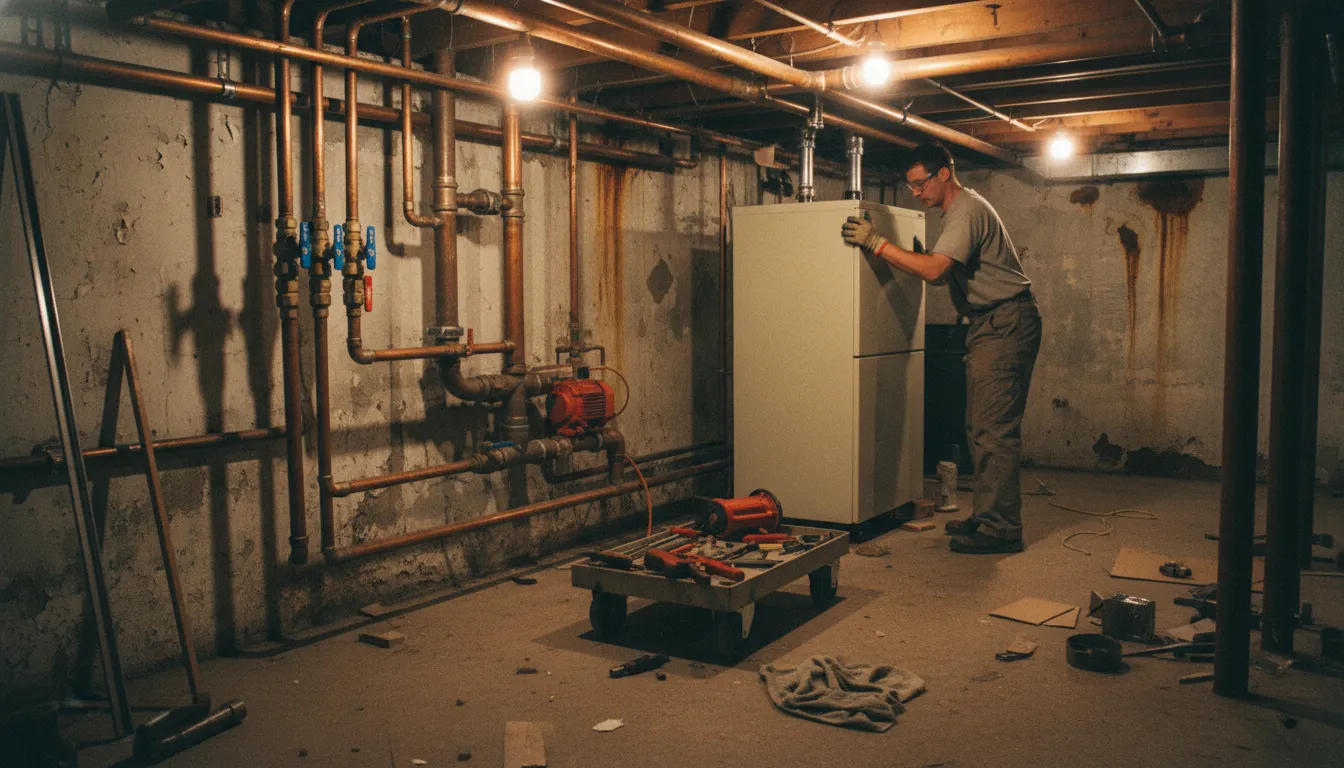
Find the Best Boiler Installation & Replacement Contractors for Your Business
No obligation • Fast responses • Nationwide coverage

Why you can trust HVAC Firms
HVAC Firms is a leading United States resource for evaluating HVAC service providers. Our team researches companies, checks credentials, and reviews customer feedback to present clear, unbiased information. Listings and rankings are based on merit, and companies cannot pay to change our editorial content.
Search providers near you
Best Boiler Installation & Replacement Contractors in Kansas Ranked
Installing or replacing a boiler is a significant home improvement project that directly impacts your comfort, safety, and energy bills. In Kansas, this process is governed by specific state safety laws and building codes designed to protect homeowners. This guide explains the key considerations for Kansas residents, from understanding state regulations and choosing the right high-efficiency equipment to budgeting for the total project cost. You can use the information here to find qualified, licensed local professionals who ensure your installation is safe, compliant, and efficient.
Bryan's Heating & Air Conditioning, Inc.
700 S Ramsey Dr, Valley Center, KS 67147
Bryan's Heating & Air Conditioning, Inc. has been providing residential and commercial HVAC services in Wichita, KS since 1986. They offer a wide range of heating and cooling solutions including repair, installation, and maintenance for furnaces, heat pumps, boilers, geothermal systems, central air conditioners, and ductless mini splits. The company also specializes in indoor air quality services such as humidity control and air purification, as well as custom ductwork fabrication and repair through their in-house sheet metal shop. Bryan's serves the Greater Wichita area with a focus on energy-efficient commercial HVAC solutions and comprehensive maintenance plans.
On Time Plumbing, Heating, Cooling & Electric
4065 N Woodlawn Blvd Suite 3, Bel Aire, KS 67220
On Time Plumbing, Heating, Cooling & Electric is a full-service provider based in Wichita, KS, offering plumbing, electrical, and HVAC services. They serve residential customers with repairs, installations, and maintenance for heating systems including furnaces, heat pumps, geothermal systems, and boilers, as well as air conditioning units and mini-splits. The company has been operating since 2004 and provides 24/7 emergency service to address urgent plumbing, heating, cooling, and electrical needs.
Integrity Trade Services LLC
225 S Ida St #102, Wichita, KS 67211
Integrity Trade Services is a Wichita, KS-based company offering electrical, plumbing, heating, and cooling services for residential and commercial clients. They specialize in HVAC installation, repair, and maintenance, including air conditioning, furnace, heat pump, and boiler systems. With over 20 years of experience, the company employs skilled technicians who have passed thorough background and skills screenings to ensure quality work.
Fahnestock Plumbing HVAC & Electric
3532 N Comotara St, Wichita, KS 67226
Fahnestock Plumbing HVAC & Electric is a full-service provider based in Wichita, KS, offering HVAC, plumbing, and electrical services. Their team handles repairs, installations, and maintenance for heat pumps, boilers, furnaces, air conditioning systems, and geothermal heat pumps. With over 75 years of experience since 1946, they employ NATE-certified technicians and hold certifications from the National Comfort Institute and the EPA. Fahnestock also offers emergency services to address urgent HVAC, plumbing, and electrical issues.
TimeSaver Home Services
3028 N Lorraine St, Hutchinson, KS 67502
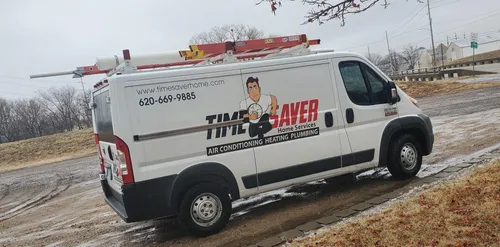
TimeSaver Home Services is an HVAC and plumbing company serving Wichita, KS, and surrounding areas including Reno and McPherson Counties. They offer repair and installation services for heating and air conditioning systems such as furnaces, air conditioners, heat pumps, boilers, mini splits, and geothermal heat pumps. With over 20 years of experience, their technicians are skilled in handling a wide range of HVAC and plumbing needs. The company also provides 24/7 emergency repair services for urgent situations.
Kansas Boiler Regulations and Safety Codes
Boiler installation in Kansas is not a simple DIY task; it's regulated for your safety. The primary oversight comes from the Kansas State Fire Marshal under the Kansas Boiler Safety Act. This law mandates that new installations, as well as second-hand or relocated boilers, must meet recognized construction codes and be reported for inspection by an authorized inspector 1.
Key regulatory points include:
- Licensing & Registration: Installers must be properly licensed. Boilers over a certain capacity (typically 200,000 BTUH or 120 gallons) require specific stamping and must be registered with the National Board of Boiler and Pressure Vessel Inspectors (NBBI) 2.
- Construction Standards: All boilers must be constructed to the ASME (American Society of Mechanical Engineers) Boiler and Pressure Vessel Code, a national safety standard.
- Location Restrictions: For safety, fuel-fired boilers are generally prohibited from being installed in closets. If installation in a bedroom or bathroom is necessary, the unit must be a sealed-combustion type that draws air directly from outside 3.
- Energy Codes: The Kansas Residential Code (IRC) Chapter 11 sets energy efficiency standards that your new boiler system must meet, ensuring it doesn't waste energy 4.
Working with a contractor who is thoroughly familiar with these state laws, national codes (ASME, NBBI), and local building codes is non-negotiable for a compliant and safe installation 5 6.
Choosing the Right Boiler for Your Kansas Home
Selecting a new boiler involves more than just picking a brand. The right choice balances upfront cost with long-term efficiency and comfort, especially given Kansas's variable climate.
Efficiency Ratings: Understanding AFUE
The most critical metric is the Annual Fuel Utilization Efficiency (AFUE) percentage. This measures how efficiently the boiler converts fuel into heat over a typical year.
- Standard Efficiency: Models with an AFUE below 85% are increasingly rare and not recommended for replacement.
- Mid-Efficiency: Units in the 85-89% AFUE range are a common baseline.
- High-Efficiency: For the best energy savings, look for boilers with an AFUE of 90% or higher. These models extract more heat from the combustion gases, sending less wasted energy up the flue.
Types of Boilers
- Condensing Boilers: These represent the pinnacle of residential boiler technology, often achieving AFUE ratings of 95% or more. They work by condensing water vapor in the exhaust gases to capture extra latent heat. While they have a higher initial cost, they offer the greatest long-term fuel savings and work best with modern low-temperature heating systems like radiant floors.
- Non-Condensing Boilers: These are typically less expensive to purchase but also less efficient (usually 80-89% AFUE). They require a more robust chimney or flue to handle hotter exhaust gases.
The Critical Importance of Proper Sizing
A boiler that is too large will "short cycle"-turn on and off frequently-leading to uneven heating, increased wear, and higher energy costs. One that is too small will struggle to keep your home warm on the coldest days. A professional installer will perform a Manual J heat load calculation, which considers your home's square footage, insulation, window quality, and other factors to determine the precise boiler size (in BTUs) needed for optimal performance and efficiency.
Find the perfect boiler installation & replacement contractors for your needs
Get personalized recommendations and expert advice
Cost Breakdown for Boiler Replacement in Kansas
The total cost of a boiler replacement project in Kansas can vary widely based on the equipment, home, and labor. Understanding the full breakdown helps in budgeting effectively.
A typical full replacement project ranges from $4,000 to over $10,000. Here's how that breaks down:
- Boiler Equipment: The unit itself is the largest variable, costing between $2,000 and $5,000. High-efficiency condensing models and well-known brands command higher prices.
- Professional Labor: Installation labor typically falls in the range of $1,500 to $2,500. This covers removing the old unit, installing the new boiler and related components, and ensuring all connections and safety devices are correct.
- Removal & Disposal: Safely disconnecting and hauling away your old boiler usually adds $500 to $1,000 to the project cost.
- Permits: Required local building permits generally cost between $50 and $200. A reputable contractor will pull these permits, which trigger the necessary inspections to verify code compliance.
- Additional Work: If your project involves a fuel conversion (e.g., switching from oil to natural gas), expect to add approximately $2,000 for new gas line work and potentially updating the flue system 7 8.
The Professional Installation Process
A proper installation by a licensed Kansas contractor follows a structured process to ensure safety, efficiency, and compliance.
- Initial Consultation & Load Calculation: A technician will assess your home, discuss your needs, and perform the essential heat load calculation to size the new boiler.
- System Design & Proposal: The contractor will recommend a specific boiler model and provide a detailed written estimate covering all equipment, labor, permits, and ancillary costs.
- Permitting: Before any work begins, your contractor will obtain the required local building permits, as mandated by Kansas law.
- Preparation & Removal: The old boiler is safely disconnected, and the installation area is prepared. The old unit is removed from the premises.
- New Installation: The new boiler is set, connected to fuel, water, and electrical lines, and integrated with your heating distribution system (radiators, baseboards, etc.). All safety and pressure relief valves are installed.
- Inspection & Testing: Once installed, the system is filled, purged of air, and fired up. The contractor will test for proper operation, check for leaks, and verify combustion efficiency. A local building inspector will also visit to approve the work.
- Customer Orientation: A final walk-through ensures you understand how to operate and maintain your new, efficient heating system.
Maintaining Your New Boiler System
To protect your investment and ensure it runs safely and efficiently for its full lifespan, regular maintenance is key. An annual professional tune-up before each heating season is recommended. This service typically includes cleaning the burner and heat exchanger, checking all safety controls, testing water pressure, and inspecting the venting system. Homeowners can also help by keeping the area around the boiler clear and monitoring the system pressure gauge.
Frequently asked questions
Sources
Footnotes
-
BOILER SAFETY ACT - State Fire Marshal, KS - https://firemarshal.ks.gov/177/Kansas-Boiler-Act-PDF ↩
-
2024 Kansas Statutes - https://www.kslegislature.gov/li/m/statute/044_000_0000_chapter/044_009_0000_article/044_009_0023_section/044_009_0023_k.pdf ↩
-
Chapter 20 Boilers and Water Heaters - UpCodes - https://up.codes/viewer/kansas-city/irc-2018/chapter/20/boilers-and-water-heaters ↩
-
Chapter 11 [RE] Energy Efficiency: Kansas Residential Code ... - https://up.codes/viewer/kansas/irc-2018/chapter/11/re-energy-efficiency ↩
-
44-916 - https://ksrevisor.gov/statutes/chapters/ch44/044_009_0016.html ↩
-
Boilers | State Fire Marshal, KS - https://www.firemarshal.ks.gov/175/Boilers ↩
-
Guide to Installing a New Boiler System - Aspen Creek HVAC - https://www.aspencreekhc.com/guide-to-installing-a-new-boiler-system/ ↩
-
Boiler Replacement Costs: Smart Budgeting and Planning ... - https://www.tcmemt.com/post/the-cost-of-boiler-replacement-expert-guide-to-smart-budgeting-and-installation-planning ↩