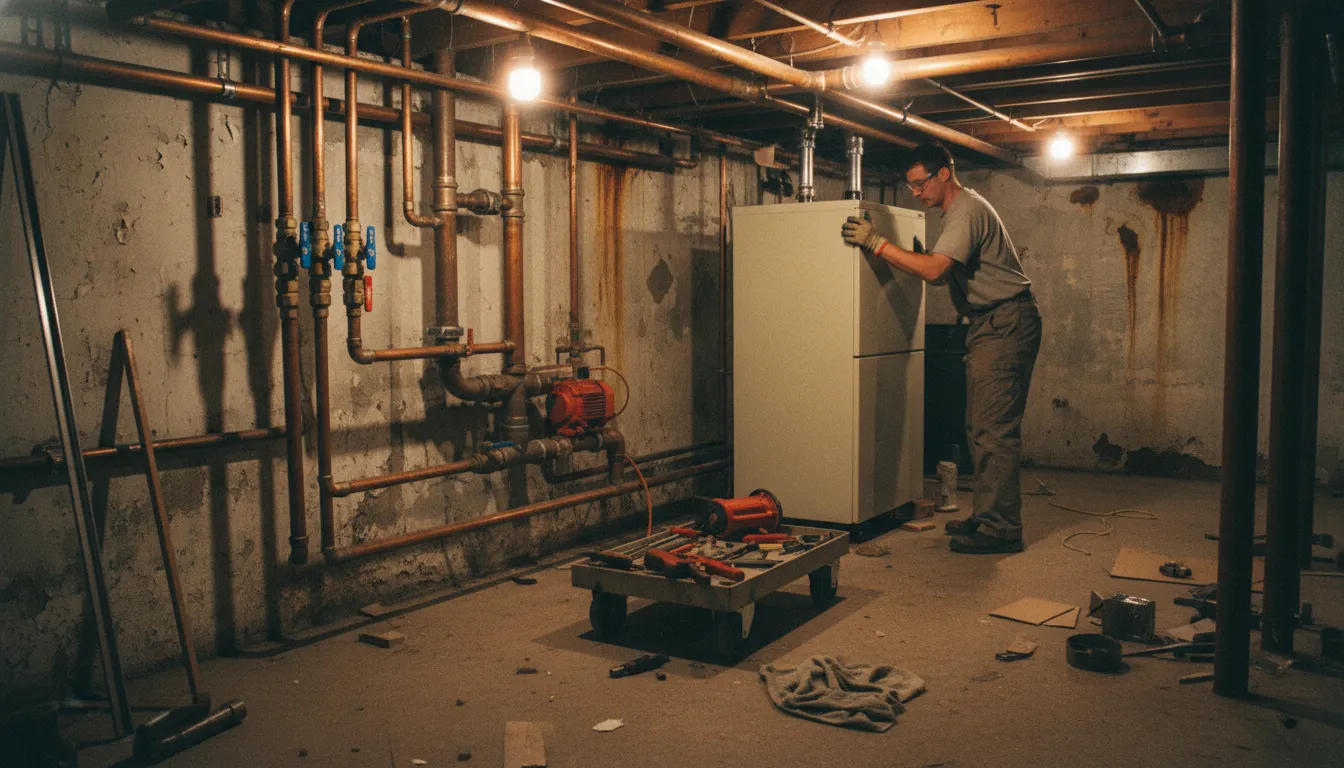
Find the Best Boiler Installation & Replacement Contractors for Your Business
No obligation • Fast responses • Nationwide coverage

Why you can trust HVAC Firms
HVAC Firms is a leading United States resource for evaluating HVAC service providers. Our team researches companies, checks credentials, and reviews customer feedback to present clear, unbiased information. Listings and rankings are based on merit, and companies cannot pay to change our editorial content.
Search providers near you
Best Boiler Installation & Replacement Contractors in Georgia Ranked
A new boiler installation or replacement is a significant investment in your Georgia home's comfort, safety, and energy efficiency. This process involves navigating state and local codes, selecting the right equipment, and ensuring proper installation by qualified professionals. This guide provides a clear overview of the key regulations, considerations, and steps to help you find and vet local service providers for your project.
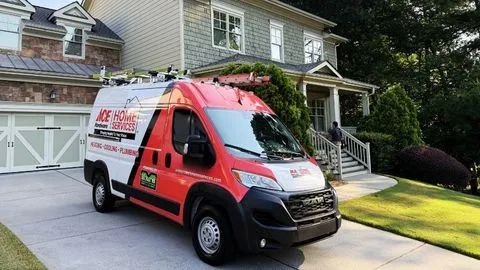
Moncrief Heating & Air Conditioning
935 Chattahoochee Ave NW, Atlanta, GA 30318
Moncrief Heating & Air Conditioning is a full-service HVAC and plumbing company serving Atlanta, GA. With over 125 years of experience, they provide installation, repair, and maintenance for heating, cooling, and plumbing systems. Their services include AC, furnace, heat pump, boiler, mini split, and geothermal heat pump installation and repair, along with HVAC tune-ups. Moncrief works closely with clients to create tailored solutions that fit individual home comfort and health needs.

United Air Temp
3030 Business Park Drive, Norcross, GA 30071
United Air Temp is an HVAC and plumbing company serving the Atlanta, GA area, including Duluth and Marietta. They offer a wide range of services such as air conditioning repair and installation, furnace and boiler maintenance, indoor air quality testing and improvement, and plumbing solutions including water heaters and water treatment. With over 90 years of experience, United Air Temp provides 24/7 emergency HVAC services and emphasizes regular maintenance plans to ensure system efficiency and reliability.

United Air Temp
1240 Johnson Ferry Pl Building - C Suite #220, Marietta, GA 30068
United Air Temp is an HVAC and plumbing contractor serving the Atlanta, GA area, including Duluth and Marietta. They offer a wide range of services such as air conditioning repair and installation, furnace and boiler repair and replacement, indoor air quality testing and improvement, and plumbing solutions including water heaters and water treatment. With over 90 years of experience, United Air Temp provides 24/7 emergency HVAC services and maintains comprehensive maintenance programs to ensure system efficiency and reliability.
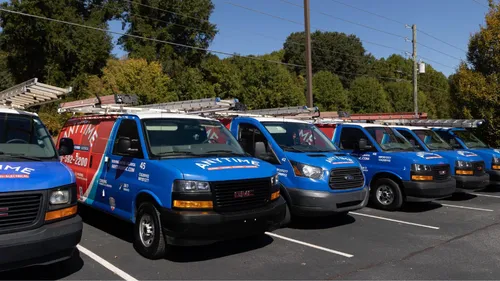
ANYTIME HEATING, COOLING AND PLUMBING
1395 South Marietta Pkwy SE Suite 600, Marietta, GA 30067
ANYTIME HEATING, COOLING AND PLUMBING provides comprehensive HVAC and plumbing services in Atlanta, GA. Serving the Metro Atlanta area for over 23 years, the company offers heating system repairs, installations, and maintenance for furnaces, boilers, heat pumps, and electric resistance heaters. Their cooling services include air conditioner repair, installation, and tune-ups for central AC, ductless mini-splits, and heat pumps. Plumbing services cover drain cleaning, fixture repair and installation, sewer line repair, hydro jetting, and water heater services. The team is fully licensed and insured, with a strong focus on restoring home comfort and safety efficiently.
HVAC Allies
Atlanta, GA
HVAC Allies is a licensed and insured HVAC contractor based near Atlanta, GA, serving homes and businesses within a 125-mile radius. They provide a wide range of HVAC services including installation, repair, and maintenance of air conditioners, furnaces, heat pumps, boilers, and complete HVAC systems. The company focuses on delivering custom HVAC solutions tailored to client needs, covering both cooling and heating systems. HVAC Allies serves the Atlanta area and parts of Georgia and Texas, aiming to offer quality products and services that enhance comfort and efficiency.
Understanding Georgia's Boiler Regulations
In Georgia, all boiler installations are governed by strict safety and building codes to protect homeowners and ensure system integrity. The primary oversight comes from the Office of the Insurance and Safety Fire Commissioner (OCI), which adopts and enforces the state's boiler rules 1.
The technical requirements are based on model codes, including the International Mechanical Code (IMC) and International Plumbing Code (IPC), with specific Georgia amendments. Furthermore, all installations must conform to national standards set by the American Society of Mechanical Engineers (ASME) and the National Board Inspection Code (NBIC) 2. Compliance with these codes is not optional; it's a legal requirement for a safe and lawful installation.
The Permit and Inspection Process
A critical step that homeowners must not overlook is obtaining the proper permits and scheduling inspections.
- Permit Required: Before any work begins, your installer must pull a permit from your local county or city building department. This permit ensures the planned work will be reviewed for code compliance.
- State Inspection: After installation but before the boiler is put into service, a Deputy Inspector from the OCI must inspect the work 3. This inspection verifies that the installation meets all ASME, NBIC, and state code requirements. Inspections are mandatory for both new and secondhand boiler installations 4.
- Local Amendments: Always check with your local building department. Some municipalities in Georgia have additional amendments or requirements beyond the state code 5.
Key Installation Requirements and Best Practices
Adhering to specific installation standards is crucial for performance, safety, and passing inspection.
Clearance and Access: Georgia codes mandate maintaining at least 18 inches of unobstructed space around the boiler 6. This clearance is essential for safe operation, routine maintenance, and proper inspection access.
Venting and Combustion Air: Proper venting of exhaust gases is a major safety concern. Installations must follow the IPC and IMC rules for venting materials, sizing, and termination points. For larger systems, guidelines from NFPA 85 may also apply 7. Equally important is providing adequate combustion air for fuel-burning boilers, as specified in the codes.
Condensate Management: Modern high-efficiency condensing boilers produce acidic water as a byproduct. Georgia code has specific requirements for the proper disposal of this condensate, typically involving neutralization kits or connection to an approved drain 8. Your installer must plan for this.
System Sizing: One of the most common mistakes is installing an incorrectly sized boiler. A unit that is too large will short-cycle, reducing efficiency and comfort, while one that is too small will struggle to heat your home. A proper Manual J heat load calculation, performed by your contractor, is necessary to determine the correct BTU/hour capacity for your specific home.
Energy Efficiency and the Georgia Energy Code
Beyond safety, Georgia mandates energy efficiency through the Georgia State Minimum Standard Energy Code, which is based on the International Energy Conservation Code (IECC) 9. This means your new boiler system must meet minimum efficiency standards.
The most straightforward way to ensure compliance and maximize savings is to choose an ENERGY STAR® certified boiler. High-efficiency condensing models often achieve Annual Fuel Utilization Efficiency (AFUE) ratings of 90% or higher, significantly reducing your annual heating costs compared to older, standard-efficiency units 10.
Types of Boilers and Cost Considerations
The type of boiler you choose will significantly impact the project's scope and cost.
- Fuel Type: The most common options in Georgia are natural gas, propane, and electric boilers. Your choice will depend on local fuel availability, utility costs, and the existing infrastructure in your home.
- Efficiency Level:
- Standard/Mid-Efficiency (Non-Condensing): Typically have AFUE ratings between 80-85%. These are often less expensive upfront but have higher operating costs.
- High-Efficiency (Condensing): AFUE ratings of 90% and above. They capture more heat from combustion gases, are more complex to install, and have a higher initial cost but offer greater long-term savings.
Understanding Cost Ranges
Boiler installation costs in Georgia vary widely based on the unit type, home size, complexity of the install, and labor rates. It's essential to get detailed, written estimates that break down all costs.
- Boiler Unit Only: Prices can range from $1,500 to $4,000+ for standard models, and $3,000 to $7,000+ for high-efficiency condensing units.
- Total Installed Cost: For a full replacement including the unit, labor, materials (piping, venting, etc.), and permits, homeowners can expect a total range from approximately $3,000 for a basic, straightforward replacement to $10,000 or more for a complex installation or a high-end system in a large home 11 12.
Find the perfect boiler installation & replacement contractors for your needs
Get personalized recommendations and expert advice
How to Plan Your Georgia Boiler Project
A successful installation starts with careful planning and selecting the right partner for the job.
- Assess Your Needs: Determine if you need a full system replacement or if a repair is sufficient. Consider your long-term plans for the home and your energy-saving goals.
- Research Local Providers: Look for licensed, insured HVAC contractors who specialize in boiler work. Verify they have experience with the specific type of boiler you are considering.
- Check Credentials: Ensure the contractor holds the proper state and local licenses. They should be familiar with Georgia's OCI regulations and the permit process in your municipality.
- Get Multiple Quotes: Obtain at least three detailed, written estimates. These should include the specific boiler model (with efficiency rating), a breakdown of all labor and material costs, permit fees, and a clear project timeline.
- Ask the Right Questions: Inquire about who will pull the permit, how they handle the state inspection, what warranties are provided on both parts and labor, and their process for calculating the correct boiler size for your home.
By understanding the regulatory landscape and following these steps, you can make an informed decision, ensure a code-compliant installation, and enjoy reliable, efficient heat in your Georgia home for years to come.
Frequently asked questions
Sources
Footnotes
-
Boiler & Pressure Vessels Rules and Regulations - oci.ga.gov - https://oci.georgia.gov/inspections-permits-plans/boilers-pressure-vessels/rules-and-regulations ↩
-
GAC - Rule 125-4-2-.02. Facilities and Equipment - GA R&R - https://rules.sos.state.ga.us/GAC/125-4-2-.02 ↩
-
GA Reg. 120-3-26-.07 State Inspection Fees New Installation ... - https://public.fastcase.com/jaEE2PXzRXmZ99jOLMt1Iv5LBp1sdLiu%2Bj6%2Fb9UkGuYJisi6A5KLDjH9EJWzZYwRTVHdgpcW8OHQ3iDCrJc5jQ%3D%3D ↩
-
GAC - Rule 511-1-3-.01. Forms - GA R&R - https://rules.sos.state.ga.us/GAC/511-1-3-.01 ↩
-
Boilers & Pressure Vessels - https://oci.georgia.gov/inspections-permits-plans/boilers-pressure-vessels ↩
-
Chapter 10 Boilers, Water Heaters and Pressure Vessels - UpCodes - https://up.codes/viewer/georgia/imc-2012/chapter/10/boilers-water-heaters-and-pressure-vessels ↩
-
Subject 120-3-26. RULES AND REGULATIONS FOR BOILERS AND PRESSURE VESSELS - https://rules.sos.ga.gov/gac/120-3-26 ↩
-
GAC - Rule 494-1-1-.01. Purpose - GA R&R - https://rules.sos.state.ga.us/gac/494-1-1-.01 ↩
-
Chapter 3 General Regulations: Georgia State Minimum Standard ... - https://up.codes/viewer/georgia/imc-2018/chapter/3/general-regulations ↩
-
Chapter 10 Boilers, Water Heaters and Pressure Vessels - https://up.codes/viewer/georgia/imc-2018/chapter/10/boilers-water-heaters-and-pressure-vessels ↩
-
Boiler Replacement ROI | Skaggs-Walsh - https://skaggswalsh.com/boiler-replacement-roi-sw/ ↩
-
How Much Does A Boiler Cost? | 6 Pricing Factors - https://www.callmattioni.com/blog/t-boiler-cost/ ↩