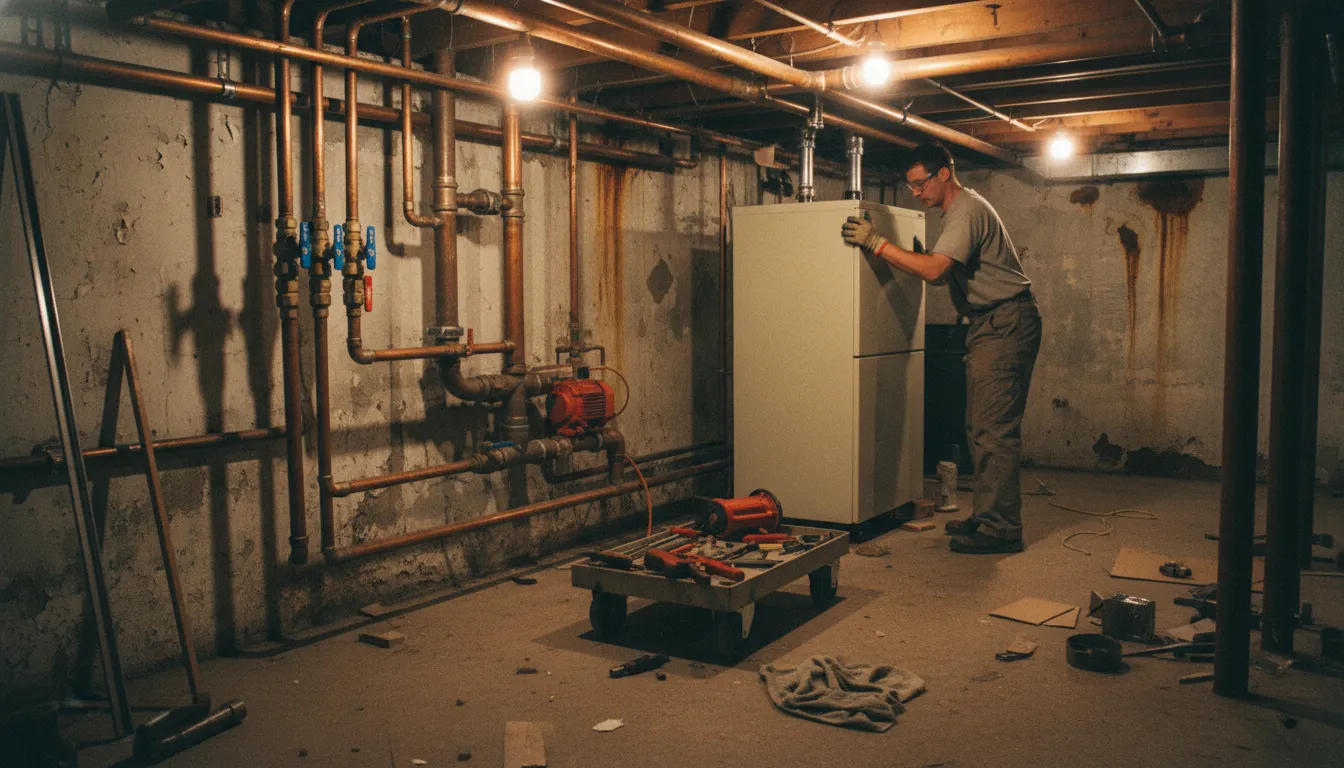
Find the Best Boiler Installation & Replacement Contractors for Your Business
No obligation • Fast responses • Nationwide coverage

Why you can trust HVAC Firms
HVAC Firms is a leading United States resource for evaluating HVAC service providers. Our team researches companies, checks credentials, and reviews customer feedback to present clear, unbiased information. Listings and rankings are based on merit, and companies cannot pay to change our editorial content.
Search providers near you
Top Boiler Installation & Replacement Contractors in Morgan Hill, California Ranked
Replacing or installing a new boiler is a significant home improvement decision that directly impacts your comfort, energy bills, and safety. Whether you're upgrading an aging system, converting from another fuel source, or installing a boiler in a new construction, understanding your options and local requirements is crucial. This guide provides a detailed overview of boiler installation and replacement specific to Morgan Hill, helping you navigate system types, local codes, costs, and the process of selecting a qualified professional for your heating project.
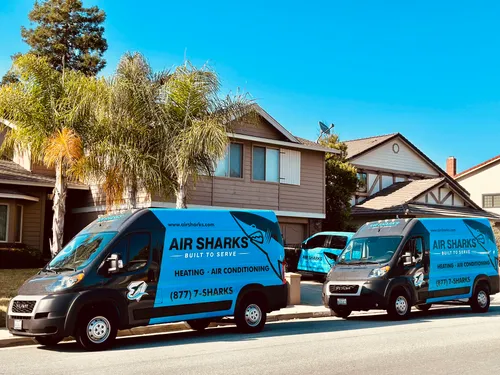
Air Sharks
1560 N 4th St #102, San Jose, CA 95112
Air Sharks is a licensed and insured HVAC company serving San Jose, CA, and nearby communities. They provide a full range of heating and cooling services including installation, repair, and maintenance for central and ductless air conditioning systems, furnaces, and boilers. Their expertise also covers ductwork cleaning, inspection, repair, and replacement to improve indoor air quality. The company emphasizes thorough inspections and offers detailed reports after service. Air Sharks has been serving the San Jose area for several years and employs background-checked and drug-tested technicians. They also provide emergency support and financing options to assist customers.
Aire Serv of Campbell and Saratoga
San Jose, CA
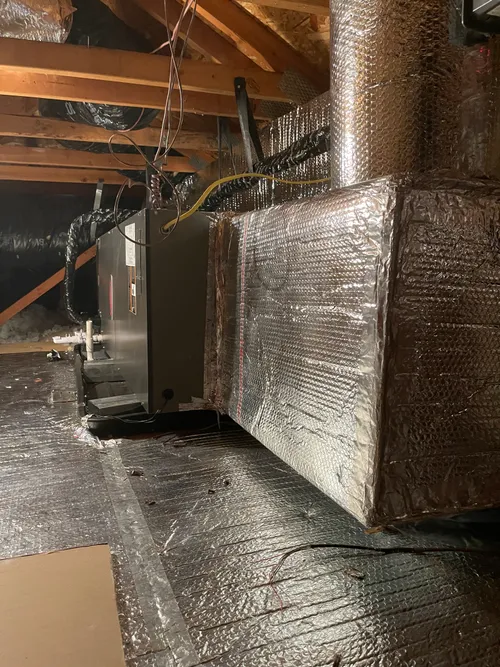
Aire Serv of Campbell and Saratoga provides heating, air conditioning, and indoor air quality services in San Jose, CA. They offer repair, installation, and maintenance for HVAC systems including furnaces, heat pumps, boilers, and air conditioners. Their services also include duct cleaning, thermostat installation, and air purification to improve indoor air quality. The company supports emergency HVAC repairs with 24/7 availability, ensuring comfort during unexpected breakdowns. Aire Serv is part of the Neighborly brand and serves residential and commercial customers in San Jose and nearby communities.
Equinox Air Conditioning
4825 Branham Ln, San Jose, CA 95118
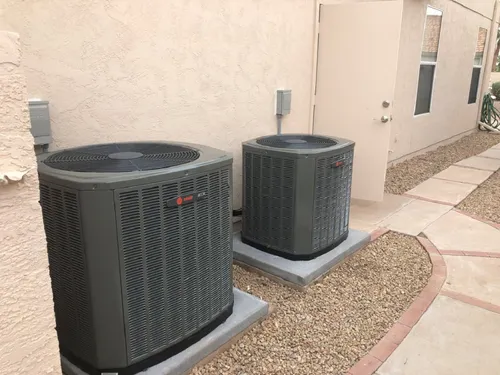
Equinox Air Conditioning is an HVAC company based in San Jose, CA, offering repair, installation, and maintenance services for heating and air conditioning systems. They service a range of equipment including air conditioners, furnaces, heat pumps, and boilers. The company provides solutions for both residential and commercial clients, ensuring comfort throughout the year. Equinox Air Conditioning works with all makes and models of HVAC systems, regardless of brand or age, and employs knowledgeable professionals to handle various HVAC needs.

TemperaturePro San Jose
1721 Old Bayshore Hwy, San Jose, CA 95112
TemperaturePro San Jose is a heating and air conditioning company serving the San Jose, CA area. They offer a wide range of HVAC services including installation, repair, and maintenance of air conditioners, furnaces, heat pumps, boilers, and duct systems. The company also provides indoor air quality solutions and guidance on California's HVAC regulations such as electrification and HERS testing. Their technicians work with many well-known HVAC brands and focus on honest, commission-free service. TemperaturePro San Jose is locally owned and operated, serving the community with expertise in both residential and commercial HVAC needs.
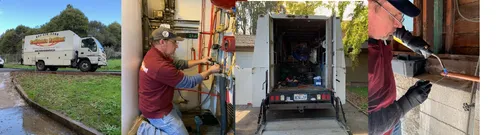
California Radiant
1245 Thompson Ave, Santa Cruz, CA 95062
California Radiant is a boiler repair and installation company serving San Jose, CA. They specialize in boilers, radiant heating systems, floor heating, radiators, and leak detection. Their team stays current with the latest boiler technology and offers installation and service for hydronic heating systems that use hot water to provide warmth. California Radiant also installs and services modern radiators and offers leak detection for potential issues in radiant heating setups.
Understanding Your Boiler Options
Choosing the right boiler for your Morgan Hill home starts with understanding the core configurations available. The primary decision involves the system's efficiency and its intended function.
Condensing vs. Non-Condensing Boilers Modern high-efficiency boilers are often condensing models. These units capture additional heat from water vapor in the exhaust gases, which would otherwise be wasted in a standard non-condensing boiler. This process makes them significantly more efficient, often achieving Annual Fuel Utilization Efficiency (AFUE) ratings above 90%. They are ideal for pairing with modern low-temperature heating systems like radiant floor heating. Non-condensing, or standard-efficiency, boilers are simpler and may be a cost-effective choice for replacing an older unit in a system not designed for condensing technology.
System Types: Combi vs. Traditional Your choice here defines how your home receives heat and hot water.
- Combination (Combi) Boilers: These compact units provide both space heating and on-demand domestic hot water from a single appliance, eliminating the need for a separate storage tank 1. They are excellent for saving space and providing endless hot water, though their flow rate can limit simultaneous use in larger homes.
- Traditional Systems: These involve a boiler dedicated to space heating (powering radiators, baseboards, or underfloor loops). Domestic hot water is supplied by a separate tank-style or tankless water heater. This setup is common in homes with higher simultaneous hot water demand and existing radiator systems.
Fuel Source Considerations Natural gas is the most common fuel for boilers in Morgan Hill due to its availability and cost. However, some homes, particularly in more rural areas, may use heating oil. Converting from an oil-fired boiler to a natural gas system involves significant work, including running a new gas line and modifying the venting, which adds substantially to the project cost. It's essential to evaluate the long-term fuel costs and availability when making this decision.
Morgan Hill Codes and Permit Requirements
Adhering to local and state codes is not just a legal formality-it's critical for safety and system performance. The City of Morgan Hill has specific requirements for boiler and water heater installations.
Permits Are Mandatory A permit from the City of Morgan Hill is required for water heater and boiler replacement. A reputable, licensed contractor will typically pull this permit on your behalf. The permit process ensures the installation will be inspected to verify it meets all safety codes, protecting your home and family.
Key Safety and Installation Codes California's strict building codes include several non-negotiable requirements for boiler installations:
- Earthquake Strapping: California law mandates that all water heaters and boilers must be strapped to the wall framing in at least two places: the top third and the bottom third of the unit. This is to prevent tipping and gas line rupture during seismic activity.
- Venting and Combustion Air: Proper venting is essential to safely exhaust carbon monoxide (CO) outdoors. Gas units must be vented using approved materials with specific clearances from combustible surfaces 2. The installation must also provide adequate combustion air for safe operation.
- Drain Pans and Relief Valve Drain Lines: To mitigate water damage from potential leaks, installations often require a drain pan beneath the unit with a drain line piped to an approved location, such as the exterior of the home or a floor drain.
- Prohibited Locations: For safety reasons, boilers and water heaters cannot be installed in bedrooms, bathrooms, or closets that open into these rooms, to reduce the risk of carbon monoxide exposure to occupants.
- System Components: Codes also dictate requirements for ancillary components like expansion tanks, which are required in closed heating systems to manage pressure fluctuations (referenced in codes like the California Mechanical Code 1001.4) 3.
Always ensure your contractor is familiar with the latest editions of the California Plumbing Code (CPC) and California Mechanical Code (CMC).
Cost Factors for Boiler Replacement
The total cost of a new boiler installation in Morgan Hill can vary widely based on several factors. Understanding these can help you budget effectively and interpret quotes.
Primary Cost Components A typical boiler replacement cost breaks down into several parts:
- Equipment Cost: The boiler unit itself typically ranges from $2,000 to $5,000, with high-efficiency condensing and combi models at the higher end of the spectrum.
- Installation Labor: Professional installation labor can range from $1,500 to $2,500 or more, depending on the job's complexity.
- Permit Fees: The City of Morgan Hill charges permit fees, generally estimated between $50 and $200 for this type of work.
- Removal & Disposal: Removing the old boiler, which can be heavy and involve disconnecting gas, water, and electrical lines, may cost an additional $500 to $1,000.
Overall Price Range For a standard gas boiler replacement in Morgan Hill, homeowners can expect a total installed cost generally ranging from $4,000 to $9,000 or more 4. High-efficiency models, including condensing boilers, might range from $6,000 to $8,500+ installed 4 5. More complex jobs, like switching from oil to gas or installing a new hydronic zone, will push costs toward the higher end of these ranges.
What Influences Your Final Price?
- Home Size and BTU Requirements: Larger homes require boilers with higher BTU output, which increases equipment cost.
- Fuel Type Conversion: As mentioned, converting from oil to gas adds significant cost for new piping and vent modifications.
- System Complexity: Integrating with existing radiators, adding new zones, or installing underfloor heating increases labor and material costs.
- Condition of Existing Components: The need to replace old pumps, valves, or piping will add to the project total.
Find the perfect boiler installation & replacement contractors for your needs
Get personalized recommendations and expert advice
The Installation Process: Key Steps for Homeowners
A successful boiler installation is a multi-step process. Being an informed participant helps ensure a smooth project.
- Initial Assessment and Quotes: Start by obtaining itemized written proposals from 2-3 licensed, local HVAC contractors 6. A thorough proposal should include the specific boiler model, labor breakdown, permit fees, and a timeline. During their assessment, a good contractor will evaluate your existing system-checking radiators, circulation pumps, and piping-to identify any ancillary work needed.
- Verification and Preparation: Before work begins, verify that the contractor will pull the required permit from the City of Morgan Hill 7. This is a hallmark of a professional. Use this time to discuss logistics like access, work hours, and protection of your property.
- Installation Day: The old boiler will be safely disconnected and removed. The new unit will be positioned, strapped for seismic safety, and connected to fuel, water, and electrical lines. Venting will be installed or modified to code. The system will be filled, purged of air, and fired up for testing.
- Inspection and Commissioning: After installation, a city inspector will visit to verify the work meets code. Once passed, the contractor will commission the system, setting controls for optimal efficiency and explaining its operation to you.
Maintaining Your New Boiler System
To protect your investment and ensure long-term efficiency and safety, regular maintenance is key. An annual professional service check before the heating season is recommended. This typically includes inspecting the heat exchanger, checking and adjusting the burner, testing safety controls, and flushing the system if needed. Homeowners can also keep an eye on the system pressure gauge and listen for unusual noises, reporting any concerns to a professional.
Frequently asked questions
Sources
Footnotes
-
Residential Boiler Heating 101 - Laars - https://www.laars.com/solutions/homeowners/heating-101 ↩
-
Morgan Hill Heater Installation - https://fastwaterheater.com/service-areas/bay-area/morgan-hill/ ↩
-
Residential Water Heater and Boiler General Requirements - https://www.townoftiburon.org/DocumentCenter/View/5177/Residential-Water-Heater-and-Boiler-Hand-Out ↩
-
Boiler Replacement Costs: Smart Budgeting and Planning ... - https://www.tcmemt.com/post/the-cost-of-boiler-replacement-expert-guide-to-smart-budgeting-and-installation-planning ↩ ↩2
-
How much does a new boiler cost to install or replace? - HomeGuide - https://homeguide.com/costs/boiler-replacement-cost ↩
-
Boiler Replacement and Installation - Modernize - https://modernize.com/hvac/heating-repair-installation/boiler ↩
-
Water Heater Replacement | City of Morgan Hill, CA - https://www.morganhill.ca.gov/168/Water-Heater-Replacement ↩