Find the Best AC Repair Contractors for Your Business
No obligation • Fast responses • Nationwide coverage

Why you can trust HVAC Firms
HVAC Firms is a leading United States resource for evaluating HVAC service providers. Our team researches companies, checks credentials, and reviews customer feedback to present clear, unbiased information. Listings and rankings are based on merit, and companies cannot pay to change our editorial content.
Search providers near you
Top AC Repair Contractors in Encinitas, California Ranked
Living in Encinitas means enjoying a beautiful coastal climate, but the salty, moist air can take a toll on your home's cooling system. When your air conditioner starts blowing warm air, making strange noises, or failing to turn on, you need reliable, expert service to get your comfort back on track. This guide explains the common air conditioning problems specific to our area, what the repair process entails, and how you can find qualified local technicians to diagnose and fix your system efficiently.
JPM Heating & Air Inc.
1551 Cuyamaca St, El Cajon, CA 92020
JPM Heating & Air Inc. is a family-owned HVAC contractor serving San Diego, CA, with over 20 years of experience. They provide a range of services including installation, repair, and maintenance of air conditioning, furnaces, heat pumps, and ductwork. As a Bryant Factory Authorized Dealer, they offer reliable HVAC solutions backed by warranties on labor and parts. Their services also include indoor air quality improvements such as air purifiers and humidifiers. JPM Heating & Air offers emergency response within 24 hours and same-day installation estimates, emphasizing clear communication and community values.
Flite Mechanical Heating & Air Professionals
3781 El Canto Dr, Spring Valley, CA 91977
Flite Mechanical Heating & Air Professionals provides HVAC installation, repair, and indoor air quality services in San Diego, CA. They handle air conditioning, furnace, mini split, and new construction HVAC systems. The company is equipped with skilled technicians who focus on accurate and reliable service to maintain comfortable indoor environments year-round. Serving homeowners and businesses in San Diego and nearby areas, Flite Mechanical is committed to supporting both residential and commercial HVAC needs.
Smith & Sons Heating and Air Inc.
8859 Balboa Ave STE E, San Diego, CA 92123
Smith & Sons Heating and Air Inc. offers air conditioning installation, repair, and maintenance services in San Diego, CA. They serve both residential and commercial clients, focusing on reliable cooling and energy-efficient HVAC solutions. Their skilled technicians provide tune-ups and repairs to keep systems running smoothly throughout the year.
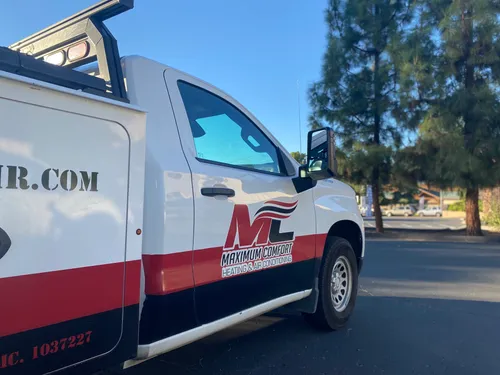
Maximum Comfort Heating and AC Repair
206 Greenfield Dr B, El Cajon, CA 92020
Maximum Comfort Heating and AC Repair is an air conditioning repair company based in San Diego, CA. They provide fast air conditioner repair services with same-day availability. The company focuses on delivering honest pricing and reliable AC repair solutions to customers in the area.
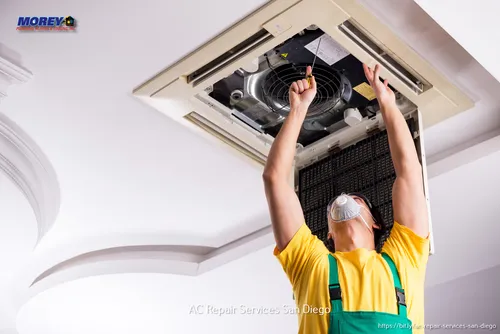
Morey Plumbing, Heating, & Cooling, Inc.
7895 Convoy Ct SUITE 13, San Diego, CA 92111
Morey Plumbing, Heating, & Cooling, Inc. is a family-owned HVAC and plumbing contractor serving San Diego, CA. They offer a wide range of services including air conditioning and heating installation, repair, and maintenance, as well as plumbing and water filtration solutions. With over 25 years of experience, the company provides annual maintenance programs and 24-hour emergency service to help maintain system performance and address urgent needs. Their licensed and insured technicians are equipped to handle various HVAC and plumbing projects across the greater San Diego area.
Why Encinitas Homes Face Unique AC Challenges
The ocean breeze is a blessing, but for your HVAC system, it presents specific challenges. The constant exposure to salty, humid air accelerates corrosion on critical components, particularly the outdoor condenser unit's coils and electrical connections. This environmental factor means that even with regular maintenance, Encinitas residents may encounter air conditioning issues that are less common inland. Understanding these local nuances helps technicians provide faster, more accurate diagnoses and repairs.
Common Air Conditioning Problems in Coastal Climates
Recognizing the signs of trouble early can prevent a minor issue from becoming a major, costly repair. Here are the most frequent cooling system failures encountered in Encinitas.
Salt and Moisture Corrosion: This is the hallmark issue for coastal AC repair. Salt buildup on the condenser coils acts as an insulator, drastically reducing the system's ability to expel heat. Meanwhile, moisture can corrode electrical contactors, capacitor connections, and wiring, leading to intermittent operation or complete failure.
Refrigerant Leaks: Your air conditioner doesn't "use up" refrigerant; it circulates it in a sealed loop. If it's low, there's a leak. The constant thermal expansion and contraction at connection points, combined with potential corrosion, can cause small leaks to develop over time. A system low on refrigerant will struggle to cool your home and can cause the compressor to overwork itself to failure.
Failed Capacitors and Contactors: These are the electrical components that help start and run the compressor and fan motors. They are particularly susceptible to failure from heat and corrosion. A bad capacitor often manifests as a humming sound from the outdoor unit without the fan or compressor starting, or the system may trip the breaker repeatedly 1.
Fan Motor Failures: The condenser fan motor, which pulls air through the outdoor coil, is constantly exposed to the elements. Corrosion from salt air can seize the bearings or damage the windings. Similarly, the indoor blower motor can fail from years of wear. Symptoms include reduced airflow from your vents or the outdoor fan not spinning.
Compressor Failure: The compressor is the heart of your AC system, and its failure is one of the most significant repairs. It can be caused by electrical issues (like a failed capacitor), refrigerant problems, or general wear and tear. Warning signs include loud grinding or rattling noises from the outdoor unit and the system failing to cool at all.
Clogged Drain Lines and Filters: While not exclusive to the coast, these are universal issues. Algae and mold can clog the condensate drain line, causing water to back up into your home or trigger a safety switch that shuts the AC off. A dirty air filter restricts airflow, forcing the system to work harder, which increases energy bills and can lead to frozen evaporator coils.
The Step-by-Step Air Conditioning Repair Process
A professional technician follows a logical troubleshooting sequence to accurately identify the root cause of your system's malfunction.
- Initial Assessment: The process begins with a conversation. The technician will ask about the symptoms, when they started, and any recent changes. They will then check the thermostat settings and power source, ensuring the unit is receiving electricity 2.
- Visual and Physical Inspection: The technician will inspect the outdoor condenser unit for debris, corrosion, and damage. They will check the indoor air handler, replace a dirty air filter, and ensure all vents are open. The condensate drain line will also be checked for clogs 3.
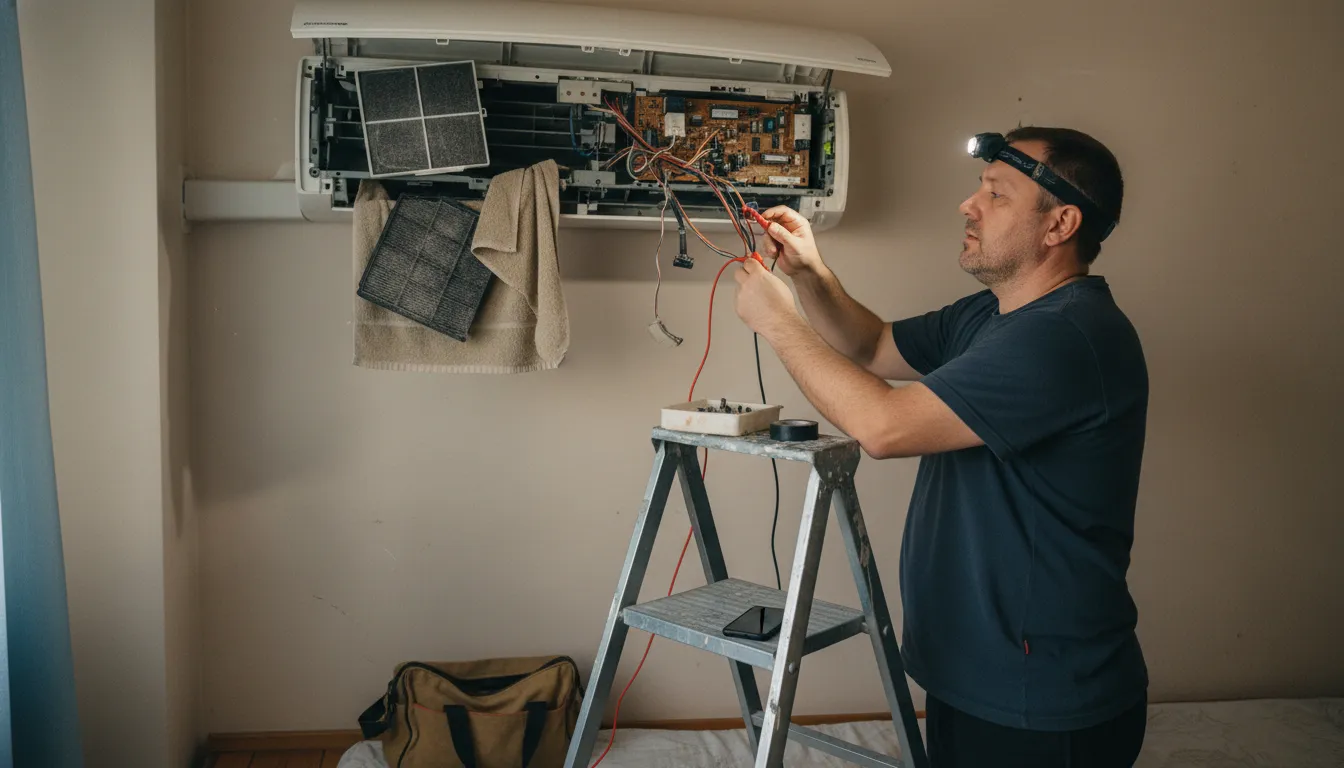
- System Testing: Using specialized tools, the technician will measure the system's refrigerant pressure and temperature to check for proper charge and potential leaks. They will use a multimeter to test electrical components like capacitors, contactors, and motors for proper operation 4.
- Diagnosis and Recommendation: After identifying the faulty component(s), the technician will explain the issue, why it caused the problem, and present your repair options. A reputable professional will provide a clear, upfront estimate for the necessary work 5.
- Execution of Repair: With your approval, the technician will perform the repair. This may involve sealing a refrigerant leak, replacing a capacitor or motor, cleaning coils, or unclogging a drain line. For major components like a compressor, replacement may be the most reliable solution 6.
Find the perfect ac repair contractors for your needs
Get personalized recommendations and expert advice
What to Expect from Local Encinitas Service Providers
The local market for cooling repair is competitive, which benefits homeowners. Many Encinitas-based companies understand the urgency of a broken AC, especially during warmer months, and structure their services accordingly.
Service Speed: It's common for providers to offer same-day or next-day service for repair calls. Several companies, including those like Same Day Heating, Cooling, Plumbing and Cali Breeze HVAC, emphasize rapid response times and even have 24/7 emergency service options for critical failures 7.
Pricing and Diagnostics: Most companies charge a diagnostic or service call fee, typically ranging from $99 to $169, to cover the initial inspection and troubleshooting 8. Importantly, some providers will apply this fee toward the cost of the repair if you choose to proceed with them. Always ask about this policy when scheduling.
Repair Cost Ranges: While the final cost depends entirely on the specific problem, local data provides a general framework:
- Capacitor Replacement: $150 - $350
- Condenser Fan Motor Replacement: $300 - $800+
- Refrigerant Leak Repair & Recharge: $300 - $1,000+ (cost varies significantly with leak location and refrigerant type)
- Compressor Replacement (Major Repair): $1,000 - $3,000+ 9
Choosing a Technician: Look for licensed, insured, and locally-established companies. Highly-rated providers on platforms like Yelp, such as Airmaxx and West Coast Heating Air Solar, often have strong reputations for quality work and customer service 10. Always verify that they have experience with the specific make and model of your system.
Proactive Maintenance to Avoid Future Repairs
The best repair is the one you never need. Scheduling annual preventative maintenance before the cooling season is the most effective way to protect your investment. A thorough maintenance visit includes cleaning corrosive salt buildup from coils, checking and tightening electrical connections, testing capacitors and motors, checking refrigerant levels, clearing the drain line, and ensuring the system is operating at peak efficiency. This proactive step can identify small issues before they lead to a complete breakdown on the hottest day of the year 11 12.
Frequently asked questions
Sources
Footnotes
-
Troubleshooting Electrical Issues in Your Home HVAC System - https://www.southern-air.com/blog/troubleshoot-electrical-issues-in-home-hvac ↩
-
6 Important Things to Check Before Scheduling a Service Call - https://acmasters.com/6-things-to-check-before-scheduling-a-service-call/ ↩
-
Troubleshooting Common Split System AC Problems - Style Crest - https://stylecrestinc.com/blog/troubleshooting-common-split-system-ac-problems/ ↩
-
HVAC Troubleshooting Guide: Step-by-Step Solutions Made Easy - https://projecthvac.com/2026/01/07/hvac-troubleshooting-guide-step-by-step/ ↩
-
Common HVAC Troubleshooting Scenarios: A Technician's Guide - https://www.servicetitan.com/blog/hvac-troubleshooting-scenarios ↩
-
Understanding Car AC Repair: A Comprehensive Guide - https://www.hondaofclevelandheights.com/blog/understanding-car-ac-repair-a-comprehensive-guide/ ↩
-
AC Repair in Encinitas CA - Cali Breeze HVAC - https://calibreezehvac.com/ac-repair-in-encinitas-ca/ ↩
-
AC Repair & Heating Service in Encinitas, CA - https://samedaysd.com/locations/encintas/ ↩
-
How Much Does it Cost to Repair AC in 2025 | Cooling Homeowner's Guide - https://www.peakheatingcooling.com/homeowners-guide/cooling/how-much-does-it-cost-to-repair-ac-most-common-ac-repairs ↩
-
TOP 10 BEST Air Conditioning Repair near Encinitas, CA - Yelp - https://m.yelp.com/search?find_desc=Air+Conditioning+Repair&find_loc=Encinitas%2C+CA ↩
-
How to Troubleshoot an HVAC System: Guide for Homeowners - https://www.ars.com/blog/how-to-troubleshoot-a-hvac-system ↩
-
The Complete Guide To HVAC Services In San Diego - https://www.progressiveairconditioning.com/the-complete-guide-to-hvac-services-in-san-diego/ ↩