Find the Best AC Installation & Replacement Contractors for Your Business
No obligation • Fast responses • Nationwide coverage

Why you can trust HVAC Firms
HVAC Firms is a leading United States resource for evaluating HVAC service providers. Our team researches companies, checks credentials, and reviews customer feedback to present clear, unbiased information. Listings and rankings are based on merit, and companies cannot pay to change our editorial content.
Search providers near you
Best AC Installation & Replacement Contractors in West Virginia Ranked
Installing or replacing an air conditioning system is a significant investment in your West Virginia home's comfort, efficiency, and value. The state's humid summers and varied terrain make a reliable cooling solution essential. This guide explains the key considerations for West Virginia homeowners, from choosing the right system type to understanding the installation process and costs, helping you make an informed decision when selecting a local service provider.
Understanding West Virginia's Climate & AC Needs
West Virginia's climate presents unique challenges for cooling. Summers can be hot and humid, particularly in the valleys, while the mountainous regions experience slightly milder conditions. This variability means a one-size-fits-all approach to air conditioning doesn't work. The state's moderate climate actually makes it an excellent candidate for heat pump systems, which provide efficient cooling in summer and heating in winter. For many homes, especially older properties common in the state, the existing infrastructure-or lack thereof-is a primary factor. Many historic or older homes were built without any ductwork, which significantly influences the type of system you can install and the overall project scope and cost.
Types of AC Systems for West Virginia Homes
Choosing the correct system type is the most critical decision. The right choice balances upfront cost, long-term energy efficiency, and suitability for your home's layout.
Heat Pumps
Ideal for West Virginia's climate, heat pumps are highly efficient systems that provide both heating and cooling by transferring heat rather than generating it. They are most effective in regions with moderate winters, making them a superb, year-round solution for many WV households. Their high efficiency often qualifies them for utility rebates, improving their overall value.
Dual-Fuel Systems
Also known as hybrid systems, these combine an electric heat pump with a gas furnace. The system intelligently switches between the two fuel sources based on outdoor temperature to provide the most cost-effective comfort. The heat pump handles moderate cooling and heating, while the gas furnace takes over during extreme cold snaps. This offers optimal efficiency across West Virginia's varying seasonal demands and can lead to substantial energy savings.
Central Air Conditioning (Split Systems)
This is the standard forced-air central cooling system, consisting of an outdoor condenser unit and an indoor evaporator coil. It's a popular choice, but its feasibility and cost depend entirely on whether your home has existing, functional ductwork. Installing a full duct system in a home that lacks one is a major construction project that can be prohibitively expensive and disruptive.
Ductless Mini-Split Systems
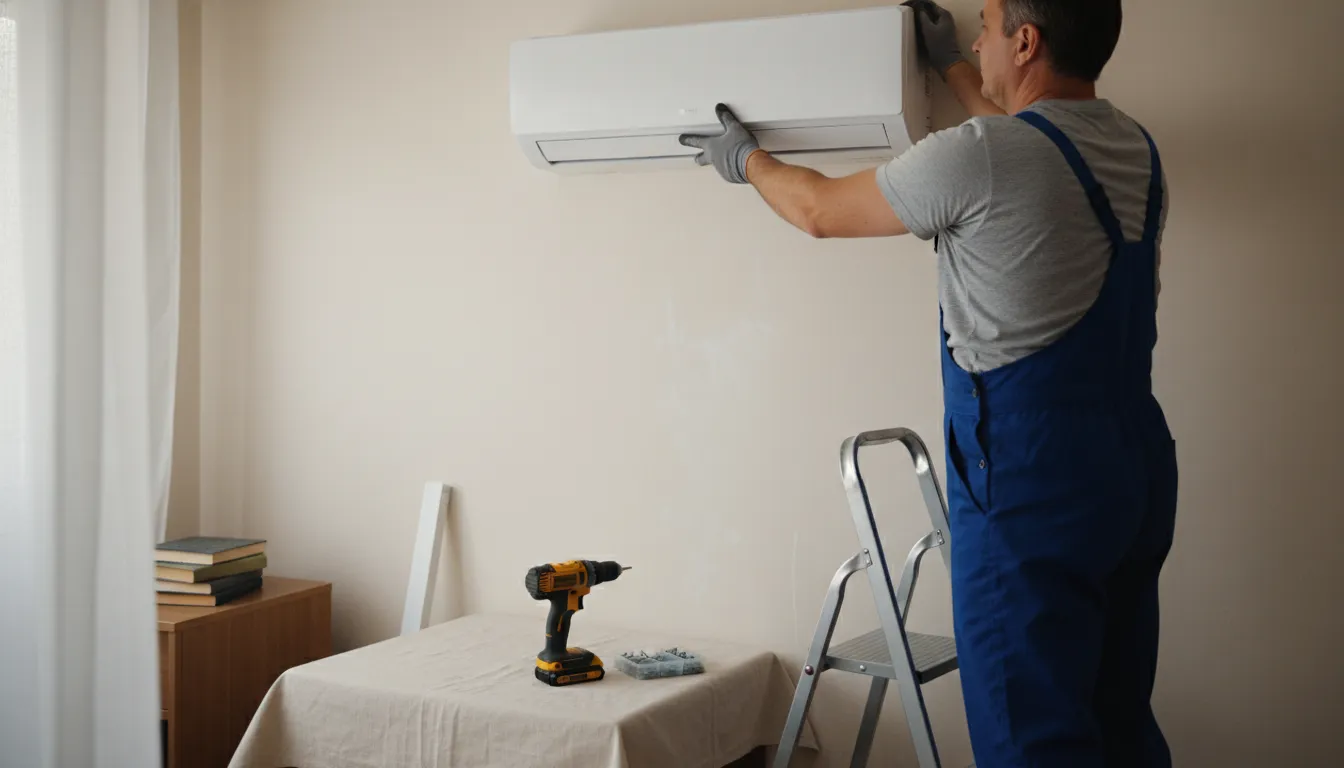
For homes without ducts (a common scenario in older West Virginia properties), ductless mini-splits are often the perfect solution. These systems have an outdoor compressor/condenser and one or more indoor air-handling units mounted on walls or ceilings. They are highly efficient, allow for zoned temperature control in different rooms, and require only a small hole in the wall for the conduit, minimizing installation complexity.
The AC Installation & Replacement Process
A professional installation follows a meticulous, multi-step process to ensure safety, efficiency, and compliance with local codes.
- Site Evaluation & Load Calculation: A technician will assess your home's size, insulation, window placement, and layout. They perform a Manual J load calculation to determine the precise cooling capacity (in tons) your home needs. An oversized or undersized unit will lead to poor performance, higher costs, and reduced comfort 1.
- System Design & Permit Acquisition: Based on the assessment, the contractor will design the system layout. They will also secure all necessary local building permits, which are required to ensure the installation meets safety and zoning regulations.
- Preparation & Old System Removal: The work area is prepared. If replacing an existing system, the old refrigerant is recovered according to EPA regulations, and the old indoor and outdoor units are safely removed.
- New Unit Installation: The new outdoor condenser is placed on a stable, level pad. The indoor evaporator coil is installed in the furnace plenum or an air handler. Refrigerant line sets (copper tubing) are run between the units, properly insulated, and sealed.
- Ductwork Modification or Installation (If Needed): For central systems, existing ducts are inspected, sealed, and cleaned. For homes getting new ductwork, this is the most labor-intensive phase, involving custom fabrication and installation within walls, attics, or crawlspaces.
- Electrical & Control Wiring: A dedicated electrical circuit is run to the outdoor unit. Low-voltage wiring is connected between the components and the new thermostat, which is mounted and programmed.
- System Testing, Startup, & Commissioning: The contractor evacuates moisture and air from the refrigerant lines, charges the system with the exact amount of refrigerant, and starts it up. They test all operations, check refrigerant pressures, measure airflow, and verify the thermostat controls. Finally, they review the system's operation and warranty details with you 2.
Find the perfect ac installation & replacement contractors for your needs
Get personalized recommendations and expert advice
Timeline for AC Installation in West Virginia
The project duration can vary widely. A straightforward replacement of a central AC system with existing, usable ductwork might be completed in one to two days. However, installations in West Virginia often take longer due to the prevalence of older homes. If new ductwork is required, the project can extend to a week or more, as it involves carpentry, drywall work, and intricate sealing. The complexity of the job, contractor availability, and permit approval times are all factors that influence the timeline.
Cost Considerations for West Virginia Homeowners
Understanding the investment helps in planning and budgeting. Costs are influenced by system type, home size, and installation complexity.
- Full HVAC System Replacement (Heating & Cooling): For a complete system change-out, including a new air conditioner or heat pump and furnace, homeowners can expect a range of $10,000 to $20,000, with an average around $14,000 3 4.
- Key Cost Factors:
- Equipment Efficiency: Higher SEER2 (Seasonal Energy Efficiency Ratio) ratings mean higher upfront cost but lower monthly bills.
- Ductwork: Installing new ductwork is one of the largest cost variables, especially in older West Virginia homes without existing ducts 5.
- Labor & Permits: Regional labor rates and local permit fees add to the total.
- Home Size & Layout: Larger homes and those with multiple stories or complex layouts require more equipment and labor.
- Rebates & Incentives: Always ask your provider about available rebates. West Virginia utilities and state programs, along with federal tax credits for high-efficiency equipment, can significantly reduce your net cost 6.
Choosing a Qualified Service Provider in West Virginia
Selecting the right contractor is as important as choosing the right equipment. Look for a licensed, insured, and locally established company. Check for certifications from organizations like NATE (North American Technician Excellence). A reputable provider will insist on performing a detailed load calculation, provide a written, itemized estimate, and clearly explain all warranty terms. They should also be knowledgeable about local code requirements and available rebate programs specific to West Virginia.
Frequently asked questions
Sources
Footnotes
-
Step-by-Step HVAC Installation Guide - Carrier - https://www.carrier.com/residential/en/us/products/air-conditioners/hvac-installation/ ↩
-
Air Conditioning Installation: A Step-by-Step Process - https://nexgenairandplumbing.com/blog/air-conditioning-installation-a-step-by-step-process/ ↩
-
West Virginia HVAC Installation Services - https://hvacloadcalculate.com/hvac-installation-states/west-virginia/ ↩
-
How Much Does a New HVAC System Cost in 2025? - https://www.jacklehr.com/blog/air-conditioning-service/new-hvac-system-cost-2025/ ↩
-
Central Air Conditioning in West Virginia Homes Explained - https://www.armadillo.one/resources/central-air-conditioning-in-west-virginia-homes-explained/ ↩
-
How Much Does an Air Conditioner Cost for a 2000-Square-Foot Home? - https://www.thisoldhouse.com/heating-cooling/air-conditioner-cost-for-2000-square-foot-home ↩