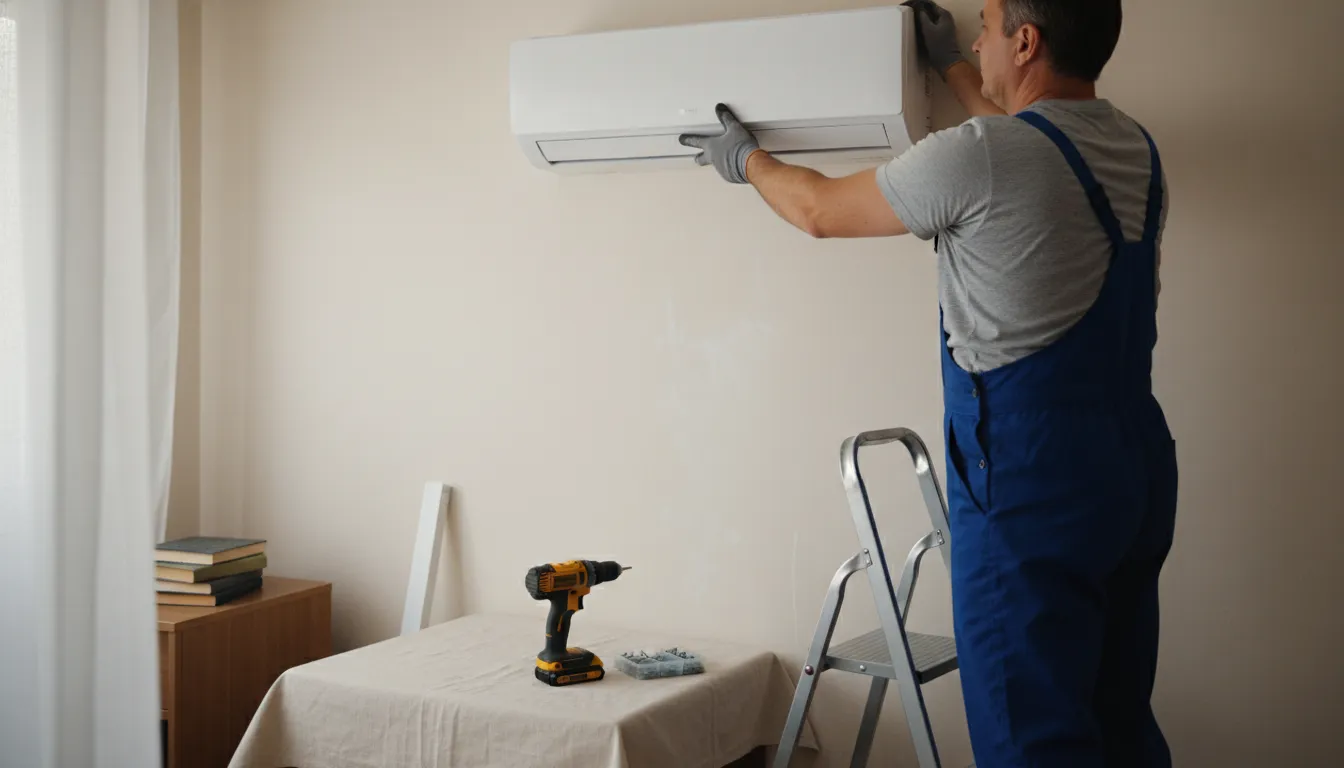
Find the Best AC Installation & Replacement Contractors for Your Business
No obligation • Fast responses • Nationwide coverage

Why you can trust HVAC Firms
HVAC Firms is a leading United States resource for evaluating HVAC service providers. Our team researches companies, checks credentials, and reviews customer feedback to present clear, unbiased information. Listings and rankings are based on merit, and companies cannot pay to change our editorial content.
Search providers near you
Best AC Installation & Replacement Contractors in South Dakota Ranked
Installing or replacing an air conditioning system is a significant investment in your South Dakota home's comfort and value. The right system efficiently manages the state's hot, humid summers while keeping energy costs in check. This guide provides a clear overview of the process, system types, costs, and key considerations to help you make an informed decision and connect with qualified local professionals for your project.
Understanding Your AC System Options in South Dakota
Choosing the correct type of air conditioner is the first critical step. The common systems installed in South Dakota homes each have distinct advantages depending on your home's layout and existing infrastructure.
Central Air Conditioning This is the most common whole-home cooling solution. It uses a split system with an outdoor condenser/compressor and an indoor evaporator coil, connected by refrigerant lines. Cool air is distributed through a network of ducts. Central AC is ideal for homes with existing ductwork and provides consistent, quiet cooling throughout the entire house.
Ductless Mini-Split Systems These systems are excellent for homes without ducts, for room additions, or for targeted cooling in specific zones. A mini-split consists of an outdoor compressor unit connected to one or more indoor air-handling units mounted on walls or ceilings. They offer high efficiency and individual room control, which can save energy by cooling only occupied spaces.
Packaged Units In a packaged system, all components-the compressor, coil, and air handler-are housed in a single cabinet, typically installed on the ground or rooftop. They connect directly to your home's ductwork. This configuration can simplify installation and maintenance and is often a good solution for homes with limited indoor space 1.
Why South Dakota's Climate Demands Careful Selection
South Dakota's continental climate presents unique challenges for cooling systems. Summers can bring intense heat waves with high humidity, while winters are bitterly cold. This extreme temperature swing means your AC must work hard during its season.
- Efficiency is Paramount: Due to high cooling loads, selecting a unit with a high Seasonal Energy Efficiency Ratio 2 (SEER2) and Energy Efficiency Ratio (EER) is crucial. Higher efficiency models use less electricity to produce the same amount of cooling, leading to substantial savings on utility bills during peak summer months.
- Managing Humidity: Comfort isn't just about temperature; it's also about humidity control. Look for systems with effective dehumidification features. A properly sized and functioning AC will remove excess moisture from the air, making your home feel cooler and more comfortable even at a slightly higher thermostat setting 2.
- Proper Sizing (Load Calculation): An oversized AC will cool your home too quickly, shutting off before it has adequately removed humidity, leading to a cold, clammy feeling and short-cycling that wears out components. An undersized unit will run constantly, struggling to reach the desired temperature and driving up energy costs. A professional will perform a Manual J load calculation, considering your home's square footage, insulation, window types, and orientation to determine the precise capacity needed in British Thermal Units (BTUs).
The Professional Installation Process: A Step-by-Step Guide
A successful installation relies on meticulous planning and expert execution. Here's what you can expect when working with a qualified professional.
- Initial Consultation and Assessment: A technician will visit your home to evaluate your cooling needs, inspect existing ductwork (if any), assess insulation, and discuss your comfort goals. This is when the critical load calculation is performed to determine the correct system size.
- System and Provider Selection: Based on the assessment, you'll receive recommendations for system type, size, and efficiency ratings. You can discuss different brands, warranties, and financing options before making a final decision.
- Preparation and Removal: On installation day, the crew will prepare the work area. The old air conditioning unit, and sometimes outdated ductwork, will be safely disconnected and removed.
- New System Installation: This phase involves multiple coordinated tasks:
- Setting the new outdoor condenser on a stable, level pad.
- Installing the new indoor evaporator coil (often in the furnace plenum or air handler).
- Running new refrigerant linesets and electrical wiring between units.
- Installing a new thermostat or upgrading your existing one.
- Modifying or sealing existing ductwork to ensure efficient airflow, or installing new ducts if needed 3.
- Testing and Balancing: Once physically installed, the system is charged with refrigerant. The technician will start the system, check for proper refrigerant levels, measure airflow from all vents, verify electrical readings, and ensure the thermostat communicates correctly. They will balance the system to deliver even cooling throughout your home 4 5.
- Walkthrough and Documentation: A final walkthrough ensures you understand how to operate your new system and your thermostat. You should receive all manufacturer warranty paperwork and information on the labor warranty provided by the installer.
Find the perfect ac installation & replacement contractors for your needs
Get personalized recommendations and expert advice
What to Expect: Timelines and Investment
Understanding the project scope and associated costs helps in planning and setting realistic expectations.
Installation Timelines The duration of an AC installation project in South Dakota varies based on complexity:
- Straightforward Replacement: Swapping an old central AC unit for a new one with minimal ductwork changes can typically be completed in 4 to 8 hours, often within a single day.
- Complex Installations: Jobs that involve installing a completely new system, adding ductwork, or setting up a multi-zone ductless system can take between 1 to 5 days. Installing a packaged unit or addressing significant structural challenges may also extend the timeline 6.
Understanding the Costs The total investment for a new air conditioning system in South Dakota is influenced by several factors:
- System Type and Size: Larger capacity units (more BTUs) cost more. Ductless systems are priced per indoor zone.
- Efficiency Rating: Units with higher SEER2 ratings have a higher upfront cost but offer long-term energy savings.
- Equipment Brand: Premium brands often command higher prices.
- Installation Complexity: The need for new electrical lines, ductwork fabrication, or structural modifications adds to labor and material costs.
- Unit-Only vs. Installed Cost: The equipment is one part of the total. Professional installation, which includes labor, materials (like refrigerant, line sets, ducting), and permitting, is a significant portion of the project price.
As a general estimate for South Dakota, homeowners can expect the total installed cost for a new central air conditioning system to often fall within the range of $5,000 to $10,000+, with high-efficiency or complex installations exceeding that. The unit itself can range from $2,000 to $7,000 or more for mid-to-high efficiency models before installation costs are added 7 8.
Key Factors for a Successful South Dakota AC Installation
Beyond choosing the right unit, these elements ensure long-term satisfaction with your investment.
- Ductwork Evaluation: Leaky, poorly insulated, or incorrectly sized ducts can sabotage even the most efficient AC unit. Have your ducts inspected for leaks and proper sizing. Sealing and insulating ducts, especially in unconditioned spaces like attics, can improve system efficiency by 20% or more.
- Thermostat Upgrade: Pairing your new AC with a modern programmable or smart thermostat allows for better temperature management and can lead to additional energy savings.
- Permits and Codes: Reputable installers will secure all necessary local building permits and ensure the installation meets current electrical and mechanical codes. This is crucial for safety and may be required for warranty validation.
- Maintenance Planning: Discuss a maintenance plan with your provider. Regular professional maintenance (typically once a year) is essential to keep your system running at peak efficiency, prevent breakdowns, and uphold the manufacturer's warranty.
Frequently asked questions
Sources
Footnotes
-
What Are the Different Types of Air Conditioners? - Bryant - https://www.bryant.com/en/us/products/air-conditioners/types/ ↩
-
AC Installation in Rapid City, South Dakota - https://www.precisionmechsd.com/cooling/air-conditioner-installation/ ↩
-
Air Conditioning Installation: A Step-by-Step Process - https://nexgenairandplumbing.com/blog/air-conditioning-installation-a-step-by-step-process/ ↩
-
A Step-by-Step Guide to Installation Timelines: What to Expect During Your AC Upgrade - https://ambroseair.com/a-step-by-step-guide-to-installation-timelines-what-to-expect-during-your-ac-upgrade/ ↩
-
Installation Services Page - https://sandspringshvac.com/installation ↩
-
How Long Does It Take To Replace Your HVAC System? - https://downeyplumbing.com/blog/how-long-does-it-take-to-replace-your-hvac-system/ ↩
-
Factors to Consider When Installing a New HVAC | Fahnestock - https://fahnestockhvac.com/2023/03/13/10-factors-to-consider-when-installing-a-new-hvac-system-in-your-home/ ↩
-
Residential AC Installation in Sioux Falls | Howe, Inc. - https://howeinc.com/residential/cooling/air-conditioner-installation/ ↩