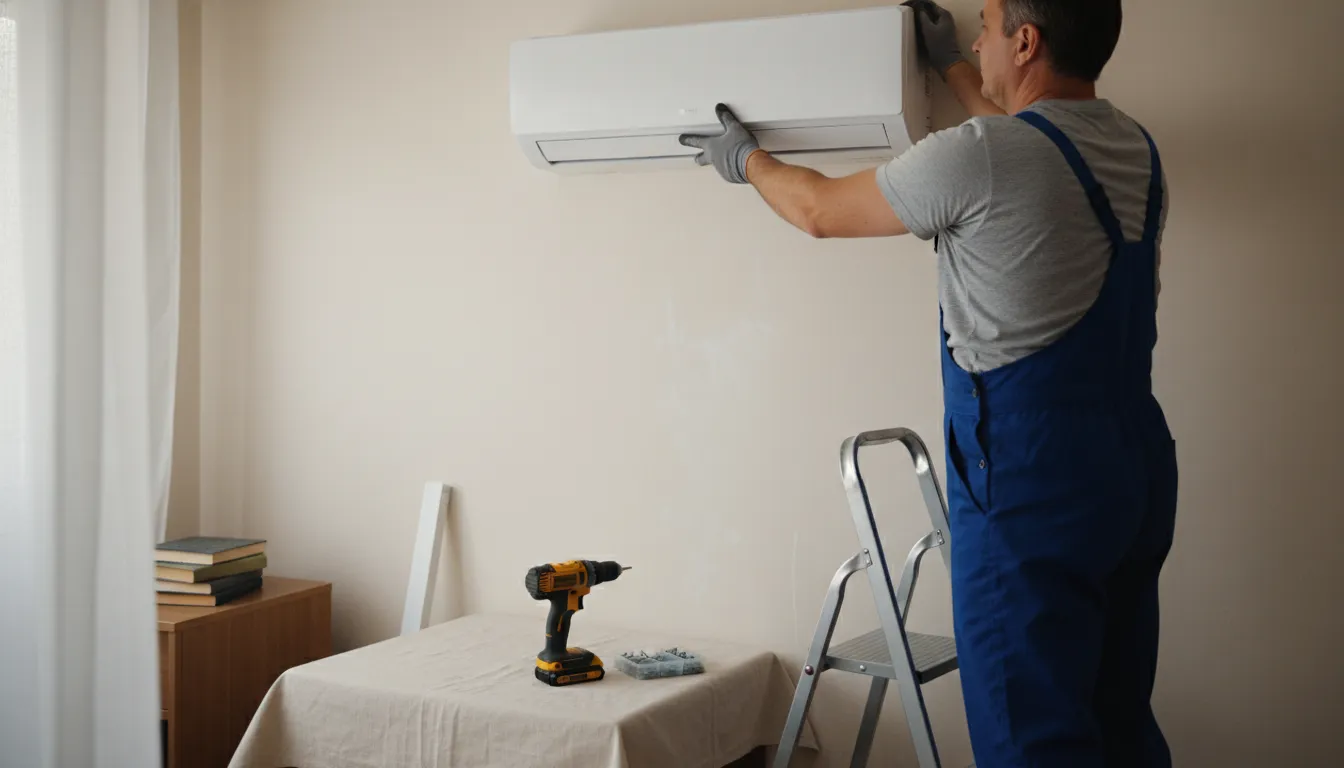
Find the Best AC Installation & Replacement Contractors for Your Business
No obligation • Fast responses • Nationwide coverage

Why you can trust HVAC Firms
HVAC Firms is a leading United States resource for evaluating HVAC service providers. Our team researches companies, checks credentials, and reviews customer feedback to present clear, unbiased information. Listings and rankings are based on merit, and companies cannot pay to change our editorial content.
Search providers near you
Top AC Installation & Replacement Contractors in Hamilton, New Jersey Ranked
Installing or replacing an air conditioning system is a significant investment in your home's comfort and efficiency, especially in Hamilton's hot, humid summers. A properly sized and professionally installed system ensures reliable cooling, lower energy bills, and improved indoor air quality. This guide provides essential information to help you understand the process, costs, and key considerations for finding a qualified local professional for your air conditioning project.
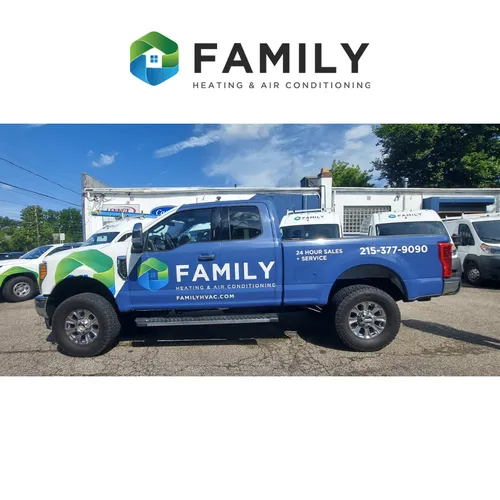
Family Heating & Air Conditioning
873 Township Line Rd, Elkins Park, PA 19027
Family Heating & Air Conditioning is an HVAC company based in Philadelphia, PA, providing repair, installation, and maintenance services for heating and cooling systems. They offer services including AC and furnace repair, HVAC installation, and tune-ups. The company also provides heating and air conditioning replacements and a comfort protection plan that goes beyond basic maintenance.
Family Heating & Air Conditioning
500 W Office Center Dr Suite 400, Fort Washington, PA 19034
Family Heating & Air Conditioning provides heating and cooling repair, installation, and maintenance services in Philadelphia, PA. They handle air conditioner and furnace repairs as well as HVAC system tune-ups and replacements. The company offers a Family Comfort Protection Plan that includes maintenance and added protection for heating and cooling systems.
Family Heating & Air Conditioning
610 Old York Rd, Jenkintown, PA 19046
Family Heating & Air Conditioning is an HVAC company serving Philadelphia, PA. They provide repair, installation, and maintenance services for heating and cooling systems, including air conditioners and furnaces. Their capabilities include HVAC tune-ups and system replacements. The company offers a Family Comfort Protection Plan that goes beyond basic maintenance. Financing options are available to support efficient and eco-friendly HVAC investments.
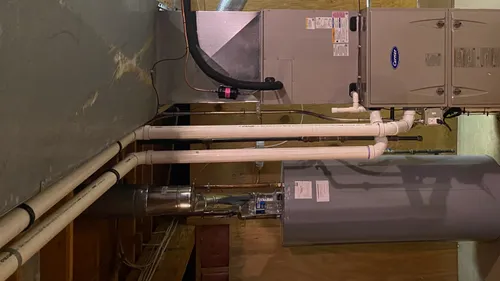
Done Rite Heating & Cooling
736 Eayrestown Rd, Lumberton Township, NJ 08048
Done Rite Heating & Cooling provides a full range of HVAC services including air conditioning, furnace, and heat pump repair, installation, and maintenance in Philadelphia, PA. They also offer commercial HVAC solutions, air duct cleaning, and indoor air quality testing and improvement services. Their team is experienced in handling refrigerant leaks, compressor issues, furnace ignition problems, and heat pump electrical or mechanical failures. Serving the Philadelphia area, they focus on ensuring efficient and reliable heating and cooling systems for both residential and commercial clients.

Downtown Mechanical LLC
2501 E Venango St, Philadelphia, PA 19134
Downtown Mechanical LLC is an HVAC company based in Philadelphia, PA, offering a range of services including air conditioning, furnace, heat pump, and boiler repair and installation. They also specialize in mini split installations and HVAC tune-ups. The team is known for clean, professional work and attention to detail, such as aesthetically pleasing ductwork installation. Downtown Mechanical has experience handling complex projects like system expansions and replacements, with a focus on clear communication and customer education. The company is recognized for quick response times and thorough service across Philadelphia and nearby areas.
Understanding Your Cooling Needs in Hamilton
Hamilton's climate in central New Jersey demands a robust cooling solution. Summers are characterized by significant heat and humidity, which means your air conditioner must work harder to maintain a comfortable indoor environment. An undersized unit will run constantly without adequately cooling your home, while an oversized unit will cycle on and off too frequently, leading to uneven temperatures, excess humidity, and premature wear.
For an average Hamilton home (approximately 2,000-2,500 square feet), system sizes often fall within the 3 to 5-ton range. A "ton" in air conditioning refers to 12,000 BTUs (British Thermal Units) of cooling capacity per hour. However, square footage is just a starting point. The only way to determine the precise size needed is through a Manual J load calculation, performed by a qualified technician 1. This comprehensive assessment considers your home's specific characteristics:
- Insulation levels in walls and attics
- Window type, size, and orientation
- Air infiltration and ductwork condition
- Number of occupants and heat-generating appliances
- Local climate data for Hamilton
Never rely on a rule of thumb or simply match the size of your old unit. Investing in a proper load calculation is the first step toward efficiency and long-term comfort.
The AC Installation & Replacement Process
Whether you're adding cooling to an existing home or swapping out an old, failing system, the installation process follows a series of critical steps to ensure safety, compliance, and performance.
1. Initial Consultation and Load Calculation A reputable professional will begin with a thorough home evaluation. This goes beyond measuring rooms; it includes inspecting your attic, basement, ductwork, electrical panel, and current system. The cornerstone of this visit is the Manual J calculation to specify the exact capacity required.
2. System Selection and Proposal Based on the assessment, your contractor will recommend equipment options. You'll discuss efficiency ratings (SEER2), brand preferences, features like variable-speed compressors, and how the new air conditioner integrates with your existing furnace or air handler. A detailed written proposal should outline all costs, including equipment, labor, materials, and permits 2.
3. Preparation and Permitting Before installation day, your provider will typically pull any required local permits from Hamilton Township. This ensures the work meets all building and safety codes. They will also schedule the installation and ensure the correct equipment and crew are ready.
4. Removal of Old Equipment (For Replacements) The crew will safely disconnect and remove your old outdoor condenser and indoor coil. Refrigerant must be recovered according to EPA regulations, and the old unit will be disposed of properly.
5. Installation of New System This is the core phase, involving multiple skilled trades:
- Setting the new outdoor condenser on a stable, level pad.
- Installing the new indoor evaporator coil onto your furnace or air handler.
- Running new copper refrigerant linesets and sealing them in insulation.
- Completing necessary electrical connections at the outdoor unit and possibly upgrading your electrical service.
- Installing a new thermostat and connecting the low-voltage wiring.
- Ensuring proper drainage for condensate removal 3.
6. Ductwork Evaluation and Modification The crew will inspect your existing ductwork for leaks, proper sizing, and insulation. Sealing leaky ducts is one of the most cost-effective ways to improve system performance and efficiency. In some cases, modifications or new duct runs may be necessary.
7. System Startup, Testing, and Inspection Once physically installed, the system is evacuated of air and moisture, charged with the correct amount of refrigerant, and powered on. Technicians will test for proper operation, measure airflow and temperature drop, and verify the thermostat controls. A final inspection may be required by the local building department to close the permit.
Find the perfect ac installation & replacement contractors for your needs
Get personalized recommendations and expert advice
Cost Factors for Air Conditioning Services in Hamilton
The total cost of a new air conditioning installation or replacement in Hamilton varies widely based on several key factors. Understanding these can help you interpret quotes and make an informed decision.
Primary Cost Drivers:
- System Size and Capacity: As discussed, a larger capacity unit (e.g., 5 tons) costs more for the equipment itself than a smaller unit (e.g., 2.5 tons) 4.
- Efficiency Rating (SEER2): Higher-efficiency units with a SEER2 rating of 16 or more have a higher upfront cost but offer significant long-term savings on your energy bills through lower electricity consumption 5.
- Equipment Type and Features: Basic single-stage systems are less expensive than advanced models with two-stage or variable-speed compressors, which provide superior comfort and humidity control.
- Scope of Labor: A simple "like-for-like" replacement where the new unit fits the existing spaces and connections is less labor-intensive than a full new installation requiring new electrical lines, refrigerant tubing, or a pad.
- Ductwork Modifications: If your existing ducts are poorly sized, leaky, or non-existent, the cost to modify, seal, or install new ductwork can add substantially to the project total 6 7.
- Electrical Upgrades: Older homes may require an electrical panel upgrade or a new dedicated circuit to handle the new air conditioner's power requirements, adding to the cost 8.
Typical Cost Ranges: Based on local data, homeowners in Hamilton and central New Jersey can expect the following ranges 9 10:
- Full New AC Installation: For a complete new system (outdoor unit, indoor coil, lines, electrical), costs typically range from $5,200 to over $12,000. A common 3-4 ton system often falls between $7,000 and $12,000+.
- AC Unit Replacement (Equipment + Labor): Swapping out an old condenser and coil with a new one generally costs between $2,500 and $7,500+. This assumes the existing furnace/air handler, ductwork, and electrical are adequate.
- Potential Rebates and Savings: Always ask your contractor about available rebates from utility companies (like PSE&G) or state programs for installing high-efficiency equipment. These can offset a portion of the upfront cost.
Pro Tip: Always obtain 3-4 detailed written estimates that include a Manual J calculation. The lowest price may not represent the best value if it involves incorrect sizing or cuts corners on crucial steps.
Choosing the Right Local Professional
Your choice of contractor is as important as your choice of equipment. A quality installation maximizes the lifespan and efficiency of your investment.
- Verify Licenses and Insurance: Ensure the company holds a valid New Jersey HVAC contractor license and carries both liability and workers' compensation insurance.
- Check References and Reviews: Look for established local companies with positive reviews on independent platforms and ask for references from recent projects similar to yours.
- Get Everything in Writing: The proposal should be a detailed contract specifying equipment model numbers, labor scope, warranty terms (both manufacturer and labor), start/completion dates, and total cost with no hidden fees.
- Ask About Post-Installation Support: Understand their service process, emergency availability, and any recommended maintenance plans to keep your new system running smoothly for years to come.
Frequently asked questions
Sources
Footnotes
-
What A/C Size Do I Need? A User-Friendly Guide - Supreme HVAC - https://supremehvac.com/blog/what-ac-size-do-i-need-a-user-friendly-guide/ ↩
-
Comprehensive HVAC Installation Process For New Jersey ... - https://delcoairhvac.com/comprehensive-hvac-installation-process-for-new-jersey-homes/ ↩
-
Heating and Air Conditioning Installation in Hamilton, NJ - https://www.homedepot.com/services/l/nj/hamilton/heating-air-conditioning-installation/c16fbb4b7 ↩
-
What size Air Conditioner do I need for my New Jersey home? - https://service-professionals.com/what-size-a-c-system-do-i-need-for-my-home/ ↩
-
Furnace & Air Conditioning Installation Cost in New Jersey (Actual Pri - https://thefurnaceoutlet.com/blogs/news/furnace-air-conditioning-installation-cost-in-new-jersey-actual-prices-what-homeowners-should-expect ↩
-
How much does it cost to replace an AC unit in New Jersey? - https://dauriahvac.com/how-much-does-it-cost-to-replace-an-ac-unit-in-new-jersey/ ↩
-
What To Understand About Air Conditioning Installation In NJ - https://delcoairhvac.com/what-to-understand-about-air-conditioning-installation-in-nj/ ↩
-
Average AC Installation & Replacement Cost in NJ - https://kriseservices.com/average-cost-of-air-conditioner-installation-and-repair-in-nj/ ↩
-
Furnace Replacement Cost in NJ & Air Conditioning Installation ... - https://thefurnaceoutlet.com/blogs/news/furnace-replacement-cost-in-nj-air-conditioning-installation-cost-in-nj-real-numbers-no-games ↩
-
How much does it cost to replace an HVAC unit in New Jersey? - https://dauriahvac.com/how-much-does-it-cost-to-replace-an-hvac-unit-in-new-jersey/ ↩