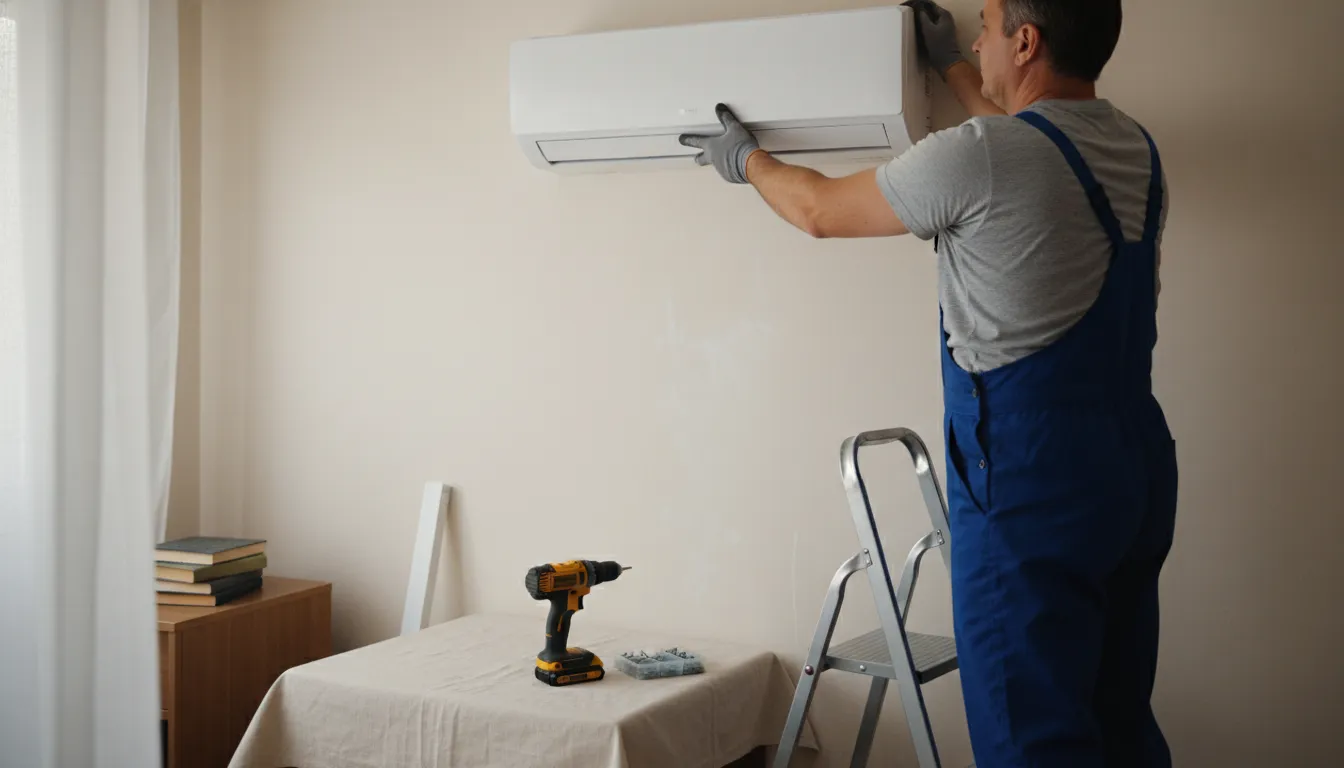
Find the Best AC Installation & Replacement Contractors for Your Business
No obligation • Fast responses • Nationwide coverage

Why you can trust HVAC Firms
HVAC Firms is a leading United States resource for evaluating HVAC service providers. Our team researches companies, checks credentials, and reviews customer feedback to present clear, unbiased information. Listings and rankings are based on merit, and companies cannot pay to change our editorial content.
Search providers near you
Best AC Installation & Replacement Contractors in Minnesota Ranked
Keeping your home comfortable during Minnesota's hot, humid summers and frigid winters requires a reliable and efficient air conditioning system. Whether you're installing central air for the first time or replacing an aging unit, understanding your options and the local installation process is key to making a smart investment. This guide provides a detailed overview of what Minnesota homeowners need to know about air conditioner installation and replacement, from system types suited for our climate to costs, timelines, and how to find qualified local professionals for the job.
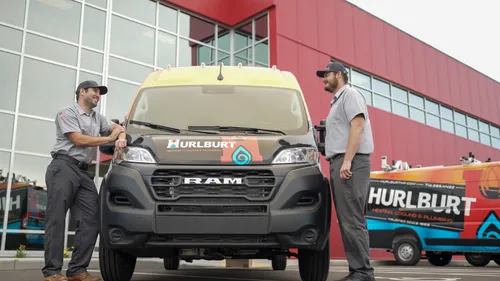
Hurlburt Heating & Plumbing
1000 County Rd E Suite 115, Shoreview, MN 55126
Hurlburt Heating & Plumbing is a family-owned home services provider serving Minneapolis, MN, and surrounding areas. Since 1959, they have offered a wide range of services including HVAC installation and repair, plumbing, and electrical work. Their HVAC services cover air conditioner and furnace repair, heat pump and mini split installation, indoor air quality solutions, and HVAC tune-ups. Hurlburt also provides whole-home air scrubbers, purifiers, humidifiers, and dehumidifiers to improve indoor air quality. With over six decades of experience, they combine modern technology with personalized service to address customer needs.
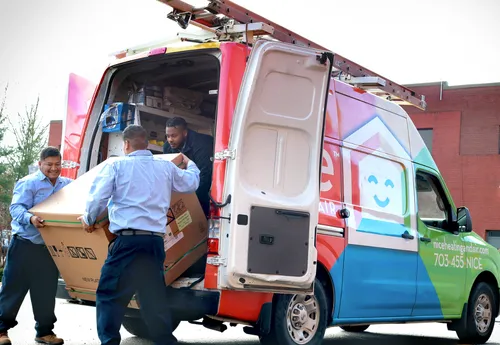
Nice Heating & Air
24 Onville Rd suite 101-9, Stafford, VA 22556
Nice Heating & Air is an HVAC company serving Minneapolis, MN, specializing in air conditioning, heating, and indoor air quality services. They provide installation, repair, and maintenance for systems including ductless mini splits, heat pumps, furnaces, and water heaters. The company has many years of experience and focuses on delivering high-quality products and services with a commitment to customer satisfaction. Their capabilities include HVAC tune-ups and indoor air quality improvements such as air purifier installation and ventilation services.
Furnace Doctors
102 County Rd C West, Little Canada, MN 55117
Furnace Doctors is an HVAC company based in Minneapolis, MN, offering a range of heating and cooling services. Their expertise includes furnace repair and replacement, air conditioner repair and installation, ductless system installation, and indoor air quality solutions such as air filtration and humidity control systems. The company emphasizes maximizing HVAC system performance and has installers with over 25 years of experience. Furnace Doctors also provides annual maintenance plans to help keep systems running efficiently.
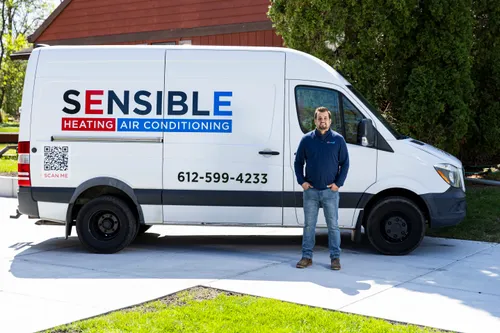
Sensible Heating and Air Conditioning
3533 Roosevelt St NE, St Anthony, MN 55418
Sensible Heating and Air Conditioning is a locally owned HVAC company serving Minneapolis, MN. They provide a range of services including air conditioning, furnace, and heat pump repair, installation, and tune-ups. With 16 years of experience, they focus on maintaining efficient and comfortable home environments through reliable HVAC solutions. Their expertise includes troubleshooting and installing all major brands to ensure energy-efficient performance throughout the year.

Standard Heating & Air Conditioning, Inc.
130 Plymouth Ave N, Minneapolis, MN 55411
Standard Heating & Air Conditioning, Inc. has been serving Minneapolis, MN, and the surrounding Twin Cities area since 1930. They provide a range of HVAC services including air conditioning and furnace repair and installation, indoor air quality solutions, and HVAC tune-ups. The company emphasizes customer education and family care, with a team of NATE-certified technicians using industry-leading equipment. Their long history reflects a commitment to ethical service and community involvement.
Understanding Minnesota's Climate & AC Needs
Minnesota's climate presents unique challenges for home cooling. Summers can bring high humidity and temperatures soaring into the 90s, while winters are notoriously cold. This extreme temperature swing makes system selection critical. An undersized unit will struggle to cool your home on the hottest days, while an oversized system will short-cycle, failing to properly dehumidify the air and leading to uneven temperatures and higher energy bills.
For this reason, a proper load calculation-not just a rule of thumb based on square footage-is essential. A qualified installer will assess your home's insulation, window quality, air leakage, and sun exposure to determine the precise capacity (measured in tons) needed. Furthermore, due to the humidity, selecting a system with a high Seasonal Energy Efficiency Ratio (SEER) rating is highly recommended for Minnesota homes, as these units are better at removing moisture while using less energy.
Types of Air Conditioning Systems for Minnesota Homes
Choosing the right type of system depends on your home's existing infrastructure and your comfort goals. Here are the most common options:
Central Air Conditioning This is the standard choice for homes with existing ductwork. A central system includes an outdoor condenser unit and an indoor evaporator coil, typically installed in your furnace. It provides consistent, whole-home cooling and is often paired with a high-efficiency furnace for year-round comfort 1.
Ductless Mini-Split Systems Ideal for older Minnesota homes without ducts, room additions, sunrooms, or for creating zoned comfort in specific areas. A mini-split has an outdoor compressor connected to one or more quiet, wall-mounted indoor air handlers. They are highly efficient, offer individual room control, and can be a cost-effective solution for cooling (and heating) targeted spaces 2.
Heat Pumps Increasingly popular in Minnesota, an air-source heat pump is one of the most versatile and efficient choices. It functions as an air conditioner in summer and reverses operation to provide efficient electric heat in winter. Modern cold-climate heat pumps are designed to operate effectively in sub-freezing temperatures, making them a superb year-round solution for both cooling and heating needs 3.
The AC Installation & Replacement Process
A professional installation follows a structured process to ensure safety, efficiency, and system longevity.
- Initial Consultation and Load Calculation: A technician will visit your home to evaluate its cooling needs, inspect existing equipment (like ductwork and electrical service), and discuss your options. This is when the critical manual J load calculation is performed.
- System Selection and Proposal: Based on the assessment, the contractor will recommend a properly sized system type and model, providing a detailed written estimate that includes equipment, labor, and any ancillary costs.
- Permitting and Preparation: The contractor will typically pull any required local building permits. On installation day, the team will prepare the work area, ensuring safety for your property and their crew.
- Removal of Old Equipment (if applicable): For replacements, the old refrigerant is recovered according to EPA regulations, and the existing outdoor unit and lines are carefully removed 4.
- New System Installation: This involves setting the new condenser on a stable pad, installing the indoor coil (or air handler), connecting new refrigerant lines with a proper purge, making electrical connections, and integrating controls with your thermostat 5 6.
- System Testing and Commissioning: This is the most important step. The technician will start the system, check refrigerant charge, measure airflow, verify electrical data, and ensure all components are operating correctly. They will also show you how to use your new system and thermostat.
The entire process for a standard replacement typically takes between 4 to 8 hours for a skilled crew 7 8. A first-time installation in a home without existing ductwork will take significantly longer.
Cost of AC Installation in Minnesota
Investing in a new air conditioner is a significant decision, and costs can vary widely based on system type, efficiency, and home complexity. For Minnesota homeowners, here is a general cost breakdown:
- Basic System Replacement: Installing a standard-efficiency central AC unit (typically 14-16 SEER) in a home with existing, usable ductwork and straightforward electrical access generally ranges from $4,500 to $6,500.
- Mid-Range/Efficiency Systems: Upgrading to a higher-efficiency model (16-18 SEER) or installing a new ductless mini-split system for a single zone often falls in the range of $6,500 to $8,500.
- High-Efficiency & Complex Installations: Top-tier systems (18+ SEER), cold-climate heat pumps, or multi-zone ductless systems, or installations requiring new ductwork or electrical upgrades, can cost $8,500 to $12,000 or more 9 10.
- Labor Costs: Professional labor typically accounts for a significant portion, often estimated between $1,125 and $2,500 for a standard replacement job 11.
Find the perfect ac installation & replacement contractors for your needs
Get personalized recommendations and expert advice
Key Considerations Before You Install
Timing Your Project: While AC failures are unpredictable, if you can plan, consider scheduling installation in the spring or fall. HVAC companies are extremely busy during peak summer heat waves. Scheduling during the shoulder seasons can often result in faster service and more installer availability 12.
The $5,000 Rule: A useful guideline when deciding between repair and replacement is the "HVAC $5,000 Rule." Multiply the age of your current air conditioner by the estimated repair cost. If the product exceeds $5,000, replacement is usually the more economical long-term choice. For example, a 12-year-old unit needing a $600 repair (12 x 600 = 7,200) suggests replacement is advisable 13.
Rebates and Financing: Always ask installers about current utility rebates (from providers like Xcel Energy or CenterPoint Energy) and federal tax credits for high-efficiency systems and heat pumps. Many HVAC companies also offer financing options to help manage the upfront cost.
Choosing a Contractor: This is the most critical step. Look for licensed, insured, and locally established companies. Check for positive reviews on independent platforms and ask for references. A trustworthy contractor will perform a load calculation, provide a detailed written estimate, and clearly explain their process and warranties.
Maintaining Your New System
Protect your investment with regular maintenance. An annual professional tune-up before cooling season is recommended. This service includes cleaning coils, checking refrigerant levels, inspecting electrical components, and ensuring the system is operating at peak efficiency. Homeowners should also regularly replace or clean their furnace/air handler filter (every 1-3 months) and keep the area around the outdoor condenser unit clear of debris, plants, and snow.
Frequently asked questions
Sources
Footnotes
-
What Are the Different Types of Air Conditioners? - Bryant - https://www.bryant.com/en/us/products/air-conditioners/types/ ↩
-
8 Types of Air Conditioners to Keep Your Home Cool - https://www.bhg.com/home-improvement/advice/expert-advice/types-of-air-conditioners/ ↩
-
State of Minnesota Technical Reference Manual for Energy ... - https://mn.gov/commerce-stat/trm/releases/4.1.pdf ↩
-
Air Conditioning Installation: A Step-by-Step Process - https://nexgenairandplumbing.com/blog/air-conditioning-installation-a-step-by-step-process/ ↩
-
A Step-by-Step Guide to HVAC Installation - Waconia Comfort - https://www.waconiacomfort.com/2024/07/16/guide-to-hvac-installation/ ↩
-
Step-by-Step HVAC Installation Guide - Carrier - https://www.carrier.com/residential/en/us/products/air-conditioners/hvac-installation/ ↩
-
Time Needed to Install an Air Conditioner - Comfort Bros - https://comfortbros.com/blog/time-needed-to-install-an-air-conditioner/ ↩
-
How Long Does it Take to Install an AC Unit? - The Chill Brothers - https://thechillbrothers.com/how-long-does-it-take-to-install-an-ac-unit/ ↩
-
AC Unit Replacement Costs and Financing: What Minnesota ... - https://www.aircomfortmn.com/blog/ac-unit-replacement-costs-and-financing-what-minnesota-homeowners-should-know ↩
-
Cost to Install Central Air in 2026: How to Save - NerdWallet - https://www.nerdwallet.com/home-ownership/home-improvement/learn/cost-to-install-central-air ↩
-
How Much Does A/C Installation Cost? A Comprehensive Guide - https://laureltonelectric.com/how-much-does-a-c-installation-cost/ ↩
-
Replacing Your Ac Unit What Are The Costs - https://www.mrcool.com/blog/replacing-your-ac-unit-what-are-the-costs ↩
-
What Is the $5,000 Rule for HVAC? - J.A. Bertsch Heating & Cooling - https://jabertsch.com/blog/what-is-the-5000-rule-for-hvac/ ↩