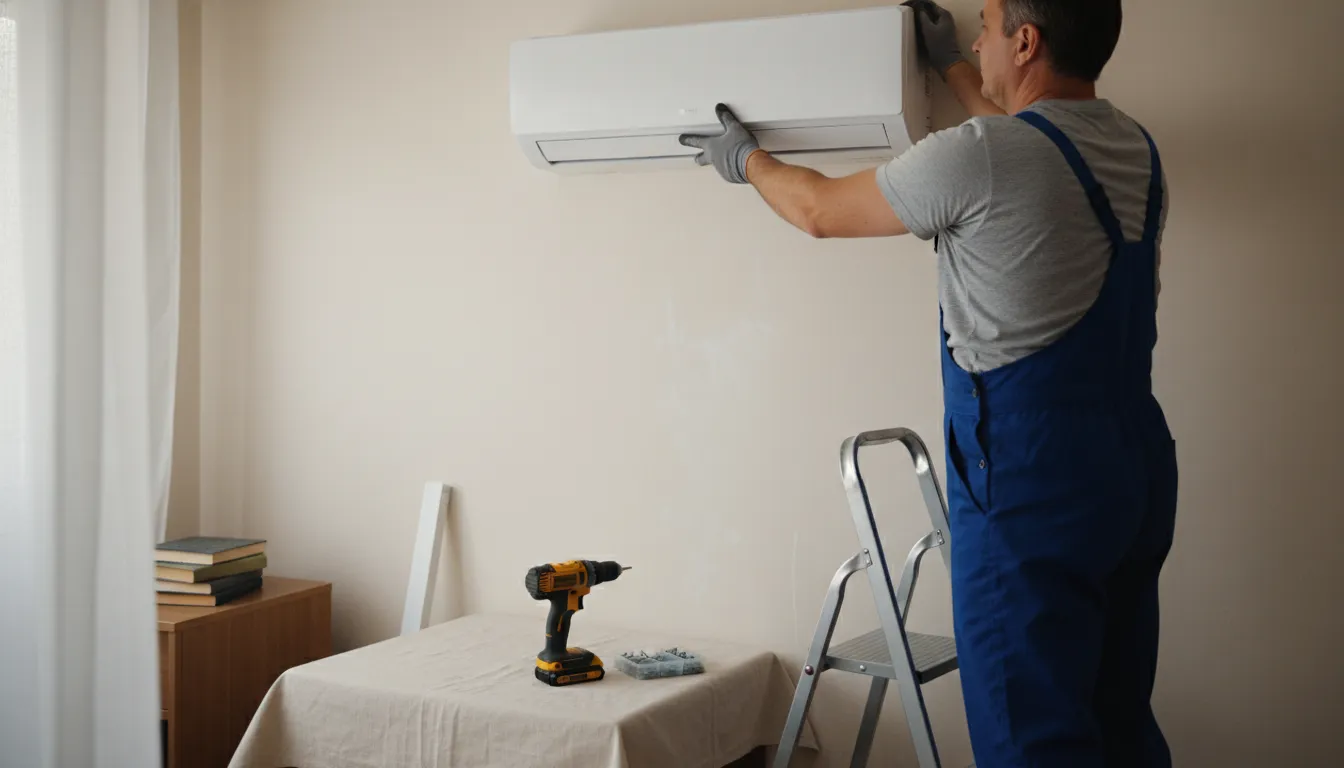
Find the Best AC Installation & Replacement Contractors for Your Business
No obligation • Fast responses • Nationwide coverage

Why you can trust HVAC Firms
HVAC Firms is a leading United States resource for evaluating HVAC service providers. Our team researches companies, checks credentials, and reviews customer feedback to present clear, unbiased information. Listings and rankings are based on merit, and companies cannot pay to change our editorial content.
Search providers near you
Best AC Installation & Replacement Contractors in Maryland Ranked
Upgrading or replacing your air conditioning system is a significant investment in your Maryland home's comfort, energy efficiency, and value. The state's humid summers and varied climate demand a system that's properly sized and installed to manage moisture and provide reliable cooling. This guide will help you understand the types of systems available, the installation process, and key considerations for Maryland homeowners, empowering you to make an informed decision when selecting a local professional for the job.
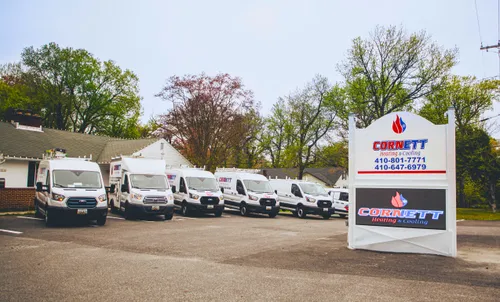
Cornett Heating & Cooling
104 Ritchie Hwy, Pasadena, MD 21122
Cornett Heating & Cooling is a family-owned HVAC company serving Baltimore, MD, and Anne Arundel County. Established in 1991, the company provides installation, repair, and maintenance services for air conditioning, furnaces, heat pumps, boilers, and other HVAC systems. They specialize in working with a variety of makes and models, including Bosch units, and offer comprehensive HVAC tune-up services. The business is led by Josh Cornett, who took over the family operation in 2016, continuing a legacy of skilled service and local expertise.
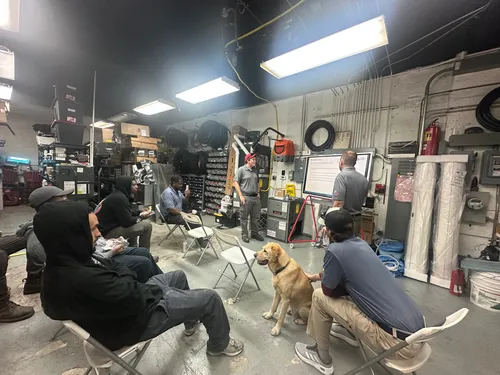
Complete Climate Services LLC
204 S Chapel St, Baltimore, MD 21231
Complete Climate Services LLC is an HVAC company based in Baltimore, MD, offering a full range of heating, ventilation, and air conditioning services. They provide AC, furnace, and boiler repair, installation, and maintenance for both residential and commercial properties. Their commercial maintenance contracts include seasonal start-ups, shutdowns, filter changes, and refrigerant checks to ensure HVAC systems operate safely and meet building codes. The company also offers 24/7 emergency repair services with technicians available to respond quickly and minimize downtime.

Clarksville Heating & Air, LLC
7380 Coca Cola Dr Suite 121, Hanover, MD 21076
Clarksville Heating & Air, LLC is an HVAC company serving Baltimore, MD, and surrounding counties. They provide heating and air conditioning installation and repair services for both residential and commercial customers. With over 40 years of experience, they offer expertise in furnace and AC systems and operate seven days a week to support customer comfort. Their service area includes Howard, Carroll, Baltimore, Anne Arundel, Montgomery, and Prince George's counties.

Bayside
836 Ritchie Hwy suite 10 r, Severna Park, MD 21146
Bayside is an HVAC company serving Baltimore, MD, specializing in air conditioning, furnace, and heat pump repair and installation. They offer comprehensive HVAC tune-up services to maintain system efficiency. With decades of combined technician experience, Bayside focuses on accurate diagnostics and lasting repairs. Their approach emphasizes quality work done right the first time and clear communication with customers.
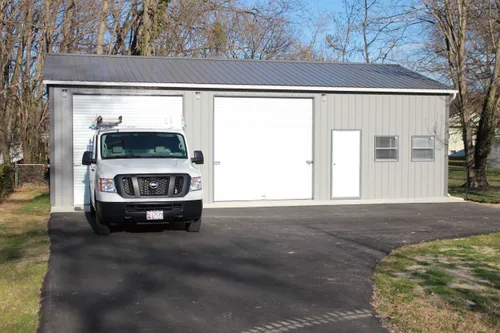
Elite Air Solutions, LLC-MD
1320 Innovation St Suite H, Baltimore, MD 21220
Elite Air Solutions, LLC-MD is an HVAC company serving Baltimore, MD, and central Maryland. They provide installation, repair, and maintenance services for air conditioning, furnaces, heat pumps, ductless units, and full duct systems. The company works with all major brands and offers preventive maintenance, new installations, and duct testing. Elite Air Solutions is available 24/7 to assist customers and aims to provide comfort in any weather condition.
Understanding Your AC System Options in Maryland
Choosing the right type of air conditioning system is the first step toward lasting home comfort. The best choice depends on your home's existing infrastructure, layout, and your specific cooling needs.
Central Split Systems This is the most common type of system found in Maryland homes with existing ductwork 1. It consists of an outdoor condenser unit and an indoor evaporator coil, typically attached to a furnace or air handler. The cooled air is distributed throughout the home via a network of ducts. These systems are effective for whole-home cooling and, when properly sized, can efficiently handle Maryland's summer heat and humidity.
Ductless Mini-Split Systems Ideal for home additions, sunrooms, or older homes without ductwork, mini-splits offer flexible, zoned comfort 2. They involve an outdoor compressor connected to one or more indoor air-handling units mounted on walls or ceilings. Each indoor unit can be controlled independently, allowing for customized temperatures in different rooms and potentially reducing energy usage by cooling only occupied spaces.
Heat Pump Systems A highly efficient option for Maryland's moderate climate, a heat pump provides both heating and cooling in one unit. It works by transferring heat rather than generating it, making it extremely efficient for cooling in the summer and capable of providing heat during milder winter months. For very cold snaps, a supplemental heat source may be needed, but for many Maryland homes, a modern heat pump is a versatile and cost-effective year-round solution.
Key Considerations for Maryland's Climate
Maryland's weather presents specific challenges that should guide your AC selection and installation.
- Combating High Humidity: Summer humidity is a major comfort factor. Look for systems with features designed for enhanced dehumidification, such as variable-speed blower motors that can run longer at lower speeds, removing more moisture from the air. Ensuring your ductwork is properly sealed is also critical to prevent humid air from leaking in and conditioned air from leaking out.
- Prioritizing Energy Efficiency: With rising energy costs, efficiency is paramount. The efficiency of central air conditioners and heat pumps is measured by the SEER2 (Seasonal Energy Efficiency Ratio) rating. A higher SEER2 rating means greater energy savings on your utility bills. Investing in a more efficient system can lead to significant long-term savings, especially during Maryland's long cooling season.
- Professional Sizing is Non-Negotiable: An oversized unit will cool your home too quickly without running long enough to remove humidity, leaving your home cold and clammy. An undersized unit will run constantly, struggling to keep up on the hottest days and driving up energy costs. A qualified HVAC professional will perform a detailed load calculation, considering your home's square footage, insulation, window types, and sun exposure to determine the perfectly sized system for optimal performance and efficiency.
The Professional Installation Process: A Step-by-Step Guide
A proper installation is just as important as the equipment you choose. Here's what you can expect from a professional AC or heat pump installation in Maryland.
- Comprehensive Site Evaluation & Planning: A technician will visit your home to assess the existing system, evaluate ductwork (if present), take measurements, and discuss your comfort needs. This is when the critical load calculation is performed to determine the correct system size.
- Securing Permits: Reputable contractors will handle pulling all necessary local building permits in Maryland. This ensures the installation will be inspected and meet all state and local safety and building codes, a crucial step for your safety and home insurance.
- Removal of the Old Equipment: The old outdoor condenser and indoor coil are safely disconnected, with refrigerant recovered according to EPA regulations. Old, leaky ductwork may also be removed at this stage if replacement is part of the project 3.
- Installation of New Components: The new outdoor unit is placed on a stable, level pad. The new indoor coil (and furnace if replaced) is installed. New refrigerant line sets are often run, and electrical connections are made to meet the new system's requirements. A new programmable or smart thermostat is typically installed.
- Ductwork Assessment & Sealing: The installer will inspect your home's ductwork for leaks. Sealing ducts with mastic is a common and vital step to improve efficiency by up to 20% or more. In some cases, partial or complete duct replacement may be recommended.
- System Testing & Commissioning: This is the most critical phase. The system is charged with the precise amount of refrigerant, all electrical connections are verified, and the airflow for each room is tested and balanced. The contractor will start the system, check for proper operation, and ensure it meets all performance specifications before handing it over to you 4.
Timeline and Investment
Understanding the project scope helps set realistic expectations for your schedule and budget.
How Long Does Installation Take? The timeline varies significantly based on the job's complexity:
- Straightforward Replacement: Swapping out an existing AC or heat pump with a new, similarly sized unit where no ductwork changes are needed can often be completed in 4 to 8 hours, or a single day 5.
- Full System with Modifications: Installing a new system that includes replacing the indoor furnace/air handler, upgrading electrical service, or adding zoning controls typically takes 1 to 2 days.
- Major Projects with New Ductwork: If the project involves designing and installing new ductwork throughout the home, the process can extend from 3 to 5 days or more, depending on the home's size and layout.
Understanding the Costs in Maryland Pricing for a new AC installation is not one-size-fits-all. Key factors include system type, efficiency (SEER2 rating), home size, and the condition of existing infrastructure like ductwork and electrical panels.
- For a basic AC replacement in a smaller Maryland home, homeowners might invest between $5,000 and $10,000+.
- A mid-range, high-efficiency system for a larger home typically falls in the range of $10,000 to $16,000+ 6.
- Projects that require extensive new ductwork, complex zoning systems, or are part of a full HVAC system overhaul can range from $7,000 to $23,000 or more, reflecting the added materials and labor 7.
Find the perfect ac installation & replacement contractors for your needs
Get personalized recommendations and expert advice
Choosing the Right Maryland HVAC Professional
Your contractor's expertise will determine the success of your installation. Look for a licensed, insured company with strong local references. They should perform a manual J load calculation, not just base the size on your old unit. Ask about their experience with your chosen system type and their process for ensuring proper airflow and commissioning. A trustworthy professional will be transparent about all costs, timelines, and permit responsibilities, providing a detailed written proposal before any work begins 8.
Maintaining Your New System
Protect your investment with regular maintenance. A professional tune-up once a year, ideally in the spring, is recommended. This service typically includes cleaning coils, checking refrigerant levels, inspecting electrical components, and ensuring the system is operating at peak efficiency. Homeowners should also change their air filters regularly (every 1-3 months) to maintain good airflow and indoor air quality. Proper maintenance extends the system's lifespan, maintains efficiency, and helps prevent costly breakdowns during the peak of summer.
Frequently asked questions
Sources
Footnotes
-
Main Components of an HVAC System | Key Parts Explained - https://www.kjheatingandair.com/main-components-of-hvac-systems ↩
-
AC Buying Guide for First-Time Maryland Homeowners - https://www.rileyheatandair.com/ac-buying-guide-for-first-time-maryland-homeowners/ ↩
-
Air Conditioning Installation: A Step-by-Step Process - https://nexgenairandplumbing.com/blog/air-conditioning-installation-a-step-by-step-process/ ↩
-
Step-by-Step HVAC Installation Guide - Carrier - https://www.carrier.com/residential/en/us/products/air-conditioners/hvac-installation/ ↩
-
How Long Does It Take To Replace Your HVAC System? - https://downeyplumbing.com/blog/how-long-does-it-take-to-replace-your-hvac-system/ ↩
-
New HVAC System Cost Calculator: Get a Custom Estimate in 2026 - https://modernize.com/hvac/cost-calculator ↩
-
How Long Does Professional AC Installation Take in Maryland? - https://www.frhvac.com/about/hvac-blog/ac-installation/professional-ac-installation-time-maryland ↩
-
Ultimate Guide to Maryland HVAC Regulations for Homeowners - https://www.acaircare.com/maryland-hvac-regulations/ ↩